




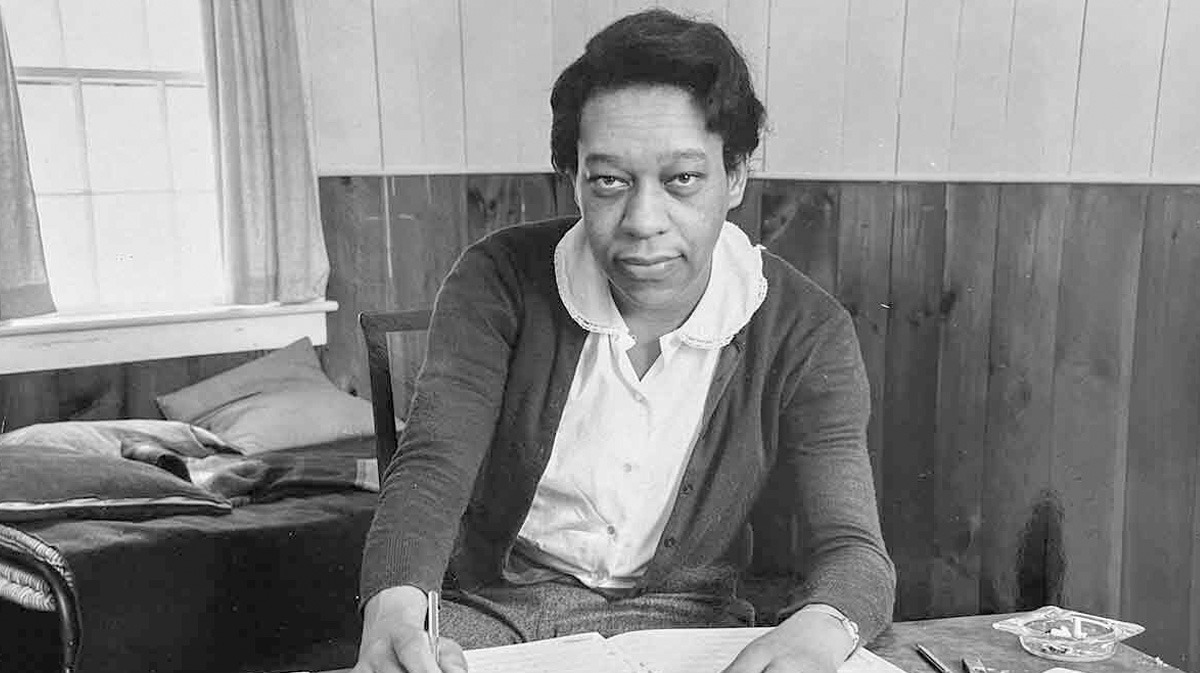

Julia Perry was one of the most accomplished American composers of the twentieth century. Although she never became a household name during her lifetime, her music demonstrated extraordinary originality, technical mastery, and emotional depth. Working in an era when opportunities for women and African American classical composers were severely limited, Perry forged a remarkable career that continues to receive increasing recognition today.
Born on March 25, 1924, in Lexington, Kentucky, Perry grew up in Akron, Ohio, in a family that valued education and music. She studied piano, violin, and voice from an early age, displaying exceptional musical talent. Her parents encouraged her artistic development, laying the foundation for a lifetime devoted to composition and performance.
Perry attended Westminster Choir College, where she earned bachelor’s and master’s degrees in music. She later continued her studies at prestigious institutions, including Juilliard and the Berkshire Music Center at Tanglewood. These experiences exposed her to leading composers and conductors while sharpening her skills as both a performer and composer.
One of Perry’s greatest influences was the renowned composition teacher Nadia Boulanger in Paris. She also studied with the Italian composer Luigi Dallapiccola, whose modernist techniques broadened her musical vocabulary. Under their guidance, Perry developed a distinctive style that combined classical traditions with innovative harmonic language.
During the late 1940s and 1950s, Perry emerged as one of America’s most promising young composers. Her breakthrough came with Stabat Mater, a powerful work for contralto and string orchestra that attracted international attention. The composition demonstrated her gift for dramatic expression and sophisticated orchestration.
Perry composed works in many forms, including symphonies, chamber music, choral pieces, operas, and orchestral compositions. She ultimately wrote twelve symphonies and numerous works for orchestra. Her music blended elements of neoclassicism with rhythms, melodies, and spiritual influences rooted in African American musical traditions, creating a voice that was uniquely her own.
Her accomplishments earned widespread recognition. Perry received two Guggenheim Fellowships, won the prestigious Prix Fontainebleau, and became one of the first Black women to have orchestral works performed by major American ensembles. She also toured Europe as a conductor and lecturer, where her music found enthusiastic audiences.
Despite these achievements, Perry faced significant barriers because of both her race and gender. Classical music during the 1950s and 1960s offered limited opportunities for African American women composers. Nevertheless, she persevered through determination and extraordinary talent, earning respect from musicians and critics around the world.
The Civil Rights Movement also influenced Perry’s later compositions. While her earlier works emphasized modernist musical techniques, many of her later pieces more openly reflected African American history and cultural identity. She demonstrated that classical music could embrace diverse traditions while maintaining artistic excellence.
In the early 1970s, Perry suffered a series of debilitating strokes that left her partially paralyzed. Rather than ending her creative life, she taught herself to write with her left hand and continued composing despite enormous physical challenges. Her determination remains one of the most inspiring aspects of her remarkable career.
Following her death in 1979, much of Perry’s music fell into obscurity because many manuscripts remained unpublished and her estate was not properly organized. For decades, performances of her music were rare, depriving audiences of one of America’s most important compositional voices.
Today, a growing movement among orchestras, scholars, and performers is restoring Julia Perry’s place in American musical history. Newly published scores, recordings, and performances have introduced her work to new audiences, revealing the brilliance of a composer whose contributions deserve lasting recognition. Her life stands as a testament to perseverance, artistic excellence, and the enduring power of music to transcend barriers.
Based on reporting by The Positive Community.
The post Julia Perry’s Enduring Musical Legacy appeared first on BlackPressUSA.