

Close Menu
  • Home
  • News
    • Local
  • Opinion
  • Business
  • Health
  • Education
  • Sports
  • Podcast

Subscribe to Updates

Get the latest creative news from FooBar about art, design and business.

What's Hot

What Is the Connection Between Health and Homelessness?

Beyond the Headlines: The Long Road to Recovery After Violent Crime

Beyond the Headlines: The Long Road to Recovery After Violent Crime

Facebook X (Twitter) Instagram
  • Lifestyle
  • Podcast
  • Contact Us
Facebook X (Twitter) Instagram Pinterest Vimeo
The Windy City Word
  • Home
  • News
    1. Local
    2. View All

    Uncle Remus Says Similar Restaurant Name Is Diluting Its Brand and Misleading Customers

    Youth curfew vote stalled in Chicago City Council’s public safety committee

    Organizers, CBA Coalition pushback on proposed luxury hotel near Obama Presidential Center

    New petition calls for state oversight and new leadership at Roseland Community Hospital

    What Is the Connection Between Health and Homelessness?

    Beyond the Headlines: The Long Road to Recovery After Violent Crime

    Social Drinking Habits Face New Scrutiny as Wellness Priorities Shift

    Why Stigma is Still One of the Biggest Barriers to Addiction Recovery

  • Opinion

    Rep Davis, Olive Post CDR., Call on Trump to Restore file of Black Vietnam War Hero to Website

    Capitalize on Slower Car Dealership Sales in 2025

    The High Cost Of Wealth Worship

    What Every Black Child Needs in the World

    Changing the Game: Westside Mom Shares Bally’s Job Experience with Son

  • Business

    Illinois Department of Innovation & Technology supplier diversity office to host procurement webinar for vendors

    Crusader Publisher host Ukrainian Tech Businessmen eyeing Gary investment

    Sims applauds $220,000 in local Back to Business grants

    New Hire360 partnership to support diversity in local trades

    Taking your small business to the next level

  • Health

    What Is the Connection Between Health and Homelessness?

    Beyond the Headlines: The Long Road to Recovery After Violent Crime

    Social Drinking Habits Face New Scrutiny as Wellness Priorities Shift

    Why Stigma is Still One of the Biggest Barriers to Addiction Recovery

    Saving Black Mothers Starts Outside the Hospital

  • Education

    COMMENTARY: Property Is Power! Why the Dream Booker T. Washington Preached in 1905 Still Matters Today

    COMMENTARY: From Chains to Change — Frederick Douglass’ Question Still Echoes Across America’s 250-Year Journey

    Chris Robinson Is Turning Cultural Memory into Public Art

    Africa University Gets First AME Member on Development Board

    National Museum of African American History and Culture Opens Two Exhibitions Exploring the Power of Abstraction Across Art and Design

  • Sports

    Nurture, Inc., Negro Southern League Museum Look to Preserve History While Healing the Community

    OP:ED How Black WNBA Players Became Collateral in the Caitlin Clark Culture War

    U.S. Men’s National Team Names its Roster for World Cup 2026

    Top 10 moments of the 2026 FIFA World Cup

    U.S. Soccer to Expand ‘Soccer at Schools’ Programming Across OUSD

  • Podcast
The Windy City Word
News

What the Supreme Court’s Trans Sports Ruling Means

staffBy staffUpdated:No Comments4 Mins Read
Facebook Twitter Pinterest Telegram LinkedIn Tumblr Email Reddit
Share
Facebook Twitter LinkedIn Pinterest WhatsApp Email

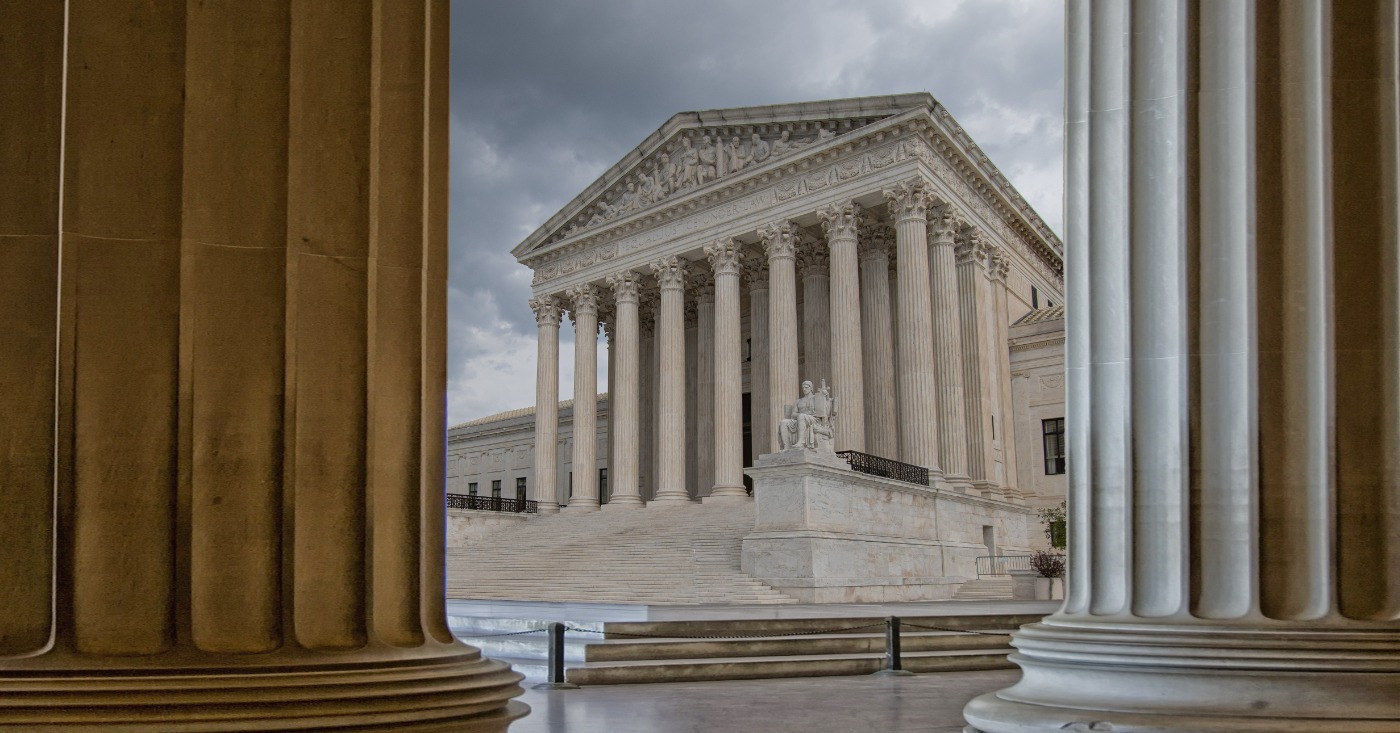
Photo: iStockphoto / NNPA.

By David Kesena | Rolling Out

The Supreme Court issued one of its most closely watched rulings of the term today, deciding that states have the authority to bar transgender girls and women from competing on girls’ and women’s school sports teams.

The 6-3 decision, written by Justice Brett Kavanaugh, resolved 2 cases that had been working through the federal court system for years: Little v. Hecox, involving Idaho’s Fairness in Women’s Sports Act, and West Virginia v. B.P.J., centered on West Virginia’s Save Women’s Sports Act. Both laws restrict participation on girls’ and women’s teams to students whose biological sex, as recorded on their original birth certificate, matches the team they wish to join.

What the 2 underlying cases were about

The case from Idaho involved Lindsay Hecox, a transgender woman who sought to join the women’s cross-country team at Boise State University. Hecox, along with a cisgender teammate, argued that Idaho’s law violated the Equal Protection Clause of the 14th Amendment by denying her the same opportunity to compete as her peers.

The West Virginia case centered on Becky Pepper-Jackson, a transgender girl who was barred from competing on her school’s girls’ cross-country and track teams under the state’s 2021 law. Her legal team argued that the policy violated both the Equal Protection Clause and Title IX, the federal law that prohibits sex discrimination in educational programs that receive federal funding.

How the majority reached its decision

Writing for the 6-justice majority, Kavanaugh concluded that schools may determine eligibility for women’s and girls’ sports teams based on biological sex without running afoul of either the Constitution or Title IX. He pointed to the court’s earlier ruling in United States v. Skrmetti, reasoning that the laws classify students by sex rather than gender identity.

Kavanaugh also wrote that requiring courts to evaluate the individual athletic effects of puberty blockers or hormone therapy on a case-by-case basis would be an unworkable standard for judges to apply fairly. Justices Clarence Thomas, Samuel Alito, Neil Gorsuch and Amy Coney Barrett joined the majority opinion, along with Chief Justice John Roberts. Thomas and Gorsuch each wrote separate concurring opinions, with Thomas writing that transgender women and girls are not women or girls under the law, regardless of their personal identification.

Kavanaugh closed his opinion by noting that the desire to compete deserves respect regardless of which side of the issue a student-athlete falls on, and that no student should be ostracized or vilified because of this dispute.

The dissent’s core argument

Justice Sonia Sotomayor, joined by Justices Elena Kagan and Ketanji Brown Jackson, dissented in part. Sotomayor agreed that Pepper-Jackson’s Title IX claim could not succeed, but argued the majority went considerably further than necessary on the Equal Protection question. She wrote that West Virginia’s law relied on a sex-based classification that should have triggered heightened judicial scrutiny, and that Pepper-Jackson deserved the chance to prove in court that the state’s stated safety and fairness rationale did not actually apply to her individual circumstances.

Jackson wrote separately as well, arguing the majority’s reading of Title IX improperly limited the law’s protections to sex assigned at birth, when she believes the statute leaves room for individuals to live according to their own gender identity.

Reaction from advocates and lawmakers

The ruling drew sharp criticism from LGBTQ+ advocacy organizations. Jennifer Levi of GLAD Law argued the decision amounts to categorical exclusion rather than a genuine effort to balance fairness, while Sasha Buchert of Lambda Legal and Joshua Block of the ACLU both said the ruling denies transgender youth the same opportunities afforded to their peers. The Trevor Project, an organization focused on LGBTQ+ youth mental health, pointed to survey data showing high rates of stress and anxiety reported by transgender and nonbinary young people in connection with similar policies nationwide.

Supporters of the ruling framed it differently. Idaho Sen. Jim Risch called the decision a win for fairness in women’s sports and for the original intent of Title IX, praising his state for being among the first in the nation to pass such a law.

Notably, attorneys on both sides of the issue, including GLAD Law’s Chris Erchull, pointed out that the ruling does not require any state to adopt a similar ban, and that broader Title IX protections against sex discrimination for LGBTQ+ students remain intact going forward.

Based on reporting by Rolling Out.


The post What the Supreme Court’s Trans Sports Ruling Means appeared first on BlackPressUSA.

Share. Facebook Twitter Pinterest LinkedIn Reddit WhatsApp Telegram Email
Previous ArticleFlorida Black Students Reach Historic Academic Achievement with End-of-Year Progress Monitoring Results
Next Article You Had Me At Hello: Love Lessons from Barack and Michelle Obama
staff

Related Posts

What Is the Connection Between Health and Homelessness?

Beyond the Headlines: The Long Road to Recovery After Violent Crime

Social Drinking Habits Face New Scrutiny as Wellness Priorities Shift

Leave A Reply Cancel Reply

Video of the Week
https://www.youtube.com/watch?v=AxFXtgzTu4U
Advertisement
Video of the Week
https://www.youtube.com/watch?v=OjfvYnUXHuI
ABOUT US


The Windy City Word is a weekly newspaper that projects a positive image of the community it serves. It reflects life on the Greater West Side as seen by the people who live and work here.

OUR PICKS

Headlines

Discover the 2025 @Hyundai Tucson XRT: All-Wheel Drive Adventure

South Side native Arionne Nettles’ debut book is a love letter to Black Chicago

MOST POPULAR

What Is the Connection Between Health and Homelessness?

Beyond the Headlines: The Long Road to Recovery After Violent Crime

Social Drinking Habits Face New Scrutiny as Wellness Priorities Shift

© 2026 The Windy City Word. Site Designed by No Regret Medai.
  • Home
  • Lifestyle
  • Podcast
  • Contact Us

Type above and press Enter to search. Press Esc to cancel.