
Close Menu
  • Home
  • News
    • Local
  • Opinion
  • Business
  • Health
  • Education
  • Sports
  • Podcast

Subscribe to Updates

Get the latest creative news from FooBar about art, design and business.

What's Hot

Photo Gallery: The Concerts at the 2026 ESSENCE Festival Of Culture® Presented By Coca-Cola®

Black Maternal Health: a 360-Degree Look at Black Midwives

Ownership over Access: Several Key Takeaways from the Greensboro Business League Executive Round Table

Facebook X (Twitter) Instagram
  • Lifestyle
  • Podcast
  • Contact Us
Facebook X (Twitter) Instagram Pinterest Vimeo
The Windy City Word
  • Home
  • News
    1. Local
    2. View All

    Uncle Remus Says Similar Restaurant Name Is Diluting Its Brand and Misleading Customers

    Youth curfew vote stalled in Chicago City Council’s public safety committee

    Organizers, CBA Coalition pushback on proposed luxury hotel near Obama Presidential Center

    New petition calls for state oversight and new leadership at Roseland Community Hospital

    Black Maternal Health: a 360-Degree Look at Black Midwives

    Clayco Invests in Men’s Mental Health

    Clayco Invests in Men’s Mental Health

    Black Maternal Health: a 360-Degree Look at Black Midwives

  • Opinion

    Rep Davis, Olive Post CDR., Call on Trump to Restore file of Black Vietnam War Hero to Website

    Capitalize on Slower Car Dealership Sales in 2025

    The High Cost Of Wealth Worship

    What Every Black Child Needs in the World

    Changing the Game: Westside Mom Shares Bally’s Job Experience with Son

  • Business

    Illinois Department of Innovation & Technology supplier diversity office to host procurement webinar for vendors

    Crusader Publisher host Ukrainian Tech Businessmen eyeing Gary investment

    Sims applauds $220,000 in local Back to Business grants

    New Hire360 partnership to support diversity in local trades

    Taking your small business to the next level

  • Health

    Black Maternal Health: a 360-Degree Look at Black Midwives

    Clayco Invests in Men’s Mental Health

    Clayco Invests in Men’s Mental Health

    Black Maternal Health: a 360-Degree Look at Black Midwives

    The Imported Doctors

  • Education

    Black Teens Lead in AI Use for Schoolwork. but at What Cost?

    COMMENTARY: Day After the Fireworks: Inaugural Martyrs Day Asks What Freedom Cost — and Who Paid

    Reading the Nation at 250: Who Is Missing from the Story?

    Nurture, Inc., Negro Southern League Museum Look to Preserve History While Healing the Community

    Military Child Care, a National Model, Faces Limitations

  • Sports

    Houston Texans’ Brandon Codrington Returns Home to Inspire Young Athletes at Free Youth Football Camp

    What the Supreme Court’s Trans Sports Ruling Means

    Photo Gallery: FIFA Fan Festival keeps drawing massive crowds in Atlanta

    Isaac Cook: A Local High School Standout to Watch

    Photo Gallery: The FIFA World Cup 2026™ Vibes are in Atlanta!

  • Podcast
The Windy City Word
Featured

The Reader Who Became a Revolutionary: Kwame Nkrumah

staffBy staffUpdated:No Comments4 Mins Read
Facebook Twitter Pinterest Telegram LinkedIn Tumblr Email Reddit
Share
Facebook Twitter LinkedIn Pinterest WhatsApp Email


By Alex Mason | Minnesota Spokesman Recorder

Kwame Nkrumah: How a Young Reader from the Gold Coast Became the Father of African Independence

A profile of Dr. Kwame Nkrumah traces his journey from a colonial classroom in the Gold Coast to Lincoln University, to leading Ghana to become the first sub-Saharan African nation to win independence, and to shaping Pan-Africanism as a movement that still resonates today.

Before he became the face of a nation’s independence, Kwame Nkrumah was a young reader who discovered that ideas could be as powerful as armies.

Born in 1909 in the Gold Coast, a British colony that would later become Ghana, Dr. Kwame Nkrumah grew up in a world that offered little room for concepts like freedom and self-determination. His early education came through missionary schools, but his imagination outgrew the walls of colonial classrooms. He wanted his life to amount to more than survival. He wanted dignity, self-rule, and a future that was not contingent upon European approval.

He found that future in books.

Nkrumah read voraciously from philosophy, politics, history, to economics. He read Marcus Garvey, W.E.B. Du Bois, Lenin, Gandhi. Through those pages he encountered bold and dangerous ideas: that African people must own their own destiny, that a small but well-coordinated group of people holds the power to overthrow systems far larger than themselves. Literacy was not merely personal growth. It was his connection to something larger than himself.

When he left for the United States in 1935, he worked menial jobs while studying at Lincoln University and later the University of Pennsylvania. He lived frugally, studied obsessively and debated endlessly. He organized African students, wrote articles and attended political meetings, learning along the way about the nature of power and its strengths and its vulnerabilities.

Nkrumah saw words as a weapon, as a vehicle for change. By the time he returned to the Gold Coast in 1947, he was not just a scholar. He was a communicator. He knew how to speak in classrooms and in marketplaces. He knew how to speak dangerously. He could move professors and farmers with the same fire, because he understood that liberation had to be spoken in a language people recognized as their own.

His political rise was swift because his message was unambiguous: self-government. Now. Not someday. Not when Britain felt comfortable. Now.

He founded the Convention People’s Party, organized strikes and boycotts, and mobilized everyday citizens who had never been told their voices mattered. When colonial authorities jailed him, his popularity only grew. In 1951, he was elected Prime Minister from a prison cell. Six years later, the Gold Coast became Ghana, the first sub-Saharan African nation to win independence from colonial rule.

Nkrumah became its first Prime Minister, then President. But his vision extended far beyond Ghana’s borders. He was a towering advocate of the Pan-Africanist movement and believed that political independence without economic sovereignty was hollow. He warned that neocolonialism was simply colonialism dressed in friendlier language. Many of those warnings proved painfully accurate.

In 1966, while he was abroad, a military coup removed him from power. He never returned to Ghana as its leader, spending his final years in exile writing, teaching and thinking about Africa’s future.

He died in 1972, but his ideas did not die with him. Today, Nkrumah’s legacy lives in every African nation that governs itself, in every Pan-African movement that insists Black history does not begin with slavery, and in every young reader who learns that leadership can come from anywhere.

Dr. Kwame Nkrumah did not just help free a nation. He helped redefine what Black leadership could look like when it refuses to shrink itself for the comfort of the West.

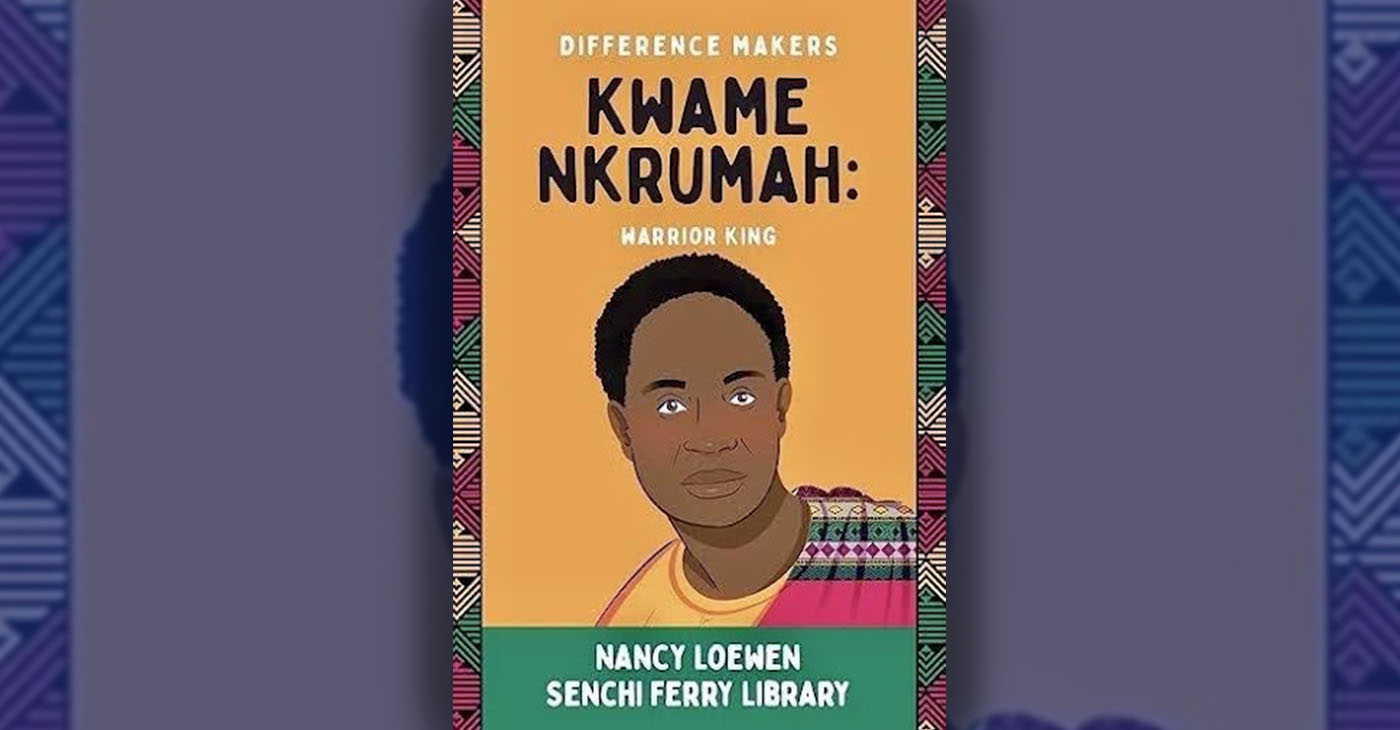
Ready to learn more about Kwame Nkrumah? Read Planting People Growing Justice’s book “Kwame Nkrumah: Warrior King” by Nancy Loewen.

Alex Mason is a Minneapolis-based writer and editor. He has written for nonprofits for nearly a decade.


Excerpt:

Photo Captions:

A vivid illustration or depiction of a young Kwame Nkrumah reading intently, symbolizing his early intellectual curiosity and the foundational role of literature in shaping his revolutionary ideas and future leadership.

A compelling visual representation of Kwame Nkrumah, either a portrait or a historical image, conveying his stature and influence as a pivotal leader in the African independence movement and a champion of Pan-Africanism.

Website Tags and SEO Keywords:

Twitter (X) Tags and Handles:
@NNPA_BlackPress @MNSpokesman @kofi_1982


Share. Facebook Twitter Pinterest LinkedIn Reddit WhatsApp Telegram Email
Previous ArticleSpeaking with Kids About Mental Health
Next Article 2026 Chevrolet Traverse: HUGE Tech & Google Built-In! #shorts
staff

Related Posts

Photo Gallery: The Concerts at the 2026 ESSENCE Festival Of Culture® Presented By Coca-Cola®

Ownership over Access: Several Key Takeaways from the Greensboro Business League Executive Round Table

Ownership over Access: Several Key Takeaways from the Greensboro Business League Executive Round Table

Leave A Reply Cancel Reply

Video of the Week
https://www.youtube.com/watch?v=AxFXtgzTu4U
Advertisement
Video of the Week
https://www.youtube.com/watch?v=OjfvYnUXHuI
ABOUT US


The Windy City Word is a weekly newspaper that projects a positive image of the community it serves. It reflects life on the Greater West Side as seen by the people who live and work here.

OUR PICKS

NABJ Convention and Lollapalooza are taking over downtown Chicago this weekend

Season 6, Episode 6: Empower Black Women Physicians

Scoop Jackson takes us behind-the-scenes of telling George “Iceman” Gervin’s story

MOST POPULAR

Black Maternal Health: a 360-Degree Look at Black Midwives

Clayco Invests in Men’s Mental Health

Clayco Invests in Men’s Mental Health

© 2026 The Windy City Word. Site Designed by No Regret Medai.
  • Home
  • Lifestyle
  • Podcast
  • Contact Us

Type above and press Enter to search. Press Esc to cancel.