


By Alex Mason | Minnesota Spokesman Recorder
Kwame Nkrumah: How a Young Reader from the Gold Coast Became the Father of African Independence
A profile of Dr. Kwame Nkrumah traces his journey from a colonial classroom in the Gold Coast to Lincoln University, to leading Ghana to become the first sub-Saharan African nation to win independence, and to shaping Pan-Africanism as a movement that still resonates today.
Before he became the face of a nation’s independence, Kwame Nkrumah was a young reader who discovered that ideas could be as powerful as armies.
Born in 1909 in the Gold Coast, a British colony that would later become Ghana, Dr. Kwame Nkrumah grew up in a world that offered little room for concepts like freedom and self-determination. His early education came through missionary schools, but his imagination outgrew the walls of colonial classrooms. He wanted his life to amount to more than survival. He wanted dignity, self-rule, and a future that was not contingent upon European approval.
He found that future in books.
Nkrumah read voraciously from philosophy, politics, history, to economics. He read Marcus Garvey, W.E.B. Du Bois, Lenin, Gandhi. Through those pages he encountered bold and dangerous ideas: that African people must own their own destiny, that a small but well-coordinated group of people holds the power to overthrow systems far larger than themselves. Literacy was not merely personal growth. It was his connection to something larger than himself.
When he left for the United States in 1935, he worked menial jobs while studying at Lincoln University and later the University of Pennsylvania. He lived frugally, studied obsessively and debated endlessly. He organized African students, wrote articles and attended political meetings, learning along the way about the nature of power and its strengths and its vulnerabilities.
Nkrumah saw words as a weapon, as a vehicle for change. By the time he returned to the Gold Coast in 1947, he was not just a scholar. He was a communicator. He knew how to speak in classrooms and in marketplaces. He knew how to speak dangerously. He could move professors and farmers with the same fire, because he understood that liberation had to be spoken in a language people recognized as their own.
His political rise was swift because his message was unambiguous: self-government. Now. Not someday. Not when Britain felt comfortable. Now.
He founded the Convention People’s Party, organized strikes and boycotts, and mobilized everyday citizens who had never been told their voices mattered. When colonial authorities jailed him, his popularity only grew. In 1951, he was elected Prime Minister from a prison cell. Six years later, the Gold Coast became Ghana, the first sub-Saharan African nation to win independence from colonial rule.
Nkrumah became its first Prime Minister, then President. But his vision extended far beyond Ghana’s borders. He was a towering advocate of the Pan-Africanist movement and believed that political independence without economic sovereignty was hollow. He warned that neocolonialism was simply colonialism dressed in friendlier language. Many of those warnings proved painfully accurate.
In 1966, while he was abroad, a military coup removed him from power. He never returned to Ghana as its leader, spending his final years in exile writing, teaching and thinking about Africa’s future.
He died in 1972, but his ideas did not die with him. Today, Nkrumah’s legacy lives in every African nation that governs itself, in every Pan-African movement that insists Black history does not begin with slavery, and in every young reader who learns that leadership can come from anywhere.
Dr. Kwame Nkrumah did not just help free a nation. He helped redefine what Black leadership could look like when it refuses to shrink itself for the comfort of the West.
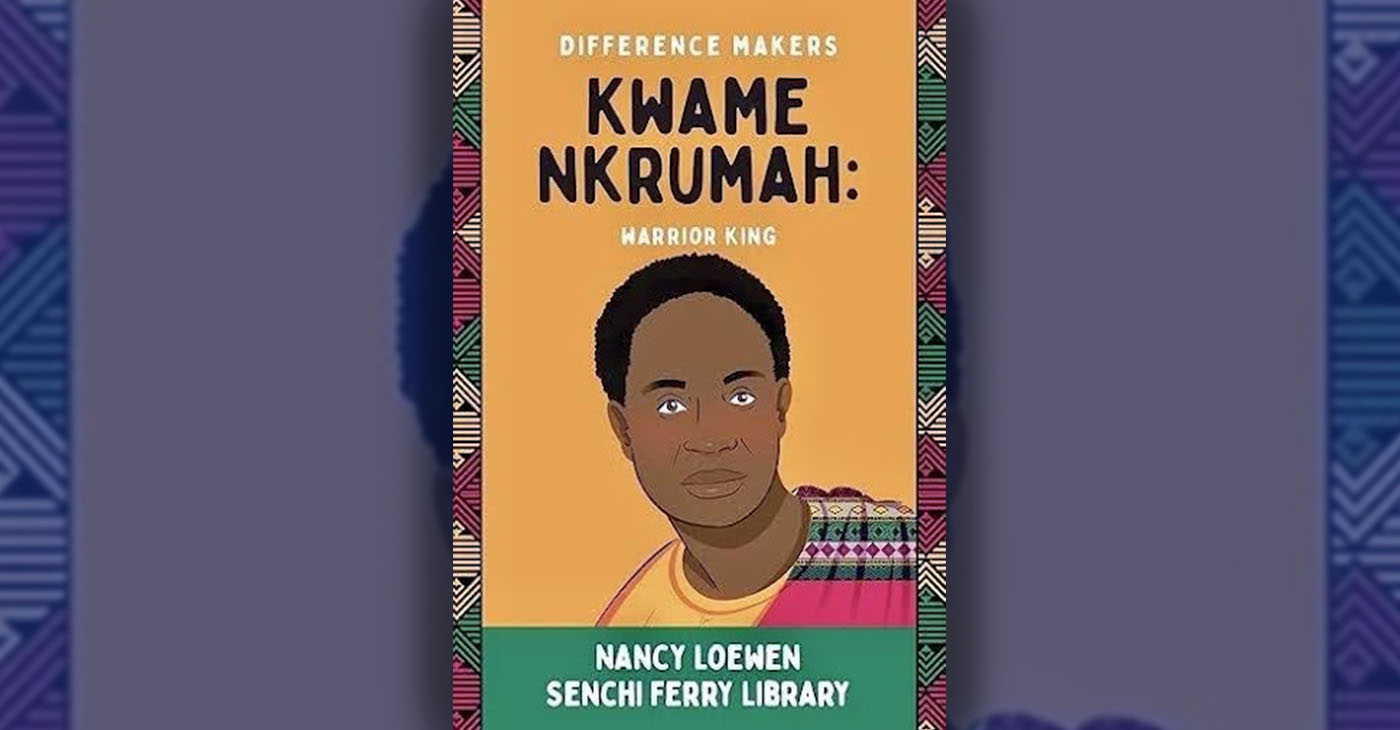
Ready to learn more about Kwame Nkrumah? Read Planting People Growing Justice’s book “Kwame Nkrumah: Warrior King” by Nancy Loewen.
Alex Mason is a Minneapolis-based writer and editor. He has written for nonprofits for nearly a decade.
Excerpt:
Photo Captions:
A vivid illustration or depiction of a young Kwame Nkrumah reading intently, symbolizing his early intellectual curiosity and the foundational role of literature in shaping his revolutionary ideas and future leadership.
A compelling visual representation of Kwame Nkrumah, either a portrait or a historical image, conveying his stature and influence as a pivotal leader in the African independence movement and a champion of Pan-Africanism.
Website Tags and SEO Keywords:
Twitter (X) Tags and Handles:
@NNPA_BlackPress @MNSpokesman @kofi_1982