


By Jheri Hardaway
Staff Writer
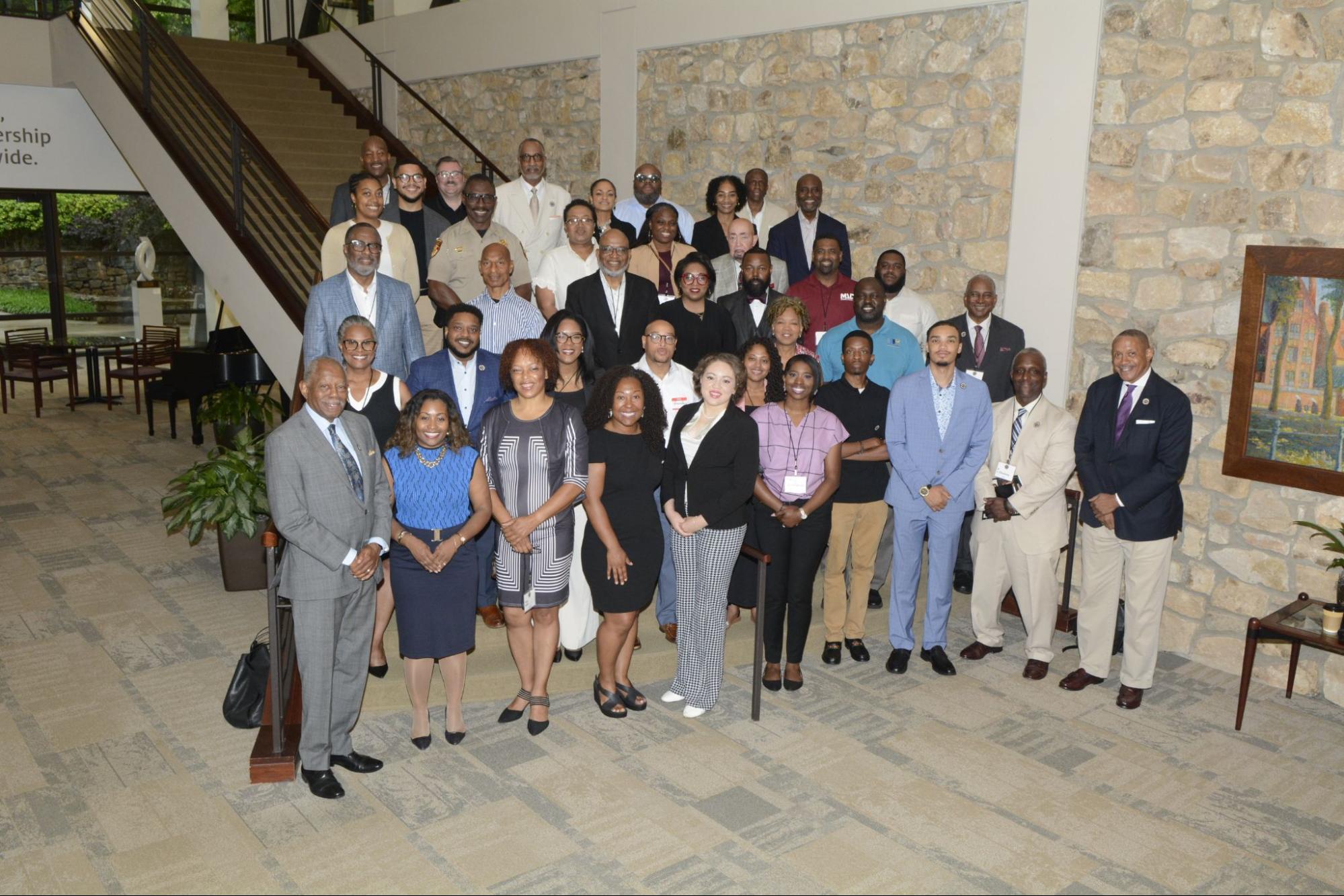
Greensboro, NC — “The civil rights movement won the right to sit at this lunch counter, but the challenge of the 21st century is ownership of the lunch counter.” This striking sentiment captured the foundational theme of the Greensboro Business League’s (GBL) Executive Round Table, hosted on Tuesday, June 23, at the stunning Center for Creative Leadership. Co-hosted by Gerry McCants, Co-Founder, and Earl Jones, Co-Founder of the GBL, and Wilson Lester, Managing General Partner of Partners In Equity, the interactive summit gathered entrepreneurs from near and far, public officials, and banking executives to confront a persistent paradox: despite political representation and massive collective spending power, proportional economic equity remains an unreached milestone for many Black communities. The conversation moved rapidly past systemic grievances, pivoting toward raw data, structural banking mechanics, and a blueprint for localized wealth retention.
Capital Rights versus Civil Rights were a theme of the opening conversation. Wilson Lester set a sobering tone for the morning, urging the audience to recognize the regulatory leverage already at their disposal. He highlighted the critical importance of the Community Reinvestment Act (CRA) of 1977, noting that federally insured banks have an absolute legal obligation to reinvest a percentage of their deposits back into low-to-moderate-income (LMI) communities. Lester reminded attendees that structural advocacy requires baseline market participation, “Knowledge is power because they have an obligation… But you have to be the ones to be the advocate and actually apply, actually go to these banks and financial institutions.”
The keynote speaker, B. Libre Kafele (known simply as Libre), an urban development advisor and author of Capital in the City and Who Pays for Development, expanded the macro-economic view. Kafele highlighted a sobering national reality: while Black consumer spending power has reached $1.7 trillion nationally, with North Carolina capturing an estimated $70 billion of that market share, the wealth frequently fails to circulate within the neighborhoods that generate it.
According to Kafele’s research across legacy cities like Detroit, Baltimore, Denver, and St. Louis, municipalities do not fail strictly due to crime or systemic incompetence, but rather due to metropolitan extraction, a process where infrastructure layout and historical policy choices draw wealth away from urban cores to benefit outer suburban communities. Libre tied these historical patterns directly to modern-day Greensboro. Without deliberate local intervention, this deficit accelerates displacement and gentrification, particularly in historically Black sectors like East Greensboro. Kafele passionately advocated for underutilized structural tools such as Community Land Trusts (CLTs) to preserve land ownership and stabilize long-term affordability.
A central focus of the roundtable panel, which featured Jonathan Rosato, founder of Trace Impact Solutions, and retired military consultant Dr. Anthony Wade, was the severe capital gridlock facing small Black-owned businesses. Rosato illuminated a major systemic mismatch in commercial real estate lending: Major traditional banks often look for a minimum commercial loan threshold of $5 million. The typical Mom-and-Pop expansion, salon, or neighborhood asset acquisition usually requires between $200,000 and $2 million. This middle tier is frequently deemed too small for commercial banking giants, yet too large for a singular Community Development Financial Institution (CDFI) to absorb without over-leveraging its balance sheet. Rosato challenged the financial ecosystem to embrace intentional risk-tolerance and expand CDFI capacity to support cash-based or unconventional business models.
The banking sector met the challenge with transparency. Kasey Hayes, Vice President of Business Banking at Bank of America, called for aggressive financial literacy and infrastructure building among local business owners, urging entrepreneurs to leverage certified public accountants (CPAs) to establish pristine financial records. Similarly, Kelvis Johnson, Sr. Vice President and Sr. Commercial lender of M&F Bank highlighted their unique position as both a historic Minority Depository Institution (MDI) and a CDFI, reminding attendees to actively hold local institutions accountable for local reinvestment.
The City of Greensboro Economic Development Office has introduced the RISE (Revitalize, Invest, Strengthen, and Expand) program, a $4 million commercial loan participation initiative designed to spark property redevelopment along designated corridors like East Market Street, Gorrell Street, and Gate City Boulevard. By acting as a secondary gap funder alongside financial institutions such as M&F Bank, United Community, First Bank, and TowneBank, the city helps entrepreneurs bridge financing shortfalls—for example, covering a $300,000 gap on a $2 million project where a bank underwrites only $1.7 million. Eligible for property acquisition and improvements, including HVAC updates, facade overhauls, and structural site cleanups, business owners can find further application details and geographical maps on the municipal portal at www.greensboro-nc.gov/riseinfill.
The overarching takeaway from the GBL Executive Round Table was clear, uncompromising, and highly motivating: the economic rescue of local communities will not be engineered by external saviors. The summit successfully bridged the gap between macro policy and localized street-level execution. By forcing municipal leaders, financial underwriters, and grassroots creators into a single room, the Greensboro Business League proved that the tools for sustainable equity, whether via the CRA, expanded CDFIs, or the city’s new RISE initiative, already exist. The remaining mandate is for local entrepreneurs to aggressively organize their financials, claim these resources, and build an economic ecosystem designed to last.
Based on reporting by The Carolinian.
The post Ownership over Access: Several Key Takeaways from the Greensboro Business League Executive Round Table appeared first on BlackPressUSA.