



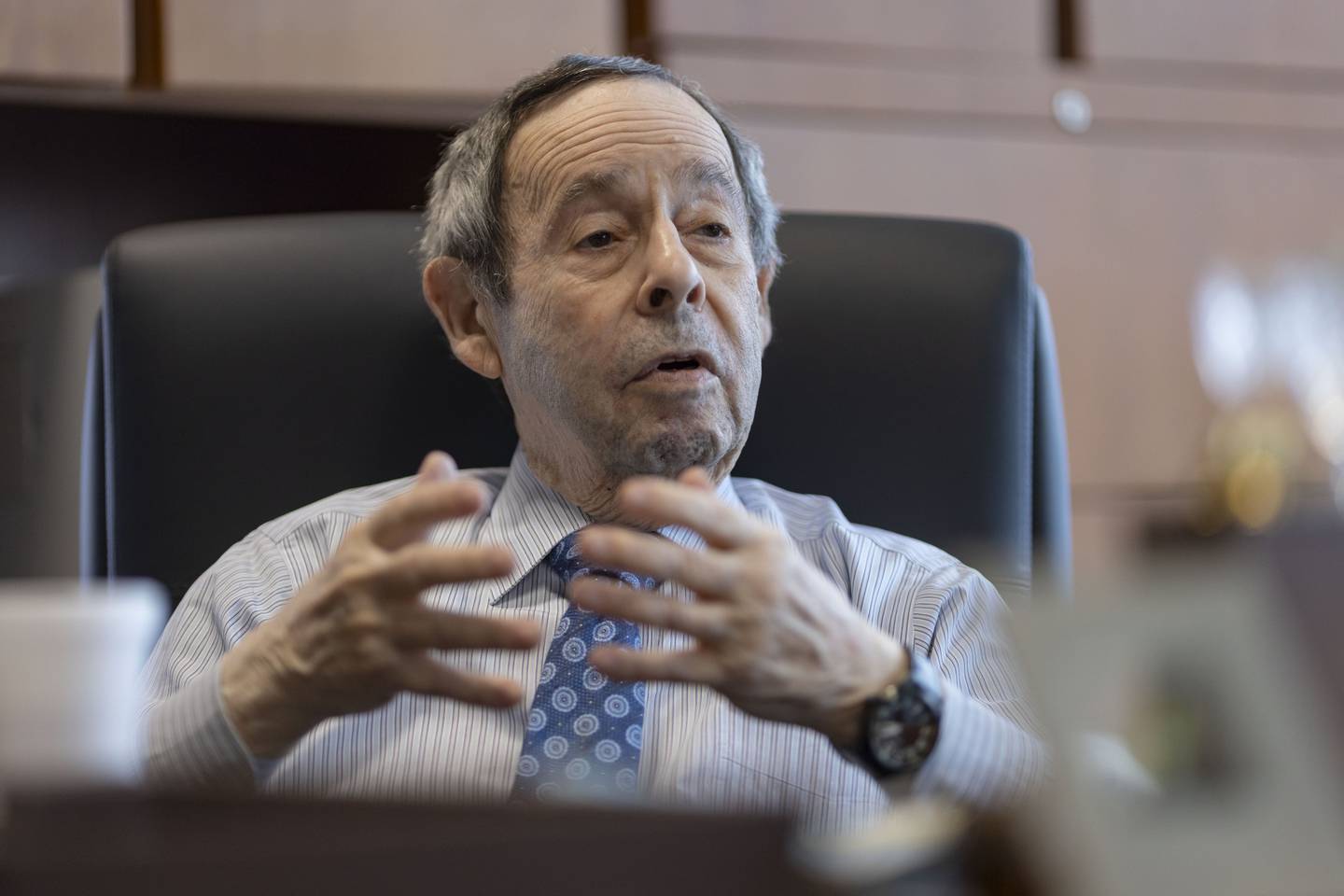
In 2018, Juvenile Court Presiding Judge Michael Toomin made the consequential decision to detain two 12-year-old boys facing gun charges despite a Cook County ordinance that said children that young shouldn’t be locked up.
The ruling launched a wave of criticism and became emblematic of a battle for the soul of juvenile justice in Cook County. Advocates for reform said children that young need help and intervention, not jail, while Toomin, in a recent interview with the Chicago Tribune, said that all other alternatives for incarceration in that case had been exhausted.
Advertisement
The case, like many in juvenile court, he said, presented no easy choices.
“They do weigh on you,” Toomin said, “but somebody has to make those decisions.”
Advertisement
Now Toomin is set to retire at the end of the year, ending 10 years of juvenile court leadership that was at times controversial, with advocates for criminal justice reform often arguing that his vision of juvenile justice was retrograde, too quick to rely on punishments that could be damaging over other solutions. He barely made it through his most recent retention vote in 2020, squeaking by with about 62% of the vote.
Some interviewed by the Tribune hope changing leadership at juvenile court will usher in a new paradigm for handling cases involving young people in Cook County.
But colleagues recalled a fair jurist and court chief.
“He pretty much let us be the captain of the ship, recognizing we are operating within the bounds of the law and doing what was in the best interest of the kids who came through our courtrooms,” said former Juvenile Court Judge Marianne Jackson.
Toomin’s decadeslong career first began on 26th Street, as a lawyer and later as a criminal court judge, overseeing, to his estimation some 600 murder cases and 400 or more jury trials, including heater Cook County cases like the second trial for mob hit man Harry “The Hook” Aleman and that of Black P Stones and El Rukn leader Jeff Fort.
He’s played a significant role in other high-profile cases, including most recently appointing a special prosecutor in the Jussie Smollett case.
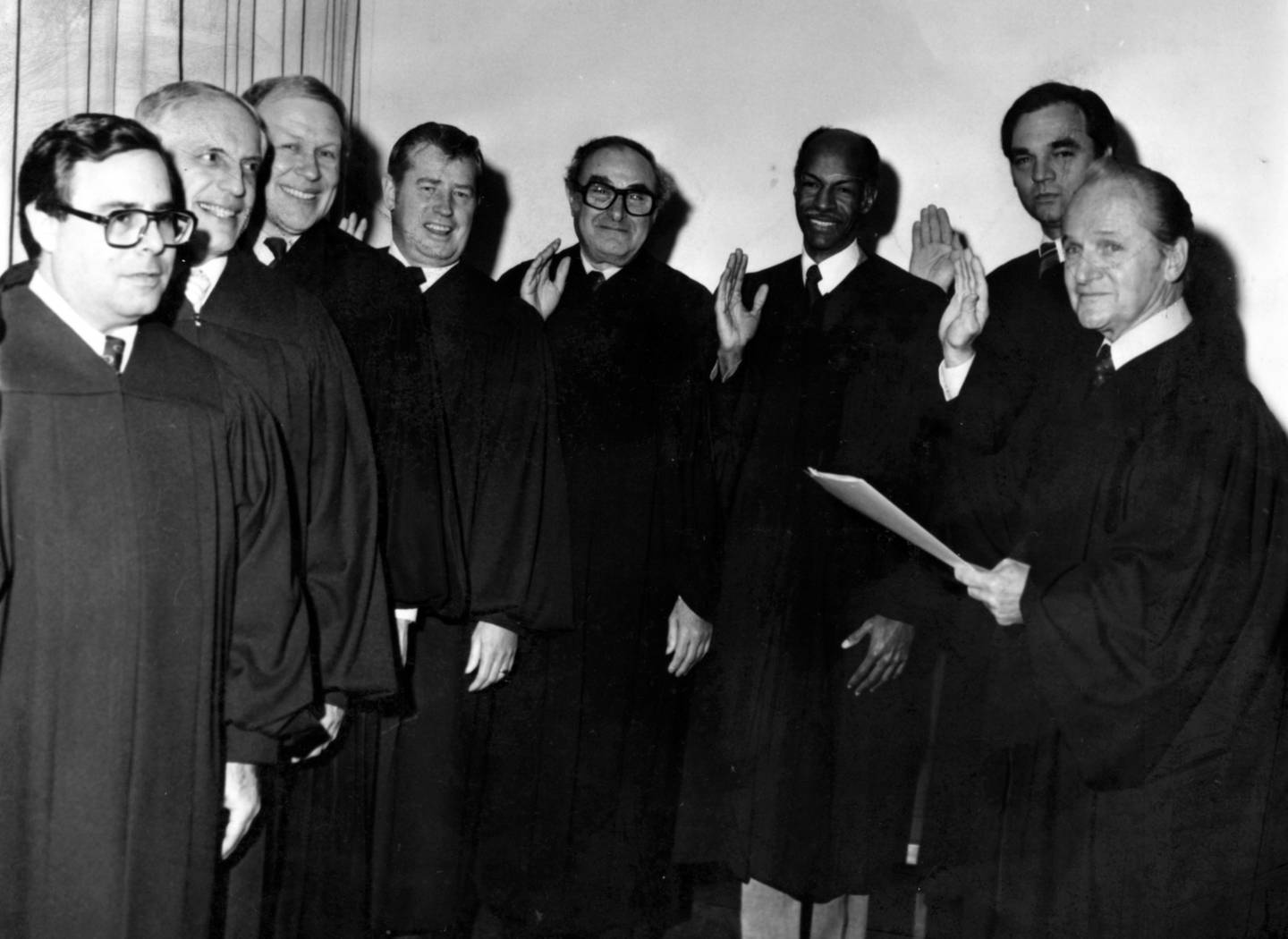
First elected in 1980, he cultivated a reputation as a conscientious judge and earned the affectionate nickname of the “Toominator.” He served as chairman of the Illinois Supreme Court’s special committee on capital cases and was appointed presiding judge in juvenile court by Chief Judge Tim Evans in 2010.
“Forty-two years is a long time,” Toomin said, speaking from his office earlier this month. “I felt that I’ve made some contributions to the system, to the court and to society. ”
Advertisement
Judge Jackson, who retired in 2018, recalls with heaviness in her voice the 2018 case of the two juveniles. One of the boys was in Jackson’s court, and she said he had previously escaped his electronic monitoring and ran away from an outreach center.
At one point, she seized on a potential solution with relief: His aunt came to court and said she would watch him. She said the boy would listen to her. But the aunt was soon back in court, Jackson said.
“Jail really isn’t an answer a lot of times,” Jackson said. “The answer is to have the resources necessary to solve the problem, but coming through juvenile court, you’re talking about decades of deprivation.”
Jackson said she presided over periods of dwindling resources and sad cases. Laquan McDonald, who was shot and killed by former Chicago police Officer Jason Van Dyke, was on probation in her court. He had been doing much better, she said.
But the case with the 12-year-old boy was one where she felt the only option she had left for the boy’s own safety was detention.
“You don’t want a Yummy on your hands,” she said, referring to 11-year-old Yummy Sandifer, who was shot and killed in 1994 in a case that shocked the nation.
Advertisement
Cook County, though, had recently passed an ordinance that prohibited children 12 and younger from being sent to the Juvenile Temporary Detention Center. Toomin ruled that the ordinance was in conflict with a state law that said children as young as 10 could be detained.
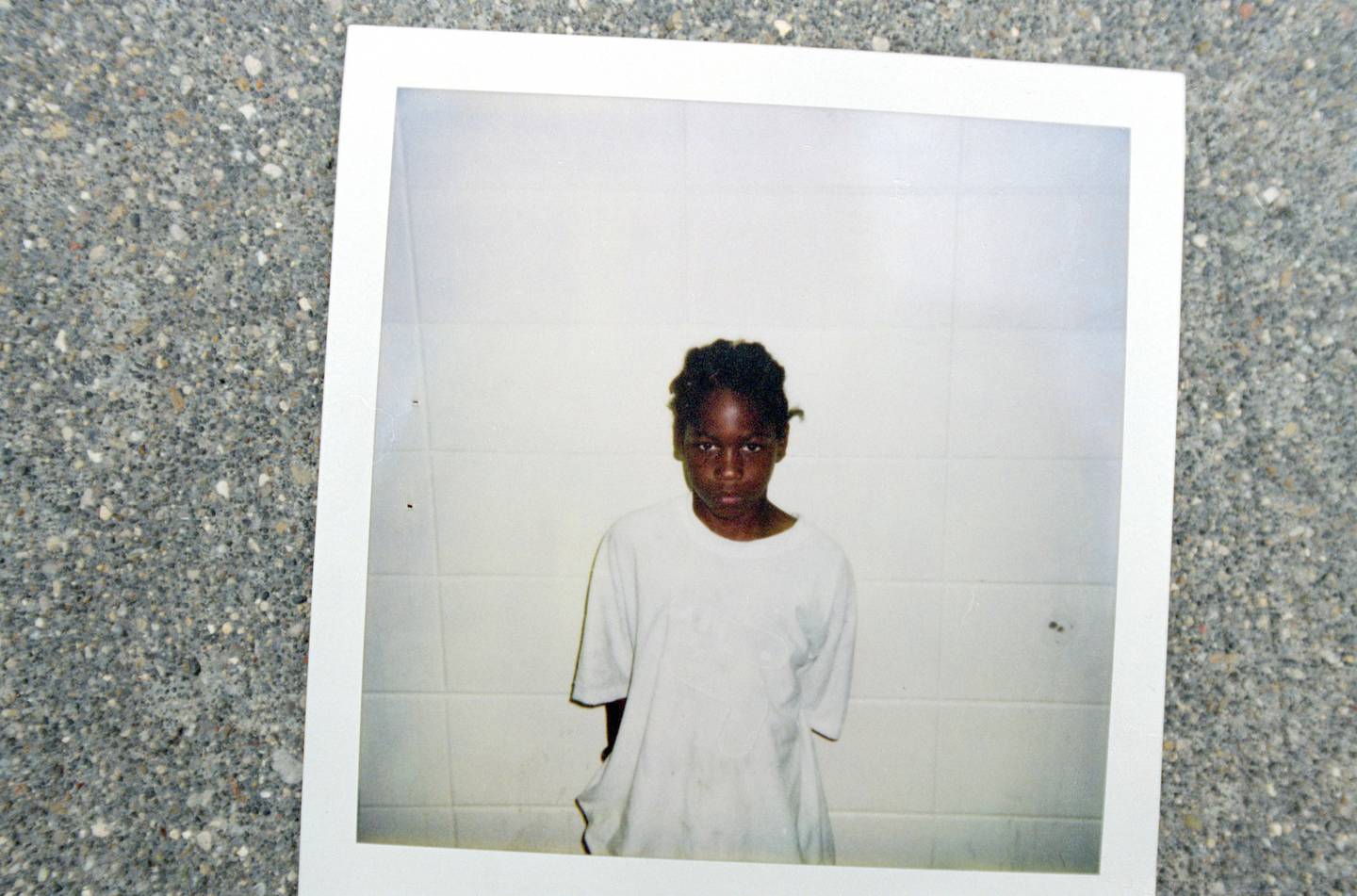
“These minors represent a clear and present threat to society to the extent that only secure placement is appropriate,” Toomin wrote in a court order. “The county’s ordinance offers little aid or guidance in the processing and placement of this cohort of our minors.”
The decision was upheld on appeal.
“We had to do it for the kids’ own safety,” Toomin said, reflecting on the matter earlier this month.
But reform advocates have countered that locking up young children is endemic of a broken system that damages the children rather than helps them grow into healthy adults.
“It’s important that justice be tempered with mercy and compassion and consistently. He has shown more of a propensity for punishment,” Betsy Clarke, then president of the Juvenile Justice Initiative said of Toomin in 2018 after the decision was made regarding the 12-year-olds. “I would urge the electors to look at this recommendation that is based upon the juvenile justice advocacy community and follow it.”
Advertisement
In an op-ed published in the Sun-Times, Cook County Board President Toni Preckwinkle asked county residents to vote against retaining Toomin, writing: “We want a leader who understands that children need to be treated differently than adults. A leader who encourages fair treatment, advocates for rehabilitation whenever possible and advances reform.”
“By that standard, Judge Toomin has failed,” Preckwinkle wrote.
Last month, 80 adults graduated from a new kind of court in Lawndale, one that offers restorative justice outside of the traditional court system.
Some charged with nonviolent offenses are diverted from county courthouses to community programs where they work to make amends for the offense through processes that can involve the victim and others in the community who were affected. At the end, they have the opportunity to have the offense wiped from their record if they successfully complete the program.
The restorative justice model is one that has gained a foothold in communities across the country and is being utilized for adults at three sites in Chicago.
Some experts see this as the next frontier in juvenile justice — an opportunity for the incoming presiding judge to press for and seek to support.
Advertisement
“For youth, I just think it’s a societal, moral obligation to take better care of our children,” said Cliff Nellis, executive director of Lawndale Christian Legal Center, which partnered with the county to start Chicago’s first restorative justice court in North Lawndale.
Nellis said the county is missing an opportunity to adapt the restorative justice courts that currently serve adults for a juvenile population. He said the infrastructure and community partners necessary to establish it already exist, and he hopes the new presiding judge considers it.
Some experts also said they hoped to see a presiding judge that supports legislative and other changes that would divert more children away from jail and allow fewer minors to be tried as an adult.
Julie Biehl, clinical law professor and the director of the Children and Family Justice Center at the Northwestern University Pritzker School of Law, said juvenile legal practice needs to be seen and understood as a specialized area of expertise, not as the “Little Leagues” for judges and lawyers hoping to move to the adult justice system at 26th and Cal. Those meting out justice need to understand that children are different from adults who come into contact with the criminal justice system, she said.
There should be a greater focus on diversion and treatment, Biehl said.
“I think what is important when moving out of Toomin’s tenure is thinking about what kind of juvenile court jurisdiction we want to have in the county,” Biehl said.
Advertisement
For his part, Toomin said he is retiring after securing a grant that will establish pilot programs that would offer alternatives to incarceration for young people. The program run through the state, called Redeploy Illinois, proposes four sites that would offer wraparound services for juveniles who met criteria for the program.
But he acknowledged he saw a shift in thinking around juvenile justice in his time as a judge, with advocacy to treat children more gently. He expressed a hesitancy in the justice system moving in that direction, a view of juvenile justice that indeed appears incompatible with the vision others have put forward.
“I sense we have missed something by the approach of saying we’re not going to be tough on kids or adults for that matter,” Toomin said.
On a bitterly cold January early morning, Jussie Smollett told Chicago police he was attacked and subjected to homophobic and racist slurs. By February, detectives had determined it was a hoax and the Cook County state’s attorney’s office charged Smollett with filing a false police report about the attack.
The case involved no juveniles, but Toomin played a consequential role in one of the most bizarre and dramatic cases in Cook County in recent years.
Cook County State’s Attorney Kim Foxx said she was recusing herself from the case and handed it to a deputy.
Advertisement
In March, in a surprising turn of events, her office dropped the charges, eliciting a storm of criticism and calls for an official review.
The matter made its way to Toomin’s desk, and he appointed a special prosecutor to look into the Smollett case itself as well as the prosecutor’s office’s decision to suddenly drop the charges.
Toomin ruled that Foxx improperly recused herself and overstepped her authority when she delegated the matter to a top deputy.
“There was no master on the bridge to guide the ship as it floundered through uncharted waters, and it ultimately lost its bearings,” Toomin wrote in the 21-page opinion. “… The unprecedented irregularities identified in this case warrants the appointment of independent counsel to restore the public’s confidence in the integrity of our criminal justice system.”
Toomin appointed Dan Webb to look at the case, the same special prosecutor he appointed years earlier in the case of Richard Vanecko, the nephew of former Chicago Mayor Richard M. Daley who ultimately pleaded guilty to involuntary manslaughter in the death of a man after a drunken confrontation.
“I felt that there was enough there to warrant the appointment of Dan Webb,” Toomin said, reflecting on his role in the Smollett case.
Advertisement
Webb ultimately retried and won a conviction against Smollett, though the case is being appealed.
The following year, Toomin was up for a retention vote, meaning he needed 60% to stay in his position.
But in an unusual move, the county Democratic Party decided not to endorse him, putting him in a close fight to retain his seat. Juvenile justice advocates said he was out of touch. Preckwinkle asked voters in the Sun-Times op-ed not to retain him because of his policies in juvenile court.
Toomin, though, feels the decision was political, in part motivated by his appointment of the special prosecutor in the Smollett case.
“I think there was one overriding reason and that was the president of the county board was Preckwinkle, who didn’t like the (Smollett) ruling,” he said.
He takes issue with the op-ed she wrote and harks back to the two 12-year-old boys, arguing he was backing up his judges.
Advertisement
Afternoon Briefing
Daily
Chicago Tribune editors’ top story picks, delivered to your inbox each afternoon.
“That’s about as close as you get,” he said of the 62% he snagged to hang onto his role. “I think most judges would say that they took it personally.”
But he looks back on his career fondly.
He remembers the frenzy of the Fort case and having to go to court with personal security. The case of mob hit man Harry “The Hook” Aleman came to his court for a second trial after the first judge accepted a bribe to acquit.
Asked whether he ever worried for his safety, he laughed and said he was too “thickheaded.”
He knows it’s time to retire but will miss the halls of justice in Cook County.
“I’m happy to have been part of it,” he said.
Advertisement


