



A Cook County judge last year moved cases involving allegations of torture by a former Chicago police detective to Will County, because the detective was married to another sitting Cook County judge.
Cook County State’s Attorney Kim Foxx quickly followed suit and stepped away, and special prosecutors were appointed, beginning a new chapter in a familiar Chicago tale.
A Chicago police detective accused of torture. Judges and prosecutors mired in a tangle of conflicts of interests.
But in a surprise move nearly a year later, the special prosecutors assigned to cases connected to former CPD Detective Kriston Kato are taking aim at a 15-year-old statute enacted in the wake of allegations surrounding notorious ex-CPD Detective Jon Burge that created a torture commission to investigate claims of police abuse.
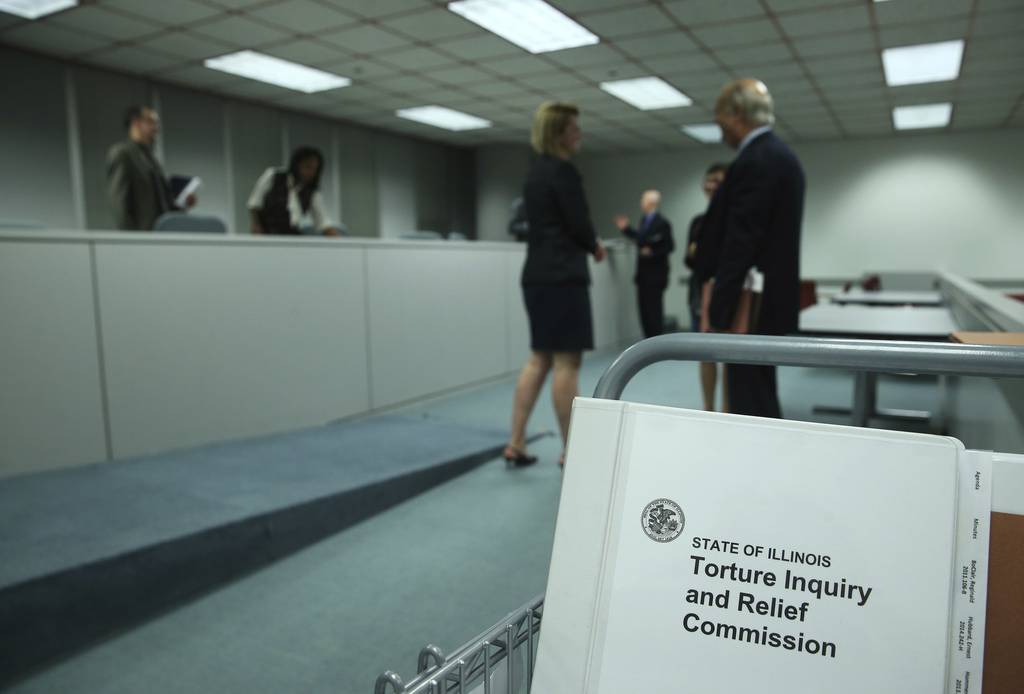
The special prosecutors have filed a motion in at least two cases related to Kato, arguing that the torture commission, which referred the cases for a court hearing, is unconstitutional. The commission was formed in 2009 by the Illinois Torture Inquiry and Relief Commission Act and has played a role in a number of overturned convictions in the past decade. The commission reviews torture claims and refers those it finds credible to judges for a hearing.
“Kato been on the radar of those who have been wrongfully convicted for decades, and now the chickens are coming home to roost,” said Flint Taylor, an attorney who has been involved in cases alleging CPD torture. “The county should be on the right side of history and not on the side of throwing a frivolous monkey wrench into the proceedings.”
:quality(70)/cloudfront-us-east-1.images.arcpublishing.com/tronc/OJZHYLDLIFBPVB75BII2WDG7PU.jpg)
Kato is married to Cook County Judge Mary Margaret Brosnahan, who currently works in the criminal division.
Defense attorneys involved in the cases have accused the special prosecutors of running amok, costing the county hundreds of thousands of dollars while straying from their objective.
Further, they allege, the county swapped one conflict of interest for another. The special prosecutors appointed are former Cook County assistant state’s attorneys who worked at the office during Kato’s time at CPD, according to the attorneys. The defense attorneys have filed a motion to disqualify Fabio Valentini and Maria McCarthy, former prosecutors now in private practice, from serving as special prosecutors on the case.
Valentini and McCarthy did not respond to a request for comment from the Tribune.
“They’ve charged the taxpayers about half a million dollars for work on this case already to try to strike down (the) statute,” said Jennifer Bonjean, a defense attorney representing a man who has accused Kato of coercing a confession by torture. “They’re trying to invalidate the crown jewel legislation that responded to our terrible history of police brutality led by Jon Burge.”
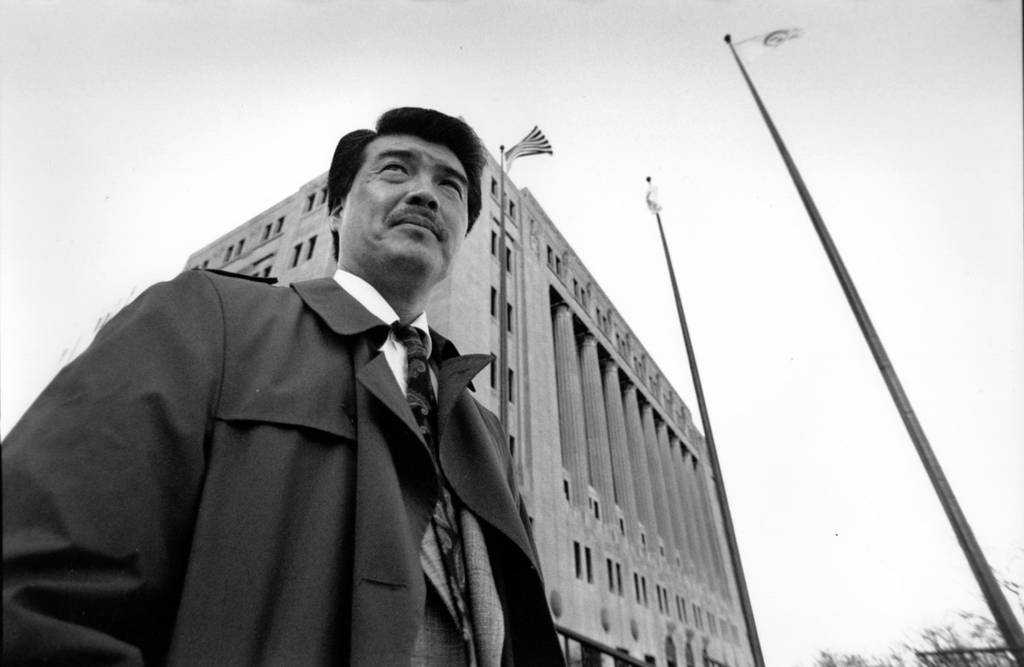
Described in a 1990s Tribune story as “a solidly built, 6-foot-tall” veteran detective, Kato has been besieged by allegations from defendants that the detective beat or intimidated them during police questioning.
As early as 1991, a defense attorney told the Tribune that Kato, as complaints of abuse mounted, was the “worst-kept secret in Cook County.”
Among those who have accused Kato of torture is Devon Daniels, who at 19 was convicted of a 1996 double murder on the West Side. The torture commission in October found that there was “credible evidence of torture” meriting judicial review.
Daniels, who maintains his innocence, alleged that Kato and two other detectives kicked him in the shins, kneed him in the groin and slapped him in the face until he implicated himself. The commission’s findings noted that Daniels complained about the alleged abuse nearly immediately.
In another Kato case being tried by the special prosecutors, Kevin Murray, convicted in a 1987 double homicide, said that Kato and another detective “slapped him in the head, hit him on his neck, punched and kneed him in the stomach, punched him in the ribs, and kicked him in the leg, groin, and chest,” according to torture commission documents. The commission in 2017 also found Murray’s claims to be credible and referred it to a judge.
A Cook County judge also granted Murray an evidentiary hearing, but it has been moved back multiple times, his attorney said.
“It’s been five years, and we’re no closer to having this hearing,” his attorney, Karl Leonard, with the University of Chicago Law School’s exoneration project clinic. “Instead, we’re dealing with whether the torture commission is constitutional.”
The special prosecutors filed the torture commission motion last month and asked a judge to dismiss the commission’s hearing referrals in both Murray’s and Daniels’ cases.
“My assumption is that their goal is to delay and string out these cases; the better it is for Kriston Kato,” Leonard said. “If the byproduct of that is to eliminate the torture commission so this body stops looking into it, that’s just a bonus.”
Leonard and Bonjean both filed motions to disqualify the special prosecutors, arguing that Valentini and McCarthy worked in the felony review division, tasked with reviewing evidence from police for felony charges, while Kato was a detective. Valentini even prosecuted a case that involved allegations against Kato, the motion says.
“If (the Cook County state’s attorney’s office) was conflicted out because they practice before his wife, this is an actual conflict that went from the appearance of a conflict to an actual conflict,” Bonjean said.
The torture commission, championed by Illinois Attorney General Kwame Raoul, who sponsored the legislation while a state senator, had a slow start, and over the years has battled problems with funding, staffing and resources.
In 2012, the Illinois legislature voted to strip the commission of all funding, forcing it to suspend operations until a state grant replaced the monetary support. It came under fire in 2013 when victims’ families said they were excluded from the process. And the commission has historically been deluged with cases, at times racking up backlogs of hundreds of claims to review.
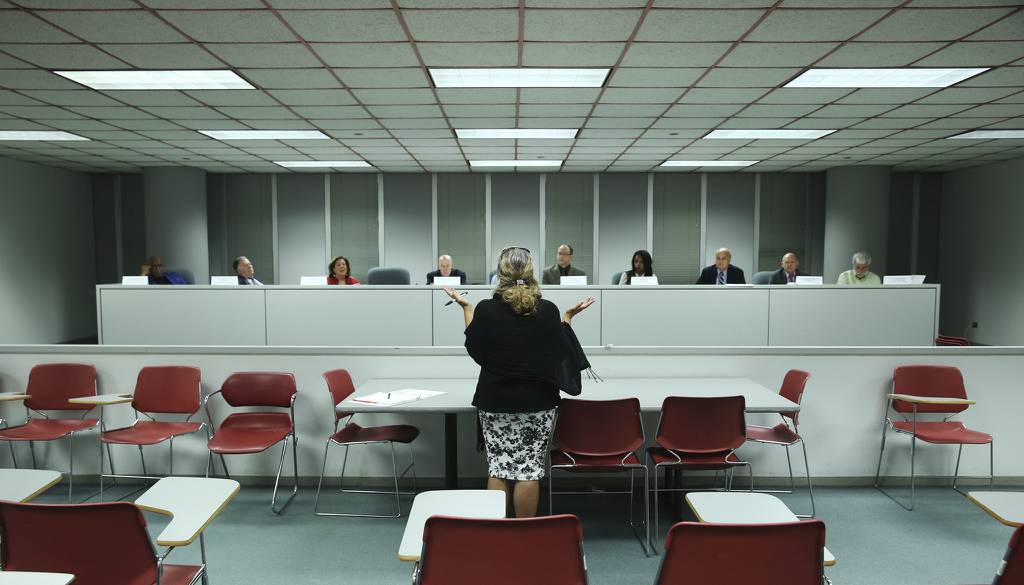
“We can’t deal with those numbers the way we’re set up now,” Executive Director Rob Olmstead told the Tribune in 2017, referring to a change in the law that allowed people to file torture claims beyond those connected to Burge, who left the department as a commander. “I think the legislature’s intention was laudable. They wanted to bring potential relief to what they thought was a wider pool of people who needed it, and that’s great, but now we need to practically find a way to do it.”
Olmstead said no one from the commission was available for an interview.
Supporters of the measure, though, say the commission plays a critical role in the Cook County criminal justice system. They condemned the move by special prosecutors arguing the statute violates the Illinois constitution, and called on the state to dedicate more funding and resources.
“We don’t believe it’s unconstitutional, we believe it’s under-resourced,” said Aislinn Pulley, co-executive director of the Chicago Torture Justice Center. “What’s unconstitutional really is people lingering behind bars for decades.”
Among other arguments in their motion, the special prosecutors contend that the commission’s ability to refer cases to judges for a hearing violates the Illinois constitution’s separation of powers clause by infringing on judicial authority. They make a similar argument to that made by prosecutors challenging the elimination of cash bail by the Illinois legislature.
Afternoon Briefing
Daily
Chicago Tribune editors’ top story picks, delivered to your inbox each afternoon.
“The People agree that the investigation and eradication of police torture and excessive force is certainly a laudable goal of government,” the motion reads. “But the road to an unauthorized evidentiary hearing, much like the proverbial road to perdition, is often paved with good intentions.”
Harold Krent, a law professor at the Illinois Institute of Technology’s Chicago-Kent College of Law, noted that judges still have a lot of discretion and said that if the argument were to prevail, it could tie the hands of the General Assembly in legislating criminal justice issues.
“The question of whether a petitioner remains incarcerated ultimately rests with the courts, not the torture commission,” Krent said.
The attorneys for the defendants plan to file a response to the special prosecutors’ torture commission motion, and believe the prosecutors’ arguments will be unsuccessful. The next hearing is scheduled for April 11.
Taylor, though, who has argued on behalf of Burge victims, had a word of caution.
“Whenever someone raises an issue and has the funds to pursue it, when you have power of state behind you, you can’t, no matter how frivolous it is … you can’t dismiss it,” Taylor said. “However, its major potential here is A) to line the pockets of private lawyers and B) delay justice.”
mabuckley@chicagotribune.com


