



By Sym Posey | The Birmingham Times
When someone collapses from sudden cardiac arrest, survival is often determined
before emergency crews ever arrive.
In Birmingham, health leaders say too many of those emergencies unfold without
immediate intervention — and they are working to change that.
Ahead of CPR & AED Awareness Week, observed June 1–7, the Sudden Cardiac Arrest
Task Force is pushing to improve survival rates through education, public
awareness, and increased CPR participation across Birmingham and, eventually, the
rest of Alabama.
The task force, announced in November 2025, brings together emergency physicians,
firefighters, public health leaders and community organizations with one shared
goal: turning bystanders into lifesavers.
“If we look at the data for the last 15 years or so in terms of cardiac arrest
survival in Birmingham, we’re far behind,” said Ryan Coute, assistant professor
of emergency medicine at the University of Alabama at Birmingham and Task Force
chairperson. “Our survival rate is around three out of every 100 people — about
3%. Nationally, that average is around 12%.”
Coute said one of the biggest drivers behind those numbers is Birmingham’s low
bystander CPR rate.
“Our CPR rate in Birmingham is around 15 to 16%,” he said. “That’s about two and a
half times below the national average, and we think that’s a large reason why
our survival rate is much lower.”
For Kim Baldwin, Vice President of Community Impact at the American Heart
Association, the task force represents an opportunity to rethink how
communities learn lifesaving skills.
“The task force was really birthed out of a need to do more in the community around
education and awareness,” Baldwin said. “We want to use Birmingham as more of a
demonstration zone.”
Rather than relying solely on traditional certification classes, organizers want CPR
education to become more visible and accessible.
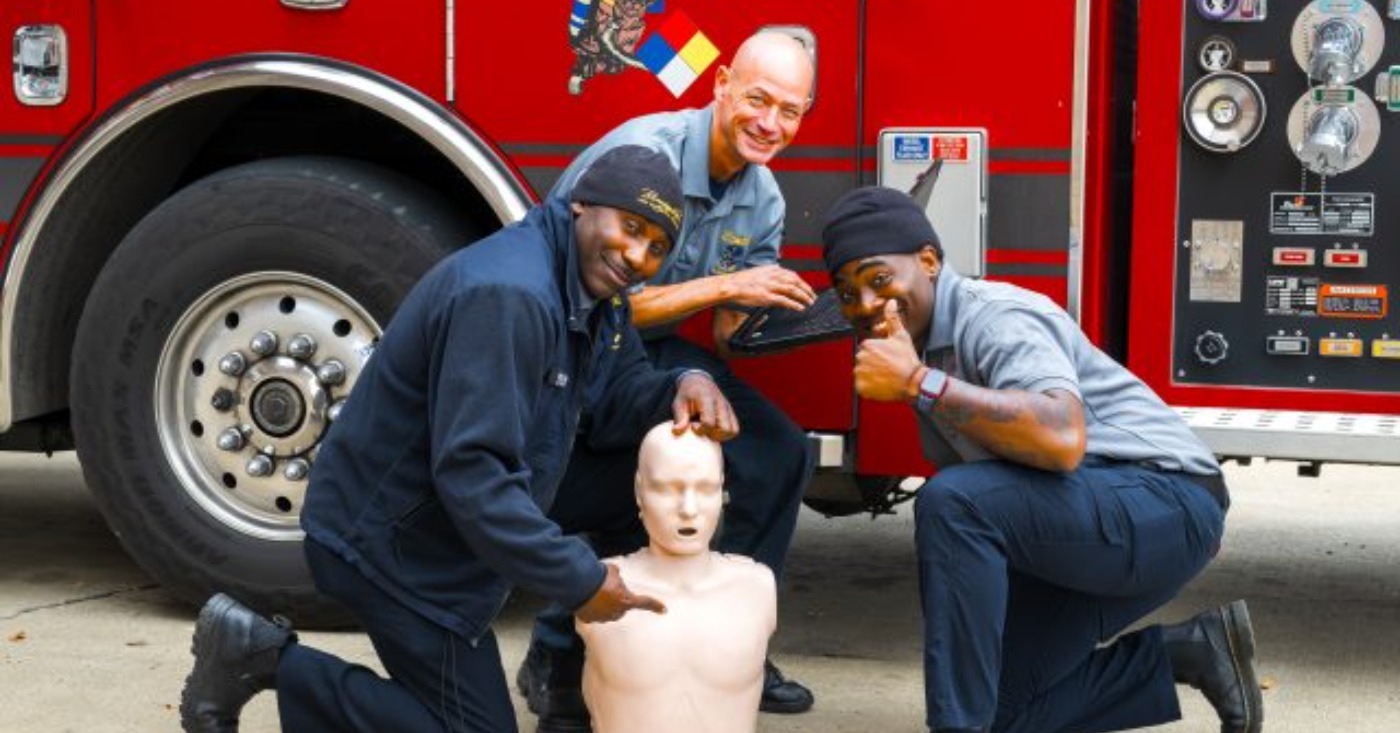
During CPR & AED Awareness Week, organizers plan to host hands-on demonstrations
in public spaces and encourage residents to practice real-world emergency
response.
“We really want to take more of an on-the-street approach,” Baldwin said.
“Literally go out into the community and ask people, ‘What would you do?’”
Coute said those moments matter because cardiac arrest leaves little room for
hesitation.
“When someone is in cardiac arrest, they are pulseless — their heart is not
functioning,” he said. “If they receive CPR before EMS arrives, that can double
or triple the likelihood of survival.”
According to Coute, survival decreases by roughly 10% for every minute treatment is
delayed.
That urgency is something Birmingham Fire Chief Cory Moon knows firsthand.
Moon, who serves on the American Heart Association board and helped assemble the task
force, said his commitment stems from both his career and personal experience.
“I’ve been in the fire service for 25 years, seeing all the cardiac arrests and
watching families go through the trauma,” Moon said. “Then my mom passed away
from sudden cardiac arrest. Those two things together are what drive my
spirit.”
Over his career, Moon said he has administered CPR thousands of times and believes
one of the greatest barriers is fear.
“I know there’s fear with people who don’t know how to do CPR — they think they’ll
do it wrong,” Moon said. “But it’s really an easy skill to learn.”
He was also struck by how few people step in before first responders arrive.
“The bystander CPR rate in Birmingham was around 10%. It’s gone up some to around
16%, but nationally it’s around 48%,” Moon said. “We rely on citizens to help
start that lifesaving care before we as 911 get there.”
Baldwin said misconceptions continue to discourage people from acting.
“One of the biggest things we hear all the time is a fear that they’re going to do
it wrong, that they’re going to cause more harm or that they’re going to be
sued,” she said.
She emphasized that Good Samaritan protections exist for people acting in good faith.
Another misconception, Baldwin said, is that mouth-to-mouth breathing is required.
“The science and the research have shown us that rescue breaths are not necessary
for most adolescents and adults experiencing cardiac arrest,” she said. “What’s
most impactful is good, solid chest compressions.”
The task force’s first-year goals include increasing participation in cardiac
arrest data reporting, creating more CPR training hubs and helping Birmingham
schools implement cardiac emergency response plans.
Moon said access is already available.
Residents can receive free hands-only CPR training through Birmingham Fire and Rescue and
participating community partners.
“We want to make sure at least one person in every household learns how to do
hands-only CPR,” Moon said.
Ultimately, leaders say success depends less on professionals and more on everyday people
deciding to act.
Baldwin’s advice is simple: Don’t wait.
“Press hard and fast in the center of the chest,” she said.
And Moon hopes Birmingham embraces the mission.
“We want to take away that fear,” he said, “and help turn a nation of bystanders
into a nation of lifesavers.”
More information about CPR training and awareness events can be found through the American Heart Association and Heart Alabama on Instagram.
The post Task Force Aims to Turn Birmingham Bystanders into Lifesavers Ahead of CPR & AED Awareness Week appeared first on BlackPressUSA.