
Close Menu
  • Home
  • News
    • Local
  • Opinion
  • Business
  • Health
  • Education
  • Sports
  • Podcast

Subscribe to Updates

Get the latest creative news from FooBar about art, design and business.

What's Hot

OP-ED: I Use to Love Her: An Open Letter to Mayor Karen Bass and the Black Political Class

Trump’s Erasure Campaign Reaches Langston Golf Course

IN MEMORIAM: Carmen de Lavallade, Iconic Dancer and Choreographer, Dies at 94

Facebook X (Twitter) Instagram
  • Lifestyle
  • Podcast
  • Contact Us
Facebook X (Twitter) Instagram Pinterest Vimeo
The Windy City Word
  • Home
  • News
    1. Local
    2. View All

    Uncle Remus Says Similar Restaurant Name Is Diluting Its Brand and Misleading Customers

    Youth curfew vote stalled in Chicago City Council’s public safety committee

    Organizers, CBA Coalition pushback on proposed luxury hotel near Obama Presidential Center

    New petition calls for state oversight and new leadership at Roseland Community Hospital

    Trump’s Erasure Campaign Reaches Langston Golf Course

    Why Tracking Racial Disparities in Special Education Still Matters 

    NFL Week 18: Playoff Scenarios Include two “Win or Go Home”

    NFL Week 17: The Playoff Picture Comes into Sharper Focus

  • Opinion

    Capitalize on Slower Car Dealership Sales in 2025

    The High Cost Of Wealth Worship

    What Every Black Child Needs in the World

    Changing the Game: Westside Mom Shares Bally’s Job Experience with Son

    The Subtle Signs of Emotional Abuse: 10 Common Patterns

  • Business

    Illinois Department of Innovation & Technology supplier diversity office to host procurement webinar for vendors

    Crusader Publisher host Ukrainian Tech Businessmen eyeing Gary investment

    Sims applauds $220,000 in local Back to Business grants

    New Hire360 partnership to support diversity in local trades

    Taking your small business to the next level

  • Health

    Why Tracking Racial Disparities in Special Education Still Matters 

    Dying From a Name: Racism, Resentment, and Politics in Health Care Are Even More Unaffordable

    Rural America Faces the First Cut as ACA Support Hits a High

    A World Pulled Backward: Child Deaths Rise as Global Health Collapses Under Funding Cuts

    Breaking the Silence: Black Veterans Speak Out on PTSD and the Path to Recovery

  • Education

    COMMENTARY: Structural Inequality Undermines Jamaica’s Schools

    Educating the Early Childhood Educators

    School Choice Is a Path Forward for Our Communities

    42nd Annual UNCF Mayor’s Masked Ball To Raise Funds & Awareness For HBCU Students

    It’s Time to Dream Bigger About What School Could Be

  • Sports

    Trump’s Erasure Campaign Reaches Langston Golf Course

    NFL Week 18: Playoff Scenarios Include two “Win or Go Home”

    NFL Week 17: The Playoff Picture Comes into Sharper Focus

    NFL Week 16: The Playoff Picture and Clinching Scenarios

    In Photos: South Carolina State overcomes 21-point deficit to win 3rd HBCU National Championship

  • Podcast
The Windy City Word
Entertainment

COMMENTARY: In 2025 Black Culture Claimed Ownership Not Permission

staffBy staffUpdated:No Comments4 Mins Read
Facebook Twitter Pinterest Telegram LinkedIn Tumblr Email Reddit
Share
Facebook Twitter LinkedIn Pinterest WhatsApp Email

By Stacy M. Brown
NNPA Newswire Senior National Correspondent

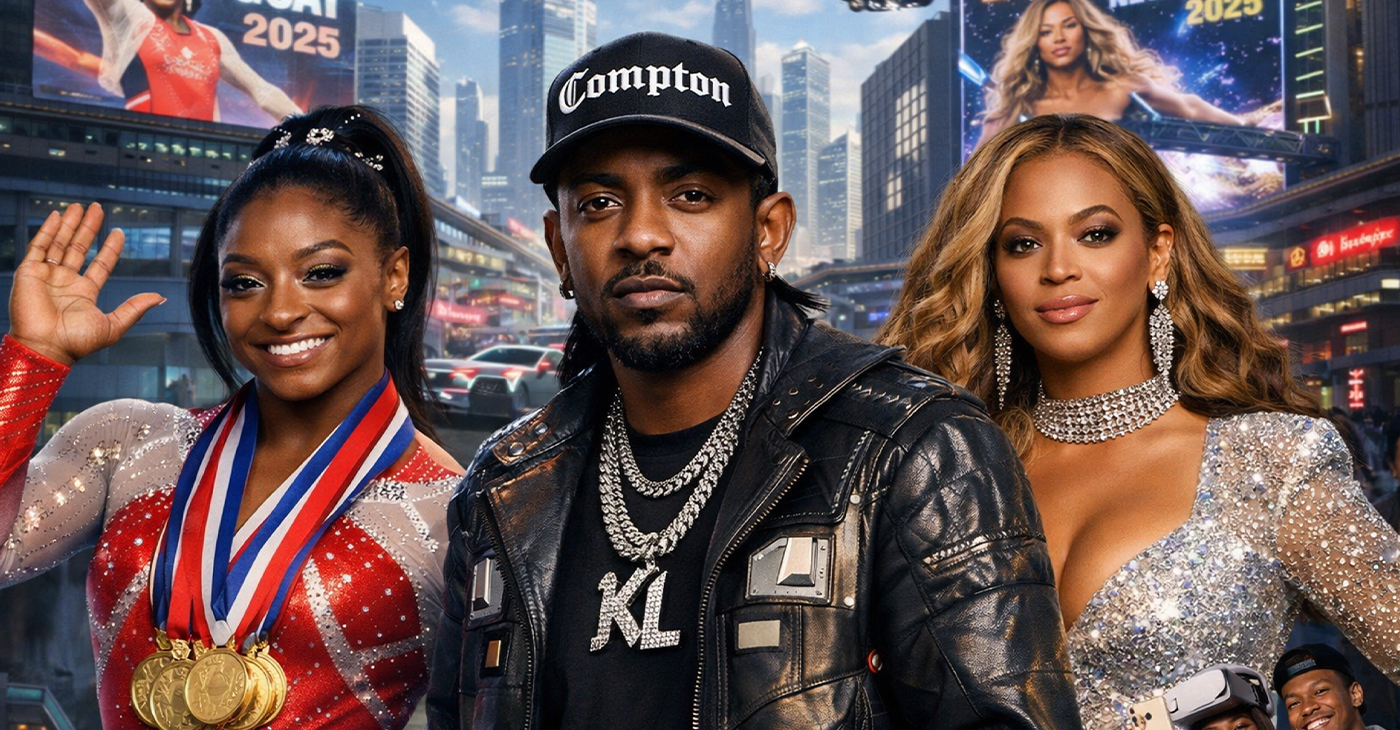
Black pop culture in 2025 did not chase attention. It set terms. Across music, television, film, fashion, and sports, Black creators tightened control over narrative, ownership, and meaning at a moment when the country itself felt unmoored.

Hip hop provided the year’s clearest line of separation. “Not Like Us” by Kendrick Lamar did more than dominate playlists. It reset cultural boundaries. “They not like us” became shorthand for lineage, authorship, and accountability, repeated in crowds, locker rooms, and online spaces as a declaration rather than a slogan. The record carried the weight of history and the sharpness of confrontation, reinforcing hip hop’s original purpose as documentation and refusal.

Kendrick’s presence in 2025 was not constant, but it was decisive. The work rejected false humility and cultural trespassing with lines that landed like verdicts. “I can’t fake humble just ’cause your ass is insecure” circulated as both lyric and posture, mirroring a broader mood across Black creative spaces. Hip hop did not soften itself for comfort. It drew lines.

Southern rap reinforced that authority without explanation. Future continued to shape the emotional architecture of the genre, his influence evident in pacing, tone, and restraint across new releases. The music carried detachment, survival, and repetition as reality rather than affectation. Killer Mike anchored Atlanta’s legacy in organizing and consequence, his words from earlier years still circulating with urgency: “I don’t believe in hope. I believe in action.”

Megan Thee Stallion stood as one of 2025’s clearest examples of ownership without apology. Independent and visible, she rejected respectability politics while controlling her work outright. “I’m really just being myself, and that’s what people connect to” echoed across interviews and social media as both explanation and refusal.

R&B moved with intention rather than excess. SZA remained central to the genre’s emotional vocabulary, her work continuing to soundtrack contradiction, longing, and self-examination. Lyrics about uncertainty and self-worth circulated heavily, reflecting a collective fatigue that did not seek resolution on demand. Summer Walker leaned further into intimacy and boundary-setting, her work resisting polish in favor of truth. R&B in 2025 did not present healing as a finish line. It acknowledged the work was ongoing.

Television reflected a similar confidence. Abbott Elementary continued to thrive by trusting Black specificity rather than flattening it. Its humor landed because it mirrored lived experience, not because it softened it. Lines about underfunded schools, burnout, and joy in the margins resonated widely without translation. Black audiences were not treated as a niche. They were treated as the center.

Film followed that lead. Black directors increasingly controlled projects from development through release, telling stories rooted in history, class, migration, and survival without requiring trauma as an entry fee. Black cinema in 2025 assumed its audience was informed, present, and deserving of complexity.

Fashion delivered one of the year’s most visible cultural statements. The 2025 Met Gala, themed “Superfine: Tailoring Black Style,” centered Black dandyism, craftsmanship, and lineage. Co-chaired by Pharrell Williams, Lewis Hamilton, Colman Domingo, and A$AP Rocky, the night functioned as correction rather than costume. Tailoring, elegance, and experimentation were framed as inheritance, not exception. “Style is about intention,” a phrase long associated with Black designers, moved from subtext to thesis.

Sports culture continued to blur the line between competition and cultural leadership. Angel Reese expanded her influence beyond the court, turning scrutiny into leverage and visibility into ownership. Her posture reflected a generational shift among Black women athletes who refused to shrink. Simone Biles remained one of the most influential figures in global sports, her insistence on self-preservation continuing to resonate. “I don’t owe anyone anything” circulated as both boundary and blueprint.

Across platforms, Black pop culture in 2025 resisted dilution. Virality lost its grip. Ownership replaced access. Community replaced clicks. The work did not ask to be understood. It stood where it was.

And through the year’s noise, pressure, and persistence, one refrain continued to carry weight, memory, and resolve: “We gon’ be alright.”

Share. Facebook Twitter Pinterest LinkedIn Reddit WhatsApp Telegram Email
Previous ArticleIN MEMORIAM: Black America’s Cultural Giants Lost in 2025
Next Article COMMENTARY: Los Angeles Police Are Still Shooting Too Many People
staff

Related Posts

OP-ED: I Use to Love Her: An Open Letter to Mayor Karen Bass and the Black Political Class

IN MEMORIAM: Carmen de Lavallade, Iconic Dancer and Choreographer, Dies at 94

COMMENTARY: Structural Inequality Undermines Jamaica’s Schools

Leave A Reply Cancel Reply

Video of the Week
https://www.youtube.com/watch?v=AxFXtgzTu4U
Advertisement
Video of the Week
https://www.youtube.com/watch?v=OjfvYnUXHuI
ABOUT US


The Windy City Word is a weekly newspaper that projects a positive image of the community it serves. It reflects life on the Greater West Side as seen by the people who live and work here.

OUR PICKS

Headlines and Hot Topics

Sisters in Cinema hosts launch event for new Chicago Media Coalition during Sundance Chicago weekend

SQ5: Highway Cruising & Fuel Efficiency Revealed!

MOST POPULAR

Why Tracking Racial Disparities in Special Education Still Matters 

Dying From a Name: Racism, Resentment, and Politics in Health Care Are Even More Unaffordable

Rural America Faces the First Cut as ACA Support Hits a High

© 2026 The Windy City Word. Site Designed by No Regret Medai.
  • Home
  • Lifestyle
  • Podcast
  • Contact Us

Type above and press Enter to search. Press Esc to cancel.