



Browsing: Local Stories

Three Illinois children have developed suspected cases of severe hepatitis potentially linked to a strain of adenovirus — joining a string of other kids from across the country with the mysterious illness.The children in Illinois were all less than 10 years old, with two in suburban Chicago and one in western Illinois, the state health department said Monday in a news release. One child needed a liver transplant because of the illness.AdvertisementHepatitis is inflammation of the liver, and is often caused by heavy alcohol use, toxins, some medications or the hepatitis A, hepatitis B or hepatitis C viruses.The sickness in the Illinois children, however, may be associated with adenovirus 41, a type of virus that typically includes diarrhea, vomiting, fever and respiratory symptoms, but is not known to cause hepatitis in otherwise healthy children. Adenoviruses spread from person to person.AdvertisementThe Illinois announcement came just days after the Centers for Disease Control and Prevention issued a nationwide alert about the illness. In the alert, which went out Thursday, the CDC said that it was working with the Alabama Department of Public Health to investigate nine cases of hepatitis in children ages 1 to 6, who were all previously healthy. The CDC said it believes adenovirus may have caused those cases, but it was still investigating. The children did not go to hospitals for COVID-19.Europe has also recently reported an increase in cases of pediatric hepatitis without a known cause, and adenovirus has been confirmed in some but not all of those cases, the CDC said. It is working with state health departments, the CDC said, to see if there are more such cases across the country.The CDC is urging parents to be on the lookout for symptoms of hepatitis in their children, which include fever, fatigue, loss of appetite, nausea, vomiting, abdominal pain, dark urine, light-colored stools, joint pain and jaundice, and to contact their doctors with any concerns. It’s also encouraging parents to make sure children are up-to-date on their vaccines and to continue taking precautions such as frequent hand washing, avoiding people who are sick, covering coughs and sneezes, and avoiding touching the eyes, nose or mouth. Vaccines are available to protect against hepatitis A and hepatitis B.The CDC is asking doctors to consider adenovirus testing for children with hepatitis without a known cause.
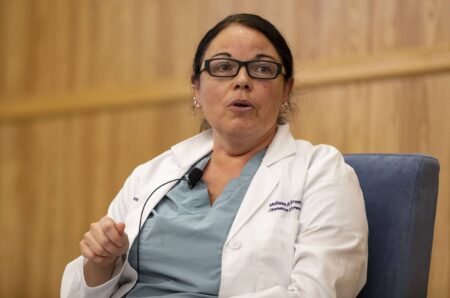
Follow the numbers. We knew that residents in certain ZIP codes lived shorter lives than others in different ZIP codes within the same city. (An NYU School of Medicine 2019 analysis found a 30-year life expectancy gap between those who live in the Streeterville and Englewood neighborhoods.) And that was before the COVID pandemic. As time went on, more stories about safety, violence and systemic racism added to that conversation.The Chicago Department of Public Health reported the life expectancy dropped almost two years from 2019-2020, the first year of the pandemic. Mayor Lori Lightfoot and Dr. Allison Arwady, head of the city’s Department of Public Health, announced an update on life expectancy in Chicago on Monday morning. According to the agency, this is one of the sharpest single-year decreases in life expectancy on record and the steepest declines for Black and Latinx Chicagoans, with COVID-19 driving those numbers. Life expectancy declines were seen in all races and nearly all community areas. Findings include:AdvertisementAs of 2020, the gap in life expectancy between Black and white Chicagoans was 10 years, up from 8.8 years in 2017. For the first time in decades, life expectancy for Black residents of Chicago fell below 70 years (the majority of those communities exist on the South Side);Chicago Latinx residents saw a more than a three-year drop in life expectancy between 2019 and 2020, the steepest decline for any group, and have lost a total of seven years of life expectancy since 2012;Asian/Pacific Islander life expectancy showed a two-year drop from 2019 to 2020, while white Chicagoans’ life expectancy declined by one year;18-to 44-year-old Chicagoans experienced a 45% increase in death rates from 2019, outpacing 65+ Chicagoans (30% increase) despite COVID’s severe impact on the population;Black Chicagoans experienced a higher rate of infant mortality while rates for other groups dropped sharply.“We are looking at the direct and indirect impacts of COVID on Chicago and the news is not good,” Arwady said. “Even before COVID the CDPH had made a decision to focus on life expectancy. … I think it is the strongest indicator of a community’s health as well as opportunities. Even before COVID, there was a major life expectancy gap here in Chicago. In the first year of 2020, not only did we see life expectancy drop for all Chicagoans — all races and ethnicities — but we saw that gap widen for Black Chicagoans on average living about 10 years less than white Chicagoans and life expectancy for Black Chicagoans falling below 70 years for the first time in many years. This is not just about COVID, it’s not just about health care. It’s about opportunities and root causes and in addition to that, we also saw Latinx Chicagoans get hit really hard with COVID, with the biggest drop in life expectancy among Latino Chicagoans within that first year. We see this as sobering data.”COVID-19 was a significant driver of decreases in life expectancy, but so were chronic diseases such as diabetes, cancer and heart disease. Homicide; infant mortality; HIV, flu, and other infections; and opioid overdoses factored into the racial life expectancy gap as well.AdvertisementCDPH’s Healthy Chicago 2025, a five-year action plan, was created to help close the gap. Launched in 2020, CDPH has committed $30 million to establish Healthy Chicago Equity Zones to strengthen community infrastructure and neighborhood networks so people most affected by inequities have the power and resources to promote health and racial equity in their communities and citywide. Other initiatives working in concert with the zoned strategy is “Dr. Taylor’s Table,” a biweekly (every other Thursday at 6 p.m.) live talk Instagram program hosted by Dr. Erica Taylor, on various topics within the Black community regarding health disparities, health care, wellness, mental health and other related issues.The health department will also launch a Community Health Response Corps, an effort to link community members to resources to mitigate social, economic, and health impacts of the pandemic; and equip them with health knowledge. Building on the ChiTracing Corps (the program that hired and trained hundreds of people for COVID contact tracing), the CHRC will create new pathways to employment for those who live in communities that are most affected by health and economic inequities. Arwady said the goal for the program was always hyperlocal decision-making and focus.“The Healthy Chicago Equity Zone model is the city’s attempt to take some of what has been good with COVID — funding community based organizations, working together on things like the unvaccinated — moving that work forward to continue to fund these networks to work on things like chronic disease,” Arwady said. “Even in the year 2020, heart disease was still the number one thing that killed Chicagoans. COVID was number two and it goes on from there.”Other endeavors aimed to reduce the life expectancy gap are:A citywide expansion of trauma-informed centers of care, a network of mental health service providers that provide services regardless of ability to pay, health insurance status or immigration status. The expansion seeks to reduce opioid deaths with a fentanyl test strip program and partnership with Chicago Public Libraries to distribute Narcan to treat opioid overdoses;A citywide expansion of the Family Connects program, which provides free, in-home health supports to new mothers and babies at the three-week postpartum mark. This coupled with the fact Illinois became the first state in the U.S. to extend full Medicaid benefits to new mothers from 60 days to one year postpartum is important, Dr. Melissa Simmons, co-chair of the Health & Policy Committee at Illinois Unidos said. “We know about half of all maternal mortality actually happens in that one year postpartum and that’s really critical because the gap in maternal mortality between Black and white mothers in our country is almost three- to fourfold and the most recent data released by the CDC in February of this year show Latinos maternal mortality rate at an all-time high, and losing a lot of ground. That is scary.”Strengthening violence prevention services, which includes the city’s network of street outreach providers.Dr. Melissa Simmons, of Illinois Unidos, during the discussion, April 25, 2022, at Phalanx Family Services in West Pullman. (Brian Cassella / Chicago Tribune)Lightfoot calls the new data an important level set. She said it’s that hyperlocal attention that is making a difference.“We have to look ourselves and our city in the eye and deal with the devastating impact of what’s transpired from a public health and health care perspective over these last two years,” Lightfoot said. “This is an important and sobering milestone that really measures how far in the journey we are and what we need to do to get to the destination. The answer to a lot of these problems is access to high-quality health care — we have to keep that front and center in our efforts.”drockett@chicagotribune.com
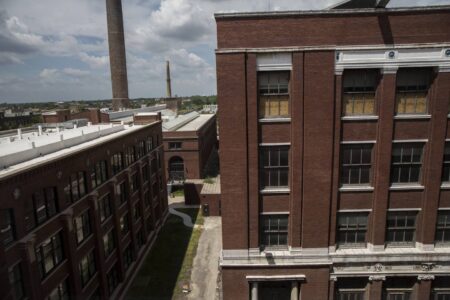
Mayor Lori Lightfoot’s administration is set to launch several development projects in the West Side neighborhood of North Lawndale, but a coalition of local community groups and developers said Monday the area’s economic troubles have deep roots, and though the mayor’s initiative is welcome, it won’t be enough.“We love the mayor’s INVEST South/West program and think it’s great, so we thank the mayor for that,” said Richard Townsell, executive director of the Lawndale Christian Development Corp. “But since the riots in 1968, North Lawndale has been on a downward trend in terms of population, and one thing is not going to solve it.”AdvertisementTownsell’s group, along with partners North Lawndale Community Coordinating Council, North Lawndale Employment Network and Sinai Community Institute, unveiled a report at the City Club of Chicago from the Great Cities Institute at the University of Illinois at Chicago, detailing both the challenges facing the West Side community of nearly 35,000, and how to reverse decades of disinvestment.North Lawndale was once the home of Sears, which ran its national mail order business out of a 55-acre complex that stretched across the neighborhood, a beehive of activity that provided thousands of jobs. Sears headed downtown in the 1970s, and other manufacturing giants such as International Harvester and Western Electric also left. Unemployment soared in the ensuing decades, leading to population decline and a deteriorated housing stock. Smaller local businesses also shut their doors, leaving behind a neighborhood with several thousand vacant lots and little economic activity.AdvertisementThe historic Sears, Roebuck & Co. Printing Building in Homan Square, North Lawndale has been transformed into 181 affordable housing units by nonprofit developer Mercy Housing Lakefront, June 14, 2017. (Zbigniew Bzdak / Chicago Tribune)“My mother escaped sharecropping by moving up from Tennessee in the ’50s to North Lawndale, where she went to work,” Townsell said. “But when you take a business, you lose not only that business, but also the businesses that fed off it, the coffee shops, diners and car washes.”North Lawndale now sits in the middle of a food desert, a region with no sizable grocery stores, forcing residents to spend their money outside the community, according to Teresa Córdova, director of the Great Cities Institute. That’s not just a matter of convenience. Unless those dollars stay in North Lawndale, commercial spaces will stay empty, cutting out an important source of jobs.“The most basic rule of economic development is you have to have dollars circulating in your community,” she said. “North Lawndale residents have to leave the neighborhood for almost everything because almost every category of goods and services is not available.”North Lawndale residents spend $124 million of their wages outside the community each year, researchers found. Furthermore, businesses did add about 3,000 jobs to the neighborhood between 2010 and 2018, but most went to nonresidents. That’s partly because more than 20% of the jobs require a college degree, a credential held by just 12.7% of North Lawndale residents. Overall, white workers hold more than half of neighborhood jobs, while making up only 2.3% of North Lawndale residents. The mismatches help explain why nearly half of local households are forced to pay 50% or more of their incomes toward rent, leaving little or nothing for savings.“What is needed right now is to plug the leaks,” Córdova said.LCDC and its community partners planned for years to bring in affordable housing, new retail and other economic development, Townsell said, but having such a detailed analysis will help set priorities and ensure future development benefits residents.The Soul Food Lounge is on the ground floor of the Dr. King Legacy Apartments in Chicago, April 25, 2022. (Jose M. Osorio / Chicago Tribune)“We knew money was leaking out of the community, but we didn’t know quite how much,” Townsell said. “And it was sobering to see in the richest country in the world how much people were spending of their hard-earned incomes just to find housing.”Lightfoot kicked off her INVEST South/West initiative in 2019, targeting 10 communities on the South and West sides. According to the mayor’s office, in the first two years it mobilized more than $1 billion of private and public funds for a series of mixed-use developments, including Lawndale Redefined, a $31.4 million project in North Lawndale. A joint venture of GRE Ventures, Imagine Group and 548 Development, it will replace a vacant plot on Ogden Avenue with dozens of apartments and town homes, retail and restaurant spaces, as well as a community center. In addition, earlier this year, the city selected 548 Development and Related Midwest to develop at 4300 West Roosevelt Road the $38.4 million Lawndale Innovation Center, a collection of solar-powered industrial buildings and community centers. The vacant 20.8-acre site was once an illegal dumping ground made infamous in the 1990s by the federal Operation Silver Shovel investigation, which led to the convictions of several aldermen.AdvertisementTownsell said the community would also like to see the city appoint an ombudsman for North Lawndale, someone who could cut through any red tape that might delay new development projects. The Great Cities report also shows the neighborhood needs a construction loan program for new, affordable single-family homes, and a flexible emergency fund to help those seeking employment pay for child care or work supplies.“Even though the unemployment rate in North Lawndale is three times higher than the city of Chicago, that’s not a reflection of people’s desire to work,” said Brenda Palms Barber, president and CEO of North Lawndale Employment Network.Above all, to improve the quality of life, the neighborhood needs grocery stores, Townsell said.“We found out during the pandemic how important health was, and we need people to have access to healthy, affordable options for produce.”brogal@chicagotribune.com
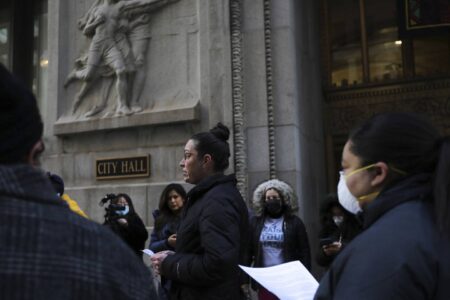
Officials with the Chicago Teachers Union argued Monday that the halting of the universal masking requirement at Chicago Public Schools last month violated their COVID-19 safety agreement by rescinding a key tenet of the plan without reopening collective bargaining.The hearing before Nick Gutierrez, administrative law judge with the Illinois Educational Labor Relations Board, was prompted by the union’s filing of an unfair labor practice charge shortly after CPS announced masks would be optional for staff, students and visitors to schools beginning March 14.Advertisement“They repudiated a key term of the safety agreement and had no legal right to do so,” said Robert Bloch, an attorney for CTU.When the safety agreement was forged with CPS in January, following a volatile battle that led to five days of canceled classes during the omicron surge, masks were still required to be worn indoors in Illinois under the executive order of Gov. J.B. Pritzker, and following the guidance of the Centers for Disease Control and Prevention.AdvertisementBut Bloch said despite universal masking being enforced in Illinois, the union still ensured the universal masking requirement was part of its safety agreement with CPS, as they were well aware “public health guidance could change with political pressure.”Leigh Mabry White, center, a Chicago Public Schools mother and member of Activate Chicago Parents, joins other parents and supporters at a news conference supporting masks in schools outside of City Hall on Feb. 28, 2022. (Jose M. Osorio / Chicago Tribune)CPS continued universal masking after many Illinois school districts dropped their requirements in response to a Feb. 4 restraining order by Sangamon County Circuit Judge Raylene Grischow in a lawsuit challenging Pritzker’s statewide mask mandate and other COVID-19 safety protocols for schools.Parents who had filed the suit sought to hold CPS CEO Pedro Martinez in contempt of court for continuing to require masks after Grischow found the state’s mask rules invalid, but the judge declined to weigh in on the request, saying “the policy of (CPS) is not before the court.”Pritzker had appealed Grischow’s restraining order, but the appellate court dismissed the appeal. The court found that because rules from the Illinois Department of Public Health requiring masking and other COVID-19 protocols had been allowed to expire, the appeal was moot.The governor then appealed to the Illinois Supreme Court, which declined to hear the case but vacated the restraining order. Pritzker announced the same day he was lifting the state’s universal masking requirement for schools, and CPS followed about a week later, announcing March 7 it was moving to a mask optional but recommended policy.Kaitlyn Girard, chief labor negotiator for CPS, said at Monday’s hearing that she and CTU President Jesse Sharkey engaged in “off the record” discussions in late February about dropping the universal mask requirement in the safety agreement, and both parties agreed “we didn’t want us being out on an island” as the only district requiring masks.Advertisement“The CTU would need to get its house of delegates to agree, and (CPS) needed to get our stakeholders on board,” Girard said.“We were facing litigation, deadlines and pleadings with the judge,” Girard said. “We were losing our ability to make these decisions if it went too far.”Yet Sharkey said he was dismayed the union was not given the opportunity to negotiate prior to the district moving to mask optional, especially given the CPS school board had shown strong support for universal masking since schools had reopened classrooms for in-person instruction last spring.“We always believed we’d be part of the agreement,” Sharkey said. “Our view is, we have a written agreement that CPS needs to abide by.”Dr. Jennifer Seo, chief medical officer at Chicago Department of Public Health, said while universal masking in schools can reduce infection and outbreaks, the lifting of the virus mitigation strategy at CPS does not appear to have had a negative impact on the community.Advertisement“More days than not, we are seeing zero deaths in the city, and hospitalizations have stayed stable,” Seo said, adding: “In terms of universal masking, we do not recommend it at this time because we remain at low COVID-19 levels.”According to the complaint, CTU is asking the labor relations board to require that CPS engage in “good faith bargaining prior to implementing unilateral changes in the terms and conditions of employment which affect the health and safety of the employees represented by the union.”CTU also accused CPS in the complaint of not adhering to the safety deal by allegedly withholding information such as the number of KN95 masks distributed to schools; school-level data on COVID-19 tests conducted through the district’s free weekly program; and confirmation of the creation of school-based contact-tracing teams.A decision on CTU’s complaint is not expected for at least 60 days.kcullotta@chicagotribune.comTwitter @kcullotta
CHIPPEWA FALLS, Wis. — A 10-year-old girl who went missing after going to visit an aunt was found dead Monday along a creek trail in downtown Chippewa Falls, police said.Iliana Peters’ death was being pursued as a homicide, Chief Matthew Kelm said.AdvertisementPolice began searching for the girl, who went by the name Lily, after her father reported Sunday evening that she hadn’t returned home from a visit to her aunt’s house.Police said a bicycle believed to be hers was found late Sunday night in the woods a short distance from her aunt’s residence near the Duncan Creek walking trail. Her body was found about 9:15 a.m. Monday.
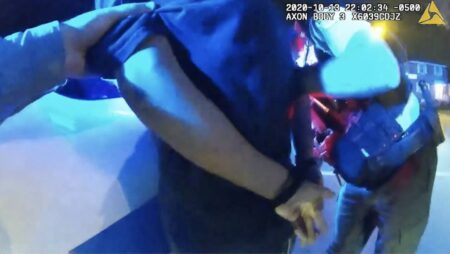
A man who sued Chicago police after an off-duty officer shot at him in the Garfield Ridge neighborhood is a step closer to a $200,000 settlement from the city.The City Council Finance Committee approved the deal Monday for Esael Morales, who in addition to being shot at by an off-duty officer in October 2020 also was handcuffed and taken into custody by other responding police officers following the incident. Morales later was released without being charged.AdvertisementThe officer who shot at Morales, Joseph Cabrera, was subsequently charged with attempted murder, aggravated discharge of a firearm, false reports and obstructing justice for the incident, which allegedly involved him drunkenly exchanging words with Morales.The criminal case against Cabrera is still pending, city lawyer Victoria Benson told aldermen. He resigned from the Police Department in May 2021, Benson said.AdvertisementMorales and his girlfriend were sitting in a parked car near 52nd Street and Monitor Avenue in Garfield Ridge when Cabrera approached the car around 9:35 p.m., Benson said. Cabrera asked them if they needed assistance and then told them to leave.Morales drove around the block and parked near the same spot, Benson said, and Cabrera again approached Morales’ car. When Morales got out of his car, he said Cabrera put him in a chokehold and Morales pushed him away, she said at Monday’s meeting.“Cabrera then took out a gun, pointed it at (Morales) and fired,” Benson said. “The shot missed the plaintiff, who then ran with his girlfriend into her house, which was just down the block.”Cabrera called 911 and reported he was an off-duty police officer who had fired his gun. On-duty officers arrived, and Morales, who did not know Cabrera was a police officer, told them Cabrera had shot at him, Benson said.Body camera footage shows Chicago police officers detain Esael Morales. (COPA / HANDOUT)Police body camera video from the responding officers released to the public in January 2021 shows them at the scene, where Cabrera and Morales could be seen down the street from one another.One officer approached Cabrera, who had his hands up and a handgun in his waistband. He immediately identified himself as a police officer, showed the other officers an ID and handed over the gun, the video footage shows.Sign up for The Spin to get the top stories in politics delivered to your inbox weekday afternoons.“Nobody shot at me. He started attacking me. I … fired a round,” Cabrera can be heard telling officers. “I don’t know … I’m pretty upset right now,” Cabrera told them, according to the footage.AdvertisementOn the video, Cabrera can be heard telling officers that Morales and his girlfriend went through a stop sign, and that he confronted them about it and asked if they needed help.Meanwhile, Morales can be seen down the street in the video.“Hey, hey, stay right there!” a responding officer yelled to him. “Stop. Stop. Stop. Stop. Stop! OK, when I say stop, stop.”“I didn’t do anything officer, he shot at me!” Morales can be heard answering, adding that he was scared. The first officer and others then restrained Morales. “Why are you putting me in handcuffs? He shot at me!” he shouted.“Almost immediately after plaintiff voluntarily began speaking with the officers, he was placed in handcuffs,” Benson said Monday. Cabrera meanwhile told responding officers he shot at Morales after Morales attacked him.Morales was taken into custody, and released more than seven hours later without being charged, according to Benson.AdvertisementThree months later, the Cook County state’s attorney’s office filed charges against Cabrera. Prosecutors said Cabrera was intoxicated during the incident after he submitted to a blood-alcohol test nearly four hours later and tested at 0.104%, slightly over the state’s legal driving limit for alcohol of 0.08,The full City Council will consider the settlement for Morales on Wednesday.jebyrne@chicagotribune.comTwitter @_johnbyrne
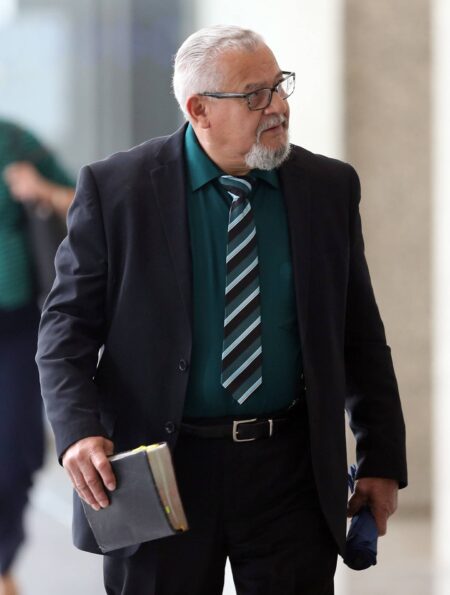
Two years after launching a review of convictions connected to discredited former Chicago police Detective Reynaldo Guevara, Cook County prosecutors on Monday agreed to dismiss charges in one Guevara-related case.The decision came as a reversal for prosecutors, who earlier this month filed paperwork saying they did not believe Daniel Rodriguez could prove his claims that he was framed for a 1991 murder.AdvertisementRodriguez and his attorneys accused Guevara of beating him into confessing to the shooting; in addition, they contend that the mother of a key prosecution witness was in a sexual relationship with Guevara. That witness, Jason Rivera, was under further pressure to lie since he was an uncharged co-conspirator in a different homicide, attorneys alleged.Former Chicago police Detective Reynaldo Guevara leaves the Dirksen U.S. Courthouse in Chicago on June 8, 2018. (Terrence Antonio James / Chicago Tribune)Dozens of people have accused Guevara, now retired, of manipulating witnesses, fabricating evidence and framing suspects over the course of his career. He has repeatedly asserted his Fifth Amendment right to remain silent when questioned about the alleged wrongdoing.AdvertisementRodriguez’s supporters broke out into applause Monday as Judge Sophia Atcherson formally threw out the conviction and Assistant State’s Attorney Carol Rogala dropped the charges. Rodriguez walked out of the courtroom wiping away tears from under his face mask.“I’m super happy,” he told reporters after the hearing. “I’m still in a daze, I still can’t believe it. After 31 years, it’s long overdue.”Prosecutors did not explain in court the reason for changing their position in the Rodriguez case. A spokesperson for Cook County State’s Attorney Kim Foxx’s office did not immediately respond to a request for comment.Rodriguez was sentenced in 1993 to 25 years in prison; he was released after serving 13. It was a “long journey” for his family, he said, including his wife and two now-adult daughters.“They grew up in a visiting room. Birthday parties and everything was in the visiting room. So … it’s a big win for me but it’s bigger for them,” he said. “You know, our family is celebrating today but there’s another family that got hurt today. There was a victim in this case that didn’t have justice. His family was told that they had justice, but they didn’t, so now they live with that pain again.”Rodriguez and his attorneys contended that the mother of Jason Rivera, a key prosecution witness, was in a sexual relationship with Guevara. The woman has since died of COVID-19, court filings show. Before the case was dismissed, Rodriguez’s attorneys had requested Guevara be ordered to appear at a hearing by video to be questioned about the relationship.Rodriguez’s attorneys also argued that Rivera was under pressure since he was an uncharged co-conspirator in a separate murder case, and that prosecutors paid Rivera relocation money before and after his testimony, unbeknownst to Rodriguez. Prosecutors disputed the allegations in an April 1 court filing.Rodriguez has claimed for decades that Guevara and his partner coerced him into confessing, an early allegation that his attorney Anand Swaminathan likened to the proverbial “canary in the coal mine.”Advertisement“For 31 years, this man has been saying ‘I’m innocent’ … and nobody listened,” Swaminathan told reporters. “He finally got that moment today.”Foxx has often said that throwing out wrongful convictions is key to earning back the trust of communities whose residents have traditionally been reluctant to cooperate with law enforcement. The office in 2020 promised a comprehensive review of Guevara-related cases. The office conducted a similar review of cases connected to convicted ex-Sgt. Ronald Watts that has resulted in a long series of mass exonerations. But after two years, Guevara-related cases have seen no similar cascade of dismissals.mcrepeau@chicagotribune.com
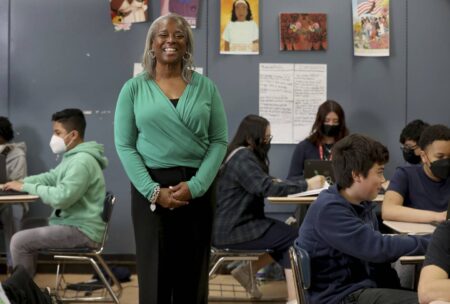
Whitney M. Young Magnet High School Principal Joyce Kenner envisions her successor as someone who commits to leading the selective enrollment school for several years, attends most student activities and maintains an open-door policy.This person should not have dollar signs in their eyes, she said.Advertisement“If you’re applying for this position for money, you need to forget it. And it’s the honest-to-God truth,” Kenner, 65, told the Tribune. “I didn’t even know how much money I made until a couple years ago. That sounds horrible, but I didn’t. I didn’t care. I mean, I knew I would make enough money to do what I need to do, but it’s not about the money.”Kenner, who makes about $175,000 per year, announced last week she is retiring after about 27 years as head of Chicago’s first public magnet high school. Kenner and five other CPS principals who have the same salary are paid the most out of all principals in the district, according to CPS data from March. The job could be the most sought-after position in Chicago Public Schools this summer as the Near West Side school is considered one of the top high schools in the country.AdvertisementWhitney M. Young Magnet High School Principal Joyce Kenner, seen April 25, 2022, has been principal for 27 years and will be retiring once her successor is named. (Antonio Perez / Chicago Tribune)Whomever is selected as Whitney Young’s fourth principal has big shoes to fill, as Kenner’s fans say she leaves behind a legacy of stressing academic excellence, prioritizing students and serving as the school’s No. 1 cheerleader on nearly every sideline.“Whitney Young, how successful it’s been, from attracting the faculty and staff that we have, the performance of the school, our test scores, where these kids end up getting accepted into colleges, she’s the driving force behind a lot of that,” Whitney Young Local School Council chairperson Brad Vesprini said of Kenner. “So it’s kind of hard to think of it without her, because she’s been such an ingrained part of the institution for so long.”The task of choosing Whitney Young’s new leader falls to the LSC, which is empowered to form a principal selection committee that can be composed of LSC members and people not on the council. Kenner’s retirement news coincided with the election last week of a new LSC to be seated in July, though the current and incoming councils are nearly identical.Vesprini said the timeline for the process is still being worked out. It’s an involved undertaking that includes drafting and posting an advertisement for the position; reviewing resumes; interviewing candidates; checking references; holding a candidate forum; selecting finalists and voting to award the contract.Whitney Young has not gone through this process since summer 1995, when Bill Clinton was serving his first term as president and Michael Jordan was filming the original “Space Jam.” Kenner had been a Whitney Young assistant principal for five years at the time. She took the top job when then-Principal Powhatan Collins accepted a regional CPS role.The late Collins and the founding Whitney Young principal, the late Bernarr Dawson, were both selected before the election of the first LSCs in 1989. Like Dawson and Collins, Kenner worked elsewhere in CPS before coming to Whitney Young, and like them, Kenner is Black. Kenner said the next principal should be Black as well.“I’m not saying (this person) has to be Black, but I just think an African-American person is more able right now to deal with the social issues that are impacting our schools and our country and our city,” Kenner said.According to CPS, at its 500-plus district-run schools, 44% of the principals are Black; 32% are white; about 19% are Hispanic; and 1% are Asian.AdvertisementWhitney Young’s commitment to ethnic and cultural diversity dates back to its 1975 opening in the Near West Side community. It was among the first CPS schools to employ racial quotas. The student population was initially supposed to be 40% Black, 40% white, 10% Latino, 5% “other” races and 5% the discretion of the principal. The Tribune reported at the time that Whitney Young was trying to set the standard for quality, integrated education.CPS abandoned the use of racial quotas for admissions to magnet and selective enrollment schools more than a decade ago. This year, of Whitney Young’s 2,100 students, 28% are Hispanic, 25% are white, 22.5% are Asian and nearly 18% are Black.“These are my babies,” Kenner said. “And I’ll tell them you got a Black mother. I got white kids and Black kids and Asian kids and Latinx kids, and I’m their mother. I just happen to be African-American.”Kenner is a native of Dayton, Ohio, and a triplet (each triplet has a name that begins with J). She was a cheerleader at Ohio University and taught health and physical education at schools in her home town. After working for the Rev. Jesse Jackson’s Operation PUSH in Chicago, Kenner joined CPS in 1984 as a job placement coordinator at King High School on the South Side.She became an assistant principal at Whitney Young in 1990, CPS records show. In discussing her legacy, Kenner points to standout performances by the academic decathlon, basketball, chess, debate, lacrosse, baseball, volleyball and tennis teams.“Whitney Young has always been an academic, top powerhouse, but I wanted to make sure that we are a powerhouse in everything. I’m very competitive. I like to win. I tell the kids, ‘Look, (even) if we don’t win, we’re going to look good.’ So if you look across the board, even my robotics team looks great. They’ve got T-shirts and jackets,” Kenner said.Advertisement“I wanted to be able to take the academics plus extracurricular activities to equal success and build a whole child. That has always been my philosophy and my goal, and I think that we have been able to do that,” she said.Whitney Young High School Principal Joyce Kenner walks through a classroom on April 25, 2022. (Antonio Perez / Chicago Tribune)Senior Tova Kaplan, the president of the class of 2022, recalled being drawn to Kenner’s passion and enthusiasm for Whitney Young and its students when she attended an open house for the school as an elementary student.”One thing I think I really learned with her is that people who are willing to advocate for themselves, that’s kind of how you got stuff done,” said Kaplan, who joined Whitney Young six years ago in the Academic Center for seventh and eighth graders. “You would have to just go down to the office. You’d have to be very proactive about talking to her and the administration.”Arlyne Chin, president of the Friends of Whitney Young fundraising organization, said she hopes Kenner’s successor follows in her footsteps by emphasizing academic excellence and respect for others.“These are the things that I think are what makes her a strong principal, also someone who’s willing to make a strong stance and if it’s not the right stance … being able to take a step back and say, either, ‘Hey, I made a mistake,’ or ‘I didn’t understand that,’ or ‘I want to understand that’ and come to the table,” said Chin, a parent of two Whitney Young students.“There have been many times where there has been maybe conflict in school, or there are policies that are being challenged, and she always welcomes that dialogue with students,” Chin said.AdvertisementKenner has weathered her share of controversies over the years. She made headlines a decade ago amid investigations into the admissions practices at prestigious Chicago public high schools. The district revealed it kept a clout list of requests from well-connected individuals trying to get children into elite schools, including Whitney Young.More recently, the school’s former swim coach was accused of renting out the Whitney Young pool and pocketing about $30,000 in proceeds over three years. The CPS Inspector General’s office determined Kenner “either knew or should have known about the coach’s informal school rental agreements with outside groups.” The Board of Education gave her a five-day, unpaid suspension.“At the end of the day, I have tried to do the very best job that I can do as one person. And, you know, I have 300 emails a day. And some of it’s junk, but I respond to every single email. It’s just a lot on my plate. And so, should I have known about the swim coach? OK, I get that. But I trusted him to do the right thing,” Kenner said Friday.Whitney Young Principal Joyce Kenner outside the school on April 25, 2022. (Antonio Perez / Chicago Tribune)She continued: “I trust the people to do the right thing, and I don’t feel like I have to follow up behind everybody. And if I do, then you don’t need to be at Whitney Young, because I don’t have the time to babysit anybody. My focus is getting our kids into the colleges of their choices. We have adults in the building, and I expect them to do adult things.”In 2020, during the nationwide reckoning following the murder of George Floyd, Kenner found herself the target of an online petition calling for her resignation based on claims that she “silenced student activists speaking against all forms of injustice.”Kenner said she made the decision to retire about three or four years ago — then the COVID-19 pandemic hit. She said she couldn’t leave then, though she called these past three years her “toughest” at the helm of Whitney Young. She said the school was prepared for the switch to remote learning in terms of technology, but not from an emotional standpoint.Advertisement“The prom, the graduation, the mental health issues, teachers crying because it just was overwhelming, students crying because they’re in front of a laptop all day long,” Kenner said. “I’m crying because my eyes are hurting. I need to go to the doctor because I can’t see anymore, or my vision is getting worse because I’m on the computer all day long. I would definitely not have ever left (earlier in) the pandemic.”Kenner has not set a departure date. She said she will stay on until a new principal is selected and will help with the transition. She hopes the process is wrapped up by July 1. Sept. 1 would be her “worst-case scenario.” In retirement, she plans to devote herself to her 3-year-old granddaughter and her grandson on the way.But before Kenner says goodbye to the top job, she has plenty of extracurriculars to attend — a tradition she hopes the next principal continues.“I want somebody like me to physically be able to go to not all, but most of the student activities. And I’m tired at the end of every single day because I make myself available to the kids all the time,” Kenner said, noting that she recently spent spring break “in that hot sun” in Florida cheering for the girls softball team. “Honestly, those girls will never forget that their principal came to Florida to see them play.”tswartz@tribpub.com
Weekend temperatures were warm enough in the Chicago area that some people may finally have taken their plants outside for the spring and summer seasons.But forecasters say it’s time to cover or take them back inside as the National Weather Service has issued a freeze warning for late Monday into Tuesday morning. After midnight, the temperature could fall below freezing, particularly in the north, northwest and western suburbs, according to meteorologists.Advertisement“Low temperatures (Monday night) across northern Illinois away from the city of Chicago will drop to near or below freezing, posing a danger to sensitive plants and vegetation. Sensitive plants should be covered or brought indoors to protect them from the freezing temperatures,” according to the weather service.Cloudy, cool, and breezy today. Expect below normal temps to continue the next few days with near to below freezing temps tonight and tomorrow night in some areas. Much of the work week will be dry other than a few showers possible Thursday PM. #ILwx #INwx pic.twitter.com/2MqlfMa4Ac— NWS Chicago (@NWSChicago) April 25, 2022
DeKalb and Dixon could drop to as low as 29 degrees overnight, while Waukegan and Elgin could see temps of 31 and 30 degrees, respectively.AdvertisementForecasters also warn that temperatures will remain below normal for most of the week. Some light showers could fall in northern Illinois Thursday and Friday, meteorologists said.For more on the forecast visit the Tribune’s weather page. Check back for updates.
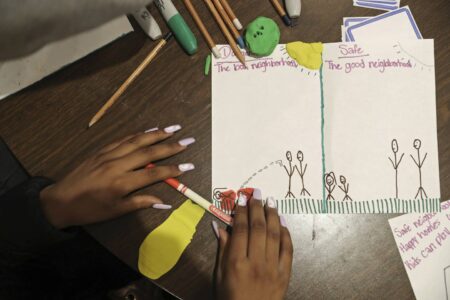
Echaka Agba and Adhana Reid read the parts of Joy and Eva, a mother-daughter duo in the play “Southside Summer,” describing at his funeral how the character Eva’s younger brother Emmanuel was killed.“Emmanuel loved running around the house, staring out at the world before him,” Agba said to a crowd of about 50 people at the Goodman Theatre on Wednesday night. “Every day during the summer, he’d watch the other kids play, occasionally asking me if he could go outside. Though he knew I would say, ‘No. It’s not safe. Maybe tomorrow.’”AdvertisementThe play goes on to describe Emmanuel and his sister playing outside on a fateful day when gunshots did ring out in the neighborhood and kids start running, ducking behind cars. In the play, Eva tells Emmanuel to run home. He listens to his sister, and is approached by a police officer who fatally shoots him.The play, read by professional actors, was written by Englewood resident McKennzie Boyd, 16. It’s one of eight plays chosen by the #Enough: Plays to End Gun Violence project, which aims to spark conversation about gun violence through the voices of youths across the country. It’s intended to be a way to provide a glimpse into the worlds of the young writers.AdvertisementYouths from grades 6 to 12 submit a 10-minute play for consideration. The selected playwrights then go through edits and readings with professional playwrights and actors, fine-tuning their work as they prepare it for staged readings across the country.On Wednesday, actors at the Goodman Theatre performed a reading of the plays, including Boyd’s “Southside Summer” and Buffalo Grove resident Wyn Alyse Thomas’ “Write Their Wrongs.” The project also had a flagship reading Wednesday night at the Lincoln Center in New York, and several other theaters hosted readings across the country simultaneously.The project has three goals, or as Michael Cotey, producer of the project, calls it, three acts. Act 1 is writing the plays, giving young people space on the stage to find their voice and talk about violence issues. Act 2 is the readings, where partnerships are created with theaters and theater groups nationally. Act 3 is seeing how the plays will influence people who attended the readings.“If this project could do its job completely, it wouldn’t exist. We wouldn’t have to provide this outlet,” Cotey said. “Sadly, I don’t think that day is going to come anytime soon, but in the meantime what we can do is that we can tell meaningful stories. Get people in communities across the country to gather and talk about them. And encourage people to take that into their daily life and do good in their communities.”Cotey hopes the plays and programs “move the needle in some way” to raise awareness about gun violence and to help prevent it.“It’s not normal but it has been woven into the fabric of what it means to grow up as a kid in this country,” Cotey said.Boyd’s play was in part inspired by her recent move to Englewood, where initially she used to stare out her window at the other kids playing outside.She didn’t lose her brother to a police killing, but she was at one point afraid to join the kids in her neighborhood outside. Her parents were also scared to let her venture out. And she has mourned the loss of people in her neighborhood who have been victims of gun violence.AdvertisementWhen Boyd first moved from Calumet City to Englewood with her family three years ago, she avoided telling people where she lived because the neighborhood carried a negative connotation, she said. Everything she’d seen on the news and heard from people who talked about Englewood made her feel unsafe and ashamed, she said.But in the last year, she’s learned to love her new neighborhood, making friends and appreciating everything the media didn’t show her about Englewood, she said.“In the beginning it was about defying what society wanted me to believe,” she said as she learned to open up to her new home. “And then it evolved to something of: They can’t tell me that I can’t love this. This is my neighborhood. It came to be not just a house but a home.”As she learned to love her new neighborhood, both from her own experiences and from talking to longtime residents about their experiences there, Boyd wrote the poem titled “Southside Summer.”“It really showed me how much you don’t really know until you’re in the moment. When you have nothing to do but to face the demon head-on and call its bluff,” Boyd said. “I want people to see the beauty of my home, even with all its nooks and crannies and the cracks that people would call problems. And they don’t have to love it. I just want them to see truly what I love.She decided to turn the poem into a play and submit it to #Enough. The reading at the Goodman Theatre was one of 66 readings in 31 cities nationwide.AdvertisementCotey, artistic producer of #Enough: Plays on Gun Violence, was in rehearsal at the Goodman Theatre on Feb. 14, 2018, when news broke that 17 people were killed in a mass shooting at Marjory Stoneman Douglas High School in Parkland, Florida. He and his colleagues at the theater sat with the news, discussed it for a few minutes, then got back to rehearsal, Cotey said.He remembers thinking: “What are we doing rehearsing a play when this thing keeps happening and it can happen in the middle of a rehearsal and we just sort of get back to normal life?”He thought the theater should be responding to mass shootings and gun violence in some way. Cotey saw the youth movements that stemmed from the Parkland shooting, young people organizing March for Our Lives protests.Myshayla Echols, 13, creates a drawing about how she sees a dangerous neighborhood in contrast to a safe neighborhood during a community discussion prior to a stage reading performance about gun violence at the Goodman Theatre. (John J. Kim / Chicago Tribune)Seeing those movements, it became clear to him that “what we need to do is make space for our young people to occupy our stages and tell us the stories that they want to tell,” he said.It would take another two mass shootings in 2019 — one on Aug. 3 at a Walmart in El Paso, Texas, where 23 people were killed, and another a day later at a bar in Dayton, Ohio, where a gunman killed nine people including his sister — for Cotey to realize he had to move forward with launching the project.In 2020, seven plays were selected out of more than 170 submissions, Cotey said. This year, the two Chicagoland playwrights — Boyd and Thomas — were among more than 150 youths who submitted a play in the fall of 2021.AdvertisementSince launching the project, Cotey has learned a lot from the young playwrights, he said.“The more I’ve been working on this project, the more I’ve learned about how this issue impacts people in different communities in different ways,” Cotey said.The project has also affected communities by creating partnerships between theaters in those areas and organizations working to reduce or prevent gun violence.In Chicago, for example, the Goodman Theatre on Wednesday hosted members of Something Good in Englewood, a nonprofit group, to discuss how people in Englewood are affected by gun violence and what solutions could help.Before the play readings, kids in sixth to eighth grade presented poems, an acrostic and a description of artwork related to gun violence in front of about 20 people.The group also created artwork answering the question: How would your community look or feel without gun violence? Using colored pencils and clay, participants from elementary school to seniors drew kids playing on a playground, groups of people together, green grass, flowers and gardens growing.AdvertisementEach of the eight plays took a different approach to examining gun violence. “It’s Okay”, written by Anya Jimenez of Brooklyn, New York, shows a grieving mother in a dream, speaking to an unknown voice, slowly realizing her 10-year-old child was killed in a shooting at her elementary school.In “In My Sights,” written by Tain Leonard-Peck of West Tisbury, Massachusetts, the gun is the main character as it moves from its maker’s home to its new owners to the hands of a person who stole it. Once it’s used to hurt a couple, the gun starts to question whether it’s meant for protection or to cause pain.Attendees applaud during a stage reading in the #Enough: Plays to End Gun Violence project at the Goodman Theatre in Chicago on April 20, 2022. (John J. Kim / Chicago Tribune)“Salted Lemonade,” by Taylor Lafayette of Benoit, Mississippi, tells the story of an 18-year-old boy who convinces his mother to go out with friends after Thanksgiving dinner. Still mourning her late husband’s fatal shooting, Lisa, the mother, feels the only way to know her son is safe is by keeping him home.But after her son leaves to meet with friends, a gunman shows up at Lisa’s door, threatening her and her sister. The play ends with Lisa begging the gunman for mercy, a cliffhanger as the audience never finds out whether he pulled the trigger.That play stood out to Matthew Martinez Hannon, one of about 50 people in the audience.“I think in a way it was the one that seemed to sort of deal with the issue the least,” Martinez Hannon said. “And yet, that sort of turn at the end where it’s like you feel like you’re safe and the place that you’ve made safe ultimately isn’t safe because the danger is encroaching on all of us whether we recognize it or not and whether we think we’re safe or not.”AdvertisementMartinez Hannon said it was incredible to see how much life experiences and the youths’ ability to articulate those experiences came across in the plays, showing a “sense of maturity,” in both the subject and the structure of the pieces.“I’m still processing it because it ended up being very impactful in a way that I didn’t expect,” Martinez Hannon said.Wyn Alyse Thomas, 18, has written three plays about gun violence since 2018.Thomas lived in northern Florida until she was 7 years old, when her family moved to the Chicago suburb of Buffalo Grove.She was in eighth grade when she learned that one of the students injured in the Parkland shooting was a childhood friend of hers.Thomas wasn’t allowed to participate in school protests and walkouts with her classmates in response to the shooting. She wanted to do something to help her make sense of what she was feeling and of what was happening. So she wrote a play.Advertisement“Writing plays is what I feel gives me power to do something about this issue because it’s what I know how to do,” Thomas said. “I want to keep doing this because it’s all I know to do to help.”In her play, “Writing Their Wrongs,” four students discuss writing something powerful enough that it will persuade lawmakers to change gun laws to help prevent more school shootings.The four students in the piece recently experienced a school shooting of their own and their discussion gets contentious as they process what happened to them.The character most adamant about taking action was the least affected by the shooting, hiding in a corner. Of the other characters, one witnessed the shooting, another was injured, and the third lost her brother in the shooting.“I want people to see that it shouldn’t just be up to the survivors of these horrific events to try and change policy and change what’s going on,” Thomas said. “I think it should be up to everyone else because they should be allowed to grieve and process what’s happened to them.”Gun violence has affected Boyd in many ways throughout her childhood, starting before she moved to Englewood.AdvertisementShe remembers being out with her dad and her sister shopping when her dad turned her around and pushed her and her sister toward a closet in the back of the store. People were swearing, crying and praying, she said. She was about 10 years old, and she remembers her dad telling her to stay quiet.“And we did. For a long time, actually. And there was no one in that room that could’ve told me that it was going to be OK and I would believe them,” she said.“Eventually the police came over and knocked on the door and it made everyone scared until he looked through the window and saw everybody cowering in this corner. Men. Women. A baby. Just afraid. We got out, we paid for our stuff and we came home.”She has another memory, also from when she was a young girl: She and her family were at a reunion picnic. She said she remembers people suddenly screaming and running toward her up a hill at the park. She remembers her uncle tackling her and covering her, telling her to stay quiet as she tried to understand what was happening, she said.It wasn’t until recent years, as she’s gotten older, that she realized how scary those moments were. She realizes those could have been her final moments, she said.“I was less than 13 years old,” she said. “Kids shouldn’t have to think about that. But we do, and we have to.”Advertisementscasanova@chicagotribune.com