



Browsing: Local Stories

The body of woman who washed up on the shore of the Chicago River on the South Side Friday morning marks the fourth person, and third woman, dead in the waters of the city’s river and lake in a week.The unidentified woman was found in the South Branch of the Chicago River off the 2600 block of South Damen Avenue about 7:50 a.m., according to Officer Roberto Garduno.AdvertisementShe was dead on the scene after police Marine Unit officers pulled her from the water, Garduno said.On Sunday, a man’s body was recovered from Lake Michigan in the 3000 block of South Fort Dearborn Drive, the city’s Bronzeville neighborhood, according to the Cook County medical examiner’s office.AdvertisementThe man was also dead on the scene, according to the medical examiner’s office.The bodies of two women — one of whom was 80 — were pulled from the Chicago River in the West Loop and the South Side on Saturday at 10:40 a.m. and about 11:15 a.m.A cause of death was not immediately known for any of the victims, according to the Cook County medical examiner’s office and it was not clear if police thought any of the deaths were connected.rsobol@chicagotribune.com
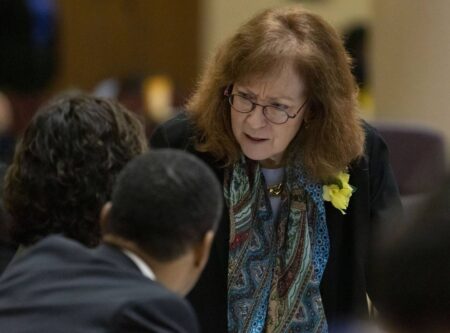
A City Council ally of Mayor Lori Lightfoot promised Friday to introduce a series of ethics reforms that would have a broad impact across city government in the wake of multiple criminal investigations at City Hall and spats over conflicts of interest among Chicago elected officials.The ethics package being proposed by Ald. Michele Smith, 43rd, follows the introduction just one month ago of a similar but smaller series of ethics proposals from a key aldermanic critic of Lightfoot that so far has found little support among council members.AdvertisementSmith, one of Lightfoot’s hand-picked committee chairs, said she will debut the legislation at Wednesday’s City Council meeting in the hopes it will “significantly strengthen Chicago’s ethics laws.” The provisions Smith highlighted include upping the maximum fine for ethics violations from $5,000 to $20,000 as well as banning former council members from lobbying the City Council.The proposal also calls for broadening what is deemed a “conflict of interest” for city officials or employees, Smith said. Under her proposal it would be a conflict if any “administrative, legislative action or decision” could benefit relatives or partners of city officials or employees. The current conflict-of-interest provisions only apply when it comes to contracted firms of city employees or relatives.AdvertisementSign up for The Spin to get the top stories in politics delivered to your inbox weekday afternoons.Smith’s proposal comes as the City Council is once again being hit by federal criminal convictions and indictments tied to allegations of corruption.Just in February, then-11th Ward Ald. Patrick Daley Thompson was convicted of felony tax fraud and ordered to vacate his seat, while current 34th Ward Ald. Carrie Austin was indicted on bribery charges last year and Ald. Edward Burke, 14th, the longest-serving alderman in city history, was charged with racketeering and other counts in 2019. The latter two have pleaded not guilty.Ald. Michele Smith, 43rd, talks to colleagues on March 23, 2022, during a Chicago City Council meeting at City Hall. (Brian Cassella / Chicago Tribune)“Our city is grappling with its historic legacy of corruption as various high-profile criminal cases work their way through the judicial system,” Smith said in a statement, adding that she hopes her package helps end the “‘I got a guy at City Hall’ mentality and move to fair representation of all in our city business.”In March, Southwest Side Ald. Silvana Tabares, 23rd, introduced a smaller ethics package aimed at prohibiting spouses, partners or immediate family members who live with city elected officials from lobbying aldermen, the mayor or other city officials or employees.Tabares said her proposal was a response to reports that City Clerk Anna Valencia, who’s running for Illinois secretary of state, had failed to report her husband’s lobbying work at City Hall as required under ethics rules. Tabares has endorsed Valencia’s top opponent in the secretary of state’s race, former Illinois Treasurer Alexi Giannoulias, though Tabares said she would have introduced the ordinance whether Valencia was running for the statewide office or not.Unlike Smith, Tabares is not a Lightfoot ally on the council.After Tabares introduced her ordinance in March, Valencia stood with Lightfoot at a news conference and called the proposal an attempted distraction by Giannoulias. The problems with her ethics forms related to her husband’s lobbying were “a human error,” Valencia said, that she corrected when she found out there had been a mistake. Lightfoot has not made any endorsements in the secretary of state’s race.Advertisement“My husband and I have very different careers,” she said. “He has his own thing. I have my own. We support each other in different ways, so we’re already following the Board of Ethics rules and will continue to do that.”Tabares’ legislation was later sent to the City Council’s Rules Committee, where ordinances the mayor opposes sometimes die from inactivity. Smith, who chairs the council Ethics Committee, may have a better shot at passing her package, which also has the backing of the Chicago Board of Ethics and the nonprofit Better Government Association.Lightfoot has made ethics reform a cornerstone of her political campaigns but so far hasn’t seen passage of major reforms, such as eliminating aldermanic prerogative.In 2019, she tried to deliver on one campaign promise focused on the City Council when her own ethics reform package sailed through the body with no debate. It gave the city inspector general more powers and tightened rules on outside jobs and City Hall lobbying.But the Chicago ethics board had proposed a much heftier maximum fine for ethics code violations — the $20,000 in Smith’s ordinance — that Lightfoot declined to include that year. Instead, she increased the ceiling for fines from $2,000 to $5,000.ayin@chicagotribune.comAdvertisementjebyrne@chicagotribune.com
Two Illinois brothers and their cousin pleaded guilty Thursday to illegally entering the U.S. Capitol through a broken window during the Jan. 6, 2021 riot.Anthony Carollo, 23, his brother, Jeremiah Carollo, 45, and their cousin, Cody Vollan, 31, were all charged in January with misdemeanor counts of unlawfully entering a restricted government building and disorderly conduct on U.S. Capitol grounds.AdvertisementThey pleaded guilty to a superseding information on Thursday during a telephone hearing in U.S. District Court in Washington. U.S. District Judge Amit P. Mehta set separate sentencing hearings for all three on Sept. 13.A criminal complaint filed in January included photos of the three men standing amid the mob outside the Capitol on Jan. 6, 2021. They later could be seen filing past a man in a gas mask and bicycle helmet. Another photo shows the defendants walking single-file through the Capitol rotunda.AdvertisementThe men were identified through Google records and surveillance images, according to court records. Anthony Carollo and Vollan were arrested in the Lockport area, while Jeremiah Carollo was arrested near his home in downstate Glen Carbon.As part of their guilty pleas, the men admitted they entered the building through a broken window adjacent to the Senate wing door around 2:22 p.m. and wandered near the offices of House Speaker Nancy Pelosi before leaving after about 15 minutes.At least 27 Illinoisans have been charged so far in the Capitol breach, an ongoing investigation that has been described by prosecutors as the largest criminal investigation in the country’s history.Most of the Illinois cases have involved simple trespassing and disorderly conduct, rather than allegations of violence.In December, however, James Robert Elliott, 24, of Aurora, was charged with felony counts alleging he used a flagpole to assault officers while illegally on the Capitol grounds. He has pleaded not guilty and his case is pending.Nationwide, nearly 800 people have been arrested as of this month in all 50 states and the District of Columbia on charges stemming from the Capitol breach, according to the U.S. Justice Department.jmeisner@chicagotribune.com

An Indiana steelmaker has agreed to pay $3 million, upgrade plant equipment, and donate 127 acres of land to the Indiana Dunes National Park after it caused a chemical spill leading into Burns Waterway that killed 3,000 fish in 2019.The proposed consent decree would have to be approved by a federal judge in the U.S. District Court in Hammond. At the time, the Burns Harbor steel mill was owned by ArcelorMittal, which sold the majority of its American assets to Cleveland Cliffs in 2020.Advertisement“This is a big victory for protecting Lake Michigan, safe clean water, and Northwest Indiana communities,” Chicago-based Environmental Law & Policy Center Executive Director Howard Learner said in a release. “The consent decree holds Cleveland-Cliffs accountable for its excessive pollution and Clean Water Act permit violations, and it underscores the value of citizen enforcement lawsuits.”A representative for Cleveland Cliffs was not immediately available for comment.AdvertisementLearner’s group and Indianapolis-based Hoosier Environmental Council were plaintiffs in the citizen lawsuit under the federal Clean Water Act that led to the tentative settlement with Cleveland Cliffs, the EPA and Indiana Department of Environmental Management.“We’re heartened by this consent decree and we’re very hopeful that it will safeguard the extraordinary ecological treasure that is Lake Michigan from another toxic industrial spill, and elevate environmental protection across Northwest Indiana, which has several communities that have borne a special burden of environmental injustice for far too long,” Hoosier Environmental Council Executive Director Jesse Kharbanda said.Days after a slew of dead fish emerged, ArcelorMittal admitted a failure in a blast furnace wastewater recycling system on Aug. 11, 2019, led to the discharge of cyanide and ammonia into Burns Waterway. The delay angered local communities and public officials in Indiana and Chicago.Local beaches closed for days as a precaution and Indiana American Water temporarily idled its Ogden Dunes water treatment plant.The agreement calls for the $3 million to be split between the federal and state government. The steelmaker is required to upgrade equipment to prevent future cyanide and ammonia spills and up its water monitoring in summer 2022 and 2023. It would also set up “improved” public notification plans to avoid the delay seen in 2019.The steelmaker also would donate 127 acres north of North Boo Road and west of Indiana 149 in Burns Harbor — a mix of woodlands and former farm land — to the Shirley Heinze Land Trust for restoration purposes. An environmental assessment would be conducted first, according to the agreement.The land would ultimately be given to the Indiana Dunes National Park.
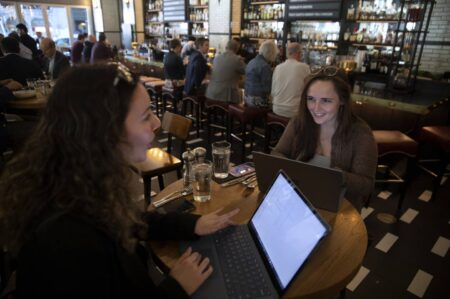
Chicago’s downtown almost looks normal some days, especially during the middle of the week when office workers pack themselves onto trains and the streets bustle with pedestrians. But downtown restaurant owners say they see something different when tallying weekly sales.Even the busiest lunch hours rarely hit pre-pandemic levels, and Mondays and Fridays are even worse.Advertisement“We’re questioning whether it even makes sense to be open on these days,” said Scott Weiner, co-owner of Fifty/50 Restaurant Group, which operates more than a dozen establishments across Chicago, including West Town Bakery and 90th Meridian, both on LaSalle Street in the financial district.And with many downtown firms planning to bring back their employees for just two or three days a week, restaurants could permanently lose several days of lunchtime business. That would be another heavy blow to an industry buffeted for two years by shutdowns, rising food prices and labor shortages, perhaps putting off real recovery for years.AdvertisementIt’s not just a problem for restaurant owners. The health of the local restaurant scene will play a key role in determining the vibrancy of downtown as it emerges from the pandemic.Downtown Chicago provides a greater variety of food options than any suburb or city neighborhood, from places to grab a quick sandwich to pricey establishments where businesses entertain out-of-town clients. Like Millennium Park or the lakefront, restaurants make downtown appealing. But if the industry continues to suffer, restaurant owners may decide it’s not worth it to reopen the many locations closed during the pandemic. Some say landlords may eventually have to agree to lower rental payments if they want to keep the restaurant scene healthy.On Wednesdays, hungry theatergoers attending afternoon matinees crowd into The Dearborn, a 225-seat restaurant at 145 N. Dearborn St., according to proprietor Clodagh Lawless. But it’s a different story on other days.“Wednesdays are just a delight,” she said. “Everything about Wednesday is perfect, but our Friday lunch is now very quiet, and that’s a problem, because we had a business model when we signed a lease which relied on a five-day workweek from our business clientele.”Two patrons at The Dearborn sit in the bar area of the restaurant in Chicago’s Loop during the lunch hour. With many downtown firms planning to bring back their employees for just two or three days a week, restaurants could permanently lose several days of lunchtime business. (Erin Hooley / Chicago Tribune)“The Loop is still in dire straits,” Weiner said. “We need the city and the people who call the shots at big companies to get people back to the office.”Weiner estimates lunchtime business is down between 60% and 70% on Mondays and Fridays, and on the other weekdays it’s down about 20%.The lingering uncertainty helps make it difficult to justify reopening Fifty/50 Restaurant Group’s Steadfast at The Gray, a Central Loop restaurant at 120 West Monroe St., in the same building as the Kimpton Gray Hotel. It was shuttered during the pandemic as business travel dried up and hotel occupancy plunged.Average hotel occupancy in downtown Chicago was 59% for the week ending April 9, according to hospitality data firm STR. It was 89.1% for the comparable week in April 2019.Advertisement“We’re not in any hurry to reopen Steadfast,” Weiner said.Lawless, who runs The Dearborn in partnership with her sister Amy Lawless, said they’ve survived the two years of turmoil brought on by COVID-19, and are determined to meet whatever challenges remain. She learned the business while growing up in Ireland from her parents, who ran restaurants and a small hotel, and switching careers isn’t an option.“It’s in our blood,” she said. “We know nothing else, but the restaurant industry, which I adore, right now is a bleak landscape.”People eat lunch at The Dearborn downtown on April 21, 2022. (Erin Hooley / Chicago Tribune)The pandemic squeeze may hit restaurants, which typically have small profit margins, harder than other businesses, according to Sam Toia, president and CEO of the Illinois Restaurant Association, an industry lobbying group.“Between 95 and 97 cents of every dollar goes toward labor costs, produce costs and fixed costs, Toia said. “And that’s in the good times.”Some downtown landlords have been willing to cut deals with restaurants during the crisis, allowing them to pay reduced rent while business was slow, he added.AdvertisementWeiner said if hybrid work schedules remain in place and restaurants can’t generate the revenue they once did, he’s optimistic landlords will negotiate the deals needed to keep these key businesses afloat, perhaps including lower rental rates.“The smart landlords are going to figure out ways to keep the restaurants in their buildings open, because if they don’t, they could lose their (office) tenants,” Weiner said.It’s not just upscale restaurants feeling the pinch. Fast-food operators have also noticed slowdowns.“Pre-pandemic Mondays and Fridays were softer days for us, averaging slightly lower than our Tuesday-Thursday business,” Potbelly Sandwich Shop COO Adam Noyes told the Tribune in a statement. “That gap has become a bit more pronounced in 2022, likely due to the hybrid office policies.”“We believe that these market condition pressures should definitely be considered by landlords to ensure that shops are able to be profitable,” he added. “We have found a number of landlords to be accommodating in supporting us through this recovery.”Michael Klein, managing principal of Glenstar, which owns the Chicago Board of Trade Building downtown, home of Ceres Café, said he agreed that if downtown businesses stick with short workweeks long term, restaurants will suffer. But he also cautions that the recovery is in its early stages, and office workers may still flood back downtown in the coming months.Advertisement“If we get to the point where 50% of the people are coming back to work, others may start to feel that they’re missing out on something, perhaps not getting that plum assignment,” Klein said.It’s difficult to measure in real time exactly how many downtown workers have returned. According to Kastle Systems, a security firm that tracks office entries, office occupancy in the Chicago metro area stood at 37.8% the week of April 13, the same as the week before, but the company doesn’t provide a separate breakout for the central business district.Klein added that tourists have returned in greater numbers than office workers, so restaurants near tourist-heavy areas like Michigan Avenue or Willis Tower should recover faster.“If you’re across from the Art Institute and go into Chick-fil-A, it may already feel normal because it’s filled up at lunchtime, but two or three blocks away in the Central Loop, restaurants are much quieter,” Klein said. “So, when people do come back, there are going to be discussions about what restaurant rents should be, but they’re going to be block by block, location by location decisions.”Weiner said he believes the old real estate adage, “location, location, location,” will be even more important to the downtown restaurant sector. Even though Fifty/50 Restaurant Group is keeping Steadfast closed for now, it’s already confident enough in the Chicago market to launch later this year one of its biggest projects yet, a two-story restaurant in Willis Tower called Kindling.Starting this fall, the 16,000-square-foot location’s chef will serve diners food cooked in a wood-fire rotisserie oven. Weiner said he expects many of the customers will be out-of-towners.Advertisement“Willis Tower is one of the top tourist destinations in Illinois, let alone Chicago, so it’s a totally different business model,” he said.Some Loop restaurants have advantages that should keep business humming no matter what happens.Gina Capitanini’s family has owned Italian Village Restaurants since 1927, a brand name that keeps customers returning to the landmark The Village at 71 W. Monroe St. Like The Dearborn, it also draws big crowds of theatergoers. Unlike most of their competitors, the family owns the property, thereby avoiding the astronomically high rents of downtown.“It’s a lot better than it was six months ago, so we’re surviving and even doing better than I expected at this point,” Capitanini said.A person walks by The Village restaurant on Chicago’s West Monroe Street on April 18, 2022. (Raquel Zaldivar / Chicago Tribune)The week before Easter was particularly rewarding.“I probably had two or three of the best days that I’ve had in the past two years,” she said. “I probably need more new employees than I need new customers.”AdvertisementBut the pandemic did force Capitanini to close both La Cantina and Vivere, the two other restaurants in the building. She currently has no plans to reopen either.Toia said more restaurants could go under even as more employees return to their workplaces unless Congress replenishes the Restaurant Revitalization Fund. The fund’s $28.6 billion in initial funding ran out last summer as thousands of restaurants nationwide rushed to secure relief.The House of Representatives approved this month $42 billion in grants for food service businesses, but according to an April 21 report in Roll Call, an aid package in the Senate faces headwinds after attracting little Republican support.About 177,000 restaurants were approved for grants through the Restaurant Revitalization Fund in 2021 but did not receive any funds, according to the National Restaurant Association.Gerardo Castillo, left, speaks to customer Jerry Boruch at The Village, one of Italian Village Restaurants’ three restaurants, on April 18, 2022. Boruch has been a regular customer since the beginning of the pandemic and dines at Italian Village Restaurants when he is downtown for business. (Raquel Zaldivar / Chicago Tribune)The Dearborn was one of the unlucky ones, Lawless said. She and her sister spent the past two years without help, paying rent and enduring several shutdowns, as well as the rising costs for food and labor.“In January, when omicron began surging, it was desolate downtown,” Lawless said. “I mean, it was literally tumbleweeds. So, our choice was, do we open for January and February and lose a ton of money, or stay closed and lose a ton of money? We chose to open so we could keep our team together.”AdvertisementIf Congress does replenish the relief fund, Lawless said The Dearborn could use the money to stock up on supplies and avoid any future supply chain disruptions, pay staff more, or perhaps give the restaurant’s interior a face-lift.No matter what happens with that legislation, Lawless said she sees hopeful signs. A full slate of conventions has returned to McCormick Place for 2022, and even though attendance so far is still significantly lower than 2019, groups attending these events are already making reservations weeks in advance.“Before this, our margins were tight, and now it’s even tougher,” she said. “But there’s definitely light at the end of the tunnel, the only question is, how long is this tunnel?”
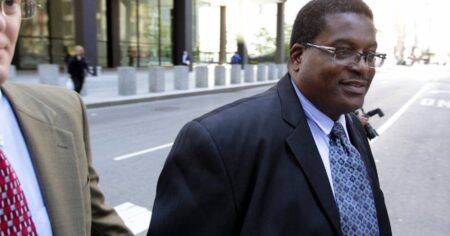
Cook County prosecutors on Friday reversed course and agreed that 44 convictions related to convicted ex-Chicago police Sgt. Ronald Watts should be thrown out.Prosecutors initially filed paperwork opposing the effort to dismiss those cases, many of which involved officers who “had not previously been impugned in Watts’ nefarious conduct,” Assistant State’s Attorney Catherine Malloy said in court Friday.AdvertisementBut upon further review, prosecutors decided that simply the potential of possible interference by Watts “raises concerns about the integrity of these cases,” Malloy said.Judge Erica Reddick formally vacated the convictions Friday, meaning that all 100 convictions for the 88 Watts accusers involved in last year’s expansive joint exoneration effort have been dismissed. Three other Watts-related cases that were not part of last year’s effort also were vacated Friday when prosecutors said they would not oppose their dismissal.AdvertisementAs of Friday, Cook County State’s Attorney Kim Foxx’s office has agreed to throw out 212 convictions related to Watts, according to a statement from the office.Over a series of hearings in recent months, prosecutors agreed that 59 convictions should be thrown out. But last month they filed paperwork on most of the remaining cases arguing that Watts’ accusers could not meet their burden of proof, and called for hearings so a judge could decide whether to dismiss the convictions.Watts and his team of tactical officers have been accused of orchestrating a decade of terror at the now-razed Ida B. Wells public housing complex on the South Side, systematically forcing residents and drug dealers alike to pay a “protection” tax and putting bogus cases on those who refused to do so.The recent hearings are a response to an expansive joint effort last summer by attorneys for 88 people with 100 Watts-related convictions, who filed petitions en masse asking that those cases be thrown out.That effort represented a significant change in the way Watts’ cases have been handled at the Leighton Criminal Court Building.Foxx’s office has been reviewing Watts-related convictions for years. In 2017, they announced the county’s first-ever mass exoneration, clearing out 18 Watts-related convictions and promising an ongoing assessment of similar cases.Attorneys for the accusers have been presenting potentially eligible cases to Cook County prosecutors for their review, and until last year, petitioners’ attorneys and prosecutors had presented a largely united public front.Attorney Joshua Tepfer, who represents dozens of Watts accusers, said in June that Foxx’s office was not adequately following through on its promises of an aggressive review of Watts’ cases and was fighting to uphold convictions that he maintained are fatally flawed.AdvertisementThe next month, Tepfer and other accusers’ attorneys launched the joint petition effort representing 88 Watts accusers.It was a bold move, seemingly intended to force Cook County prosecutors to announce a decision on the cases after prosecutors’ ongoing review of such convictions had, in the view of some Watts accusers’ attorneys, stalled out.Prosecutors said they were committed to reviewing each case on an individual basis to determine if they can stand by the convictions. Five were thrown out in November, and dozens more were vacated earlier this year.Until prosecutors announced Friday that they had changed course, the remaining cases potentially were headed to hearings at which a judge would determine if the convictions would stand.Reddick, who has presided over the recent hearings, said from the bench earlier this year that the Watts era was “clearly shown to be a blight on the criminal justice system.”When Watts was finally caught, in 2012, it was on relatively minor federal charges of shaking down a drug courier who turned out to be an FBI agent. Watts and Officer Kallatt Mohammed both pleaded guilty, and Watts received 22 months in prison. He was released in 2015.Advertisementmcrepeau@chicagotribune.com
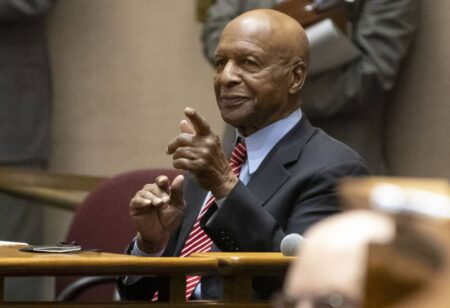
SPRINGFIELD — The umbrella organization of organized labor in Illinois has decided to not make an endorsement for the Democratic nomination for secretary of state, despite more than half of its nearly 900,000 workers who’ve already pledged their support for Alexi Giannoulias.The lack of an endorsement by the Illinois AFL-CIO signals good news for Giannoulias’ two major opponents in the Democratic primary on June 28, especially his main rival, Chicago City Clerk Anna Valencia, who has faced questions about whether her husband’s lobbying activities have interfered with her role in public office.AdvertisementGiannoulias is one of four Democrats vying for the nomination to replace Jesse White, who has been secretary of state since 1999. With more than $4.4 million in his campaign through March, Giannoulias has maintained a huge campaign cash advantage over Valencia and his other major Democratic opponent, Chicago Ald. David Moore, 17th. Sidney Moore of Homewood is also on the ballot.Tim Drea, the president of the Illinois AFL-CIO, said Thursday that “the candidates had support from affiliates on both sides,” but none could get the two-thirds support necessary for an endorsement from the umbrella organization.AdvertisementDrea said the organization also made no endorsement in three hotly contested Congressional races: The 3rd District, a newly drawn Latino-leaning district that covers the city’s Northwest Side and western suburbs and features Democrats Delia Ramirez, a state representative from Chicago, and Chicago Ald. Gilbert Villegas, 36th; the 6th District in the western suburbs where two-term U.S. Rep. Sean Casten, a Democrat from Downers Grove, is facing off against first-term Democratic U.S. Rep. Marie Newman of LaGrange; and a crowded race in the 1st District to replace retiring Democratic U.S. Rep. Bobby Rush of Chicago.Illinois Secretary of State Jesse White is recognized Feb. 23, 2022, during a Chicago City Council meeting. Four Democrats are vying for the nomination to replace White, who has been secretary of state since 1999. (Brian Cassella / Chicago Tribune)By the end of last year, Giannoulias had already secured an array of key union endorsements, including several labor groups affiliated with the Illinois AFL-CIO that amass more than half a million of the organization’s nearly 900,000 workers. But an endorsement from the umbrella organization itself could go a long way for any of the candidates going into the November general election because labor unions generally favor Democrats.In a statement, the Giannoulias campaign said it was still optimistic about the race despite not receiving the support from the organization.“Alexi is leading the race when it comes to endorsements from organized labor with announced support from a broad-based coalition of unions that represent more than 600,000 Illinoisans statewide,” a campaign spokesperson said in the statement Thursday. “Alexi has proven himself as tireless fighter who has a record of protecting and supporting working families.”Moore, the Chicago alderman, said in a statement that he appreciated the AFL-CIO “rejecting the rush to anoint anyone in this race as the front runner.”“The Illinois Secretary of State’s race is still very competitive and while money and endorsements are important, voters will have the final say,” Moore said.Valencia, whose campaign declined to comment on AFL-CIO decision, has secured endorsements from many major state Democrats, including White himself, Gov. J.B. Pritzker and U.S. Sens. Tammy Duckworth and Dick Durbin. Valencia ran Durbin’s 2014 reelection campaign. She’s also secured some union support, including from the Associated Fire Fighters of Illinois and the Illinois Nurses Association, among others.But Valencia also has become marred in controversy lately over questions about whether her husband, Reyahd Kazmi, has used his lobbying practice to profit off connections to Valencia’s role as city clerk.AdvertisementVarious news reports have documented several instances over the last four years that suggest Kazmi may have benefited financially from that connection, including when Valencia promoted two companies for a city-sponsored event in 2018 that were also clients of Kazmi. While Valencia entered into a nonpaid “partnership” with these clients for a healthy-food program for Chicago’s youth, the news reports said the companies have paid Kazmi $52,000 for lobbying work.In another instance, Kazmi’s business partner sought Valencia’s help to expand his business into New Orleans before she set up meetings with city officials there, according to the news reports. Kazmi’s partner won a contract with that city and competitors then accused New Orleans officials of contract rigging, the news reports say.Meanwhile, the Valencia campaign has gone after Giannoulias for failing to disclose names of his clients from an investment firm where he served as its wealth director after he served as state treasurer from 2007 to 2011, even as he stresses transparency in government in his bid for secretary of state.On the Republican side of the race, state Rep. Dan Brady of Bloomington is seeking the GOP nomination for secretary of state. His campaign has announced endorsements from several Republican state legislators, as well as from three GOP congressmen, U.S. Reps. Rodney Davis of Taylorville, Darin LaHood of Peoria and Mike Bost of Murphysboro.Brady’s challenger is John Milhiser, a former U.S. Attorney in the Central District of Illinois, who is running for secretary of state as part of a slate of candidates promoted by billionaire hedge fund manager Ken Griffin.jgorner@chicagotribune.com
REYNOLDSVILLE, Ill. — Two Southern Illinois University-Carbondale graduate students and a Missouri woman died Thursday after their vehicles collided on a highway, police said.The crash that occurred about 4:15 a.m. on Illinois Route 3 in Union County killed Marie A. Meunier, 32 of Cape Girardeau, Missouri, and students Pavan Swarna and Vamshi K. Pechetty, both 23, of Carbondale, state police said.AdvertisementThey were pronounced dead at the scene of the crash, police said.Meunier was driving a 2013 blue Fiat sedan when her car crossed the center line and struck the front of the 2019 Toyota sedan Swarna was driving, police said.AdvertisementThree other SIU graduate students were injured in the collision, police said: 23-year-old Yaswanth S. Uppalapati, 24-year-old Kalyan Dorna and 23-year-old Kakumanu Karthik.Three other SIU graduate students were injured in the collision, police said: 23-year-old Yaswanth S. Uppalapati, 24-year-old Kalyan Dorna and 23-year-old Kakumanu Karthik, all of Carbondale. Karthik suffered lift-threatening injuries, police said.“We are working to support the families during this incredibly difficult time,” SIU Chancellor Austin Lane said in a statement. “Our thoughts and hearts are with these students and their loved ones.”

The trees were bare, the sky was gray and temperatures hovered in the 60s.But grass underfoot was already emerald green at the Land, a community garden and outdoor space on the Southeast Side, and the crowd of 35 —children and older adults, lifelong gardeners and newbies, professional tree planters and neighborhood volunteers — was in high spirits.AdvertisementStanding in a wide circle, they introduced themselves one by one to loud applause.And then they got to work: planting 20 trees, including persimmon and white oak, Ohio buckeye and Kentucky coffeetree.Advertisement“I think it’s beautiful,” said Jim Murrell, 81, of the Pullman neighborhood, who attended with his wife, Lena. “People should be more sensitive to trees.”Tree plantings such as the one at the Land earlier this month are on the rise, according to the Chicago Region Trees Initiative, a consortium that works to increase the regional tree canopy. This spring the consortium will participate in 16 tree plantings, each with 10 to 83 trees, according to Trinity Pierce, stewardship manager for the trees initiative. That compares with about 10 tree plantings during the entire first year of the COVID-19 pandemic.Colette Copic, left, of Chicago Region Trees Initiative, and Lalli Licona, 6, high-five after planting a tree in a lot on the South Side of Chicago near the Calumet River on April 13, 2022. Experts from The Morton Arboretum helped volunteers such as Licona with the planting. (Terrence Antonio James / Chicago Tribune)“There’s this sincere and genuine need for connection” during the pandemic, Pierce said, and that extends to growing food and caring for plants. She’s seen more interest in fruit-bearing trees, community gardens and backyard improvements.The interest comes at a time of growing awareness that the urban tree canopy contributes to human health and comfort, and that it’s unevenly distributed according to income and race.[ A ‘postcard from the future,’ Oak Park building is one of three in the state to prove it creates as much energy as it uses ]A 2021 analysis by the conservation organization American Forests found U.S. neighborhoods with a majority of people of color average 33% less tree canopy than majority-white communities. Neighborhoods with 90% or more of their residents living in poverty had 41% less tree canopy than communities with 10% or less of the population living in poverty.The southeast section of the Calumet Heights neighborhood where the Land is located has 17% tree coverage, according to American Forests, which would like to see 48% tree coverage there. Ninety-four percent of residents are people of color.Last summer neighbors and supporters came together to plant sunflowers and vegetables. There’s a big metal shed with a mural featuring flowers, trees and messages of goodwill. Long grasses and meandering paths give the oversized city lot an unplanned, natural look.The Land organizers got in touch with the trees initiative through the nonprofit Arbor Day Foundation, which has partnered with Peanuts Worldwide (of Charlie Brown fame) to plant hundreds of thousands of trees around the globe through 2025.AdvertisementVolunteers plant trees in a lot on the South Side near the Calumet River . (Terrence Antonio James / Chicago Tribune)The trees initiative provided the tree know-how, the Arbor Day Foundation and Peanuts Worldwide provided funding — as well as a very convincing Snoopy in full fuzzy white costume — and the Land provided the space, the vision and the knowledge of the community.“I find that information exchange — that’s what’s so rewarding about this work,” said Pierce. “Yes, it’s about trees, but more so, the people who live with those trees and take care of them.”In keeping with the Land’s focus on fresh food and permaculture — a form of sustainable agriculture — the trees initiative provided pawpaw, persimmon and serviceberry, all trees that produce edible fruit.“Not a lot of people realize we have native, hardy tree species that do really well and produce delicious food,” Pierce said.“That’s the other side of it: just spreading awareness about the wonderful trees we have that are going to do well — they’re not just going to survive, they’re going to thrive.”Lydia Scott, left, director of the Chicago Region Trees Initiative at The Morton Arboretum, looks on as Chimalli Licona, center, and Coqui Licona tamp down the soil around a newly planted tree in a lot on the South Side of Chicago near the Calumet River. (Terrence Antonio James / Chicago Tribune)The crowd at the planting included seasoned urban gardeners such as Lena Murrell, 78, who has two peach trees, an apple tree and a pear tree outside her home in the Pullman neighborhood, and Ray Glend, 74, of the Chatham neighborhood, who patiently explained the charm of the pawpaw fruit.Advertisement“It’s sweet and creamy with a lot of seeds,” said Glend. “It’s like a custard.”[ 2 Illinois eagles died from lead poisoning in March, and toxic hunting ammunition is likely the culprit ]The tree-planting itself was over fairly quickly, with individuals and small groups digging 3-foot-wide holes and arranging trees so they stood straight up, with the bark at their bases exposed to discourage unhealthy root growth.Afterward, participants mingled, while children played or looked on curiously. Royal Robinson Jr. came with his wife, Nicole, and their children, Royal Robinson III, 8, and Rainah Robinson, 12. The Robinsons, who have a 10-acre family farm outside Hindsboro, Illinois, brought cartons of fresh eggs — brown, yellow and even pale blue — and offered them free to whoever wanted them.Royal Robinson, right, moves trees to the spot where they will be planted in a South Side lot. (Terrence Antonio James / Chicago Tribune)Pura Verdad, a community organizer, brought four of her six children, ages 6 to 12, as well as hand-painted canvases promoting local environmental causes such as the fight to save the Bell Bowl Prairie in Rockford.“This is a prime time to talk to people who love trees,” she said.The crowd, which grew to over 40, posed for a group photo, then lingered under threatening skies.AdvertisementThe new trees stood in the background, some bare, some with last year’s brown leaves still dangling. But if you looked closely you could see new growth. The serviceberries, in particular, were already covered with dozens of mint-green buds, each holding the promise of spring’s white petals and summer’s red fruit.nschoenberg@chicagotribune.com
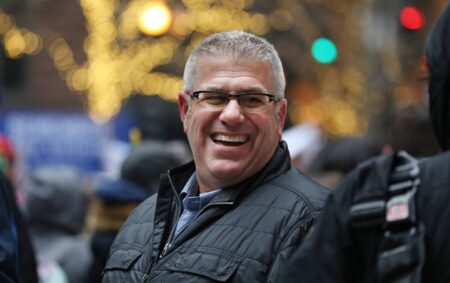
Illinois’ political battle of the billionaires has long been thought to be Democratic Gov. J.B. Pritzker and the governor’s nemesis, businessman Ken Griffin. But now a new battle may be shaping up in the race for the Republican nomination for governor.Late Wednesday, conservative megadonor Richard Uihlein, founder of the privately held Uline office supply business, gave $2.5 million to state Sen. Darren Bailey’s effort for the GOP governor nomination. That’s on top of $1 million Uihlein already contributed to Bailey’s campaign.AdvertisementUihlein joins Griffin as one of the larger campaign contributors in the GOP primary. Griffin, the state’s wealthiest person and head of the hedge fund firm Citadel, earlier this year gave $20 million to Aurora Mayor Richard Irvin’s June 28 primary bid for the Republican nomination for governor to face Pritzker in November. Two years ago, Griffin pumped millions into defeating Pritzker’s proposed graduated income tax amendment.State Rep. Darren Bailey, R-Xenia, attends the March for Life Chicago rally at Federal Plaza on Jan. 8, 2022, in Chicago. (John J. Kim / Chicago Tribune)In addition to giving to Bailey, Uihlein also has contributed $1 million to an independent expenditure group headed by right-wing talk show host Dan Proft that is being used for TV ads attacking Irvin. Proft, of Naples, Florida, was an unsuccessful 2010 candidate for the GOP nomination for governor and previously ran Uihlein-funded efforts to win Republican legislative seats with little success.AdvertisementUihlein and his wife, Elizabeth, are worth an estimated $4 billion, according to Bloomberg. They have donated tens of millions of dollars to national conservative candidates, groups and causes, including organizations that have backed former President Donald Trump’s unsubstantiated claims that the 2020 presidential election was stolen from him.Since 1998, the Uihleins, of Lake Forest, have contributed nearly $35 million to state Republican candidates and groups, according to records from the Illinois State Board of Elections. The couple gave more than $2.6 million to wealthy Republican businessman Bruce Rauner’s successful run for governor in 2014 but soured on Rauner four years later and gave $2.5 million to his unsuccessful GOP primary challenger, former state Rep. Jeanne Ives of Wheaton. Ives and Proft have each endorsed Bailey for the GOP nomination.“We are in this position because I’ve been expelling truth, hope, the possibility of restoring Illinois,” Bailey said Wednesday about his run for governor as he accepted endorsements from anti-abortion groups at Trump Tower in Chicago.Bailey, of Xenia, has seen his candidacy subjected to attacks from Irvin on TV and in mailers, questioning the Downstate senator’s conservative credentials. Bailey also has questioned Irvin’s GOP qualifications.Griffin is worth an estimated $27.6 billion, according to Forbes. Griffin gave Rauner $11.5 million in his winning 2014 campaign for governor and another $22.5 million in Rauner’s losing reelection effort.Griffin spent $53.75 million to successfully fight Pritzker’s proposed graduated-rate income tax constitutional amendment. Pritzker spent $58 million in his unsuccessful push for voter ratification.Pritzker, an heir to the Hyatt Hotels fortune and an entrepreneur, is the nation’s wealthiest politician, worth an estimated $3.6 billion, according to Forbes. Pritzker has already poured $125.5 million of his own money into his reelection campaign, including a $90 million deposit in January.Even with Uihlein’s latest funding, Bailey trails Irvin and cryptocurrency venture capitalist Jesse Sullivan of Petersburg in the cash race leading up to the GOP primary. Irvin had spent nearly $10 million in ads through the end of March and had $10 million in cash to start April. Sullivan reported $8 million in cash at the end of March.AdvertisementBefore Uihlein’s latest donation, Bailey reported having more than $900,000 in cash to start April.Meanwhile, the elections board removed from the primary ballot a Republican slate running under the “We are the people Illinois” banner and backing former President Donald Trump’s false claims of endemic voter fraud.The board found the group fell short of the valid number of petition signatures to appear on the ballot. It struck the names of governor candidate Emily Johnson of Wheaton; Brett Mahlen for lieutenant governor and his wife, Maryann Mahlen, for U.S. Senate, both from Orland Park; Michelle Turney of Chicago for secretary of state; Patrice McDermand of Lake Bluff for treasurer; and Michael Kinney of Carol Stream for comptroller.rap30@aol.com