
Browsing: Local Stories
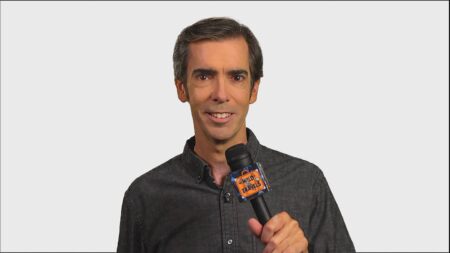
Within 24 hours, two separate attacks occurred at two North Side Red Line stations that resulted in one man being stabbed during an armed robbery and another hospitalized from being punched. Chicago police are now investigating the attacks on the transit system, which recently has seen a spate of similar incidents.AdvertisementCBS Chicago reported that the man who was punched was actor Will Clinger — the former host of the WTTW-Channel 11 program “Wild Chicago” and the current host of “Wild Travels.” CBS reported that Clinger remained in intensive care Tuesday night after being attacked. He told the news station that he never saw it coming.”Wild Travels” host Will Clinger (Harvey Moshman)The earlier attack occurred around 4:40 a.m. Monday when Chicago police were called to the Belmont CTA station, at 945 W. Belmont Ave. in Lakeview, police said. They found that a 44-year-old man had been stabbed by someone who also robbed him of some items before running off, police said.AdvertisementIt wasn’t immediately clear where on his body the man was stabbed, at what hospital he was treated and his condition was not released by authorities, who said mass transit detectives were investigating. Police didn’t say what was stolen from the man.Later that night, around 8:45 p.m. Monday, police were called to the Addison Red Line station, at 940 W. Addison St., to investigate a battery and robbery, police said.A 64-year-old man, identified by CBS as Clinger, “was approached by two unknown males who demanded his personal property,” police said. One of the two men also “punched the (64-year-old) in the face causing (him) to fall and hit his head on the wall.” He suffered “minor bruising and a laceration to the head and was transported to Illinois Masonic hospital in good condition,” according to police.Crime at Chicago transit stations has been making headlines this month, anecdotally alluding to an increase in violence on public transportation in the city, although statistics for the month have not yet been released. Last month, police and CTA officials committed additional resources to combat growing concerns over the safety of the transit system.The continued news of attacks comes as CTA grapples with spikes in violent crime and complaints that more riders are breaking rules that prohibit smoking, drinking and other nuisance behavior on trains and buses. Police and CTA officials on March 9 announced plans to address crime and rule-breaking, saying they would be doubling the number of unarmed security guards and adding more police officers and supervisors to patrol the transit system, including on the busy Red and Blue lines, with a focus on gang and narcotics crimes.Check back for updates.
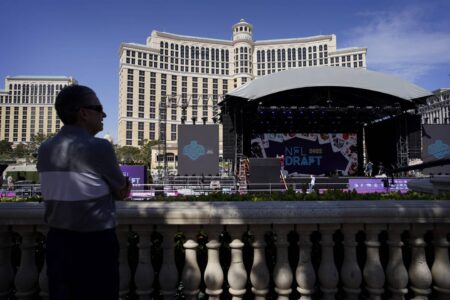
General manager Ryan Poles, coach Matt Eberflus and their staffs could spend their first draft night with the Chicago Bears on the sideline.The Bears don’t have a first-round draft pick Thursday after former general manager Ryan Pace traded it last year to move up for quarterback Justin Fields. So unless Poles engineers another trade, the Bears will spend the night watching the board unfold and plotting their Day 2 moves, which include two second-round picks and a third-rounder.AdvertisementHere’s what you need to know about this year’s draft.Round 1 will kick off at 7 p.m. CT Thursday, followed by Rounds 2-3 at 6 p.m. Friday and Rounds 4-7 at 11 a.m. Saturday.AdvertisementLas Vegas — originally scheduled to host in 2020 before COVID-19 made the draft a virtual experience — gets the stage this year. And what a visual show it will be, with the Strip anchoring the events and a red-carpet stage at the Fountains of Bellagio.“The key thing for the draft is to take on the character of where we are,” said Eric Finkelstein, NFL senior director of event operations. “This is not a cookie-cutter event. We try to embody and highlight where we are.”People look on as workers erect a stage during setup for the NFL draft on April 26, 2022, in Las Vegas. (John Locher/AP)At the Bellagio, there was thought of placing the prospects on boats in the fountains to get them to the red carpet. Time constraints and weather concerns — Thursday night’s forecast calls for strong wind, unusual in Vegas this time of year — canned that idea.The main stage for the draft is next to Caesars Forum and behind the High Roller observation wheel. Portions of the Strip will be closed to vehicular traffic, which is a big deal in Vegas — usually reserved for New Year’s Eve and for the city’s marathon.As it stands, the Bears have the following selections:2nd round: No. 392nd round: No. 483rd round: No. 715th round: No. 1485th round: No. 1506th round: No. 186[ [Don’t miss] 12 intriguing wide receiver options for the Chicago Bears in the NFL draft ][ [Don’t miss] Chicago Bears have 3 picks on Day 2 of the NFL draft. Who are the best players still available? ]The draft will be on NFL Network, ABC, ESPN and ESPN Deportes from Thursday-Saturday.AdvertisementRich Eisen leads the NFL Network team, which also includes Daniel Jeremiah, Charles Davis, Ian Rapoport, Melissa Stark and more.For the first two nights on ABC, Rece Davis, Todd McShay Desmond Howard, Sam Ponder, Jesse Palmer, Suzy Kolber, Laura Rutledge and Robert Griffin III will be among the analysts and reporters covering the event. Mike Greenberg, Mel Kiper Jr., Louis Riddick, Booger McFarland and Chris Mortensen will lead the ESPN coverage. The ESPN broadcast will be simulcast on ABC on Saturday.Kirk Herbstreit won’t work the draft for ESPN after doctors discovered a blood clot: “I feel good, but out of an abundance of caution, I think we’re just going to take a step back from this year’s draft coverage.”Kiper, the 61-year-old analyst who has appeared on ESPN’s draft coverage every year since 1984, will be working from his Maryland home because he’s not vaccinated. NFL reporter Adam Schefter will not cover the draft because he will be attending his son’s college graduation.Poles spent 13 years with the Kansas City Chiefs, so he has worked before on draft night. But he’s gearing up for his first as a general manager, and he prepared by putting his staff through multiple draft simulations.“The responsibility of making the pick, yeah, it’s bigger,” he said. “At the same time, you just rely on the work that everyone put in to make the right decision. And that was the cool thing about doing a lot of these mock-up drafts. We feel comfortable with the way that this thing is going to play out.”AdvertisementSince the Bears don’t have a first-round pick, Poles said the Bears will work through more simulations Thursday night so their operation runs smoothly Friday.Because the Bears only have six picks, Poles talked about trading back in the draft a couple of times to add to their draft haul. While there has been a lot of talk about drafting a wide receiver on Day 2, he said he thinks this class has depth among offensive linemen, defensive backs, defensive linemen and running backs.[ [Don’t miss] Ryan Poles’ remodeling project is about to take a big step forward. Here’s how he prepared for his 1st draft as Chicago Bears GM. ]And while providing help to quarterback Justin Fields is a priority, Poles said that can come in different forms.“Anytime you just improve the team overall, you’re helping all of the players out,” Poles said. “That can look different. You could say he needs receivers, receivers, receivers, but he needs blocking, too, and he also needs balance in terms of running the ball efficiently and getting that done up front.“And then you can do some play-action pass stuff, then you can do different things. Turnovers. Maybe a returner to flip the field to score more points. So it’s all connected. That’s really why the mindset is to get the best players on this team as possible. If I get too lopsided and be like, ‘I’ve got to do this specific thing,’ I think that’s where you lead into big mistakes.”Most analysts agree the Bears are most in need of offensive linemen, wide receivers and cornerbacks as they enter Poles’ first draft.AdvertisementIn Brad Biggs’ first Tribune mock draft, he suggested the Bears could pick Alabama cornerback Josh Jobe and wide receiver John Metchie III with their second-round selections. Biggs’ second mock draft sent Tulsa offensive tackle Tyler Smith and Florida cornerback Kaiir Elam to the Bears in the second round. In his final mock draft, Biggs tabbed DL Logan Hall from Houston and OT Bernhard Raimann from Central Michigan as second-round picks for the Bears .In ESPN’s three-round mock draft, Kiper and McShay had the Bears take Texas A&M guard Kenyon Green, Elam and Kentucky defensive end Josh Paschal.ExpandAutoplayImage 1 of 30Virginia McCaskey, the daughter of George Halas, took over as majority owner of the Chicago Bears in 1983. (Brian Cassella / Chicago Tribune)Some of the most notable moves Poles made in his low-key first few months were letting go of former Bears players. He traded Khalil Mack to the Los Angeles Chargers, let Allen Robinson, Akiem Hicks, James Daniels and Bilal Nichols go into free agency, and released Eddie Goldman, Danny Trevathan and Tarik Cohen.After nixing the Larry Ogunjobi deal because of a failed physical, Poles’ biggest additions have been center Lucas Patrick, defensive tackle Justin Jones, defensive end Al-Quadin Muhammad, wide receiver Byron Pringle, linebacker Nicholas Morrow and backup quarterback Trevor Siemian. But the GM still has a lot of roster spots to fill.Read about all the Bears moves so far here.ExpandAutoplayImage 1 of 119Bears quarterback Justin Fields scores in the fourth quarter against the 49ers at Soldier Field on Oct. 31, 2021. (Jose M. Osorio / Chicago Tribune)This will be the third time in four years the Bears haven’t had a first-round pick.AdvertisementPace sacrificed the pick last year to get Fields at No. 11 and also traded up to pick offensive tackle Teven Jenkins at No. 39. Pace also traded the Bears’ first-round picks in 2019 and 2020 to acquire Mack.The Bears’ top picks in 2020 were second-rounders Cole Kmet and Jaylon Johnson, as well as fifth-rounders Darnell Mooney, Trevis Gipson and Kindle Vildor. In 2019, the Bears’ first pick was third-rounder David Montgomery, and the only other player from that five-person class still with the Bears is cornerback Duke Shelley.[ [Don’t miss] Chicago Bears Q&A: Is there a position no one is talking about to target in Round 2? Who is playing left tackle to start minicamp? ]Before that, inside linebacker Roquan Smith, quarterback Mitch Trubisky, outside linebacker Leonard Floyd and wide receiver Kevin White were Pace’s first four first-round picks. Smith, the No. 8 pick in 2018, is the only one of those four still with the team.[ [Don’t miss] As Roquan Smith gets acquainted with a new regime, he ‘absolutely’ wants to stay with the Chicago Bears long term ]There are a few — but mostly in later rounds. Here are some key names to watch for. (Projections based on a consensus of seven-round mock drafts by The Athletic, CBSSports.com, ESPN.com, NFL.com and Sporting News)S Kyle Hamilton, Notre Dame, 1st roundDT Perrion Winfrey, Oklahoma (Lake Park), 1st-3rdWR Alec Pierce, Cincinnati (Glenbard West), 2nd-4thS Kerby Joseph, Illinois, 3rd-5thDT John Ridgeway, Arkansas (Bloomington), 3rd-6thRB Kyren Williams, Notre Dame, 4th-5thWR Kevin Austin, Notre Dame, 4th-7thQB Jack Coan, Notre Dame, 4th-7thLB Jack Sanborn, Wisconsin (Lake Zurich), 4th-7thOT Vederian Lowe, Illinois (Rockford Auburn), 5th-7thC Doug Kramer, Illinois (Hinsdale Central), 7th-FALB Jake Hansen, Illinois, 7th-FAP Blake Hayes, Illinois, 7th-FADE Myron Tagovailoa-Amosa, Notre Dame, 7th-FAOT Andrew Rupcich, Culver-Stockton (McHenry), 7th-FACOVID-19 disrupted the draft process the last two years.AdvertisementIn 2020, the NFL and its teams conducted the draft virtually, with general managers and coaches working from home to make picks. Last year in the pre-draft process, the NFL canceled the scouting combine and didn’t allow in-person prospect visits. Teams were allowed back in their facilities to draft, but there were some restrictions for teams that didn’t have fully vaccinated personnel.This year, the process mostly has been back to normal. The combine and in-person prospect visits returned, and the NFL dropped its COVID-19 restrictions in March. Barring an outbreak, the Bears should be able to operate as usual from their draft room at Halas Hall.Here are some fun NFL draft facts with a Chicago angle:Chicago hosted the festivities in 1938, 1942-43, 1951, 1962-64 and 2015-16. Before 2015, the draft had been held in New York. But after Chicago, the draft has traveled to Philadelphia, Dallas, Nashville, Tenn., and Cleveland.A University of Chicago halfback was the first player chosen in an NFL draft. The Eagles made Jay Berwanger the No. 1 pick on Feb. 8, 1936, during the nine-round event at Philadelphia’s Ritz-Carlton. Berwanger had won the inaugural Heisman Trophy and the Chicago Tribune Silver Football as the best player in the Big Ten when the Maroons were members of the conference. But he never played a down in the NFL.ExpandAutoplayImage 1 of 15George Halas Jr., from left, Abe Gibron, former Chicago Bears player, and Phil Handler, line coach for the Bears, sit at the Bears table during the NFL draft Dec. 2, 1963, at the Sheraton Hotel in Chicago. (Eddie Wagner, Sr., Chicago Tribune)
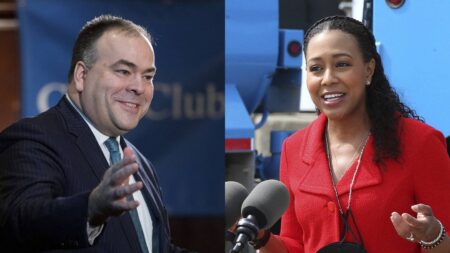
The issue of ethics is once again taking a central role in the race for Cook County assessor as first-term incumbent Fritz Kaegi is blasting his main opponent Kari Steele over her husband’s work as a lobbyist for an international development company that could benefit from decisions made by the assessor’s office.Ethics for years has been a key campaign issue in races for county assessor, an office responsible for accurately and fairly assessing the value of the county’s 1.8 million properties. As an outsider four years ago, Kaegi defeated Assessor Joseph Berrios, who also was head of the Cook County Democratic Party, in part by pointing to Berrios’ history of taking campaign contributions from property tax appeal attorneys and noting Berrios hired relatives and friends in the office.AdvertisementToday, Kaegi is the county Democratic Party-backed candidate and is attacking Steele and her husband, Mazonne “Maze” Jackson, saying Jackson’s work as a lobbyist for a real estate firm could compromise her role as assessor. Steele is now president of the Metropolitan Water Reclamation Board of Greater Chicago.Steele has countered that Kaegi has not lived up to his promises that he’d reform the assessor’s office by making property assessments more equitable and transparent, an issue bolstered by “The Tax Divide,” a Chicago Tribune and ProPublica Illinois series that found assessments under Berrios placed an outsize portion of the property tax burden on the poor.AdvertisementThe issue of Kaegi raising concerns about Steele came to a head following Steele’s answers during a Crain’s Chicago Business podcast in which she declined to promise that Jackson would stop lobbying on behalf of real estate developers were she to assume the office. City and county lobbying records, as well as a Better Government Association story, have detailed that Jackson’s firm, The Intelligence Group, has one lobbying client, real estate company Onni Group.Cook County Assessor Fritz Kaegi and challenger and Metropolitan Water Reclamation District Board President Kari Steele. (Erin Hooley and Antonio Perez / Chicago Tribune)“Commissioner Steele’s unwillingness to say that she will ensure her spouse eliminates his conflicts of interest related to his lobbying is troubling,” said Kaegi campaign spokeswoman Alicia Webb. “Cook County residents deserve to know whether Mr. Jackson will continue lobbying for Onni Group and other real estate developers who may seek assessments before the office she seeks to control.”In recent interviews with the Tribune, both Steele and Jackson said Jackson has not lobbied the assessor’s office and vowed he would not if Steele wins.“I can’t state that enough,” Steele said. “As you see, I just keep saying he doesn’t lobby the assessor’s office or seek official action.”She added the idea that Jackson’s lobbying could pose an ethical issue for her seeking office was dredged up by Kaegi’s campaign to “deflect that his responsibilities aren’t being executed.” Jackson also said the criticism was “crossing the line.”“Quite frankly, in some cases, it’s offensive … the fact that she could not be able to make decisions as a woman without me being of some level of influence,” he said.Sign up for The Spin to get the top stories in politics delivered to your inbox weekday afternoons.But Reform for Illinois Executive Director Alisa Kaplan said the concern is valid, and Steele’s measures might be insufficient should Jackson continue lobbying for Onni Group and other developers. That’s because even the appearance of partiality could be problematic, Kaplan said.Advertisement“When it comes to corruption or bias, appearance can be as damaging to the public’s trust as reality,” Kaplan said. “Fairly or not, the public usually sees elected officials and their spouses as a unit — as having the same financial interests. That could make it hard for Commissioner Steele to draw a line between her work and her husband’s.”The issue of elected officials whose spouses work as lobbyists has also become an issue in the race for Illinois secretary of state, where City Clerk Anna Valencia has faced questions about whether her husband’s lobbying activities have interfered with her role in public office.When asked whether it was warranted to expect her husband to stop lobbying for real estate firms, Steele said, “I wouldn’t say it’s unfair for anyone to have that thought, but I would eliminate any conflict of interest or appearance of conflict of interest” by signing an executive order barring any family member of her staffers from lobbying or seeking official action from the office.Kaegi’s administration implemented a similar order that bars assessor’s office employees from participating in decisions that could benefit them, a relative or a private organization in which they have interest.Steele also said she would install a full-time ethics officer and recuse herself from decisions involving Jackson’s clients, though she was less specific on how other situations, such as assessments for property owners who work for Jackson’s clients, should be handled.“I will look into that,” Steele said, “but if there was any appearance of conflict of interest, I will recuse myself.”AdvertisementKaegi’s campaign said the assessor already employs an ethics official, though that person also serves as the office’s legal director — “as is common in government agencies,” assessor’s office spokeswoman Angelina Romero said.Though Onni Group could benefit from decisions made by the assessor’s office, Jackson said the firm’s interests would not overlap with the mission of the assessor’s office.“My client Onni is my only real estate client, and they don’t ask for grants or set-asides, or any specific legislative action,” Jackson said. “My relationship with Onni does not deal in the relationship of taxes. … Quite frankly, that is an area that I don’t really understand very much.”In a statement, Onni Group’s chief of staff, Duncan Wlodarczak, said “we are proud of what we have been able to accomplish in Chicago with Maze’s assistance. That stated, Maze’s scope of work with Onni does not, has never, and will not involve the assessor’s office.”While Jackson said he would not lobby the assessor’s office, he declined to make a similar pledge for lobbying the Cook County Board, the Chicago City Council or the Illinois General Assembly, all of which can pass legislation related to property taxes.“I would just tell you that again, if it is deemed by the ethics officer that it would be a conflict, I would without question recuse myself from it,” Jackson said.AdvertisementJackson also accused Kaegi of being hypocritical. He said four years ago he endorsed Kaegi when he ran for assessor and even helped host a fundraiser in Kaegi’s efforts to defeat Berrios. Jackson even shared a post on social media of a flyer for the fundraiser and noted that at the time of the event — October 16, 2018 — he was lobbying for Onni.“It’s important that we recognize that while he is pointing the finger, he should be looking back at himself because during that same exact time, I was raising funds for him and representing the same company, and he didn’t find a conflict then,” Jackson said.ayin@chicagotribune.com

Illinois residents who have appeared in a photograph on the Google Photos app within the last seven years may be eligible for a cut of a $100 million class-action privacy settlement reached by Google this month.The lawsuit alleges Google’s face grouping tool, which sorts faces in the Google Photos app by similarity, runs afoul of Illinois’ biometric privacy law. The law requires companies to get user consent for the use of such technologies. AdvertisementThe settlement was filed in Cook County Circuit Court April 14, and Judge Anna M. Loftus issued an order granting preliminary approval of the agreement Monday.The lawsuit was first filed in the U.S. District Court for the Northern District of Illinois in March 2016. The plaintiffs filed suit in state court in 2019 after a judge found they lacked standing to pursue their claims in federal court.AdvertisementIf a final order is approved in the case, Illinois residents who appeared in a photograph in Google Photos between May 1, 2015, and the date of the settlement’s preliminary approval would be eligible to take part in the deal. While the amount of the payments will depend on how many people file claims, attorneys estimate each class member will receive between $200 and $400, according to the agreement.“We’re pleased to resolve this matter relating to specific laws in Illinois, and we remain committed to building easy-to-use controls for our users,” Google spokesperson José Castañeda said in a statement Tuesday.Castañeda said Google Photos users in Illinois would be prompted to provide opt-in consent to face grouping in the coming weeks. Those changes will also be gradually rolled out across the U.S., he said. Users can choose to turn face grouping off, in which case face groups will be deleted from their accounts.Each of the five named plaintiffs in the case is eligible to recieve a $5,000 payment, and attorneys will be able to apply for up to $40 million in fees plus costs and expenses, to be paid out of the settlement fund, according to the agreement.Attorneys for the plaintiffs were not immediately available for comment Tuesday evening.The Illinois Biometric Information Privacy Act, passed in 2008, is among the strictest such laws in the U.S. Last year, Facebook received approval for a landmark $650 million class-action settlement in an Illinois biometric privacy case over its facial tagging feature, but the payouts were delayed more than a year after two objectors appealed the award of attorneys’ fees in the case. In March, the U.S. Court of Appeals for the 9th Circuit upheld the February 2021 class-action settlement and attorney fee award, freeing up payments for the 1.6 million Illinois Facebook users who filed claims. Those who did should expect to see checks of almost $400 in the mail starting next month. AdvertisementA final approval hearing for the Google settlement is scheduled for September.
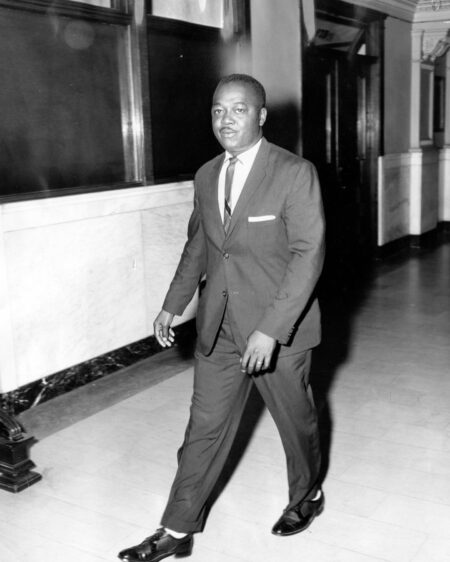
Nearly 60 years after his conviction on what he claimed were racist and retaliatory federal charges, the first Black U.S. Secret Service agent assigned to a presidential detail has been pardoned by President Joe Biden.Chicagoan Abraham Bolden, 87, who served on the security detail for President John F. Kennedy, was among 78 people granted pardons or commutations of their sentences on Tuesday as part of Biden’s first use of his executive clemency powers.AdvertisementBolden, who’d warned about lax security practices around the president, was charged in 1964 with attempting to sell a copy of a Secret Service file to a ring of counterfeiters. His first trial ended in a hung jury, and after he was convicted in a retrial, key witnesses said they lied at the prosecutor’s request.Secret Service agent Abraham Bolden is seen outside the court at the Federal Building in Chicago on July 7, 1964, where he was being tried for attempting to sell government investigative reports. He continued to maintain his innocence. (George Quinn / Chicago Tribune)A longtime resident of Chicago’s South Side, Bolden served about three years in federal prison. He has long maintained his innocence and wrote a book in which he argued he was targeted for speaking out against racist and unprofessional behavior in the Secret Service.AdvertisementIn a statement announcing the clemencies, Biden said, “America is a nation of laws and second chances, redemption, and rehabilitation.”“Elected officials on both sides of the aisle, faith leaders, civil rights advocates, and law enforcement leaders agree that our criminal justice system can and should reflect these core values that enable safer and stronger communities,” the statement read.Bolden could not be reached for comment Tuesday. A woman who identified herself as his caregiver answered the phone at his Auburn Gresham neighborhood bungalow and said he was in poor health and overwhelmed by all the calls of support. “It’s been such a long time coming,” she said.In a statement posted Tuesday afternoon on his Facebook page, Bolden said he got the call about the pardon early in the morning and accepted the “justifiable action by President Joe Biden with sincere gratitude.”He also thanked his family for “giving me the will to fight through some of the darkest days of my life.”Abraham Bolden, secret service agent sentenced to six years in prison for bribery conspiracy charges, walks with his wife, Barbara, in the U.S. courthouse after the jury’s verdict on Aug. 12, 1964. Editors note: this historic print has some hand painting on it. (Cy Wolf / Chicago Tribune)“While initial attempts to affirm my innocence were unsuccessful, almost 60 years later, my victory was won,” he wrote. “It is my hope that my pardon will inspire others to continue to fight for justice and to stand on the truth.”Bolden’s story was featured in a 2010 Chicago Tribune column by Dawn Turner Trice, including his account of how a chance run-in with Kennedy in Chicago led to him being promoted to Washington to join the president’s protective team.In April 1961, Bolden was working as a Secret Service agent based in Chicago and had been assigned to guard a cordoned-off bathroom at the McCormick Place convention center when Kennedy arrived for a political event. He said the president stopped at the restroom door and asked him, “Has there ever been a Negro Secret Service agent on White House detail in Washington, D.C.?’”AdvertisementBolden said, “I told him, ‘Not to my knowledge, Mr. President.’ And he asked me if I would like to be the first, and I told him, ‘Yes, sir, Mr. President.’”Two months later, Bolden, who was 26 at the time, was sent to Washington, where he said he immediately “ran into some harsh racism” among the ranks. He said he asked off of the detail after enduring racial slurs from fellow agents and small nooses were left around his workplace. He also said he was shocked by the lax security around the president, including agents who womanized and drank on duty. He complained to superiors, and that is when he became a target.After Kennedy’s assassination in Dallas in 1963, Bolden said he’d planned to try to talk to someone on the Warren Commission, but instead he was suddenly escorted back to Chicago, where he was charged with soliciting a $50,000 bribe from the boss of a ring of counterfeiters.Former secret service agent and author Abraham Bolden at Mather Cafe in Chicago on Jan. 13, 2010. He wrote a book in which he argued he was targeted for speaking out against racist and unprofessional behavior in the Secret Service. (Nancy Stone / Chicago Tribune)“The aftermath of Kennedy’s assassination led to events that would implicate me in a case of bribery,” Bolden said in his statement Tuesday. “After two high-profile trials, held before a trial judge who told the deliberating jury to find me guilty, I was convicted and served a six-year sentence.”Bolden, who was released after serving about 39 months behind bars, always maintained his innocence. He twice asked President Richard Nixon for a pardon but was denied, and his appeals to a succession of presidents over the years were met by silence from the White House.Bolden, meanwhile, stayed in Chicago, working as an automotive quality control supervisor before retiring in 2001. His wife, Barbara, who is now deceased, convinced him to write his memoir, “The Echo From Dealey Plaza,” and stood by him throughout his ordeal, he said.Advertisement“She held our family together during these tragic times,” Bolden’s statement read.jmeisner@chicagotribune.com
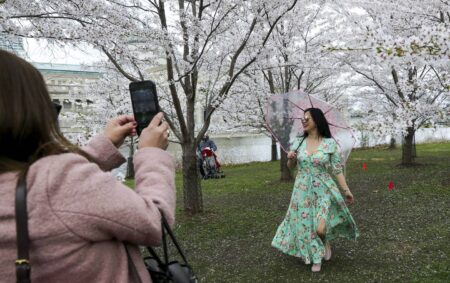
The largest single group of cherry trees in Chicago is at the cusp of full bloom, with peak viewing expected to start within days. Thousands of people have come to see the 160 trees surrounding the Columbia Basin lagoon, just south of the Museum of Science and Industry, according to Chicago Park District manager of art initiatives Michael Dimitroff.AdvertisementDimitroff said that 5,000 people viewed the pink and white blooms last weekend alone, with some laying out blankets in the spirit of hanami, the Japanese tradition of savoring cherry blossom season with leisurely viewings, picnics and festivals.“It was the picture of harmony,” Dimitroff said. “It was like ‘Sunday Afternoon on the Island of La Grande Jatte’ — the Seurat painting but the Japanese hanami version.”AdvertisementRemy Tiu is photographed by her friend Candy Manuel, who drove from Elgin to see the cherry blossoms south of the Museum of Science and Industry in Chicago on April 26, 2022.
(Jose M. Osorio / Chicago Tribune)America’s romance with cherry blossoms was imported from Japan, where the blooms are celebrated as symbols of spring and the fleeting nature of beauty.“There’s something beautiful about every stage of the process: watching the buds, watching them fully open, when the little heart-shaped petals fall to the ground, the fragrance in the air,” said Park District operations support manager Karen Szyjka.“You can go out there even when it’s raining; (you can go) in the morning or in the evening. There’s something to be appreciated in every moment,” she said.The Park District is posting updates on the blossoms’ progress and will hold a free Hanami Sakura Celebration Sunday from noon to 3 p.m. at Jackson Park, in partnership with the Japanese Arts Foundation, Japanese Culture Center, Consulate General of Japan in Chicago and the Jackson Park Advisory Council. The event will feature traditional drumming and dancing, origami and haikuBlooming cherry blossoms south of the Museum of Science and Industry in Chicago. (Jose M. Osorio / Chicago Tribune)America’s signature cherry blossom display was born in 1912, when Japan gave 3,000 cherry trees to Washington, D.C., to be planted along the Potomac River. Those trees would be joined by others, and today Washington’s cherry blossom festival is a tourist attraction and a widely recognized rite of spring.Chicago, with its notoriously punishing climate, was a less obvious candidate for a mass planting. But beginning in 2013, the nonprofit Project 120 and the Japanese Chamber of Commerce and Industry of Chicago took on the challenge.They planted trees in Jackson Park to commemorate the 120th anniversary of the 1893 World’s Fair and the 50th anniversary of the Japanese Chamber of Commerce and Industry of Chicago, according to the consulate general of Japan in Chicago and the Park District.People take photographs under the cherry blossoms south of the Museum of Science and Industry in Chicago on April 26, 2022. (Jose M. Osorio / Chicago Tribune)There were years when the temperamental young trees barely bloomed or the wind carried off the blossoms within days, but 2021 brought a full-fledged viewing season.AdvertisementIf the weather holds, this year’s blossoms could last another week or two, but then again, a storm could bring them down in two days, Dimitroff said.“It’s all weather dependent,” he said, and that’s in keeping with hanami. “The idea is, it’s a fleeting moment in your life, so go out and celebrate.”nschoenberg@chicagotribune.com
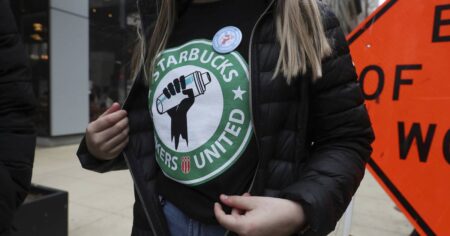
Workers at Starbucks locations in Cary and Peoria won union elections Tuesday, making the stores the first and second Starbucks to unionize in Illinois.Starbucks employees in Cary voted 17-4 and employees in Peoria voted 9-2 to unionize, said Esau Chavez, a union organizer with the Chicago and Midwest Regional Joint Board of Workers United. Workers United is the Service Employees International Union affiliate that represents the Starbucks workers.Advertisement“We’re feeling incredibly empowered,” said Jon Gill, a barista at the Peoria store at 1200 W. Main St. in the Campustown Shopping Center.“The wins that we are seeing at Starbucks are proof that no massive corporation is invincible,” said Gill, who has worked at the Peoria location since December. Gill said they would like to see wage increases as well as a contract with guaranteed hours so employees’ access to the company’s benefits is protected.Advertisement“Workers do have power, and if they organize, they can reach that power,” Gill said.Employees at 230 Starbucks locations have filed for union elections in 31 states, according to Casey Moore, a barista on the Starbucks Workers United communications committee. Out of 35 stores that have had elections, 32 have voted to unionize, Moore said.In statements, organizing committees at both Illinois stores celebrated Tuesday’s votes.“This is a win for every store, and really every partner that works for Starbucks. There is still a long road ahead, but we look forward to working with corporate as partners in making Starbucks the best employer for essential workers,” said workers at the Cary store, which is located at 620 Northwest Highway.“Our victory here in Peoria is a product of the incredible organizing that Starbucks workers have done across the country. We stand in solidarity with every Starbucks worker and any worker fighting for a better world,” the Peoria organizing committee said.A representative for Starbucks did not immediately respond to a request for comment.Parties have one week to file objections to the votes with the National Labor Relations Board, said agency spokesperson Kayla Blado. If no objections are filed, the results will be certified.In Chicago, six stores have filed for elections, according to Grace Easterby, an organizer with the Chicago and Midwest Regional Joint Board of Workers United. Three of those stores — in the Loop, Logan Square and Hyde Park — have election dates set for June 7, with ballots going out to workers in early May.AdvertisementThe other Chicago Starbucks that have filed for union elections are in Bucktown, Edgewater and Edgewater Beach. tasoglin@chicagotribune.com

A Gary man was convicted Monday of killing a woman’s boyfriend who came to get her from his basement apartment.Antonio “Cadillac” West, 54, of the 2500 block of Connecticut Street, was charged in the Sept. 8 murder of Shawn Rhyan Pewitt, 39, of Rockvale, Tennessee.AdvertisementHis murder conviction carries a penalty from 45-65 years. West was also convicted of a firearms enhancement, which could add up to 20 more years.Prosecutors said West fatally shot him after Pewitt went to pull the woman, his child’s mother, from the apartment after West had supplied her drugs for several hours and forced her to have sex as payment.AdvertisementDefense lawyers Kerry Connor and Sonya Scott-Dix said the state’s case were various pieces of witness testimony that did not line up. It was mixed with sloppy police work including large holes in what forensics were collected from the scene, Connor said.The woman also went freely with West and at no point — including to Lowell Police — indicated she was in danger or used her cellphone to call for help, the lawyer said.The woman, Pewitt and another man were at a drug house nearby in Gary on Sept. 7, when West arrived, charges state. They all briefly went outside West’s apartment.Pewitt wanted her to leave, but West told her to go inside. She did because she was afraid of him, the woman said. West forced her to have sex for six hits of crack cocaine, according to court documents.Later on, she went with him for an appointment at a Social Security office and waited in the car. She called Pewitt, who told her to get out of the car and walk for help, documents state.The woman was too scared and waited in the car, going back with West to his apartment, documents said. Pewitt returned to the apartment to get her, documents said.“Let’s go,” he said, according to the probable cause affidavit.“Hell, no,” West responded.Advertisement“You want to come outside, I’ll crack your head,” Pewitt said.West fired a shot that hit him once in the chest, according to court documents. The woman tried to help him, screaming for someone to call 911. West fled in a white SUV.Pewitt was transported to Methodist Northlake where he was pronounced dead.Deputy Prosecuting Attorneys Jacob Brandewie and Arturo Balcazar led the state’s case. Senior Judge Michael Bergerson filled in for Judge Natalie Bokota during the trial.
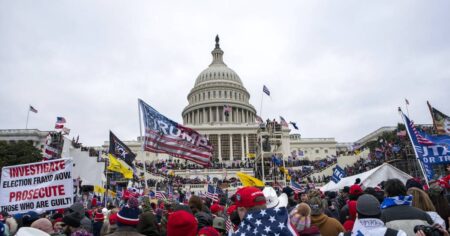
A federal judge in Washington, D.C., on Tuesday sentenced two North Shore brothers to six months of probation, including 60 days on home detention, for illegally entering the U.S. Capitol during the attack on Jan. 6, 2021.In rejecting jail time, U.S. District Judge Thomas Hogan said the conduct that Christian Kulas and his older brother, Mark Kulas Jr., engaged in was “somewhat minimal from other rioters” who attacked police, damaged property or otherwise tried to disrupt the government that day.AdvertisementHogan also noted that the brothers and their family, including their immigrant parents, have been subjected to sustained attacks on social media since they were charged, including physical threats and anti-immigrant “animus” that the judge said was “very unfortunate.”Kulas Jr., 27, of Lake Forest, and Christian Kulas, 24, of Kenilworth, pleaded guilty in December to parading, demonstrating or picketing in a Capitol building, a misdemeanor that called for up to six months in jail.AdvertisementThe brothers are sons of the wealthy owner of a North Shore maid service, Kulas Maids, and attended Lake Forest High School.A criminal complaint against Christian Kulas said the younger brother was captured on social media and surveillance images wearing a Burberry coat and a hat with the Donald Trump campaign slogan “Keep America Great.”Video clips on an Instagram account associated with Kulas also showed people at a rally where Trump was speaking and video of rioters at the Capitol steps after the rally.Mark Kulas Jr. was charged in late November, five months after his younger brother.As part of their plea agreement, each of the brothers agreed to pay a $500 restitution fee. Damages to the Capitol building on Jan. 6 totaled about $1.5 million, according to court records.According to a statement of offense, the brothers flew from Illinois to Washington the day before the attack. They attended the Trump rally, then marched to the Capitol building. Both wore hats with Trump’s political slogans.The brothers spent about 20 minutes in the Capitol building, entering after rioters earlier had forced the doors open, according to the court document.“There is no evidence that Christian Kulas or Mark Kulas Jr. otherwise assisted the rioters using force against the police line in an effort to open the doorway,” and the brothers returned to Illinois on Jan. 7, the statement says.AdvertisementThe Kulases have remained free on personal recognizance bonds since being charged.The brothers are among at least 27 Illinoisans charged in the Capitol attack, which has evolved into the largest criminal investigation in the country’s history.jmeisner@chicagotribune.com
The superintendent of Chicago’s 45th Ward has been charged with gun possession and official misconduct for attempting to sell a machine gun to an undercover ATF agent and a confidential informant while clocked in to his job with the city’s Department of Streets and Sanitation, authorities said.Ward boss Charles Sikanich was arrested Monday after being indicted on the charges last week, court records show. As he was being arrested, he “repeatedly asked to contact” 45th Ward Ald. Jim Gardiner before he was placed into custody, according to his arrest report.AdvertisementAssistant Attorney General Jonas Harger said in Cook County court Tuesday that the ATF got a tip from a confidential informant in February 2020 that Sikanich owned an MP 40 machine gun and was interested in selling it. Sikanich asked the informant to find him a buyer, Harger said.A meeting was scheduled with Sikanich, the informant and an undercover ATF agent, at which they all tried to negotiate a price for the illegal gun, authorities said. Time sheet records show he was on the clock at his Streets and Sanitation job during the time he allegedly was set to discuss the gun’s sale.AdvertisementSome months later, agents confronted Sikanich, who led them to a “secret compartment” in his basement where a black duffel bag containing the gun was recovered, Harger said.Sikanich’s attorney, Blaire Dalton, said in court the gun was a family heirloom, passed down from Sikanich’s grandfather. It dates from World War II’s Battle of the Bulge, Dalton said. The gun was “plugged” and unusable, she said in court, noting that the gun was seized in August but Sikanich was only charged this month.In response, Harger noted that it took the ATF less than an hour to render the gun usable, and it was still capable of firing shots. Sikanich “knew the gun was illegal and intended to sell it for an increased price because of illegality of the gun,” he said.Information about Sikanich’s bond was not immediately available.The charges are just the latest court proceedings for Sikanich. He and Gardiner are being sued in federal court by a man who claims Gardiner had him harassed, intimidated, and ultimately falsely arrested after he’d picked up a cellphone that Sikanich had inadvertently left at a 7-Eleven.Gardiner is also under federal criminal investigation involving his conduct in office, including whether he retaliated against constituents for political purposes, sources have told the Tribune.mcrepeau@chicagotribune.comjebyrne@chicagotribune.com