



Browsing: Local Stories
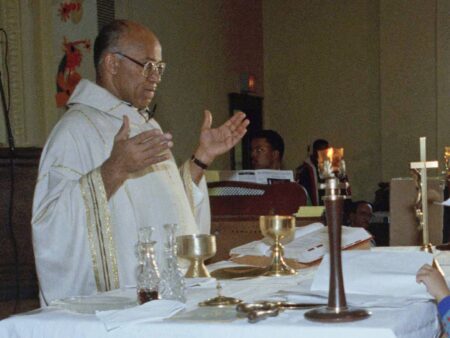
The Archdiocese of Chicago has settled sex abuse claims for $800,000 against five clergymen, including the Rev. George Clements, a well-known Catholic priest and civil rights activist who died in 2019 at 87, according to a settlement document and the lawyer handling the case.Clements was a prominent and sometimes controversial figure in Chicago, recognized for his civil rights work and social justice advocacy. He was known as the first Catholic priest to adopt a child, eventually adopting four sons. His life inspired a made-for-TV movie, “The Father Clements Story,” that aired in 1987.AdvertisementHe served as pastor at Holy Angels Parish in the Bronzeville neighborhood from 1969 to 1991, marched with Martin Luther King Jr. in Chicago, Alabama and Mississippi and was the second Black priest to be ordained in the Chicago Archdiocese. He also served in a number of other Chicago-area parishes, including St. Ambrose Parish from July 6, 1957, to July 6, 1962; and St. Dorothy Parish from July 7, 1962, to June 19, 1969.Cardinal Blase Cupich, archbishop of Chicago, asked Clements to step aside from active ministry in 2019 due to an allegation of sex abuse of a minor that occurred in 1974 while he was pastor of Holy Angels Parish.AdvertisementMitchell Garabedian, a Boston-based attorney who represents the plaintiffs, said the settlement stemmed from an investigation and mediation. Because the claim fell outside of the statute of limitations, a lawsuit was not filed.Garabedian said the abuse claim was from about 1974 to 1979 when the child was 7 to 12 years old while Clements was assigned to Holy Angels Church.The Rev. George Clements during a service in Chicago on Jan. 28, 1991. (Fred Jewell / AP)The archdiocese did not admit wrongdoing in the settlement, which was filed in February, according to the document. A spokesperson for the archdiocese said it does not comment on lawsuits, claims or settlements.The Archdiocese also settled claims against Brother Edward Courtney, the Rev. Michael Weston, the Rev. Daniel Holihan and the Rev. Joseph Fitzharris.Courtney was a teacher at Leo High School on the South Side. The settlement involved a claim of abuse of a victim of around 14 or 15 in 1970 to 1971 in the school, Garabedian said.Weston was accused of abusing a 13-year-old in 1978 while assigned to St. Julie Billiart’s Church in Tinley Park, Holihan, a 6- or 7-year-old in the 1960s while assigned to St. Aloysius’ Church in Chicago, and Fitzharris, a 12-year-old in 1975 while assigned to St. Fidelis’ Church in Chicago.Holihan and Fitzharris have been named in previous settlements, according to Tribune archives.Each individual settlement claim was in the “low six figures,” Garabedian said. He called on Cupich to add Clements to the archdiocese’s public list of clergymen who have been credibly accused of sexual abuse.Advertisement“It is an honor and privilege to represent clergy sexual abuse victims who are changing the world for the better by reporting clergy sexual abuse,” he said.mabuckley@chicagotribune.com
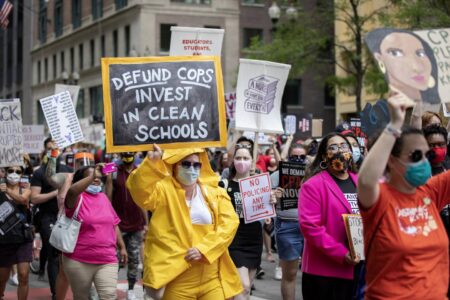
Forty-one high schools will once again evaluate their safety plans and decide by June 15 if they will continue in Chicago Public Schools’ controversial school resource officer program.“This is not just about the vote of whether you want to keep SROs or not,” CPS Chief Safety and Security Officer Jadine Chou said at Wednesday’s monthly Chicago Board of Education meeting. “This is about, how do you look at safety holistically — physical safety, emotional safety and relational safety?”AdvertisementLast summer, 19 schools decided to retain both of their uniformed Chicago police officers; 22 schools chose to keep just one officer; and 12 schools voted to exit the SRO program. Based on the school votes, the board in September approved a one-year, $11 million agreement with the Chicago Police Department for this program.The schools that ditched one or both of their officers received nearly $3.3 million combined to pay for an alternative, such as a restorative justice coordinator or a youth intervention specialist.AdvertisementChou said Wednesday that in the coming weeks CPS will post school discipline data online while determining more ways to measure if these other approaches are working, such as the perception of safety at a school.Protesters gather in the Loop in June 2020 to call for the removal of school resource officers from Chicago Public Schools. (Erin Hooley / Chicago Tribune)The 41 schools still in the SRO program must reconvene their safety committees, which will include at least two parents and two students, to review data, solicit feedback from school community members and present an updated safety plan with a recommendation on school police to the Local School Council for a vote by June 15.The 12 schools that left the SRO program don’t have to go through this “whole school safety” planning process again, and they will receive the same funding as last year, Chou said. Schools that voted police officers out cannot reinstate them.The process was born from the nationwide reckoning that followed the killing of George Floyd by Minneapolis police. CPS partnered with five community-based organizations, which hosted nine community meetings to gather input on the process and devise recommendations such as sharing school safety plans online, increasing student and community involvement in the decision-making and implementation process, and promoting stories of success.“Year one was really focused on building out what that whole school safety plan could look like in and of itself,” said Juleny Santa Cruz of Mikva Challenge, one of the groups that worked on this process. “Year two is a really good opportunity to continue to push the envelope on, how do we shift safety from punitive measures into holistic measures?”tswartz@tribpub.com

A Lombard man has been sentenced to 10 years in prison Wednesday after police caught him headed toward the village’s municipal campus with a Molotov cocktail and a lighter.Christian Frazee, 27, pleaded guilty to one count of conspiracy to commit terrorism, according to a statement from the DuPage County state’s attorney’s office.AdvertisementFrazee and was sentenced to 10 years in the Illinois Department of Corrections by Judge Michael Reidy, the statement said.Frazee also pleaded guilty to one count of child pornography. He was sentenced to three years for that charge, which will be served concurrently with the 10-year sentence.AdvertisementAbout 12:30 a.m. on June 1, 2020, a Lombard police officer saw Frazee dressed in all black wearing a hood, face covering and latex gloves walking near Village Hall and toward the of Lombard municipal campus, according to the statement.He had a bat hanging from his bag and was holding a lighter in his left hand and a Motolov cocktail in his right hand as he walked toward police and city employee cars, the statement said.Frazee also had a butane torch lighter and seven more lighters, according to the statement, which said police had extra patrol that weekend because protests and unrest in Chicago and surrounding suburbs.Frazee was charged with possession of an incendiary device and attempted terrorism at the time.While investigating these charges, police found hundreds of photos and videos of child pornography on Frazee’s phone, according to the statement. Frazee will be required to register as a sex offender for life.“In June 2020, amid legitimate protests, Mr. Frazee armed himself with a Molotov cocktail, headed toward the Lombard Hall and municipal campus intent on terrorizing the community through violence,” State’s Attorney Robert Berlin said in the statement.“If not for the vigilance and quick actions of the Lombard Police Department, the situation may have escalated resulting in the loss of property and perhaps the loss of human life.”
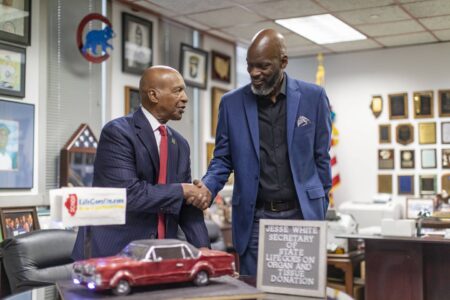
One year ago, Phillip Hanks was enduring the first of two surgeries. One was almost eight hours to give him a new intestine, stomach, liver and pancreas, The following day, Hanks was back on the operating table to get a kidney.Hanks, a father of six, received a multivisceral transplant — a simultaneous transplant of multiple organs — at Indiana University Health in Indianapolis in April 2021. Since then, Hanks, of Joliet, said he doesn’t want to say it’s been easy, but his health has been “smooth sailing.” No hiccups on the health front, no drama.AdvertisementIn fact, Hanks celebrated birthday 51 on Aug. 23. He’s still driving to Indianapolis for hospital checkups, but not as frequently.“I feel great. I’m back in the gym slightly, trying to get more strength,” he said. On Tuesday, the end of National Donate Life Month, Hanks was celebrating the transplant milestone in Illinois Secretary of State Jesse White’s office, surrounded by family. White read the Chicago Tribune story about Hanks’ journey in 2021, and recruited him to be a spokesperson for the secretary of state’s Organ/Tissue Donor Life Goes On program and registry. As one of 12 spokespeople, Hanks has been talking to youth in schools and at secretary of state facilities in the area. He said he’s averaging a couple dozen talks every two weeks, and even shot a public service announcement.Advertisement[embedded content]White calls it a “perfect match.” “He’s been there, done that and now he’s able to tell his story and spread the news of this wonderful program.” White presented Hanks with a commemorative framed license plate with 5ALIVE on it. A family friend made a replica of his dream car (a 1967 Mercury Cougar XR7) in cake form to commemorate the occasion of his second chance at life through organ donation.“Phil has been so incredibly instrumental and inspiring to the program. Our mission is to strengthen the Illinois organ and tissue donor registry through outreach and registration initiatives and one of the ways we are able to do that is partnering with individuals, organizations, faith-based institutions, learning institutions … we have coordinators go out and lead the charge and serve as advocates to help us with that mission,” said Connie Boatman, director of Life Goes On. “Phil hit the floor running. It’s been incredible to have him on board.“As you know so many minorities believe that organ and tissue donation doesn’t work or they have questions about it and we’re constantly working to debunk those myths. He’s a prime example that organ and tissue donation does save lives and it doesn’t matter your race, ethnicity or gender.”Boatman said since White’s tenure in office, which began in 1998, Life Goes On has registered 7.3 million people for the donor program.Hanks still gets teary-eyed when reliving April 26. He was on the transplant list by Dec. 31, 2020, and received his organs four months later, from two donors. Hanks’ wife, Tiva, calls it a miracle.Illinois Secretary of State Jesse White, left, and Phillip Hanks, who had a multiple organ transplant last year, on April 26, 2022 in White’s Thompson Center office. (Brian Cassella/Chicago Tribune)“I’m feeling very blessed,” she said. “We were reminiscing about the actual day: He was asking me questions about what was I feeling? How did it go? How long did it take? It was a mind-blowing experience. I was there by myself in the middle of COVID and it was scary, I spent a lot of the time on the phone with my auntie. My family was really my rock. I spent all that time in the waiting room, just talking on the phone, texting the family, giving them updates on where they were in the procedure and then afterward, she and I talked to the doctors and were felling very grateful that everything went so well. It was an out of body experience to say the least.”Hanks was beaming from ear to ear about his supportive family getting him through it all, sister, aunt, sons and daughter. Tuesday, his 4-month old granddaughter (Gianna Guyton ) was by his side, serving as motivation“We don’t realize how close we are to it until it happens to us, that’s why it’s important for us to get involved,” Boatman said. “That’s why what Phillip does is so important because you have to have representation. He is an awesome representation that it does work. Black people do get organs and you don’t have to be rich, you don’t have to be a celebrity. It’s important that we educate ourselves and we exercise our due diligence to share our positions with our families to let them know what our wishes are.”AdvertisementIllinoisans can register with the secretary of state’s Organ/Tissue Donor Registry at LifeGoesOn.com, by calling 800-210-2106 or by visiting a driver services facility.drockett@chicagotribune.com
A woman convicted of killing her 18-month-old foster child has been sentenced to 50 years in prison for the crime.Except to answer “Yes” or “No” when Superior Court Judge Salvador Vasquez asked a question, Jamilia Shenese Hodge, 37, remained silent during her sentencing Wednesday. Her attorney, Scott King, told the court he advised her not to give a statement since she plans to appeal the sentence.AdvertisementKing, who asked that Vasquez sentence Hodge to the minimum of 45 years, said in his remarks that the entirety of the evidence against Hodge hinged only upon the 6.5 hours Hodge was interrogated over two days, not on any injuries Hodges allegedly inflicted. While he respected the jury’s decision, he said he didn’t agree with the verdict.“We have a defendant in this case where this was the first contact with police she’d ever had in any category,” King said. “A huge mitigating factor is a complete lack of interaction with the court.Advertisement“ (Hodge is) 37 years old and a mom of a 6-year-old, a young woman who didn’t just get barely through but who took classes in business and psychology. She worked and was the sole supporter of her household: her kid, foster kids and two grown men.”King also said the big part of Hodge’s appeal will be methods in which police interrogated her.Prosecuting Attorney Michelle Jatkiewicz asked if the court was really going to let Hodge decline to make a statement, then said that the victim, Emma Salinas, deserved better.“What the court is left with is two aggravating factors: Emma’s age because she was defenseless, and the position of trust. Miss Hodge chose to take the kids on when they were removed from their mother’s care. She not only violated their mother’s trust, but she violated the trust of the state.”Jatkiewicz, who asked that Hodge be sentenced to 60 years, said Hodge admitted to heavy marijuana use since she was 15 and reminded the court that Hodge spent more time casting herself as the victim than showing remorse for the victim.Vasquez said he doesn’t understand how Hodge, who had no previous contact with the law, could’ve killed Emma since nothing ever indicated she would be capable. But he did agree that Hodge violated a lot of trust.“You failed, and you failed horribly,” Vasquez said. “Your obligation was to bring her home, and it didn’t occur.”Vasquez agreed that the state’s argument for the maximum sentence was valid but ultimately decided it wasn’t appropriate. He sentenced her to 50 years with five years of probation and then lifetime parole.AdvertisementGary Detective Sgt. Ed Gonzalez and Ogden Dunes Police Chief Jeremy Ogden, who were among the officers who responded to the call in 2017, attended the sentencing. Both said they “had no words.”“Thinking that Emma’s siblings walked past her in the morning and saw her lying there, not knowing anything was wrong, then being taken away by CPS after school, I’m at a loss for words,” Gonzalez said. “It was tragic for someone this young to have lost her life.”“We’ll always see her lying there in her crib,” Ogden added.Hodge told police that Emma was one of four foster children in her care. She called 911 around 11:42 a.m. May 4 to report that the child had died, according to court records.Autopsy findings showed the girl suffered a possible dislocation of vertebrae in her neck and died of asphyxia due to suffocation, which was complicated by blunt force trauma to the head. The child also had bleeding on the brain, the probable cause affidavit states.The forensic pathologist who conducted the autopsy estimated the child had been dead at least 12 hours before the 911 call, according to court records.AdvertisementIn an interview with police, Hodge said she took two of her foster children to school that morning, returned home to take a third child to school and came back home around 8 a.m., when she noticed Emma’s face was facing the wall in the same position as when Hodge left, according to the probable cause affidavit.Emma had arrived home around 7:30 p.m. May 2 from visiting her biological mother, who complained the child was sick with a fever and diarrhea, records state.Hodge’s boyfriend returned to the Miller home around midnight May 3 and heard Emma yelling or crying in the crib while the other children in the bedroom were trying to sleep, records state. The boyfriend told police he opened the bedroom door and told Emma to quiet down, and she did, records state.Hodge said she did not get out of bed when her boyfriend and his brother came home from working out, but both said Hodge was awake and in the kitchen when they came home, records state.In a follow-up interview, Hodge said she put a hand over the toddler’s face to stop her from crying and put her left hand on the child’s chest as she lay on her back, records state. As she spoke with investigators, Hodge started crying and said she was sorry for what happened and that it was an accident, records state.Meredith Colias-Pete contributed.AdvertisementMichelle L. Quinn is a freelance reporter for the Post-Tribune.
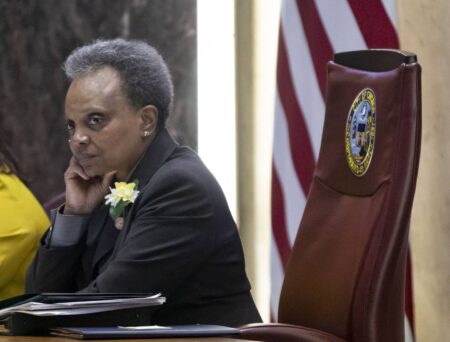
A coalition of news organizations convened by the Chicago Tribune is seeking to block the Chicago Park District’s efforts to seal a pending lawsuit alleging Mayor Lori Lightfoot yelled obscenities at and defamed a Park District attorney during a call about a controversial Christopher Columbus statue.The Park District earlier this month asked a Cook County judge to shield from the public all records in the defamation lawsuit brought by George Smyrniotis, a former Park District attorney who alleges Lightfoot blocked an agreement that had been reached with an Italian American organization to allow the statue to be displayed in a parade.AdvertisementSmyrniotis also alleges the mayor yelled obscene comments at him and another Park District attorney on a heated Zoom call, declaring that while they were “out there stroking your d—- over the Columbus statue, I am trying to keep Chicago police officers from being shot and you are trying to get them shot.”Mayor Lori Lightfoot during a City Council meeting March 23, 2022. (Brian Cassella / Chicago Tribune)The Park District is arguing the case should be sealed to protect attorney-client privilege as it defends itself in a separate lawsuit brought by an Italian American organization over Lightfoot’s decision to remove a Columbus statue in Little Italy following protests in the city in 2020.AdvertisementBut the coalition of news organizations — which also includes the Chicago Sun-Times, Illinois Press Association, WBBM-Ch. 2, WMAQ-Ch. 5, WLS-Ch. 7, WFLD-Ch. 32, WBEZ and WGN-Ch. 9 — argues in a petition filed late Tuesday that “the public has a significant interest in knowing about allegations of government wrongdoing.” That interest outweighs the potential for privileged information being disclosed, the organizations argue in their court filing.“Allegations of workplace misconduct committed by a public official are significant in any context,” the petition states. “Against the backdrop where many public figures have been ousted from leadership roles based on statements or conduct that is thought to be insensitive or inappropriate, the public has an interest in the impact of statements that the complaint attributes to the mayor.”Tribune Executive Editor Mitch Pugh said in a statement that “we find it unfathomable that anyone would argue this case should be conducted in secrecy given it involves the words and actions of public officials.”“The coalition of media organizations that joined together to file this motion should be a clear signal of the stakes,” Pugh said. “We are gratified to see this distinguished group of media companies stand united in defense of the public’s right to know.”The media organizations also argue the public has a vested interest in the debate over the removal of monuments, which has become a major local and national issue, as well as public safety, which Lightfoot allegedly discussed.“Weighing this blanket assertion of privilege against the wide-ranging and significant public interest in this matter, the balance weighs heavily in favor of disclosure here,” the news organizations stated in the petition.A spokeswoman for the Park District did not respond immediately Wednesday to a request for comment. Smyrniotis’ attorney declined to comment.Sign up for The Spin to get the top stories in politics delivered to your inbox weekday afternoons.AdvertisementLightfoot has said she ordered the removal of Columbus monuments after activists forcibly tried to remove a more prominent statue of Columbus in Grant Park, leading to violent clashes between police and protesters. Soon after, the city took down the statues in Grant Park and Little Italy and later removed a lesser-known statue in the South Chicago neighborhood.The removal of the Little Italy Columbus statue prompted lawyers for the Joint Civic Committee of Italian Americans to sue, saying removing the statue violated a 1973 agreement. The defamation lawsuit alleges the Park District and the Italian American organization had reached an agreement last year that would have allowed the statue to be displayed in the group’s annual Columbus Day parade and were negotiating over its permanent removal.ExpandAutoplayImage 1 of 31Workers remove the Christopher Columbus statue from Chicago’s Grant Park during the early morning hours of July 24, 2020. (Armando L. Sanchez / Chicago Tribune)When Lightfoot found out, the lawsuit says, she threatened to pull the permit for the parade and ordered Park District officials — including Smyrniotis, then deputy general counsel for the Park District and who had worked on the settlement — to attend a Zoom meeting.At the meeting last year, Smyrniotis alleges, Lightfoot “proceeded to berate and defame” the lawyers and asked them, “Where did you go to law school? Did you even go to law school? Do you even have a law license?”Lightfoot told them that they had to submit their pleadings to a city lawyer for approval and were told “not to do a f—— thing with that statue without my approval.”“Get that f—— statue back before noon tomorrow or I am going to have you fired,” Lightfoot said, according to the complaint.Advertisement“You make some kind of secret agreement with Italians. … You are out there stroking your d—- over the Columbus statue, I am trying to keep Chicago police officers from being shot and you are trying to get them shot,” Lightfoot said, according to the complaint. “My d— is bigger than yours and the Italians, I have the biggest d— in Chicago.”Lightfoot has dismissed the allegations in the defamation lawsuit as “wholly lacking in merit” and called its claims “deeply offensive and ridiculous.”Smyrniotis alleges the comments defamed him by implying he lacked the ability to perform his job duties. He resigned from the Park District in February, according to the lawsuit.dpetrella@chicagotribune.com
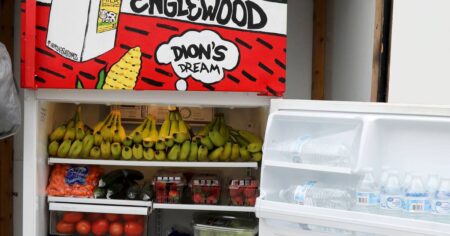
Dion Dawson’s early life may have been filled with poverty, hardship and bouts of homelessness, but his last two years have been nothing short of meteoric.In early 2020, Dawson was working overnights at an Amazon facility to help several family members pay bills in the midst of a pandemic. But by the end of 2021, following the death of George Floyd, he had started a nonprofit aimed at eliminating food insecurity and earned public recognition for his efforts to provide an oasis in a food desert.AdvertisementThis month, Dawson, 34, was one of 18 people from around the globe selected for the highly coveted Echoing Green fellowship, which will help fund his initiatives: Project Dream Fridge, a community refrigerator in the heart of Englewood where residents access fresh fruit and vegetables stocked daily, and Dream Deliveries, which delivers free food to homes across the city and suburbs.“I’ve been blessed to be able to live presently in the moment,” Dawson told the Tribune. “When you come from a background where your family has struggled, where you have to worry about where your next meal will come from, it feels good to actually live in that moment and be able to relish in the fact that day-to-day operations are secure.”AdvertisementEchoing Green is a corporate backed nonprofit that identifies future leaders who have shown bold or innovative problem solving in topics ranging from health, human rights, poverty and racial justice. Former first lady Michelle Obama was a fellow in 1991.Green fellows receive an $80,000 stipend over 18 months and Dawson said he would use the money to expand his food delivery service, which has reached as far north as Evanston and west to Schiller Park. He plans to expand throughout Cook County. He’s looking toward loftier goals, with every $1 million raised being used to feed 1,000 families in a 50-mile radius.“Echoing Green listened to me, listened to my ideas on where I think we have the best impact in changing the narrative in food insecurity,” he said, “and this is about getting to the root of the problem and where food insecurity is anywhere, not just in Englewood.”The topic of food insecurity has a deep personal resonance for Dawson, the youngest of four sons raised on the streets of Englewood by a single mother. He lived much of his young life in homelessness as his mother struggled with substance abuse. Still, homelessness didn’t stop Dawson from finishing school, graduating from Holmes Elementary and Gage Park High schools.After returning from a six-year stint in the Navy, Dawson found himself homeless again, living in his car, saying he had a difficult transition back to civilian life.Dawson’s life took an unexpected detour in May 2020 following Floyd’s death. A community member asked Dawson to do something for his neighborhood in recognition of Juneteenth, an African American holiday that gained widespread support following Floyd’s death at the hands of Minneapolis police. “I said I’m going to feed 100 families,” Dawson recalled.What followed was a whirlwind that included two successful crowdfunding campaigns to buy fresh fruits and vegetables for families and the start of his own nonprofit, Dion’s Chicago Dream. That same year, Dawson and his wife were surprised by talk show host Ellen DeGeneres with a $25,000 check on her show for his community work.Dawson said a real point of pride is that his program has grown from 30 households to 250 and that his organization of five owns its delivery vehicles and pays the crew a living wage.AdvertisementDawson said he remains committed to feeding people “no matter where they are. No matter if they’re in Streeterville, Englewood, West Pullman. Food insecurity doesn’t look like a certain person and it doesn’t come in a certain neighborhood.”wlee@chicagotribune.comTwitter @Midnoircowboy
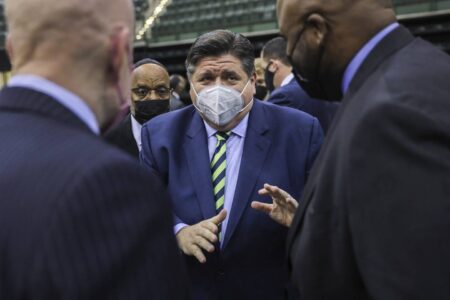
Gov. J.B. Pritzker said Illinois is on a “trajectory to overcome” a shortage of qualified teachers that will be further spurred with measures to increase the pool of substitutes and remove barriers for new and returning educators that he signed into law Wednesday.The new laws lower the minimum age to become a paraprofessional in pre-K through eighth grade classrooms by one year, to 18; reduce the reinstatement fee for lapsed teaching licenses from $500 to $50; allow college students in education programs to apply for substitute teaching licenses if they have at least 90 credit hours; and triple the time short-term substitutes can spend in a single classroom, to 15 days, during periods when the state is under a disaster declaration.AdvertisementSuch efforts are a continuation of laws passed earlier in Pritzker’s tenure to address the crisis of teacher vacancies that including raising the minimum salary for teachers to $40,000 by the 2023-2024 school year.“In this fight for our children’s futures, school districts should know they’re far from alone,” said Pritzker, who signed the bills at Springfield High School. “We are continuing to find new ways to bring more help into our classrooms so that all students can get the education that they deserve.”AdvertisementDespite hiring 5,600 teachers across the state this school year, the greatest number of hires on record, more than 2,100 teaching positions remain unfilled, State Superintendent of Education Carmen Ayala said at Wednesday’s bill-signing.Gov. J.B. Pritzker after he signed the fiscal year 2023 budget at Chicago State University on April 19, 2022. (Jose M. Osorio / Chicago Tribune)Those vacancies are “concentrated in hard-to-staff schools and subjects,” disparately affecting low-income, bilingual and special education students, Ayala said. An additional 2,400 paraprofessional openings are also vacant, according to the Illinois State Board of Education.“As we look forward, we must continue to root our efforts to strengthen the teaching profession in equity,” Ayala said. “Not all schools and not all students are experiencing teacher staffing issues in the same way.”State Rep. Sue Scherer, a former teacher who sponsored parts of the legislative package, said the new laws will “make a difference” in classrooms even before the current school year ends. The expansion to allow short-term substitutes to spend 15 consecutive days in a classroom, rather than just five, is effective immediately, as is the reduced license reinstatement fee.“So many politicians will say education is important, but then when you get to the backroom deals and it’s time to finalize the budget, it’s the first thing cut,” said Scherer, a Decatur Democrat. “It’s heartwarming that people are kind of putting their money where their mouth is.”Effective Jan. 1 are the laws lowering the paraprofessional age requirement and allowing college students to substitute teach. The measures will allow future teachers to get classroom experience while simultaneously easing the struggle to find people to lead classrooms, lawmakers who sponsored the measures said.State Sen. Doris Turner, a Springfield Democrat, said she anticipates the new laws will pay dividends for years to come.“Education is the foundation on which community is built,” Turner said. “We owe it to current students and future generations to pour as much into Illinois educational systems as humanly possible.”Advertisementcspaulding@chicagotribune.com

Meta, the social media giant formerly known as Facebook, is expanding its massive $1 billion data center under construction in DeKalb to nearly 2.4 million square feet, putting the college town west of Chicago at the center of its metaverse.Slated to open next year, the five-building complex filled with servers and other computing equipment, will create 200 jobs and power everything from Facebook posts to Instagram photos as one of 17 Meta data centers across the U.S.Advertisement“This is the physical backbone of all of our apps and services,” said Meta spokesman Tom Parnell.The expansion, announced Thursday, will make the DeKalb data center one of Meta’s largest facilities, and an integral part of its ambitious plans to expand its social media platforms into an immersive virtual reality experience, Parnell said.AdvertisementMeta’s bricks-and-mortar data centers supply the massive computing power needed to share information and connect users on the evolving social media platforms. The company has 14 data centers operating in the U.S., with three under construction, including DeKalb.The DeKalb data center broke ground in 2020, starting with two buildings that are now 70% complete, Parnell said. Construction on the three additional buildings began in January, and the infrastructure buildout at the sprawling 505-acre site is expected to be finished in 2023.Meta is hiring 200 workers to operate the facility, with positions ranging from technicians and electrical engineers to culinary staff. About half of the employees are already onboard, preparing the data center for its launch next year.“The impact Meta has made within the City of DeKalb goes beyond just an economic one,” DeKalb Mayor Cohen Barnes said in a news release. “Since day one, they have made a concerted effort to make a larger impact on DeKalb, and I look forward, with this announcement, to seeing that partnership continue to grow over the years to come.”The demand for data centers has been growing exponentially in recent years, spurred by the heightened need for cloud technology and remote connectivity during the COVID-19 pandemic, which saw work-from-home go mainstream. The adoption of long-term hybrid strategies for many companies portends continued growth, according to industry analysts.The Chicago area is tied with Atlanta as the fourth largest data center market in the world behind Northern Virginia, Silicon Valley and Singapore, according to a new study by Cushman & Wakefield. The study cites low cost of land, a robust development pipeline and lower power costs than most large data centers as advantages for Chicago.The study also notes that Chicago-area sites come with “sizable incentives,” a factor that helped bring Facebook/Meta to DeKalb.In 2019, Illinois created the Data Center Investment Program, offering an exemption from state and local sales and use taxes for companies that invest at least $250 million and create 20 new operational jobs in a data center. The program also requires the data center to be carbon-neutral.AdvertisementFacebook was granted the data center sales tax exemptions by the state, Parnell said.As part of the green building requirement, Meta is partnering with the University of Illinois at Urbana-Champaign to develop a more sustainable concrete mix for construction of the data center. Meta has also invested in two new wind energy projects in Morgan and DeWitt counties, with the goal of supporting DeKalb data center with 100% renewable energy.One thing the DeKalb data center ostensibly won’t be processing is facial recognition technology after agreeing to pay $650 million in a landmark settlement over alleged violations of Illinois’ biometric privacy law.In November, Facebook announced it would shut down its facial recognition system amid “growing concerns” over the widespread use of the technology. As a result, Facebook said it planned to delete more than a billion facial recognition templates it had stored, putting an end to the feature that automatically recognized if people’s faces appear in memories, photos or videos.About 1.6 million Illinois Facebook users who filed claims can expect to receive their $397 checks beginning May 9, according to Chicago attorney Jay Edelson, who brought the lawsuit against Facebook seven years ago.rchannick@chicagotribune.com
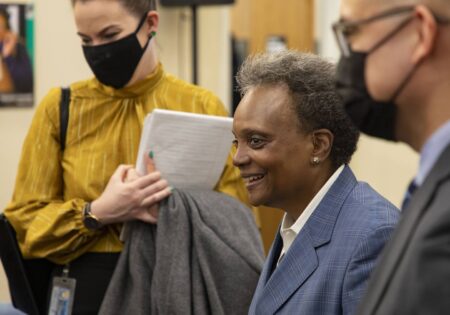
Chicago Mayor Lori Lightfoot’s controversial free gas and public transit card giveaway narrowly passed the City Council Wednesday after aldermen debated whether the measure will truly help struggling residents or simply be a political “gimmick.”The plan to hand out 50,000 gas cards, worth $150 each, and 100,000 Chicago Transit Authority fare cards, $50 each, passed 26-23 despite reservations from several aldermen that it was a political stunt and would be largely ineffective. Lightfoot’s program, dubbed “Chicago Moves,” followed mayoral candidate Willie Wilson’s self-funded $2.2 million gas giveaways to drivers who camped out at gas stations.Advertisement“Some of our neighborhoods have intentionally been starved for no other reason than systemic racism,” Lightfoot said Wednesday before the City Council vote. “Should we not address that problem, solve it? We are a city. A city of neighbors.”Ald. Raymond Lopez, 15th, who has also declared his candidacy for mayor in the 2023 election, dismissed Lightfoot’s plan before the vote: “To say it comes off as a gimmick would be an understatement.”AdvertisementMayor Lori Lightfoot, shown Monday, got her gas and public transit fare card giveaway through the City Council Wednesday. (Brian Cassella / Chicago Tribune)Ald. Andre Vasquez Jr., 40th, cried foul over the timing of Lightfoot putting tax dollars into gas cards “all of a sudden” when a political rival, Wilson, concluded multiple gas giveaways.Wilson has announced he’ll run for mayor in February. Lightfoot has not formally declared but is widely expected to seek a second term.Other aldermen expressed concern about the city subsidizing gas purchases, which they said was environmentally unfriendly, and argued that the money would be better spent on affordable housing or other needs.Lightfoot brushed off the criticism that her program is a political stunt as “nonsense.” At one point, she brandished two dollar bills to emphasize that people are struggling financially.Lightfoot also tried to shoot down hang-ups over the environment and public transit by saying the city was doing everything in its power to keep the CTA safe with more police and cameras, and that “back on planet reality,” many residents live in public transit deserts and need a car to get around.“Am I solving every problem with this? Of course not,” Lightfoot said.With Lightfoot expected to announce her campaign for a second term in the near future, her proposal called for spending $12.5 million in city money for the gas and public transit cards. Facing pushback, Lightfoot amended her initial plan to direct the cards to lower-income households, from $140,000 to $93,200 for a family of four, and to ensure three-fourths of the $7.5 million in gas cards go to people from the mobility-challenged neighborhoods. The cards would be distributed via lottery if more eligible households apply than the number of cards that are available.AdvertisementThe measure passed with the support of three aldermen — Gilbert Villegas, 36th; Debra Silverstein, 50th; and Derrick Curtis, 18th — who voted against the ordinance in committee. Lightfoot made changes to her bill so more residents would be eligible.