


Browsing: Local Stories

A woman was left dead in a West Side alley with her two youngest children huddled
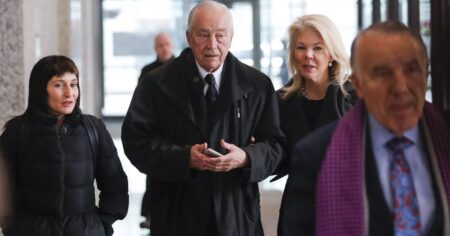
Former Chicago Ald. Edward Vrdolyak has been released early from federal prison after serving about five months of his 18-month sentence for a tax-related conviction.Vrdolyak, 84, had been housed at the federal medical prison in Rochester, Minnesota since late November. As of Friday, his location was listed on the U.S. Bureau of Prisons web site at a halfway house in Downers Grove.AdvertisementGiven Vrodlyak’s age and ill health, it’s likely he’s serving out the rest of his sentence on some form of home detention, though still under the jurisdiction of the prison bureau. His sentence is scheduled to conclude in March 2023.A BOP spokesman could not immediately be reached Friday, and Vrodolyak’s attorney did not respond to a request for comment.AdvertisementVrdolyak, a former Chicago political powerhouse and twice-convicted felon, reported to prison on Nov. 30 to begin serving his sentence stemming from millions of dollars in legal fees he and a colleague reaped in the state’s massive settlement with the tobacco companies in the 1990s.In January, just a few weeks after his arrival, Vrdolyak’s attorneys filed an emergency petition asking U.S. District Judge Robert Dow to order his release, citing the former alderman’s advanced age, rapidly declining health and susceptibility the surging omicron variant of COVID-19.Prosecutors objected, saying that Vrdolyak was receiving top-notch medical care in prison and that efforts to win release, which began with a request to the U.S. Bureau of Prisons the day after he reported, showed a “remarkable display of white collar criminal privilege.”“The government has no doubt that prison life is tough on the defendant and his family,” Assistant U.S. Attorney Amarjeet Bhachu wrote in a filing in January. “But time in prison is not meant to be a walk in the park.”In denying early release in March, Dow noted that Vrdolyak would be eligible to petition the Bureau of Prisons for release to home confinement once he’s completed 25% of his sentence, which would have been mid-April.Vrdolyak pleaded guilty in March 2019 to a tax charge alleging he obstructed an IRS investigation into payments to and from his friend and associate Daniel Soso related to the state’s $9.3 billion settlement with tobacco companies in the late 1990s.In asking for prison time, prosecutors said Vrdolyak had been paid at least $12 million in fees stemming from the settlement even though he did no legal work on the case and hid his involvement from the Illinois attorney general.Vrdolyak’s lawyers argued that his cut from the tobacco deal was a legitimately earned consulting fee paid by a law firm that had sought his expertise and assistance.AdvertisementSoso, 70, a lawyer and former Chicago cop, pleaded guilty in 2019 to one count of income tax evasion for failing to report more than $3 million in income in the deal. He was sentenced in March 2020 to 2 years in prison.jmeisner@chicagotribune.com
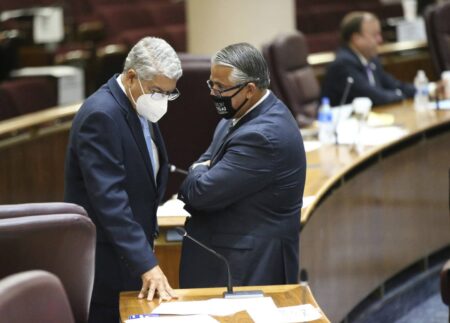
With a deadline approaching to avoid the first Chicago ward map referendum in three decades, Latino aldermen failed this week to convince City Council colleagues to let them make changes to the design of the 50 wards they’re set to present to voters.That effectively cuts a map created by good-government groups out of a possible late June decision by voters on the shape of Chicago’s wards for the next decade. The development also sets up a potential head-to-head ballot showdown between the Latino proposal and a map favored by most of the council’s Black Caucus and others.AdvertisementBut there’s still plenty of time for aldermen to lay down their sabers and reach a deal before the May 19 deadline to avoid the referendum.In political terms, three weeks is forever, and Chicago aldermen have a well-established history of gnashing their teeth at one another for months only to come to an eleventh-hour agreement on a map rather than letting voters choose.AdvertisementIn the latest twist of the monthslong fight, the Latino Caucus hoped to get the council Wednesday to suspend its rules and for a majority of aldermen to pass either their map or the one backed by the Black Caucus and others. Doing so would have allowed the Latino Caucus to then amend its map for the June referendum in order to reflect changes it agreed to this year with the good government groups, including CHANGE Illinois.But the Latino Caucus didn’t have the votes and didn’t bring the proposal to the council.Latino aldermen had hoped that presenting a compromise map with CHANGE Illinois would bolster their argument to voters that their version is fairer to all Chicagoans, with officials who crafted the so-called People’s Map working with them to make the case.The partnership with good-government advocates could also have helped them label a competing map as one crafted in a backroom by political insiders. That’s the map backed by the City Council Rules Committee, which is now favored by 34 aldermen, including most of the Black Caucus.The chair of the Latino Caucus, Ald. Gilbert Villegas, 36th, said the caucus still hopes to convince People’s Map backers to join them in advocating for the Latino Caucus map, even though it cannot be amended to reflect changes the two groups agreed upon.“We hope to be able to make the case to them that our two maps are very similar, that our process of creating our map has been far more transparent and that we’ve worked harder to keep communities intact” than the architects of the Rules Committee map, Villegas said.Black Caucus chair Ald. Jason Ervin, 28th, said a deal could be made before the deadline if supporters of the Latino map are ready to compromise.Advertisement“I think they need to realize they shot their shot (with the failed People’s Map partnership), and that a majority, more than a majority of the council and Chicagoans aren’t with them on this,” Ervin said. “We’ve made compromises. If they’re willing to do that, there’s a chance we could get there.”Latino Caucus Chair Ald. Gilbert Villegas, 36th, right, with Ald. Roberto Maldonado, 26th, during a City Council meeting in September. (Antonio Perez / Chicago Tribune)Without the agreed-upon amendments to the Latino map, which is supported by 15 aldermen, the People’s Map backers have said they won’t work to pass it in the June referendum.“I won’t say it’s impossible, but the likelihood is that we will simply be educating people about the maps on the ballot and what the data says,” said Chaundra Van Dyk, project manager for the CHANGE Illinois government ethics organization that was a key player in the creation of the People’s Map.CHANGE Illinois Executive Director Madeleine Doubek expressed disappointment in the council’s refusal to allow the amendments to the Latino map, saying aldermen who declined to support it “did so to make sure the people of Chicago have no say in shaping their communities for the next 10 years.”“In doing so with time running out, they are knowingly stopping Chicagoans from having the option of voting June 28th on the only ward map with aldermanic support that the people of the city helped design,” Doubek said in a statement.It remains to be seen whether the June 28 referendum takes place. Mayor Lori Lightfoot has by and large remained on the sidelines of the fractious council fight, but she could still play a part in brokering a deal before May 19, as her predecessor, Rahm Emanuel, did in helping 41 aldermen (the minimum needed to avoid a referendum) come to agreement on a map following the 2010 U.S. census.AdvertisementSign up for The Spin to get the top stories in politics delivered to your inbox weekday afternoons.The front in the fight shifted slightly Wednesday, as new 11th Ward Ald. Nicole Lee announced she joined 33 other council members in endorsing the Rules map. Lee, who was appointed by Lightfoot to complete the term of Ald. Patrick Daley Thompson after his conviction in a federal tax fraud case, said it’s the best option for unifying her constituents as well as the Asian American community.“It’s the clear leader in creating the strongest opportunities for Asian American voters and keeps more of today’s 11th Ward together,” Lee said at a City Hall news conference. “It’s imperative for my community that our voices are strongly represented now and into the future.”The remap fight has dragged on since the early fall, highlighting and deepening conflicts that have long simmered among aldermen of different ethnicities.Some Latino aldermen are still smarting from the remap following the 2010 census, believing they should have gotten more majority-Latino wards then.AdvertisementBlack aldermen argue the Latinos are in danger of overextending themselves by creating more Latino wards than they can consistently win.The proposed Black Caucus map that the council Rules Committee has endorsed creates 16 Black-majority wards, 14 Latino wards and an additional ward with a Black plurality.The proposed Latino map has 16 Black-majority wards and 15 Latino-majority wards following 2020 U.S. census data showing Chicago’s Latino population climbed and Latinos overtook Blacks as the city’s second-largest racial or ethnic group while the Black population continued to fall.Chicago voters last faced a referendum on the ward maps following the 1990 census. Following that referendum, a group of aldermen and others filed a federal lawsuit challenging the result that ended up costing taxpayers $20 million.jebyrne@chicagotribune.comayin@chicagotribune.com
Haleigh Hutchinson gave birth to her son late last year in the midst of a COVID-19 outbreak and immediately had to watch him undergo heart surgery. Charlie is now a happy, 9-month-old but his heart problems mean that contracting the virus could be dangerous for him.So Hutchinson, 29, of North Aurora, has been anxiously waiting for a vaccine to be authorized for young children. In the meantime, she stays away from church and other community venues. Her son hasn’t met her family and friends.Advertisement“My son and really all the kids who couldn’t get the vaccine are kind of like sitting ducks in this,” Hutchinson said. “It’s like … society has moved on and has made the kids feel like, well, ‘If they die, they die.’ ”Moderna on Thursday submitted a request to the Food and Drug Administration for emergency authorization of its COVID-19 vaccine for children younger than 6, a welcome development for parents who have faced long waits to vaccinate their youngest children, particularly for those like Hutchinson, who have immunocompromised kids.AdvertisementVaccine trials for young children have greater regulatory and ethical concerns and naturally come last after such measures have been tested and authorized for older people. But the long wait, beset with some delays, has stalled a return to normal for some families with babies and toddlers. In February, Pfizer had to delay its request for emergency authorization for the same age group in order to further test a third shot after its two-dose regimen was found to be not as effective in the youngest age bracket.“It’s a process that has taken longer than anyone really anticipated,” said Dr. Bill Muller, an infectious disease specialist at Lurie Children’s Hospital and the site lead there for the Moderna trials.The wait partially has to do with how vaccine trials for children are set up, Muller said, but could also be due to resources stretched thin as the FDA and drug companies are in the process of testing and evaluating boosters, treatments for COVID-19 and other vaccines and treatments.“In the bigger picture of vaccine authorization throughout history, this has still been really quick,” he said.Muller estimated that it could be several weeks before the FDA makes its decision, as it moves through its normal steps for evaluating vaccine trials.Meanwhile, parents of young children are feeling the strain.“It has been so stressful just waiting, and waiting,” said Laura Hohm, mother of a 4-year-old daughter who is not yet eligible. “It seems like for families with children in this age group, it’s been dangled in front of us and then taken away so many times.”Laura Hohm with her children, Charlotte, 8, left, and Catherine, 4, at their Aurora home on April 28, 2022. Hohm is looking forward to being able to get a booster COVID vaccine for Charlotte and a first vaccine for Catherine. (Chris Sweda / Chicago Tribune)Margot Taylor, a 36-year-old mother in Lincoln Square, has a 2-year-old daughter. She’s rarely eaten out during the pandemic or seen family.Advertisement“Today, my husband has four shots of the vaccine and my daughter has none,” she said.Vaccine trials for children differ from those for adults, which look for whether participants develop a symptomatic case of the virus. For children, researchers track whether the inoculation generates an immune response to determine if it’s effective.Moderna’s vaccine is currently approved for adults 18 and older, while Pfizer’s vaccine is approved for children 5 and older.In announcing its authorization request, Moderna said its vaccine had good safety results and a “robust neutralizing antibody response” in children 6 months to under 6 years old. The trials also found that the vaccine had an efficacy rate of 51% in children 6 months to 2 years and 37% in 2 to under 6 years.While those figures are noticeably lower than the effectiveness of Moderna’s vaccine when it was authorized for adults late 2020, Moderna notes that the trials were conducted during the omicron wave, when vaccines were largely also less effective in preventing infection for adults, though continued to prevent serious hospitalization and death.Muller said it’s not an apples-to-apples comparison because the earlier adult vaccination trials better “matched” the strain of COVID-19 circulating at the time. He said the vaccines for children may eventually be approved as a three-dose regimen to increase efficacy.AdvertisementMuch still needs to be done to achieve higher vaccination rates of eligible children, aged 5 to 11, as well, he said. Only 38% of children in Illinois in that age range have been fully vaccinated, according to information from the American Academy of Pediatrics.“There’s still is a lot of work to do on messaging for vaccines in general,” Muller said. “It needs to be emphasized that the benefits and safety of the vaccine far exceed the risk.”mabuckley@chicagotribune.comtmijares@chicagotribune.com
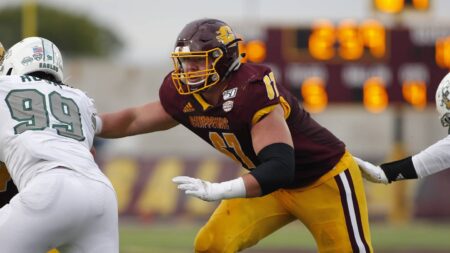
Ryan Poles didn’t make a splash on his first draft night as Chicago Bears general manager, but that was expected.The Bears didn’t have a first-round pick because former GM Ryan Pace traded it last year to move up to draft quarterback Justin Fields, and Poles didn’t execute a trade up into the first round Thursday night.Advertisement[ [Don’t miss] When do the Bears pick? What do the mock drafts say? Everything you need to know about the 2022 NFL draft. ]Instead he will try to select impactful players Friday on Day 2, when the Bears have the Nos. 39 and 48 picks in the second round and No. 71 in the third round.Nine offensive linemen, six wide receivers and four cornerbacks were selected in the first round, but many other interesting prospects are available. Here are some noteworthy players still on the board at the Bears’ three biggest positions of need and a handful of other prospects who might merit consideration.AdvertisementCentral Michigan’s Luke Goedeke plays against Eastern Michigan on Oct. 5, 2019, in Mount Pleasant, Mich. (Al Goldis/AP)Luke Goedeke, G, Central Michigan: Teammate Bernhard Raimann has been discussed more widely by draftniks, but league personnel have been buzzing about Goedeke since his pro day workout. He played right tackle for the Chippewas but likely will be a guard as a pro.Cam Jurgens, C, Nebraska: If the Bears like the idea of sliding Lucas Patrick over to right guard, they could add Jurgens as a rookie who should compete for a starting role immediately.Dylan Parham, G, Memphis: After failing in their bid to add Ryan Bates as a restricted free agent, the Bears have a need at right guard. Adding Parham after a trade down in Round 2 or in Round 3 could fill that void.Nicholas Petit-Frere, OT, Ohio State: A right tackle for the Buckeyes in 2020, he shifted to the left side last fall. Petit-Frere has the athleticism to remain on the left side but would need to be developed.Bernhard Raimann, OT, Central Michigan: A transfer student from Austria, Raimann arrived at Central Michigan as a tight end before being converted to the offensive line. He settled in at left tackle during the COVID-shortened 2020 season and showed real improvement last fall. Some thought he was a potential first-round pick, but knee issues might have dropped him on some boards.Clemson cornerback Andrew Booth Jr. plays against Pittsburgh on Oct. 23, 2021, in Pittsburgh. (Keith Srakocic/AP)Andrew Booth Jr., Clemson: The Bears have a real need at nickel cornerback, and that could be where Booth projects best in the NFL. Some thought he would be selected in the back half of the first round.Kyler Gordon, Washington: Many figured he would go in Round 1 with Huskies teammate Trent McDuffie. The Bears need a starter opposite Jaylon Johnson, so it’s possible if Gordon is available the position could trump their needs on the O-line and at receiver.Roger McCreary, Auburn: Played well in press man last season, when he led the SEC in pass breakups.AdvertisementCam Taylor-Britt, Nebraska: Skilled zone corner could be a good fit for what coach Matt Eberflus wants to do on defense, especially in Round 3.Tariq Woolen, Texas-San Antonio: Rare combination of size (6-foot-4, 205 pounds), length (33⅝-inch arms) and speed (4.26 seconds in the 40-yard dash) makes Woolen an intriguing Day 2 prospect.Memphis wide receiver Calvin Austin III runs after catching a pass against Central Florida on Oct. 22, 2021, in Orlando, Fla. (Phelan M. Ebenhack/AP)Calvin Austin III, Memphis: The former walk-on is small at 5-8, 170 pounds. But he’s also lightning quick and ran a 4.32-second 40-yard dash at the combine.John Metchie III, Alabama: Known for his toughness, Metchie was sidelined in December with an ACL tear and didn’t participate in on-field pre-draft activities. But before that he had 96 catches for 1,142 yards and eight touchdowns in 13 games in 2021.Skyy Moore, Western Michigan: Touted for his crisp route running, savvy in getting open and willingness to make contested catches. He had 95 catches for 1,292 yards and 10 touchdowns in 2021.George Pickens, Georgia: A gifted wide receiver whose stock dropped after he missed most of the 2021 season with a torn ACL. His best season came as a freshman in 2019 (49 catches, 727 yards, eight touchdowns).Advertisement[ [Don’t miss] 12 intriguing wide receiver options for the Bears in the NFL draft ]Alec Pierce, Cincinnati: The former Glenbard West multisport athlete utilizes size, athleticism and speed to make an impact, including 52 catches for 884 yards and eight touchdowns in 2021.Wan’Dale Robinson, Kentucky: After two seasons at Nebraska, he transferred to Kentucky and had 104 catches for 1,334 yards. He’s undersized but athletic and excellent with the ball in his hands.[embedded content]Jalen Tolbert, South Alabama: A smooth playmaker who totaled 2,559 receiving yards and 16 touchdowns in his final two seasons, though he’ll have a big jump in level of competition in the NFL.Christian Watson, North Dakota State: He has explosiveness and speed — which he showed off with a 4.36-second 40-yard dash at the combine — to go with solid production at the FCS level. But he’s another one who has a leap in competition ahead.Houston defensive lineman Logan Hall (92) breaks through the Temple line on Nov. 13, 2021, in Philadelphia. (Chris Szagola/AP)Logan Hall, DL, Houston: He made a top-30 visit to Halas Hall and has the versatility to be used similarly to how Eberflus deployed DeForest Buckner in Indianapolis.Nik Bonitto, edge, Oklahoma: He had 32 tackles for a loss and 18½ sacks in his college career, including 15 sacks over the last two seasons. He ran the 40-yard dash in 4.54 secondsAdvertisementArnold Ebiketie, edge, Penn State: After transferring from Temple for his fifth-year senior season, he totaled 17 tackles for a loss, 9½ sacks and two forced fumbles.Boye Mafe, edge, Minnesota: Mafe had 15 sacks in his college career, including seven in 2021. He’s a fast, explosive athlete who needs development.David Ojabo, edge, Michigan: The Scottish-Nigerian edge rusher had 11 sacks and five forced fumbles in 2021. But he suffered a torn Achilles tendon at Michigan’s pro day and is recovering.[ [Don’t miss] NFL draft Day 1: Defensive players taken with the 1st 5 picks before a run on wide receivers and offensive linemen ]Nakobe Dean, ILB, Georgia: Dean doesn’t play a position of great need for the Bears. But many analysts rank the 2021 Butkus Award winner and first-team All-American as the best player available, with some having predicted he would go in the middle of the first round.Jaquan Brisker, S, Penn State: He was named a second-team All-American by multiple outlets as a fifth-year senior in 2021 after transferring from junior college in 2019. A defensive leader for the Nittany Lions, he had 153 tackles, 9½ for a loss, five interceptions and 14 pass breakups in 21 career starts.Kerby Joseph, S, Illinois: Joseph had five interceptions, seven passes defended and three fumble recoveries in 2021.AdvertisementJalen Pitre, S, Baylor: The versatile safety had two interceptions, nine passes defended, three forced fumbles, three sacks and 18 tackles for a loss as a fifth-year senior.

A man riding a scooter died after colliding with a truck in the South Austin neighborhood Thursday afternoon.At about 2:15 p.m., the unidentified 35-year-old was westbound on Erie Street when he entered the intersection at Cicero Avenue and crashed into a truck that was southbound on Cicero, Chicago police said in a media notification.AdvertisementThe man was pronounced dead at 2:46 p.m. at Stroger Hospital, according to the Cook County medical examiner’s office. An autopsy was scheduled for Friday.Police continue to investigate and no citations have been issued.
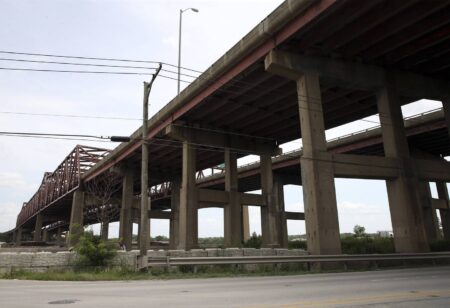
The number of Illinois bridges in poor condition has increased over the last four years and a quarter of the state’s water lines are tainted by lead, according to the latest infrastructure report card from the Illinois Section of the American Society of Civil Engineers.But despite the state’s third consecutive below-average overall grade of C-minus in the quadrennial report, massive investments from the state and federal governments led the authors to conclude that “fortunately, the future is bright.”Advertisement“This report card demonstrates how proper and consistent funding can produce more jobs, safer communities and put more money back in taxpayers’ wallets,” said Andrew Walton, president of engineering group’s Illinois section, in a news conference at Union Station. “These investments will also help Illinois capitalize on our geographical advantage, which in turn will create and promote growth for our state’s economy and citizens.”The engineering group completes similar report cards for 36 states, and Illinois was one of 15 to get an overall grade of C-minus, with six other states getting a D-plus or worse.AdvertisementAcross 11 infrastructure categories, the state maintained or improved its ranking in all but one category, its drinking water score, which fell to a poor rating.The report introduced a grade for stormwater infrastructure for the first time, assigning Illinois a poor grade because of its aging and undersized system.The report found 2,405 bridges in Illinois to be in poor condition, up from 2,303 bridges in the 2018 report. The analysis notes that 70% of Illinois bridges in poor condition are owned by municipalities and counties, suggesting a need to address the backlog in local maintenance.Already in the works is a $1.2 billion reconstruction of bridges and roads in a 12- or 13-mile stretch of Interstate 80, from a couple miles west of the Interstate 55 interchange, all the way to the Des Plaines River, said Illinois Transportation Secretary Omer Osman. A project like that will increase the standards of several bridges and roads, extending their life expectancies by “hundreds of years,” Osman said.The I-80 bridges over the Des Plaines River in Joliet in 2019. (Terrence Antonio James / Chicago Tribune)“Progress does not happen overnight,” Osman said. “We are on our way, not only to keep improving infrastructure, but also to invest public resources where they do the most good.”The number of state-maintained highways in excellent condition rose 5.2% in 2020 compared to the previous year, but 18.6% of highways were rated poor, according to the report. Also, congestion around the Chicago area still makes trips about one-third longer during peak travel times.The state’s water infrastructure remains one of the biggest problems. More than 1 million of the state’s 4 million drinking water service lines have been flagged for containing levels of lead or lead solder, according to the report, one of the largest shares of lead service pipelines in the nation.“We have a lead problem, a lead service pipe problem,” said Patrick Lach, lead author of the report. “That is a major safety issue that we are concerned about with our citizens who have those service lines.”AdvertisementA federal investment of $288 million this year, solely to improve Illinois’ water infrastructure, should help propel the state’s replacement of lead service lines, the report said. That must be coupled with workforce development, especially for water treatment operators, it said.Gov. J.B. Pritzker’s “Rebuild Illinois” plan, an ongoing six-year, $45 billion effort to improve state roads, bridges, rails and public buildings, along with the state’s allotment from the $1 trillion federal infrastructure plan President Joe Biden signed into law in November, signal a “new era” for Illinois infrastructure, Walton said.Rebuild Illinois, from 2019, invests $25.3 billion over six years into upgrading the state’s roads and bridges. That includes $561 million for reconstructing the Interstate 190 Kennedy Expressway near O’Hare and $25.4 million to improve the bridge under the Old Post Office.Illinois is also slated to receive nearly $1.4 billion in federal funding over five years to upgrade its deteriorating bridges. That’s only a portion of the expected total of more than $17 billion the state can expect for infrastructure improvements..The earmarked investments ensure money will continue flowing into the state’s infrastructure for the next several years, but experts urged officials to look beyond the current investments to assess how to ensure sustained revenues to maintain roads.Revenues from fuel taxes are expected to fall, both in the short term with Pritzker’s six-month freeze on the gas tax, as well as in the future as the auto industry is shifting toward electric vehicles, according to the report.AdvertisementDespite the stagnant overall grade, state Sen. Don DeWitte, a St. Charles Republican and minority spokesperson on the Senate Transportation Committee, said “the needle is moving up.”“These investments are showing positive progress in the areas of roads, bridges, air and rail systems in Illinois that not only bring these long-delayed improvements into safer states of good repair, but will maintain these foundational infrastructure investments for further expansion and system upgrades, to maintain Illinois’ status as the transportation hub of the nation,” DeWitte said.cspaulding@chicagotribune.com
The U.S. Drug Enforcement Administration has suspended an Evergreen Park pharmacy’s ability to dispense certain controlled substance medications, after it allegedly gave patients dangerous amounts and combinations of drugs.The DEA issued an order to Evergreen Park Pharmacy on Wednesday immediately suspending the pharmacy’s ability to give patients certain medications including oxycodone, morphine, codeine and Valium. Certain drugs are labeled as controlled substance medications because of their potential for abuse and risk.AdvertisementThe order came after a DEA investigation revealed alleged regulatory violations and an Illinois Prescription Monitoring Program review showed that excessive opioids and dangerous drug combinations were allegedly given to three patients. A pharmacy expert who reviewed records found that the quantities and combinations of drugs dispensed to the three patients allegedly were “not for legitimate medical purposes, and could have led to respiratory failure and death,” the DEA Chicago division said in a news release.Hani Abdallah, a pharmacist and the pharmacy’s owner, said Thursday when contacted by the Tribune that the pharmacy did nothing wrong and plans to fight the suspension. The pharmacy is still dispensing other types of medications not covered by the suspension.AdvertisementAbdallah said he knows the three patients well, and they were all using the medications for legitimate purposes. He said they started on high amounts of the medications, but he was able to lower them.“I think I did a good job at bringing them down, and for the DEA to come in and do that, it’s just not right,” Abdallah said.When suspensions are issued, pharmacies have the right to administrative hearings before an administrative law judge renders a final decision about whether to revoke a pharmacy’s registration to legally dispense controlled substance medications. State-licensed pharmacies must be registered with the DEA to legally dispense controlled substance medications.In recent years, doctors and pharmacies have come under scrutiny for how they prescribe and dispense certain medications, such as opioids, which can be addictive and lead to death when people overdose on them.The state and nation have been dealing with an epidemic of opioid addiction, exacerbated by the pandemic.In 2020, the number of opioid deaths in Illinois rose 33% compared with 2019, according to Gov. J.B. Pritzker’s office. In March, Pritzker announced a statewide Overdose Action Plan to help address the issue in some of the state’s hardest-hit areas.
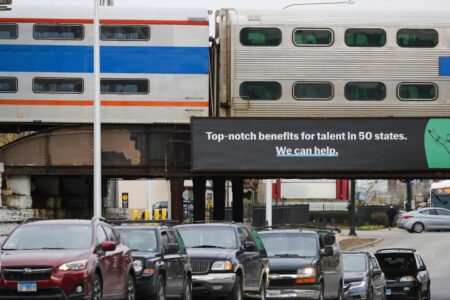
Metra is preparing to replace nearly a dozen aging rail bridges along a stretch of Chicago’s North Side, marking the long-delayed next phase of a bridge project that began more than a decade ago.Metra officials say their preferred plan for the project on the busy Union Pacific North Line would mean minimal changes to commuter train schedules. But property owners who live near the project raised concerns that the construction plan will harm them and their homes.AdvertisementThe $262 million project involves replacing 11 bridges, nearby track and retaining walls along the Union Pacific North Line between Fullerton Avenue in Lincoln Park and Cornelia Avenue in Roscoe Village. The bridges are around 120 years old, and are beyond their useful life span, Metra has said.The project is still being designed, but Metra’s preferred option involves shifting the tracks about 20 feet to the west within the existing railroad property, in a series of moves that will allow service to continue on two tracks during construction.AdvertisementA train travels over the railroad bridge on West Fullerton Avenue, just west of Clybourn Avenue in Chicago on April 28, 2022. (Jose M. Osorio / Chicago Tribune)Underpasses would get new lighting and improvements, and Roscoe Street and Cornelia Avenue would be lowered to keep the current clearance between the streets and the new, larger bridges, which would be slightly raised in most other places. A bridge at Lincoln Avenue and Addison Street would be refurbished and painted, but not replaced.Construction is expected to begin in summer 2023 and last five years.The work is part of a broader effort to replace 22 bridges along the line and rebuild the Ravenswood station. It was initially set to begin in 2010 at a cost of $185 million at the time, and last eight years.The first part of the work was delayed about a year after Metra tried to reduce service to a single track during construction, wreaking havoc for commuters and leading to complaints about late and crowded trains, the Tribune previously reported. The agency eventually revised plans so it could keep two tracks in service and avoid major schedule changes, raising the expected cost.Years later, parts of the project were again delayed by budget issues, partly linked to state funding concerns at the time and partly to the expense of installing a federally-mandated train safety system, the Tribune has reported. Work on the first 11 bridges farther north along the line has been completed, and the Ravenswood Station construction is expected to be finished this year, Metra spokesman Michael Gillis said.Bridge underpasses would get new lighting and improvements, and Roscoe Street and Cornelia Avenue, seen here, would be lowered to keep the current clearance between the streets. (Jose M. Osorio / Chicago Tribune)Metra learned its lesson from the earlier attempt to reduce service to a single track for the first 11 bridges, Gillis said. The agency considered reducing service to a single track this time around, as well as other construction options, but deemed they would lead to delays and higher construction costs.If it moves forward as planned, the new round of construction work is not expected to interrupt service during weekday rush periods. Slow zones might be needed at times, Metra said, and trains could be funneled onto a single track outside of rush hour.Metra recently tweaked scheduled on the Union Pacific North Line, including eliminating four midday trains, though Gillis said their elimination was largely tied to a different construction project. The number of trains the agency is now running on the line is comparable to 2019 levels.AdvertisementThe construction comes as Metra looks to continue reclaiming riders. One day this week, Metra provided 14,500 passenger trips on the Union Pacific North Line, about 42% of pre-COVID-19 levels. Gillis said Metra hopes more riders will have returned by the time construction starts.“We hope (nearby homeowners) understand that the bridges need to be replaced, and we need to do it in a way that the line is still operational,” Gillis said.That was one point of contention for homeowners who packed a recent public meeting, asking questions and grilling project leaders during a heated discussion. Some said Metra’s focus should not be on disrupting service for commuters in the short term at the expense of the long-term effects on their property.Sharl Ludwig was among a group of homeowners who live along the west side of the train line who are upset with the construction plan. She said her property backs onto the tracks, and she worried about the effects of increased vibrations on her century-old home and fumes from diesel engines that would be running closer to her house.Ludwig also worried that putting up a new retaining wall will block her route out of her backyard in an emergency, she said.“It’s going to change a lot of people’s lives, and most of them not for the good,” she said.AdvertisementJoe Hesse, who lives on the east side of the tracks, said he feels bad for people on the other side of the tracks who will have trains running closer to their properties. He also worries about noise, traffic and street closures throughout the area for years during construction.He and his neighbors have planted a garden along a swath of the railroad embankment in an effort to clean up and beautify the area, and he imagines at least some of it will be destroyed during construction. Still, he understands the need for the project.“They have to redo the bridges,” he said. “They’re falling apart.”A person walks their dog underneath the railroad bridge on West Fullerton Avenue, just west of Clybourn Avenue on April 28, 2022. Union Pacific is planning to replace tracks and rebuild 11 aging bridges along the Union Pacific North line between Fullerton and Addison. (Jose M. Osorio / Chicago Tribune)Union Pacific owns the train tracks, but Metra is on the hook for the project because the stretch of tracks is not used by freight trains, Gillis said.For decades there were three sets of tracks on the line, but the third set was removed around 1980 by the owners at the time. Metra does not intend to add a third set of rails but will maintain space for them after the project.Metra is also undertaking bridge work elsewhere in Chicago, Gillis said. In one instance, bridges farther north on the Union Pacific North Line near Peterson and Ridge avenues will be replaced as part of construction of a new station.AdvertisementOther bridges being rebuilt this year include one on the Milwaukee North Line on Chicago’s Northwest Side and on the Rock Island line on the South Side. Repair work is taking place on Metra Electric bridges.The Union Pacific North Line has a particularly large number of bridges through Chicago compared with other Metra lines, Gillis said.sfreishtat@chicagotribune.com
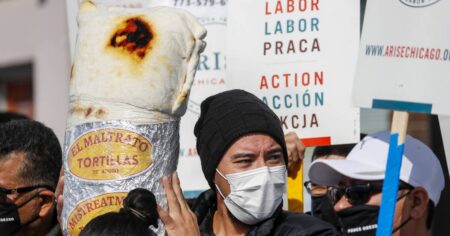
El Milagro committed “flagrant” violations of state labor law for allegedly denying employees proper meal breaks and has been referred to the Illinois attorney general’s office, according to the Illinois Department of Labor.In a notice of noncompliance dated March 23, the agency found the Chicago tortilla maker had violated the Illinois One Day Rest in Seven Act because employees regularly worked over 7.5 hours without required meal breaks. The Department of Labor found 112 meal break violations between Jan. 1 and July 31, 2021, and was fined $11,200 in total for those violations, according to the document.AdvertisementThe findings, which were released to the Tribune through a Freedom of Information Act request, come after workers at El Milagro filed a complaint with the Department of Labor in late October 2021.Advertisement“Because El Milagro has not paid these penalties or demonstrated that it has come in to compliance, this matter has been referred to the office of the Illinois attorney general for enforcement,” department spokesperson Paul Cicchini said in an email to the Tribune Wednesday.Drew Hill, a spokesperson for the attorney general’s office, said Wednesday the office had received the referral and would review it. “We do not have any further updates at this time,” Hill said.In a statement, El Milagro spokesperson Alejandra Moran said the company had not yet received communication from the attorney general’s office. She said should an action be filed based on “prior discussions with the Illinois Department of Labor,” the company “disputes the allegations and intends to vigorously defend the matter in court.”“The company is confident its ongoing commitment and dedication to employees, including fair wages, regular meal and rest breaks, and days off, will prevail,” Moran said. “El Milagro welcomes an unbiased review of the evidence, including facts that should have been considered as part of a fair and reasonable investigation.”When asked what facts she was referring to and whether the company had paid the fine, Moran said the company could not comment further on open legal matters.AdvertisementIn a statement, Arise Chicago, the nonprofit workers’ rights group organizing with the El Milagro workers, said the department’s findings were “sadly, not surprising based on what workers have reported to Arise Chicago.”“This is just more evidence that El Milagro has systematically violated its workers rights. And it amplifies how courageous the workers have been to stand up to exploitation,” Arise said. “We applaud IDOL for its investigation and look to the Illinois attorney general to fully enforce IDOL’s ruling.”Last September, employees at El Milagro staged a brief walkout, alleging low pay and unjust working conditions. After the walkout, workers were locked out of the facility, a practice Arise Chicago alleged was illegal.Earlier this month, workers said they had secured a slate of wage and workplace improvements after months of organizing. Employees said they were no longer required to work seven days in a row and had seen improvements like anti-sexual harassment training for managers and air conditioning in lunch rooms. Workers also saw two rounds of raises last year, which brought starting wages up to about $16.50 per hour, with most other workers now earning between $17 and $20 per hour, according to Arise Chicago.El Milagro disputed the wage increases were the result of worker activism.Workers said earlier this month that despite improvements, other changes were still necessary. They pointed to increases in the speed of work machines, which they described in a letter to company management as creating “hazardous and untenable” working conditions.AdvertisementThey also alleged the company had not followed through on a verbal commitment to provide Sundays off and that third-shift workers at the company’s 31st Street location were regularly sent home early in possible violation of Chicago’s Fair Workweek Ordinance.Shelly Ruzicka, communications and development director for Arise Chicago, said Wednesday workers were no longer reporting lost hours at the company’s 31st Street location. However, she said, they believed machine speeds were still dangerously high, and are still calling on the company to close on Sundays and to sit down with them to discuss their concerns.“El Milagro will not comment further on open legal matters,” the company said in a statement. “As it has for 70 years as a family-owned, local business, El Milagro continues to respect the rights of every employee, provides fair wages and attractive benefits, and operates with integrity.”Workers at El Milagro have also filed complaints with Chicago’s Office of Labor Standards and with the National Labor Relations Board. Representatives from each agency said investigations into those complaints were ongoing.Chicago Tribune’s Laura Rodríguez Presa contributed.tasoglin@chicagotribune.com