



Browsing: Lifestyle
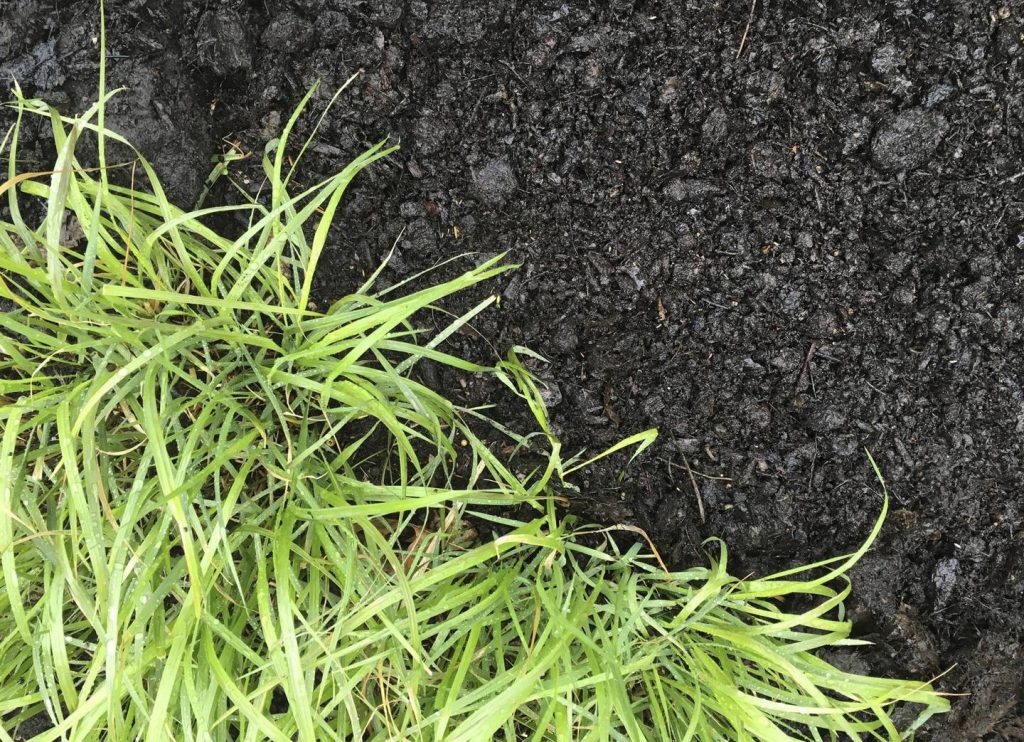
A layer of mulch is a powerful way to defend your plants against summer heat, drought and overbearing weeds, while improving the soil to nourish their roots. But what is the best kind of mulch?“There are many materials you can use to create a mulch layer,” said Sharon Yiesla, plant knowledge specialist in the Plant Clinic at The Morton Arboretum in Lisle. “The critical thing is that it should always be made from plants.”AdvertisementPlant-based mulch is powerful because it emulates the way plants live in nature. When leaves, stalks, dead branches, and other plant materials fall to the ground, they form a protective layer over the soil. That layer of leaf litter keeps soil moist around plants’ roots and insulates them against extremes of heat and cold. Over time, a wide array of soil-dwelling organisms, including insects, fungi and bacteria, will consume the litter, breaking it down to improve the soil.What you choose for mulch in your garden may depend on price, availability, where you’re using the mulch and how long you want it to last. “In general, the larger the pieces of material in mulch, the longer it will take to decay,” Yiesla said.AdvertisementA mulch of composted leaves is used on garden beds at The Morton Arboretum. Many materials can make a beneficial mulch layer, as long as they are derived from plants. (Beth Botts/Morton Arboretum)Shredded wood. This is the most widely available kind of mulch in the Midwest. A bag labeled mulch at the home center most likely contains shredded byproducts from the lumber industry. Shredded wood mulch lasts a year or two. It works well around trees, shrubs and perennials, but may be too coarse and lumpy for beds where you will dig often, such as vegetable gardens.This kind of mulch also can be ordered in bulk from landscape supply yards and some garden centers. It is sold by the cubic yard.Dyed mulch. Shredded wood that is dyed black, brown or red is common. The dyes themselves won’t hurt plants. They are used to give a uniform appearance to a mixture of shredded wood from demolition sites, old pallets, and other reclaimed wood. “It’s not necessarily harmful, but you just don’t know what’s in it,” Yiesla said. The Mulch and Soil Council, an industry group, has guidelines for the content of mulch. Look for its seal on bags.Fresh wood chips. Tree-trimming crews use shredders to reduce branches to coarse wood chips. Sometimes homeowners can get a load of those chips for free from tree companies, utility crews, or municipalities. Since the chunks are large, this kind of mulch is best around trees and shrubs, where it is likely to take several years to break down. “You probably don’t want those big, awkward lumps in the soil of your garden beds where you’re likely to be working,” Yiesla said. To seek out free wood chips, start by asking your local municipality. Some have piles of mulch available to residents.Composted wood chips. The Arboretum uses wood chips that have been allowed to break down slightly to mulch its trees and shrubs and on its unpaved trails. A similar material, available from landscape supply companies, is dark brown with a less raw appearance than fresh wood chips.Leaves. An excellent and abundant mulch, leaves are free, if you remember to collect them in autumn when they fall from the trees. The thin, light leaves will break down fairly quickly, which makes them good for beds of annuals, vegetables and perennials. “You do need to renew leaf mulch fairly often,” Yiesla said, “but after all, nature renews it every year.” The Arboretum uses leaf mulch in all its garden beds, after the leaves have been allowed to compost for a few months.To prevent leaves from blowing around or forming an impenetrable mat, shred them by raking them into a pile on the grass and running the lawn mower over them. Some gardeners stow away a supply of leaves each fall, whole or shredded, to use for mulch or to add to the compost pile throughout the year.Straw. Stalks from wheat and other grains are a traditional mulch in vegetable gardens since they break down over the course of a growing season. In the city and suburbs, straw may be hard to find and relatively expensive. It also may contain weed seeds.AdvertisementCocoa mulch. Shells from roasted cocoa beans are sometimes available. They make an attractive, fine-textured mulch. Pet owners should be aware that they may contain compounds dangerous to dogs.“Any plant-based mulch will benefit your plants, but if appearance is important to you, decide on a material and use it consistently,” Yiesla said. That way, when mulch becomes thin because the lower layers are breaking down, you can simply add more of the same type to the top.Just be careful not to make it too deep. Mulch should be 1 to 2 inches deep around perennials, annuals and vegetables, and 3 to 4 inches deep around trees and shrubs.One material to avoid is gravel. “We don’t consider that mulch,” Yiesla said. “Rocks can’t do for your plants what a real, plant-based mulch will do.”For tree and plant advice, contact the Plant Clinic at The Morton Arboretum (630-719-2424, mortonarb.org/plant-clinic, or plantclinic@mortonarb.org). Beth Botts is a staff writer at the Arboretum.

Dear Amy: My daughter is 33, living on her own, thriving in her career, and in most aspects doing very well. She lives in a different city, so I only see her several times a year. We talk on the phone often.When she was a teenager, she had an eating disorder (anorexia). We intervened and took her to an expert therapist who worked with her for two years. She developed many tools to deal with her disordered eating.AdvertisementStress is a trigger and can send her into anxiety disorder behaviors.She is currently trying to relocate to another state, and I am concerned (mostly from her social media posts) that she may be dealing with disordered eating habits again. She looks very thin.AdvertisementHer brother told me that he is very concerned, but he doesn’t feel she would be open to any concerns/suggestions he may have.She is ultra-sensitive when I question anything about her eating.When she was in therapy her therapist had told the family members that we needed to let her make her own choices about food – to put her in control.I fear she’s dealing with her current stress in a way that is unhealthy.How do you suggest I best help without alienating her?– Concerned ParentDear Concerned: As with some other diseases, eating disorders can flare – even many years after successful treatment. Stress is a definite risk factor, and can lead to a relapse.Understand a basic truth: We all become most defensive when confronted with our deepest vulnerabilities.AdvertisementYour daughter is an adult. She is ultimately responsible for managing her health.Her eating disorder can be considered a chronic disease. If she had an auto-immune disease (also triggered by stress), you would want to prompt her to take care of her health.Expressing your concern in a loving way might trigger a defensive reaction.And yet – you are her mother, and if you are brave enough to talk to her, you will be demonstrating that you care, that you are on her side, that you see her eating disorder as an illness and not a character flaw, and that you are available for help if she needs it.Talk to her: “This is such a stressful time for you. I’m worried that your eating disorder could flare. How are you managing your health right now? Can I help you in any way?”She may respond, “Mom – stop.” And that’s OK. You can respond, “Honey – I do worry, but I can handle my own anxieties. I just want you to know that I’ve got your back. Always.”AdvertisementThe National Eating Disorders Association (nationaleatingdisorders.org) offers helpful advice for families.Dear Amy: My beloved husband left this physical earth 20 months ago.I did not have a gravestone unveiling.Recently, a close family friend went to visit our gravesite and place flowers there.Our plaque has his date of birth and date of death.She then posted a photo of this to Facebook and shared it with her entire “friends” list, some of whom I do not know.AdvertisementI was a bit shocked to see the picture, which I found because I was scrolling on my own Facebook page.I realize our gravesite is public, but am I wrong in thinking that she should not have posted and shared it everywhere without asking permission?Am I a relic?I found this to be disrespectful.– UpsetDear Upset: I can well imagine how you must have felt to see a photo of this memorial marker on social media.AdvertisementFor me, this begs the question: Can we do anything anymore that remains private or personal?I ask (rhetorically): Can we eat a meal, have an argument, do a good deed, or visit a friend’s gravesite without posting an update about it?You could contact your friend and say, “I’m so grateful that you visited my husband’s grave. Thank you so much for honoring us with the visit and flowers. However, I was sad to see that you posted a photo of it on Facebook. Seeing the photo without knowing it would be there was a shock for me. I wish you had asked me first.”Ask AmyDailyNo-nonsense advice for better living delivered to your inbox every morning. For a limited time, sign up for the Ask Amy newsletter and get the book “Ask Amy: Essential Wisdom from America’s Favorite Advice Columnist” for $5.Dear Amy: I’m a bartender. Thank you so much for recognizing the role that responsible bartenders play in trying to keep our patrons safe.Any customer who feels worried or unsafe should absolutely alert the bartender and/or security staff. We can often handle a situation safely and discreetly.– Chicago BartenderAdvertisementDear Bartender: Thank you very sincerely for your service.Got a question for Amy? Enter it here and we’ll send it to her.Sign up here to receive the Ask Amy newsletter to get advice e-mailed to your inbox every morning, and for a limited time — get the book “Ask Amy: Essential Wisdom from America’s Favorite Advice Columnist” for $5.©2021 Amy Dickinson.
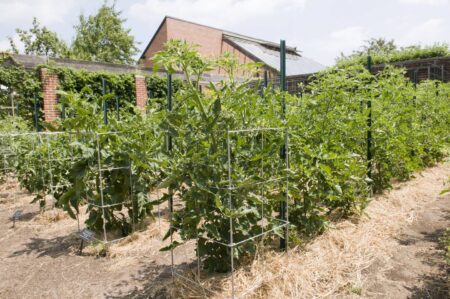
“I want to try growing tomatoes in my garden this year and would like some advice on how to be successful in doing so.”— Larry Zar, HighwoodAdvertisementThere are some basic practices to follow that will help ensure your success in growing tomatoes. Garden centers have lots of tomato plants for sale now, so it should be easy to find good quality plants. Determinate tomato varieties (meaning they have a determined, defined growing height) grow to 2 to 3 feet tall and generally do not require staking — thus are good for small spaces and containers. They tend to provide many ripe tomatoes earlier in the season, and at the same time, with less productivity in the latter part of the season. AdvertisementIndeterminate tomatoes will continue to grow big and need cages or stakes. They produce fruit all summer and into fall, when frost kills the plants. Fruit production slows as the days become shorter and colder in fall before a frost. There are some basic practices to follow that will help ensure your success in growing tomatoes. (RJ Carlson/Chicago Botanic Garden)Look for tomato plants that have dark green leaves and are short and stocky with strong stems. They should not have any flowers or fruit forming unless they are established plants growing in a large container. I prefer growing heirloom varieties because of the large number of different types. The plants dry out quickly at home, so be sure to watch them closely for water until you can plant them.It is very important to wait until temperatures stay consistently warm before planting tomatoes, as cold soil and air temperatures can set their growth back dramatically. Memorial Day weekend is generally a good time for planting tomatoes in the Chicago area, but use the weather as your guide, since timing can be earlier or later depending on spring weather. I saw tomatoes for sale at the end of April and wonder how these plants fared without the gardeners employing specialty growing techniques to offset the cold weather.Tomato plants need to be in a bed with full sun for best results, since light shade adversely affects the fruit production. I have successfully grown tomatoes in beds that were shaded in the morning with full sun in the afternoon. The soil should be well drained and amended with compost. Plant the tomatoes deep by burying most of the stem. Remove any of the lower leaves that will be underground after planting. The plants will form roots along the stem. Planting deeply also helps stabilize any transplants that happen to be taller and spindly. Provide plenty of space — at least 2 feet — for each plant to develop, as many tomatoes will get large. Install tomato cages shortly after planting to help protect the young plants and provide support for them.Consider rotating crops with those that are unrelated in order to break the life cycles of insects and diseases if you can. Peppers, eggplants, potatoes, and other plants in the Solanaceae family are related to tomatoes, so they should not be planted during the rotation years. This can be more difficult if you have a small space, so consider your crops carefully and experiment with different combinations.For more plant advice, contact the Plant Information Service at the Chicago Botanic Garden at plantinfo@chicagobotanic.org. Tim Johnson is senior director of horticulture at the Chicago Botanic Garden.
Dear Amy: I have two daughters and a son. All are adults. I am divorced from their father and am still single after 17 years since the divorce.My girls both remain in my life – the youngest especially. “Chloe” is always there for me.Advertisement“Nancy,” the eldest, is like a cat toward me – she only makes time and effort for me if it’s on her terms and she is in the right mood, which is not very often.My son, “Bradley” however, completely avoids me. He never answers his phone if I call. He doesn’t respond to contact from myself, his father, or his older sister, but he sometimes relates with Chloe.AdvertisementNow that I’m over 60 and have battled cancer, I’m feeling my mortality and starting to think about things like getting a will done.I’m a person of simple means so there won’t be much money left, but there will be a few thousand dollars in a 401K account and some life insurance money.My dilemma is: Should I leave Bradley completely out of the will?It seems the sad, sobering thing to do, but it would be based on how he has treated me.Since Nancy is lukewarm toward me, should I leave her one-third, and then two-thirds goes to Chloe, who has been the most loving and giving child?I suspect that if I do an even three-way split, the girls, especially Chloe, will feel resentful that their “deadbeat brother” got anything at all.What do you think?– ConflictedAdvertisementDear Conflicted: The daughter closest to you, “Chloe,” has already reaped the consequences and rewards of her behavior: she has a nice, positive, and active relationship with her mother. Your son “Bradley” has through his own choices been denied that.Estate planning can be a complicated business, because it inspires some people to essentially reward or punish after death, when neither you nor they can do anything further.Worrying about what others may think after you’ve died should be a non-starter.There is no “right” answer to this question, but in my opinion, you should leave an equal amount to all three children who came into the world loved equally by you.In addition to any funds, you can leave special material items to your favored daughter – or give them to her while you’re still around to enjoy the relationship.You could also notify her ahead of time of your intentions and your reasoning.AdvertisementTalk things through, but no matter what – you should make the choice that feels best, kindest, and most ethical to you.Dear Amy: My long-term friend decided to ghost me a few months after his wife went in for a “routine heart procedure” and tragically never woke up.He was devastated – as was everyone that knew her.I know he has alcohol and drug problems.The last thing he told me was that he was chasing a widow in town who “has a lot of money” and that he was done with me.I asked, “So this is the end of our friendship?” He never responded.AdvertisementMany years ago, he sent me a piece of artwork he made out of wood. There are many hours of work that went into this.I don’t want it in my house anymore. I thought about donating it to Goodwill here, but it’s kinda weird and I doubt if they’d want it.I thought to simply mail it back to him with no explanation, but is that cruel?I thought to just burn it in my fireplace, but that seems hateful.I am not actually angry with him, but I don’t want this piece, and I never really liked this odd thing very much.Do YOU want it?Advertisement– Wood BurnedDear Burned: You could try reaching out to this man – one more time – to see if he would like this piece returned to him. Keep your tone very neutral and tell him you are “downsizing.”Depending on his response, Goodwill would definitely want this item. I hope you choose to donate it.As someone who scours flea markets, second-hand stores, and Goodwill for home-made treasures, this piece actually sounds totally up my alley.Ask AmyDailyNo-nonsense advice for better living delivered to your inbox every morning. For a limited time, sign up for the Ask Amy newsletter and get the book “Ask Amy: Essential Wisdom from America’s Favorite Advice Columnist” for $5.Dear Amy: I snorted my coffee when I read your (excellent) response to “Happy Teetotaler,” the young woman who felt pressured to drink when going out.My favorite of your snappy excuses: “I need to stay sober so I won’t slip in your vomit later.”Advertisement– Cleaning UpDear Cleaning: I do enjoy supplying some snap.Got a question for Amy? Enter it here and we’ll send it to her.Sign up here to receive the Ask Amy newsletter to get advice e-mailed to your inbox every morning, and for a limited time — get the book “Ask Amy: Essential Wisdom from America’s Favorite Advice Columnist” for $5.©2021 Amy Dickinson.
Dear Amy: I have this “thing” about needing to drive, no matter whose vehicle it is. I have to drive. Otherwise, I’m a nervous wreck.This began right after our daughter died in a car wreck in 2006. She was 19.AdvertisementI know this is a mental issue, but being aware of that doesn’t help.I feel like if I drive, everything and everyone will be OK because I’m a very safe driver. I also watch other cars like a hawk.AdvertisementMy husband hates this because I adhere to the speed limit, especially on the Interstate, where nobody drives the speed limit. He gripes the whole time.He knows why I do this, but it doesn’t stop him from being vocal about how much it annoys him – and that makes me even more nervous.I wish I could be the passenger so I could relax, enjoy the view or sleep. I cannot make myself relax; I’m so anxious and afraid.I would like to get over this. I want to be unafraid – the way I used to be.I’m tired of being afraid of everything. This manifests in other areas also.Is there a name for this? Could my ADHD have something to do with this?– The Cowardly LionessDear Lioness: I am aware of a designation that might apply to you: “CG,” or “Complicated Grief.”AdvertisementFor you, this manifests through your intrusive thoughts and the compulsive need to drive – otherwise you feel unbearably anxious.You can feel better – and you will feel better – with treatment. (And yes, in my amateur opinion, your ADHD is related to this.)The event that brought this on is so tragic. And of course you are reminded of this every time you get into a car.But your brain is working overtime trying to make the world safe, and your need to control some essentially uncontrollable aspects of your life must be exhausting for you (and yes, frustrating for others).Knowing that your experience is caused by “a mental issue” is good, but in this case awareness is only the first step. I hope you will seek out a grief counselor or grief group to talk to about your loss. This is one step toward healing.Your family doctor should also refer you to a psychiatrist or trauma specialist, who could help to set you on a healthier path through talk therapy, holistic coping techniques, and medication.AdvertisementDear Amy: My sister and her husband are in a bad place. I love them both. They have been together for over 20 years and have three young children. They were high school sweethearts.I have known my brother-in-law since I was 12. He’s like a brother to me and it hurts to see them both hurting.Basically they are in this vicious cycle where she ignores him and ices him out because she is so angry. He drinks all the time and will say mean things to her, and not remember later.He drinks because he feels unloved and disregarded. He recently made a comment to my husband about taking his own life.I want to help them both, whether or not they choose to stay together.Can I talk to them both individually without overstepping?AdvertisementCan I ask my sister to give him one more chance if he stops drinking, and to be more open to him?She will not do therapy, which I think would benefit them both. He has been to therapy, but only randomly. I want to help them, but I’m unsure how.– A Broken-hearted SisterDear Sister: You are obviously very fond of this couple and are deeply invested in trying to help them.None of your efforts will likely yield results, however, because this is their dysfunction and until one or both of them decides to change, they will continue in this cycle.Yes, I think you should express your love and concern to each of them. Urge them to get help.AdvertisementYou would benefit from attending a “friends and family” support program such as Al-anon. If your sister will attend meetings with you, all the better.Dear Amy: “Swim Parent” was carting a teenage neighbor back and forth to swim practice, with no help from her parents.Ask AmyDailyNo-nonsense advice for better living delivered to your inbox every morning. For a limited time, sign up for the Ask Amy newsletter and get the book “Ask Amy: Essential Wisdom from America’s Favorite Advice Columnist” for $5.My parents were like that girl’s. They said that if I wanted to be in gymnastics, I had to find my own transportation. They never helped.Thank God for other parents.– Grateful GymnastDear Grateful: Other kids’ parents have saved many childhoods.AdvertisementGot a question for Amy? Enter it here and we’ll send it to her.Sign up here to receive the Ask Amy newsletter to get advice e-mailed to your inbox every morning, and for a limited time — get the book “Ask Amy: Essential Wisdom from America’s Favorite Advice Columnist” for $5.©2021 Amy Dickinson.

The frozen meals that AYO Foods creates and markets sit next to P.F. Chang’s food in Target’s freezer section.But AYO Foods founders, Perteet and Fred Spencer, would prefer their fare be next to Amy’s Kitchen, the organic packaged and prepared foods giant.Advertisement“If you look at our caloric intake, our protein content, our fiber content, it’s very comfortable, if not better than some of the other kind of ‘better for you’ frozen items out there,” Perteet Spencer said. “And I can guarantee you it’s going to be much more flavorful.”AdvertisementThe Spencers launched AYO Foods, an array of West African frozen meals and hot sauces, in July 2020. In two years, they’ve expanded into stores nationwide, including Chicagoland Mariano’s, Heinen’s, and The Fresh Market stores.Frozen options range from jollof rice to cassava leaf stew, egusi seed soup just begging for some doughy fufu to sop up all the rich flavors, and chicken yassa, a popular dish of slow-braised chicken thighs with lemon and caramelized onion.The couple partnered with “Top Chef” alumnus Eric Adjepong and chef Zoe Adjonyoh — cookbook author and founder of Zoe’s Ghana Kitchen, to promote West African cuisine through the brand. As the daughter of a Liberian immigrant, Perteet Spencer said she believes everyone deserves to see themselves when they walk down the grocery aisle. “We’re talking about an entire continent not represented in grocery stores,” Perteet Spencer said with an incredulous tone. “It’s not a monolith; we’re talking about 17 different countries (in West Africa). Every tribe, every country, they all have their unique way of doing things.”The regional cuisines share similar ingredients, and “it’s just the process of cooking — the different seasoning and flavors that you use — that separates them,” her husband said.Homemade egusi stew, made of egusi seeds, iru, chicken, onions and collard greens. (Terrence Antonio James / Chicago Tribune)Before making fresh egusi stew with egusi seeds, chicken, onions and collards, Perteet makes her way to an African market on Foster Avenue and North Broadway to gather dried crawfish and shrimp powder, seeds, and iru, also known as locust beans. Now, a version of the same dish with such hard-to-find ingredients is available at dozens of stores across the country.“We’re really excited to take people on this journey through West Africa to allow them to experience the flavors and ingredients,” she said. “The common mark that unites the food are these really slow-cooked, layered flavors … that’s pretty consistent with everything, whether it’s the dough rising on the puff puff, or the stew simmering on the cassava leaf.”AdvertisementFred Spencer likens the AYO Foods process to cooking soul food, with big pots, layered flavors and hearty, traditional fare. But finding ways to retain the depth and quality of those slow-cooked dishes on a mass production scale took serious effort, Perteet Spencer said. At one point, she brought in her mother so manufacturers could shadow her preparation in order to do it properly and not rush the process.“We have lots of horror stories early in our journey of partners that didn’t work out because they wanted to speed up the process,” she said. “If you have a pot of greens, the best ones are those that cook low and slow. We needed to honor that process as we found partners to scale this up.”The result are ingredient lists that are familiar and alluring: roasted garlic puree made of simply garlic, extra virgin olive oil, and thyme accents the chicken yassa; just five ingredients comprise the fried puff puff bread.“We’re using fresh vegetables, we’re doing that slow-cooking process. We’re not cutting corners,” she said. “It was really important for us to honor the process and not short change it as we went through our journey. It’s just how we operate.”Fred Spencer and his wife Perteet Spencer started the food company called AYO Foods, which focuses on West African cuisine. (Terrence Antonio James / Chicago Tribune)That operation began three years ago, when the Spencers, DePaul University college sweethearts, noticed market trends changing.Advertisement“We saw this huge rise in global flavors, a massive gap in flavors of the continent in total,” she said. So she left her corporate job as a brand manager with General Mills to bring joy to the world — ayo means “joy” in Yoruba — full-time, with Fred’s urging and support.While she takes credit for introducing her husband to Liberian food, she said she learned how to cook from her father. He immigrated from Lofa County, the northernmost portion of Liberia, to the Twin Cities in Minnesota at age 17, bringing with him cooking that reminded him of home. Her parents would eventually meet in Minnesota.Perteet and Fred’s large families serve as inspiration to the food brand, but it’s the pair’s love of food that is the nexus of AYO Foods. Fred, a real estate developer, opened a restaurant when he was 24 years old (something he said the couple might get back to someday). With a grandmother from Alabama, the Roseland native recalls cooking as a childhood chore, because he would get all the tedious food prep duties. But that’s changed since he’s gotten older.The family affair that cooking has always been is now one the youngest Spencers are picking up. Perteet and Fred’s daughters, 11 and 8 years old, like the kitchen so much, sometimes they have to be pushed out of the space. Their oldest tries to get her biscuits as flaky as her father’s, and she’s currently working on perfecting her macaroons, said Perteet Spencer.“They love being involved in the kitchen with us,” she said. “I didn’t start cooking until college, and to see them start so young, it’s exciting to see. You can’t have family together without a ton of really incredible food.”The first AYO Foods dishes were those the couple personally love — jollof rice, egusi soup and cassava leaf stew. The couple prides themselves on AYO Foods being rich in nutrients and low in sodium. Advertisement“Obesity is at an all-time high, diabetes is at an all-time high, hypertension is at an all-time high. We couldn’t in good conscience put out a product that was a contributor to all of that,” Perteet said. “I think one of the things that AYO does really beautifully is prove that food can be good and tasty, but still be good for you. We wanted to really be able to set a model for that.”Fred Spencer eats freshly made Egusi stew at home on May 19, 2022. (Terrence Antonio James / Chicago Tribune)The plan for the brand is to expand beyond frozen foods to bring greater inclusivity and diversity to shelves. AYO Foods already has pepper and shito sauces — the former is habanero-based, the latter has a seafood base, complemented by hot peppers, tomatoes and caramelized onions.“We started with frozen primarily because it’s the easiest transition to have authentic ingredients — not adding preservatives or anything like that — to bring the true essence of the food,” Fred Spencer said. “But we want to make this a broad brand, as opposed to just frozen.”The self-described “big dreamers” know the platform AYO Foods allows has a lot of wingspan to make an impact above and beyond celebrating the culture through packaged foods. The Moonboi Project is the Spencers philanthropic effort born from that platform — one that enriches the West African culture. In December, AYO Foods partnered with Girl Power Africa, a nonprofit committed to empowering women and children impacted by civil war and ebola in Liberia through entrepreneurship. AYO is supporting the cultivation of 15 acres of Liberian farmland, the Spencers said.“Part of what we’re doing with these dishes is bringing awareness to these crops, to this food, which we hope in turn creates increased demand and economic change in West Africa,” Perteet said. “Already we’ve built three homes, fully cleared the land, (and) we’re starting to see the first crop yield. And the yield of that is actually being used to give back to women who were victims of either ebola or the Liberian civil war as seed capital to start businesses of their own.”AdvertisementSeeing the impact the food brand is providing in such a short time has the Spencers excited about the potential of AYO Foods to not only change the lives of their immediate families, but other communities in desperate need of help, as well.“If anything can get across from any of this is that, AYO was created as a family company,” Fred Spencer said. “We’re doing this as a family together, and that’s what’s going to make it successful.”drockett@chicagotribune.com

Dear Amy: In 2020, my nephew, “TJ,” graduated from high school.My husband and I are especially close to him. Due to COVID there was no graduation party for him.AdvertisementDuring lockdown, I sent TJ a card and enclosed money.Later, I sent a personal, heartfelt letter to TJ, wanting him to know how much I enjoyed seeing him grow, recounting memories we shared, giving him unsolicited advice about college (that he could take or leave), etc.AdvertisementTJ called to thank me for the gift and the letter.Months later my sister-in-law “Teri” mentioned to me that she was in TJ’s room and a letter was open on his nightstand. She said she saw it was from me and read it.She said she thought it was so nice and that it made her cry.I was speechless!The issue for me is I feel the letter was private between TJ and myself.I was raised in a household where we never opened mail that was not addressed to us because the contents of any mail was considered the private information of the recipient.Now, two years later, TJ’s brother is graduating from high school and I had planned to write a similar letter for him, but now I feel constrained on how much of my personal feelings I want to put into the letter.Truth be told, the joy of doing another letter is gone for me since I know it may be read by others.AdvertisementI want to get your thoughts on whether I am overreacting.– Upset AuntDear Upset: Yes, you are overreacting. By a mile-and-a-half.When people receive letters and cards of congratulation to mark a happy occasion, they often leave the cards and letters out and share the content of these with family members (unless the recipient is explicitly asked not to).According to your account, this letter was lying open in your nephew’s room. It was not sealed, and your sister-in-law did not “open” it. She merely read it, as I maintain just about anyone would do. (You obviously wouldn’t, but I believe that most people would.)My overall point is that when a letter leaves the writer’s heart, mind, pen and home – it becomes the physical property of the person who receives it, and that person can leave it lying out for others to see, put it into a scrapbook, post a photo of it on social media, sell it at an auction, or throw it away.AdvertisementIt is best to enter a correspondence assuming that others may see what you write, and to choose your words carefully.Your sister-in-law was moved by the contents of this letter to the point of tears. She was thoughtful enough to tell you so, and your response is to consider denying your other nephew this gift of your time and wisdom.This seems an extremely unkind reaction.If you choose to write to your younger nephew, you should ask him to keep the contents of your letter private.Dear Amy: I am beginning to think that I’m in violation of some unwritten social code with respect to gift giving.After a very acrimonious divorce, we experienced the typical “siding off” of our mutual acquaintances.AdvertisementThis is understandable, as divorce puts friends in awkward positions.Anyway, I have continued to send gifts as children of “our” friends marry, despite not being an invited guest.These gifts are not being acknowledged.I’m trying to figure out if I just hit a streak of ungrateful young people or if my giving is so grossly out of place that it is just being ignored. Any guidance is really appreciated.– Bewildered GiverDear Bewildered: All gifts should be acknowledged, even if the gift bewilders the recipient.AdvertisementYou do not need to receive a wedding invitation in order to send a gift, but if you have never met the couple – or haven’t seen the marrying person in many years – you might want to switch your generosity to a warmly-worded card.Ask AmyDailyNo-nonsense advice for better living delivered to your inbox every morning. For a limited time, sign up for the Ask Amy newsletter and get the book “Ask Amy: Essential Wisdom from America’s Favorite Advice Columnist” for $5.Dear Amy: I appreciated your response to “Torn,” the older man who wanted to announce his long-ago sexually exploitive relationship with his sister-in-law at the woman’s funeral.Yes, I agree that what happened to him when he was a teenager was abusive. And yes, I also agree that a funeral is NOT the time to disclose it.– FanDear Fan: My heart fairly broke for this man, who had been struggling with the impact of this abusive sexual relationship. I hope he gets help.Got a question for Amy? Enter it here and we’ll send it to her.AdvertisementSign up here to receive the Ask Amy newsletter to get advice e-mailed to your inbox every morning, and for a limited time — get the book “Ask Amy: Essential Wisdom from America’s Favorite Advice Columnist” for $5.©2021 Amy Dickinson.

From interior design to sociology to three jobs at education nonprofits, Danielle Tubbs’ journey to baking took a bit of a circuitous path. The Miami transplant, now an East Garfield Park resident, is trying to make her passion for baking boldly flavored, Jamaican-inspired vegan, nut and soy-free cookies into a household name. Tubbs filed for an LLC and bought a domain name eight years ago for Tubby’s Taste Vegan Cookies. Since then, her work has been featured on ”Good Morning America,” ABC 7, WGN and NBC 5.Living blocks from the business incubator The Hatchery Chicago, Tubbs has been taking food classes at the site since 2015 and producing cookies that meld mango, coconut and lime; grapefruit, pineapple and hibiscus; and coconut, oatmeal and cinnamon from the site since September 2020. It was with plans to bring on more help and machinery that she applied to be a member of the sixth cohort of the Allies for Community Business’ Neighborhood Entrepreneurship Lab in 2021.AdvertisementDeveloped in partnership with the Chicago Community Trust, NEL gives entrepreneurs a $20,000 grant and pairs them with advisers to provide assistance and networking opportunities. The lab experience is the idea of Robert Crawford Jr., created to build entrepreneurialism, strengthen neighborhoods and increase employment. Since 2016, the lab has aided 60 small businesses across the city.Danielle Tubbs of Tubby’s Taste Vegan Cookies, at the Allies for Community Business’ Neighborhood Entrepreneurship Lab celebration at The Hatchery in Chicago’s East Garfield Park neighborhood on May 26, 2022. Tubbs was one of the award recipients at the event, receiving a grant worth $20,000 to grow her business. (Chris Sweda / Chicago Tribune)“I believe in capitalism so strongly … the way it’s been a cornerstone of the American experience, the small farmer, everything,” he said about why he created the endeavor with the Chicago Community Trust. “I felt very strongly that where we’ve missed as a country is we haven’t encouraged enough people that hadn’t come from more affluent backgrounds, particularly people who are Black, brown, Native Americans. I just felt strongly that would strengthen the community so strongly.”AdvertisementWith his late father’s business acumen as inspiration, he went to the trust’s former president and CEO, Terry Mazany, to work together to support entrepreneurialism in disadvantaged communities that need their services. A test with one entrepreneur has turned into a nine-month program where over two dozen small business owners are assigned mentors to help entrepreneurs strategize on how to grow the business with the grant money they received. Specialists in finance, technology, advertising and human resources also come to speak to cohort members.“The $20,000 allowed me to put money toward getting into stores, which has proven challenging with the COVID climate right now,” Tubbs said. “I had goals of getting into 10 boutique grocery stores and a lot of them weren’t really bringing on new products.”The pandemic. Supply chain disruptions. Inflation. Lack of staff. Small businesses have endured real challenges as of late. And as of January 2022, the number of open small businesses decreased by 10.4% compared with January 2020, according to an Economic Opportunity Insights Tracker, which tracks the economic effect of COVID-19. Couple that with a 2019 market study that shows significant disparities in the number of businesses along racial, ethnic, gender and geographic lines, and Crawford says that’s why the lab is needed. When individuals and neighborhoods find themselves locked out of access to resources and opportunities, the lab is one avenue of support.Crawford says Chicago has to get small business numbers up and help those shuttered small businesses start up again.“Entrepreneurialism is the soul of American business,” he said. “These are the people that become leaders of the community.”Kia Smith, right, of South Chicago Dance Theatre, talks with Bob Crawford at the Allies for Community Business’ Neighborhood Entrepreneurship Lab celebration at The Hatchery on May 26, 2022. Smith’s repertory company was one of the small businesses honored at the event. Crawford’s collaboration with the Chicago Community Trust resulted in the creation of the Neighborhood Entrepreneurship Lab. (Chris Sweda / Chicago Tribune)Crawford spoke at a cohort graduation ceremony at The Hatchery on May 26. Tubbs was among the 25 graduates, as was Jacques Sarr, proprietor of Jacques International Language Academy in Rogers Park. Where Tubbs has been refining her wholesale practices, drumming up more awareness of the business, selling online and figuring out how to work with distributors, Sarr has been focusing on creating multiple, affordable language academy locations locally and internationally. A former freelance translator who knows nine languages, Sarr runs academies offering 16 languages to students of all ages.“When I opened it in 2017, I wanted to make languages accessible for everybody. Not just those who can afford the luxury,” Sarr said. “My main goal — I want people with low income and their children to have access to languages.”He will be opening a Paris academy this summer. Sarr said he couldn’t open the location without the NEL grant funds. “It’s common to go to more than one location to learn a language,” Sarr said. “I wanted to be different, go to one place and learn many languages.”AdvertisementKarl Herbert Grabbi, Waleed Khan and Jacques Sarr attend Sarr’s French advanced conversation session on June 1, 2022, in Chicago. (Armando L. Sanchez / Chicago Tribune)Tubbs talked strategy with her mentor and adviser every other week. Her mentor sold his own bakery and offered specific advice. As a team of one, Tubbs said it helped to have others to bounce ideas off of, to share with. They offered insights and provided accountability, and the grant money provided wiggle room for Tubbs to take more chances — all things Tubbs welcomed.“There’s so much need in these communities for these services, and there’s a lot of business opportunities,” Crawford said. “In these communities that have been hollowed out … a store leaves and there’s an opportunity for somebody to get in there and provide some service. There’s need, and there’s also tremendous entrepreneurial spirit.”Next year, NEL will expand its program to include five more entrepreneurs, Crawford said. Roughly 75 applications were submitted for the sixth cohort, which only had 25 openings. Applications for the seventh cohort are double that already. The new cohort will begin in September.“Most of the companies have been in business two, three years,” Crawford said. “We’re in the process of perfecting this, but every single one (business) that we’ve invested in, they’re all still in business.”drockett@chicagotribune.com
Dear Amy: I’m from a small family (I have one brother), and while growing up, my two cousins (my aunt’s sons) were like brothers to me – we always spent vacations, holidays, and family celebrations together.Fast-forward 30 years and we aren’t as close as we used to be – for various reasons.AdvertisementI relocated to the West Coast and my family is in the Midwest.I see my parents and my brother often, but I haven’t seen my cousins since the pandemic began because we have differing opinions on vaccinations and social-distancing (I believe in both; they don’t).AdvertisementOur daughter is engaged, deeply in love, and very happy in an interracial relationship.My spouse and I are quite fond of our future son-in-law and his family.My dilemma is this: Both of my cousins have expressed racist views and used racial slurs in the past.I do not trust that they will be supportive of our daughter’s marriage. I’m not comfortable with them attending her wedding.Should I call them directly and address the issues outright? Should I quietly not invite them? Honestly, I love my cousins, but I don’t like them or their world views, and I don’t know what to do.– Stressed in the WestDear Stressed: If you aren’t comfortable being in proximity to these men for health or cultural reasons, then – follow your instincts.But I’m leaning in favor of considering an invite for these two bozos, or at least opening it up for discussion – because if your daughter and her fiancé are hosting a family wedding, well, families are made up of all sorts of people, and sometimes these people are jerks, losers, and racists.AdvertisementThere are many variables to ponder here, however, including how awful your cousins really are, and how tolerant the bride, groom, and his family are willing or able to be.Fortunately for you, this decision should be made by the marrying couple, so you can kick this in their direction.I suggest that you be completely honest with them: “Bert and Ernie are … the worst. They are racist fools. But they are my cousins. There – you have it.”Your daughter and her fiancé may not have any interest in or feel any obligation toward these family members, and if so – the decision is an easy one.If the cousins don’t make the list and you are asked why, you can tell them the truth: “Your racist views knocked you off of the invite list.”Dear Amy: I have been best friends with “Penny” for over 60 years. Last year we had an argument over the phone regarding COVID vaccines.AdvertisementIn addition to the risk factor of her age, she has health issues, but is an adamant anti-vaxxer.I was concerned for her health and told her that she was wrong not to get vaccinated.Since that moment, we haven’t texted or spoken.I feel sad about not contacting her, but notice that she hasn’t reached out to me, either.I think she has written me off. Her birthday is approaching.Do I send a card?Advertisement– Ex-bestieDear Ex: Your argument with “Penny” seemed focused on how receiving a vaccine would be in her best interest.Even though you framed your point of view as concern about her, people don’t like being told that their own health decisions are “wrong.”Putting aside the idea that vaccines can have a communal impact; when it comes to her own health, Penny’s choice is her own to make.You seem to be against the idea of reconciling – and on the fence about being in touch at all – but I don’t really see a downside to reaching out.If you’re truly done with this relationship, then you should let this milestone day pass without reaching out. But surely, even though you two had an argument, aren’t you on some level happy to see that this fellow human being (who according to you has health problems) has reached another birthday?AdvertisementDear Amy: “Torn” described a long-ago sexual relationship with his sister-in-law, which started when he was 15.Ask AmyDailyNo-nonsense advice for better living delivered to your inbox every morning. For a limited time, sign up for the Ask Amy newsletter and get the book “Ask Amy: Essential Wisdom from America’s Favorite Advice Columnist” for $5.I almost never agree with you because you obviously hate men, and so I have to admit that I was shocked and surprised at your compassionate response to Torn.Yes, he was sexually exploited by an older woman. This was wrong, he is suffering, and you were right to recognize it.– One of the Men You HateDear One: I’ll take the backhanded compliment, and thank you for it.Got a question for Amy? Enter it here and we’ll send it to her.AdvertisementSign up here to receive the Ask Amy newsletter to get advice e-mailed to your inbox every morning, and for a limited time — get the book “Ask Amy: Essential Wisdom from America’s Favorite Advice Columnist” for $5.©2021 Amy Dickinson.

When America’s first national park Yellowstone was established in 1872, 2 million acres were set aside “for the benefit