


Author: staff

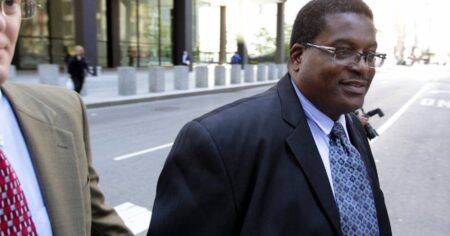
Cook County prosecutors on Friday reversed course and agreed that 44 convictions related to convicted ex-Chicago police Sgt. Ronald Watts should be thrown out.Prosecutors initially filed paperwork opposing the effort to dismiss those cases, many of which involved officers who “had not previously been impugned in Watts’ nefarious conduct,” Assistant State’s Attorney Catherine Malloy said in court Friday.AdvertisementBut upon further review, prosecutors decided that simply the potential of possible interference by Watts “raises concerns about the integrity of these cases,” Malloy said.Judge Erica Reddick formally vacated the convictions Friday, meaning that all 100 convictions for the 88 Watts accusers involved in last year’s expansive joint exoneration effort have been dismissed. Three other Watts-related cases that were not part of last year’s effort also were vacated Friday when prosecutors said they would not oppose their dismissal.AdvertisementAs of Friday, Cook County State’s Attorney Kim Foxx’s office has agreed to throw out 212 convictions related to Watts, according to a statement from the office.Over a series of hearings in recent months, prosecutors agreed that 59 convictions should be thrown out. But last month they filed paperwork on most of the remaining cases arguing that Watts’ accusers could not meet their burden of proof, and called for hearings so a judge could decide whether to dismiss the convictions.Watts and his team of tactical officers have been accused of orchestrating a decade of terror at the now-razed Ida B. Wells public housing complex on the South Side, systematically forcing residents and drug dealers alike to pay a “protection” tax and putting bogus cases on those who refused to do so.The recent hearings are a response to an expansive joint effort last summer by attorneys for 88 people with 100 Watts-related convictions, who filed petitions en masse asking that those cases be thrown out.That effort represented a significant change in the way Watts’ cases have been handled at the Leighton Criminal Court Building.Foxx’s office has been reviewing Watts-related convictions for years. In 2017, they announced the county’s first-ever mass exoneration, clearing out 18 Watts-related convictions and promising an ongoing assessment of similar cases.Attorneys for the accusers have been presenting potentially eligible cases to Cook County prosecutors for their review, and until last year, petitioners’ attorneys and prosecutors had presented a largely united public front.Attorney Joshua Tepfer, who represents dozens of Watts accusers, said in June that Foxx’s office was not adequately following through on its promises of an aggressive review of Watts’ cases and was fighting to uphold convictions that he maintained are fatally flawed.AdvertisementThe next month, Tepfer and other accusers’ attorneys launched the joint petition effort representing 88 Watts accusers.It was a bold move, seemingly intended to force Cook County prosecutors to announce a decision on the cases after prosecutors’ ongoing review of such convictions had, in the view of some Watts accusers’ attorneys, stalled out.Prosecutors said they were committed to reviewing each case on an individual basis to determine if they can stand by the convictions. Five were thrown out in November, and dozens more were vacated earlier this year.Until prosecutors announced Friday that they had changed course, the remaining cases potentially were headed to hearings at which a judge would determine if the convictions would stand.Reddick, who has presided over the recent hearings, said from the bench earlier this year that the Watts era was “clearly shown to be a blight on the criminal justice system.”When Watts was finally caught, in 2012, it was on relatively minor federal charges of shaking down a drug courier who turned out to be an FBI agent. Watts and Officer Kallatt Mohammed both pleaded guilty, and Watts received 22 months in prison. He was released in 2015.Advertisementmcrepeau@chicagotribune.com
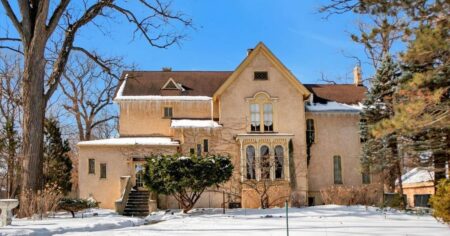
A 19th-century, Italianate-style mansion on more than 2.5 acres in the South Side Morgan Park neighborhood sold on March 28 for $625,000.Known alternately as the Hopkinson House or the Platt House after the surnames of early owners, the five-bedroom, 4,428-square-foot structure sits on one of the largest land sizes of any single-family home inside Chicago’s city limits.AdvertisementThe property includes five separate parcels of record, including several properties that extend into the middle of the block, between the backyards of neighboring houses.The year that the home, on South Drew Street, was built is in question. Early Tribune articles state that the house was built in 1845, while research provided by listing agent Nancy Hotchkiss of Berkshire Hathaway HomeServices, including a plaque in the home, pegs the home’s construction date to 1862. Either way, the house has been reported over the years to be the oldest home in the greater Beverly and Morgan Park area.AdvertisementThe house’s first owner was William Hopkinson, and a 1963 Tribune article claimed that the house was a station on the Underground Railroad.In the mid-1920s, Robert Platt, a University of Chicago geography professor, and his wife, Harriet, bought the house and remained there until his death in 1964. A 1989 Tribune article noted that the land once was used as a Potawatomi tribe council site.During the Platts’ ownership of the home, more than 100 U. of C. students lived in the Platts’ home, free of charge, according to Robert Platt’s 1964 Tribune obituary.The house has 3-1/2 bathrooms, two fireplaces, hardwood floors, original moldings and plasterwork.“You walk in the front door, and you’re awestruck,” Hotchkiss said. “It does need work, but it’s impressive and amazing and so unique and different. The couple who bought it is great and amazing and are going to keep the character alive. They’re so into the house and into the history. They wrote a lovely letter to the seller stating their intention to restore the house and keep the original integrity intact.”Hotchkiss’ client paid $735,000 in 2004 for the property.“He purchased it because he was afraid it would be lost,” Hotchkiss said of the seller. “He wanted to just keep it. It has so much history, and he just wanted to make sure it went to the right person.”The five parcels collectively had a $22,676 property tax bill in the 2020 tax year.AdvertisementGoldsborough is a freelance writer.Join our Chicago Dream Homes Facebook group for more luxury listings and real estate news.
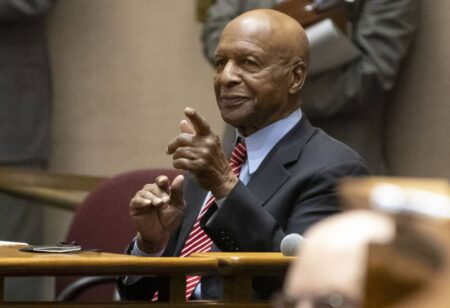
SPRINGFIELD — The umbrella organization of organized labor in Illinois has decided to not make an endorsement for the Democratic nomination for secretary of state, despite more than half of its nearly 900,000 workers who’ve already pledged their support for Alexi Giannoulias.The lack of an endorsement by the Illinois AFL-CIO signals good news for Giannoulias’ two major opponents in the Democratic primary on June 28, especially his main rival, Chicago City Clerk Anna Valencia, who has faced questions about whether her husband’s lobbying activities have interfered with her role in public office.AdvertisementGiannoulias is one of four Democrats vying for the nomination to replace Jesse White, who has been secretary of state since 1999. With more than $4.4 million in his campaign through March, Giannoulias has maintained a huge campaign cash advantage over Valencia and his other major Democratic opponent, Chicago Ald. David Moore, 17th. Sidney Moore of Homewood is also on the ballot.Tim Drea, the president of the Illinois AFL-CIO, said Thursday that “the candidates had support from affiliates on both sides,” but none could get the two-thirds support necessary for an endorsement from the umbrella organization.AdvertisementDrea said the organization also made no endorsement in three hotly contested Congressional races: The 3rd District, a newly drawn Latino-leaning district that covers the city’s Northwest Side and western suburbs and features Democrats Delia Ramirez, a state representative from Chicago, and Chicago Ald. Gilbert Villegas, 36th; the 6th District in the western suburbs where two-term U.S. Rep. Sean Casten, a Democrat from Downers Grove, is facing off against first-term Democratic U.S. Rep. Marie Newman of LaGrange; and a crowded race in the 1st District to replace retiring Democratic U.S. Rep. Bobby Rush of Chicago.Illinois Secretary of State Jesse White is recognized Feb. 23, 2022, during a Chicago City Council meeting. Four Democrats are vying for the nomination to replace White, who has been secretary of state since 1999. (Brian Cassella / Chicago Tribune)By the end of last year, Giannoulias had already secured an array of key union endorsements, including several labor groups affiliated with the Illinois AFL-CIO that amass more than half a million of the organization’s nearly 900,000 workers. But an endorsement from the umbrella organization itself could go a long way for any of the candidates going into the November general election because labor unions generally favor Democrats.In a statement, the Giannoulias campaign said it was still optimistic about the race despite not receiving the support from the organization.“Alexi is leading the race when it comes to endorsements from organized labor with announced support from a broad-based coalition of unions that represent more than 600,000 Illinoisans statewide,” a campaign spokesperson said in the statement Thursday. “Alexi has proven himself as tireless fighter who has a record of protecting and supporting working families.”Moore, the Chicago alderman, said in a statement that he appreciated the AFL-CIO “rejecting the rush to anoint anyone in this race as the front runner.”“The Illinois Secretary of State’s race is still very competitive and while money and endorsements are important, voters will have the final say,” Moore said.Valencia, whose campaign declined to comment on AFL-CIO decision, has secured endorsements from many major state Democrats, including White himself, Gov. J.B. Pritzker and U.S. Sens. Tammy Duckworth and Dick Durbin. Valencia ran Durbin’s 2014 reelection campaign. She’s also secured some union support, including from the Associated Fire Fighters of Illinois and the Illinois Nurses Association, among others.But Valencia also has become marred in controversy lately over questions about whether her husband, Reyahd Kazmi, has used his lobbying practice to profit off connections to Valencia’s role as city clerk.AdvertisementVarious news reports have documented several instances over the last four years that suggest Kazmi may have benefited financially from that connection, including when Valencia promoted two companies for a city-sponsored event in 2018 that were also clients of Kazmi. While Valencia entered into a nonpaid “partnership” with these clients for a healthy-food program for Chicago’s youth, the news reports said the companies have paid Kazmi $52,000 for lobbying work.In another instance, Kazmi’s business partner sought Valencia’s help to expand his business into New Orleans before she set up meetings with city officials there, according to the news reports. Kazmi’s partner won a contract with that city and competitors then accused New Orleans officials of contract rigging, the news reports say.Meanwhile, the Valencia campaign has gone after Giannoulias for failing to disclose names of his clients from an investment firm where he served as its wealth director after he served as state treasurer from 2007 to 2011, even as he stresses transparency in government in his bid for secretary of state.On the Republican side of the race, state Rep. Dan Brady of Bloomington is seeking the GOP nomination for secretary of state. His campaign has announced endorsements from several Republican state legislators, as well as from three GOP congressmen, U.S. Reps. Rodney Davis of Taylorville, Darin LaHood of Peoria and Mike Bost of Murphysboro.Brady’s challenger is John Milhiser, a former U.S. Attorney in the Central District of Illinois, who is running for secretary of state as part of a slate of candidates promoted by billionaire hedge fund manager Ken Griffin.jgorner@chicagotribune.com

REYNOLDSVILLE, Ill. — Two Southern Illinois University-Carbondale graduate students and a Missouri woman died Thursday after their vehicles collided on a highway, police said.The crash that occurred about 4:15 a.m. on Illinois Route 3 in Union County killed Marie A. Meunier, 32 of Cape Girardeau, Missouri, and students Pavan Swarna and Vamshi K. Pechetty, both 23, of Carbondale, state police said.AdvertisementThey were pronounced dead at the scene of the crash, police said.Meunier was driving a 2013 blue Fiat sedan when her car crossed the center line and struck the front of the 2019 Toyota sedan Swarna was driving, police said.AdvertisementThree other SIU graduate students were injured in the collision, police said: 23-year-old Yaswanth S. Uppalapati, 24-year-old Kalyan Dorna and 23-year-old Kakumanu Karthik.Three other SIU graduate students were injured in the collision, police said: 23-year-old Yaswanth S. Uppalapati, 24-year-old Kalyan Dorna and 23-year-old Kakumanu Karthik, all of Carbondale. Karthik suffered lift-threatening injuries, police said.“We are working to support the families during this incredibly difficult time,” SIU Chancellor Austin Lane said in a statement. “Our thoughts and hearts are with these students and their loved ones.”

It’s rare for center Nikola Vučević to take the most shots on the Chicago Bulls.Although he was used to being the primary scorer during his decade with the Orlando Magic, Vučević stepped into a more complementary role in the Bulls offense after arriving in a March 2021 trade. His scoring average of 17.6 points in his first full season in Chicago was nearly seven points lower than in his last season with the Magic (24.5), while he took almost five fewer shots per game (15.8 versus 20.6).AdvertisementBut in the first two games of the Bulls’ playoff series with the Milwaukee Bucks, Vučević broke this trend to match fellow stars DeMar DeRozan and Zach LaVine in offensive output. His production made the difference for the Bulls as they return from Milwaukee with the series tied 1-1.[ [Don’t miss] The Bulls returned to the best of themselves in their Game 2 win. Will it be enough to swing the series? ]In Game 1, Vučević led the Bulls in scoring with 24 points while taking the most shots (27) on the team. Although he suffered from the same shooting slump that plagued the entire roster — going 9-for-27 and 2-for-10 from 3-point range — his scoring was essential to the Bulls keeping pace in the 93-86 loss. Advertisement“Everybody on our team, nobody really cares who takes the shot,” Vučević said. “We all need to be aggressive. We all need to take the shots that are there.”Vučević’s high volume of shots continued in Game 2 with 24 points on 10-for-18 shooting. Both figures were second to DeRozan’s postseason career-high 41 points on 16-for-31 shooting as Vučević balanced a well-rounded attack by the Bulls big three.ExpandAutoplayImage 1 of 53Bulls forward DeMar DeRozan, center, is surrounded by teammates after hitting a shot over Bucks forward Giannis Antetokounmpo late in the second half of Game 2 of a first-round playoff series on April 20, 2022, at Fiserv Forum in Milwaukee. (Chris Sweda / Chicago Tribune)The Bucks defensive style caters to Vučević as a pick-and-pop big man. Although his main focus is to carve out a presence in the paint, Vučević’s shooting from behind the arc and even in the midrange allows him to stretch the Bucks defense in a way traditional post-up centers can’t replicate.Vučević’s scoring map in Game 2 emphasized the importance of this versatility — four made shots behind the arc, two in the midrange, two in the paint and two at the rim. His two 3-pointers in the fourth quarter landed haymakers on the Bucks to cut their late-game runs short.Chicago Tribune SportsWeekdaysA daily sports newsletter delivered to your inbox for your morning commute.“That’s just the way they play defense,” Vučević said. “They collapse in the paint, they take the paint away from teams and they don’t give up the 3, but that’s the shot you’re going to get. You have to make that shot to be able to beat them.”Bulls center Nikola Vučević (9) celebrates beside Bucks forward Giannis Antetokounmpo (34) in the second half of Game 2 on Wednesday, April 20, 2022, at Fiserv Forum in Milwaukee. (Chris Sweda / Chicago Tribune)Although Vučević’s outside shooting was in the spotlight Wednesday, he can unlock the entire offense when he clicks in the middle of the paint — especially by supplying second-chance opportunities.The Bulls had six offensive rebounds in Game 2 and Vučević was responsible for half of them, including two critical offensive boards in the final minutes of the fourth quarter to set up the Bulls for game-clinching baskets.“When the defense is out of place, there’s room for us to get offensive rebounds,” Vučević said. “At the same time, we also have to be careful not to all crash because it leaves us out of position.”Advertisement[ [Don’t miss] Column: Bulls’ gritty effort in Game 2 win gives the Bucks something to worry about ]Like many of his Bulls teammates, Vučević isn’t big on celebrations. Although his frustration is often transparent, he rarely even tosses up a hand gesture to celebrate a made shot, typically pointing at the teammate who assisted him as he jogs back up the court.But when Vučević hit his second 3-pointer in the fourth quarter of Game 2 to solidify the Bulls lead, he couldn’t hold back. He punched at the air with both fists, then patted his chest with a confident head nod.“It’s the playoffs,” Vučević said after the win. “Every moment is big. Every game is big.”

Dear Amy: Occasionally, I get together with a few of my neighbors.Recently these people have commented negatively about people not getting the COVID vaccine. I refuse to get this shot.AdvertisementShould I admit my decision not to vaccinate — and tell them about it?Should I just not be their friend anymore?AdvertisementWhat is your advice?– I RefuseDear You Refuse: You have the right to roll the dice regarding your refusal to vaccinate against a highly contagious virus that is the cause of a global pandemic.You do NOT have the right to withhold your decision – when you know this is important to people you have been spending time with.You likely believe this is a personal and private decision, but – unlike other choices you might make — this is a personal choice with communal consequences.Their vaccinations would likely protect your neighbors from the more severe forms of this illness, but – they may have elders or other more vulnerable people in their circles who might not be so lucky.Where I live, currently cases are way up and hospitalizations are down. But getting sick from this virus can have a huge impact on people who get it (and vaccinated people do get it). The symptoms can be lingering and severe, and they (and family members) will be forced to quarantine.Whether you wish to attempt to continue on in friendship with these neighbors is up to you. But honesty is a necessary aspect of friendship, and so you should disclose your vaccination status, and give them the opportunity to reconsider in-person contact.AdvertisementGiven that you haven’t disclosed something obviously very important to them, they may reconsider having a friendship with you, and you should prepare yourself for that.Dear Amy: Our granddaughter has a 5-year-old daughter whose father, “W,” was convicted of a felony involving a gun. He was a previous felon.W has been in and out of my great-granddaughter’s life for the past five years. He is now facing some serious jail time.W’s mother and his sister have been involved with our great-granddaughter and have been consistently in her life.What is the best way for our granddaughter to deal with her child’s grandmother and aunt when it comes to the child visiting them?My granddaughter doesn’t want her daughter going to jail to visit, nor does she want her to talk to W on the phone, because the child becomes too emotional.AdvertisementI asked her to see a counselor, but she says she cannot afford one.I think it would be good for the child to continue to have contact with her father’s family members.Your suggestions?– ConcernedDear Concerned: I agree that this child is too young to visit her father in prison. I disagree, to some extent, regarding phone calls. Depending on the context and on the father’s ability to communicate appropriately with his daughter, monitored phone or video calls should be considered.The child’s father should be encouraged to write to his daughter, and – once the mother has vetted his communication – the daughter can write back.AdvertisementNot knowing the context, backstory, or personalities of any of the people involved, I mainly note that this child’s mother is the custodial parent, and it is her duty to always make choices in the child’s best interests. If she decides that no-contact with “W” is best for her child for the next few months, then “W’s” family members must respect that.Studies show that having an incarcerated parent can have a profound impact on a child’s physical and mental health.Your granddaughter should research the impact of incarceration on families. She is mistaken that she can’t afford a counselor. Licensed social workers are eminently qualified to work with this family, and by making some phone calls, she can get low or no-cost help.Youth.gov has a wealth of information for families of those incarcerated. A film featuring four young people reflecting on their experience with an incarcerated parent is both illuminating and heartbreaking. (Youth.gov/coip)Ask AmyDailyNo-nonsense advice for better living delivered to your inbox every morning. For a limited time, sign up for the Ask Amy newsletter and get the book “Ask Amy: Essential Wisdom from America’s Favorite Advice Columnist” for $5.Dear Amy: I’m laughing about your issue with the use of the term “maiden name.”Aren’t there bigger fish to fry? Some women, such as my daughter, took her husband’s last name when they got married, so if she’s filling out any legal paperwork, it will ask for her maiden name. What’s the issue?Advertisement– A ReaderDear Reader: “Maiden” as a term refers – or implies a reference — to a woman’s presumed “maidenhood,” or virginity. Some women really don’t want our surnames characterized that way.Got a question for Amy? Enter it here and we’ll send it to her.Sign up here to receive the Ask Amy newsletter to get advice e-mailed to your inbox every morning, and for a limited time — get the book “Ask Amy: Essential Wisdom from America’s Favorite Advice Columnist” for $5.©2021 Amy Dickinson.
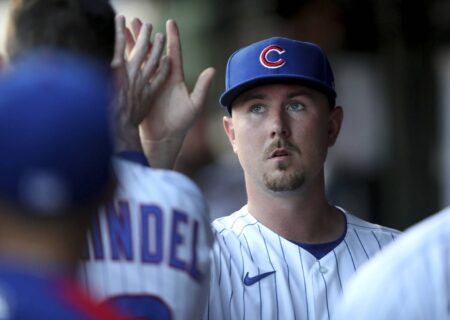
Daniel Vogelbach hit a two-run homer, Yoshi Tsutsugo had a two-run double and the Pittsburgh Pirates rallied past the Chicago Cubs 4-3 on Thursday night at Wrigley Field.The Pirates rebounded from a three-game sweep in Milwaukee with nine hits in the opener of a four-game series.AdvertisementPirates starter Bryce Wilson allowed Rafael Ortega’s leadoff single in the first, then walked three straight batters. Jonathan Villar added a sacrifice fly for a 2-0 lead, and Seiya Suzuki had an RBI groundout in the second for a 3-0 edge.[ [Don’t miss] Marcus Stroman is frustrated by another rough outing in the Cubs’ rain-shortened 8-2 loss to the Rays ]Vogelbach — a second-round pick by the Cubs in 2011 who spent five years in their minor-league system — homered in the third, and Tsutsugo’s double made it 4-3 Pirates in the fifth. That prompted Cubs manager David Ross to pull reliever Ethan Roberts (0-1) after two-thirds of an inning in which he gave up two earned runs, two hits, two walks and fanned two.AdvertisementScott Effross got the Cubs out of the fifth, then Chris Martin struck out three in the sixth, stranding Ben Gamel at third after a leadoff single and a throwing error.Cubs starter Mark Leiter Jr. gave up three hits and two runs, walking two and striking out three in four innings.Cubs starting pitcher Mark Leiter Jr. is congratulated in the dugout after shutting down the Pirates in the first inning at Wrigley Field on Thursday, April 21, 2022. (Chris Sweda / Chicago Tribune)Wilson allowed three hits and three earned runs in three innings. He walked four and struck out two.Wil Crowe (1-0) fanned five Cubs in 2⅓ innings of scoreless relief, allowing one hit. Dillon Peters and Heath Hembree pitched a scoreless seventh, leaving potential tying run Nico Hoerner stranded at third.Chicago Tribune SportsWeekdaysA daily sports newsletter delivered to your inbox for your morning commute.David Bednar retired all four batters he faced, striking out two in 1⅓ innings before Chris Stratton entered to make his first save of the year.[ [Don’t miss] How the Cubs’ Ethan Roberts developed a nasty slider — and ‘exceeded whatever your loftiest expectations can be’ ]Five Cubs relievers combined for 4⅓ scoreless innings after the Pirates inched ahead in the fifth.Cubs first baseman Frank Schwindel had his nine-game hitting streak snapped.The Cubs (6-7) have dropped three in a row to dip below .500 after a series loss to the Tampa Bay Rays earlier in the week.AdvertisementPirates: The Pirates optioned RHP Roansy Contreras to Triple-A Indianapolis and called up RHP Chase De Jong. Manager Derek Shelton said Contreras will “have an impact as a starter this year” and that he felt the best place to “get him stretched” out was in Indianapolis. RHP Luis Oviedo was designated for assignment.Cubs: The Cubs dealt RHP Cory Abbott to the San Francisco Giants for cash after designating him for assignment Saturday. … The Cubs also acquired LHP Sean Newcomb from the Atlanta Braves in exchange for Jesse Chavez and cash. Ross said he didn’t want to “prejudge” Newcomb before seeing him live, noting that the 28-year-old has had “some major-league success” and faced “some adversity.” Newcomb was available after joining the team Thursday. … Ross said LHP Wade Miley (left elbow inflammation) had a “really nice bullpen” session Wednesday. Ross said Miley will get a minor-league assignment before returning to the active roster.Former Cubs LHP José Quintana (0-1, 3.86 ERA) gets the call for the Pirates on Friday, while LHP Drew Smyly (1-0, 0.00 ERA) will start for the Cubs.

Chicago concert promoter Jam Productions has partnered with a Los Angeles-based investment group.Jam, which operates venues such as the Vic Theatre, the Riviera Theatre and Park West in Chicago, recently celebrated its 50th year in business as one of the largest independent producers of live entertainment in the U.S. It also owns and is behind the renovation of the Uptown Theatre in the Uptown neighborhood, and operates The Palace in St. Paul, Minnesota. It is owned by Jerry Mickelson, who cofounded Jam in 1972 with Arny Granat, who left the company in 2019.Advertisement“It has been obvious that for Jam’s business to grow, it needed to be part of a network, something larger with more locations, data and intelligence analytics as well as booking leverage,” Jam co-founder Jerry Mickelson said. “Over the years I considered all the bigger players but there wasn’t a good fit in terms of how we wanted to operate and compete.”Jerry Mickelson in the lobby of the shuttered Uptown Theatre in Chicago in 2010. (Chris Walker / Chicago Tribune)Jam has sold an equity stake to SaveLive, a California group founded in 2020 and headed by CEO Marc Geiger. Its announcement of the sale calls Jam a “crown jewel in the SaveLive network. Jam and SaveLive intend to aggressively invest in the Midwest targeting small-to-midsize venues across multiple cities.” Coming out of the music industry’s pandemic pause, Jam anticipates producing 450 concerts in 33 venues in the Midwest.AdvertisementMickelson will retain control of Jam and continue to make operational decisions for the company, according to a report in Crain’s Chicago Business.“It’s exciting to reinvent Jam by aligning with a national company outside of our comfort zone and built differently than ours,” Mickelson said. “We blazed a trail and were always focused on the city’s neighborhoods and on bands who were just starting out. We very much played a part in defining the modern concert business and it’s not over. We’re going to continue to grow and adapt for the next 50 years with SaveLive.”SaveLive’s current partners include The Alibi and Golden State Theatre in California; Beer City Music Hall, Ponyboy, Tower Theatre and Criterion in Oklahoma City; and Elektricity in Pontiac, Michigan, among others. In a statement, it describes itself as founded “to bring scalable services and advantages to independent venue owners” — services including booking, ticketing, marketing, food and beverage, technology and sales and sponsorship.“Jam’s platform is a natural next step in building a quality national independent network,” Geiger said. “Jerry’s tenacity over the years of consolidation has been inspiring and we are super excited to integrate and get to work.”Geiger was also a co-founder of Lollapalooza in 1991, and lead the William Morris Endeavor music division from 2003 until 2020.Update: This story has been changed with new information about the partnership and Mickelson’s continued role at Jam.
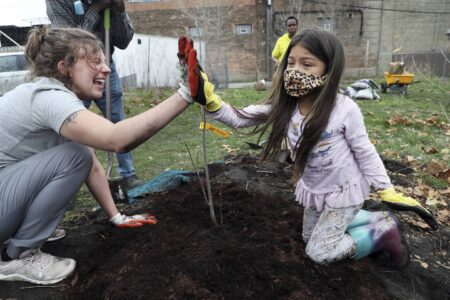
The trees were bare, the sky was gray and temperatures hovered in the 60s.But grass underfoot was already emerald green at the Land, a community garden and outdoor space on the Southeast Side, and the crowd of 35 —children and older adults, lifelong gardeners and newbies, professional tree planters and neighborhood volunteers — was in high spirits.AdvertisementStanding in a wide circle, they introduced themselves one by one to loud applause.And then they got to work: planting 20 trees, including persimmon and white oak, Ohio buckeye and Kentucky coffeetree.Advertisement“I think it’s beautiful,” said Jim Murrell, 81, of the Pullman neighborhood, who attended with his wife, Lena. “People should be more sensitive to trees.”Tree plantings such as the one at the Land earlier this month are on the rise, according to the Chicago Region Trees Initiative, a consortium that works to increase the regional tree canopy. This spring the consortium will participate in 16 tree plantings, each with 10 to 83 trees, according to Trinity Pierce, stewardship manager for the trees initiative. That compares with about 10 tree plantings during the entire first year of the COVID-19 pandemic.Colette Copic, left, of Chicago Region Trees Initiative, and Lalli Licona, 6, high-five after planting a tree in a lot on the South Side of Chicago near the Calumet River on April 13, 2022. Experts from The Morton Arboretum helped volunteers such as Licona with the planting. (Terrence Antonio James / Chicago Tribune)“There’s this sincere and genuine need for connection” during the pandemic, Pierce said, and that extends to growing food and caring for plants. She’s seen more interest in fruit-bearing trees, community gardens and backyard improvements.The interest comes at a time of growing awareness that the urban tree canopy contributes to human health and comfort, and that it’s unevenly distributed according to income and race.[ A ‘postcard from the future,’ Oak Park building is one of three in the state to prove it creates as much energy as it uses ]A 2021 analysis by the conservation organization American Forests found U.S. neighborhoods with a majority of people of color average 33% less tree canopy than majority-white communities. Neighborhoods with 90% or more of their residents living in poverty had 41% less tree canopy than communities with 10% or less of the population living in poverty.The southeast section of the Calumet Heights neighborhood where the Land is located has 17% tree coverage, according to American Forests, which would like to see 48% tree coverage there. Ninety-four percent of residents are people of color.Last summer neighbors and supporters came together to plant sunflowers and vegetables. There’s a big metal shed with a mural featuring flowers, trees and messages of goodwill. Long grasses and meandering paths give the oversized city lot an unplanned, natural look.The Land organizers got in touch with the trees initiative through the nonprofit Arbor Day Foundation, which has partnered with Peanuts Worldwide (of Charlie Brown fame) to plant hundreds of thousands of trees around the globe through 2025.AdvertisementVolunteers plant trees in a lot on the South Side near the Calumet River . (Terrence Antonio James / Chicago Tribune)The trees initiative provided the tree know-how, the Arbor Day Foundation and Peanuts Worldwide provided funding — as well as a very convincing Snoopy in full fuzzy white costume — and the Land provided the space, the vision and the knowledge of the community.“I find that information exchange — that’s what’s so rewarding about this work,” said Pierce. “Yes, it’s about trees, but more so, the people who live with those trees and take care of them.”In keeping with the Land’s focus on fresh food and permaculture — a form of sustainable agriculture — the trees initiative provided pawpaw, persimmon and serviceberry, all trees that produce edible fruit.“Not a lot of people realize we have native, hardy tree species that do really well and produce delicious food,” Pierce said.“That’s the other side of it: just spreading awareness about the wonderful trees we have that are going to do well — they’re not just going to survive, they’re going to thrive.”Lydia Scott, left, director of the Chicago Region Trees Initiative at The Morton Arboretum, looks on as Chimalli Licona, center, and Coqui Licona tamp down the soil around a newly planted tree in a lot on the South Side of Chicago near the Calumet River. (Terrence Antonio James / Chicago Tribune)The crowd at the planting included seasoned urban gardeners such as Lena Murrell, 78, who has two peach trees, an apple tree and a pear tree outside her home in the Pullman neighborhood, and Ray Glend, 74, of the Chatham neighborhood, who patiently explained the charm of the pawpaw fruit.Advertisement“It’s sweet and creamy with a lot of seeds,” said Glend. “It’s like a custard.”[ 2 Illinois eagles died from lead poisoning in March, and toxic hunting ammunition is likely the culprit ]The tree-planting itself was over fairly quickly, with individuals and small groups digging 3-foot-wide holes and arranging trees so they stood straight up, with the bark at their bases exposed to discourage unhealthy root growth.Afterward, participants mingled, while children played or looked on curiously. Royal Robinson Jr. came with his wife, Nicole, and their children, Royal Robinson III, 8, and Rainah Robinson, 12. The Robinsons, who have a 10-acre family farm outside Hindsboro, Illinois, brought cartons of fresh eggs — brown, yellow and even pale blue — and offered them free to whoever wanted them.Royal Robinson, right, moves trees to the spot where they will be planted in a South Side lot. (Terrence Antonio James / Chicago Tribune)Pura Verdad, a community organizer, brought four of her six children, ages 6 to 12, as well as hand-painted canvases promoting local environmental causes such as the fight to save the Bell Bowl Prairie in Rockford.“This is a prime time to talk to people who love trees,” she said.The crowd, which grew to over 40, posed for a group photo, then lingered under threatening skies.AdvertisementThe new trees stood in the background, some bare, some with last year’s brown leaves still dangling. But if you looked closely you could see new growth. The serviceberries, in particular, were already covered with dozens of mint-green buds, each holding the promise of spring’s white petals and summer’s red fruit.nschoenberg@chicagotribune.com
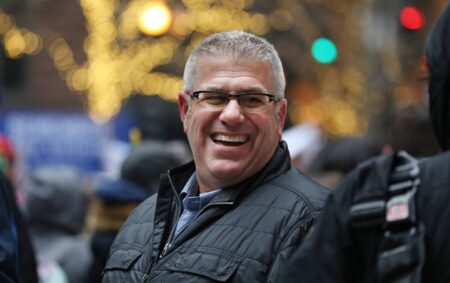
Illinois’ political battle of the billionaires has long been thought to be Democratic Gov. J.B. Pritzker and the governor’s nemesis, businessman Ken Griffin. But now a new battle may be shaping up in the race for the Republican nomination for governor.Late Wednesday, conservative megadonor Richard Uihlein, founder of the privately held Uline office supply business, gave $2.5 million to state Sen. Darren Bailey’s effort for the GOP governor nomination. That’s on top of $1 million Uihlein already contributed to Bailey’s campaign.AdvertisementUihlein joins Griffin as one of the larger campaign contributors in the GOP primary. Griffin, the state’s wealthiest person and head of the hedge fund firm Citadel, earlier this year gave $20 million to Aurora Mayor Richard Irvin’s June 28 primary bid for the Republican nomination for governor to face Pritzker in November. Two years ago, Griffin pumped millions into defeating Pritzker’s proposed graduated income tax amendment.State Rep. Darren Bailey, R-Xenia, attends the March for Life Chicago rally at Federal Plaza on Jan. 8, 2022, in Chicago. (John J. Kim / Chicago Tribune)In addition to giving to Bailey, Uihlein also has contributed $1 million to an independent expenditure group headed by right-wing talk show host Dan Proft that is being used for TV ads attacking Irvin. Proft, of Naples, Florida, was an unsuccessful 2010 candidate for the GOP nomination for governor and previously ran Uihlein-funded efforts to win Republican legislative seats with little success.AdvertisementUihlein and his wife, Elizabeth, are worth an estimated $4 billion, according to Bloomberg. They have donated tens of millions of dollars to national conservative candidates, groups and causes, including organizations that have backed former President Donald Trump’s unsubstantiated claims that the 2020 presidential election was stolen from him.Since 1998, the Uihleins, of Lake Forest, have contributed nearly $35 million to state Republican candidates and groups, according to records from the Illinois State Board of Elections. The couple gave more than $2.6 million to wealthy Republican businessman Bruce Rauner’s successful run for governor in 2014 but soured on Rauner four years later and gave $2.5 million to his unsuccessful GOP primary challenger, former state Rep. Jeanne Ives of Wheaton. Ives and Proft have each endorsed Bailey for the GOP nomination.“We are in this position because I’ve been expelling truth, hope, the possibility of restoring Illinois,” Bailey said Wednesday about his run for governor as he accepted endorsements from anti-abortion groups at Trump Tower in Chicago.Bailey, of Xenia, has seen his candidacy subjected to attacks from Irvin on TV and in mailers, questioning the Downstate senator’s conservative credentials. Bailey also has questioned Irvin’s GOP qualifications.Griffin is worth an estimated $27.6 billion, according to Forbes. Griffin gave Rauner $11.5 million in his winning 2014 campaign for governor and another $22.5 million in Rauner’s losing reelection effort.Griffin spent $53.75 million to successfully fight Pritzker’s proposed graduated-rate income tax constitutional amendment. Pritzker spent $58 million in his unsuccessful push for voter ratification.Pritzker, an heir to the Hyatt Hotels fortune and an entrepreneur, is the nation’s wealthiest politician, worth an estimated $3.6 billion, according to Forbes. Pritzker has already poured $125.5 million of his own money into his reelection campaign, including a $90 million deposit in January.Even with Uihlein’s latest funding, Bailey trails Irvin and cryptocurrency venture capitalist Jesse Sullivan of Petersburg in the cash race leading up to the GOP primary. Irvin had spent nearly $10 million in ads through the end of March and had $10 million in cash to start April. Sullivan reported $8 million in cash at the end of March.AdvertisementBefore Uihlein’s latest donation, Bailey reported having more than $900,000 in cash to start April.Meanwhile, the elections board removed from the primary ballot a Republican slate running under the “We are the people Illinois” banner and backing former President Donald Trump’s false claims of endemic voter fraud.The board found the group fell short of the valid number of petition signatures to appear on the ballot. It struck the names of governor candidate Emily Johnson of Wheaton; Brett Mahlen for lieutenant governor and his wife, Maryann Mahlen, for U.S. Senate, both from Orland Park; Michelle Turney of Chicago for secretary of state; Patrice McDermand of Lake Bluff for treasurer; and Michael Kinney of Carol Stream for comptroller.rap30@aol.com