



Author: staff

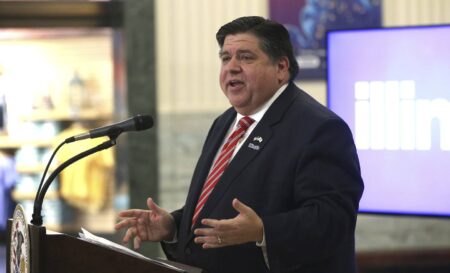
Illinois on Thursday received its third credit upgrade in less than a year after previously going more than two decades without one, bolstering Gov. J.B. Pritzker’s reelection campaign message that he and fellow Democrats are slowly fixing the state’s long-running financial problems.Even with the upgrade, Moody’s Investors Service said Illinois’ credit remains lower than any other state in the nation. That’s in large part due to the state’s long-term debt issues, including pensions that remain significantly underfunded, and its sluggish economy relative to other states.AdvertisementStill, Pritzker publicized the bump as he announced the news at the Thompson Center in the Loop.Gov. J.B. Pritzker announces a new Illinois tourism campaign at the Shedd Aquarium in Chicago on April 18, 2022. (Antonio Perez / Chicago Tribune)“There is more work to be done, of course, but step by step, rung by rung, we are steadily climbing the ladder out of the hole that was dug over decades, and Illinois’ future is bright,” Pritzker said.AdvertisementThursday’s credit hike from Moody’s comes after the ratings agency last year elevated the state’s credit to two notches above junk bond status from one, the first upgrade for Illinois since Republican George Ryan was governor. S&P Global Ratings followed suit soon after, and while Fitch Ratings still has Illinois at its lowest investment grade, the firm has signaled an upgrade could be in the offing.Higher bond ratings mean the state generally is able to borrow money at lower interest rates, ultimately saving money for taxpayers.The positive financial news gave Pritzker another opportunity to tout the $46 billion state budget and $1.8 billion election-year tax relief plan he signed into law Tuesday — a plan he’s repeatedly promoting in TV commercials for his reelection campaign.The spending plan for the budget year that begins July 1 and other measures are allowing the state to deposit $1 billion into its rainy day fund, make an additional pension payment of $500 million on top of a required $9.6 billion contribution, and devote more than $1 billion toward paying off old employee health insurance bills.The state also has paid off $3.2 billion in emergency coronavirus loans from the Federal Reserve ahead of schedule and, using federal aid from President Joe Biden’s American Rescue Plan, paid down $2.7 billion of a $4.5 billion deficit in its unemployment insurance trust fund.“When I came into office, Illinois had a structural deficit of nearly $3 billion, and between 2015 and 2017 our state suffered an astonishing eight credit downgrades,” Pritzker said. “We’ve now repeatedly balanced the budget and secured three upgrades in under a year.”Still, the state has nearly $140 million in unfunded pension liabilities and has yet to come up with a plan to repay the remaining $1.8 billion unemployment fund debt, among other challenges.House Speaker Emanuel “Chris” Welch, a Hillside Democrat who is looking to defend a 73-45 supermajority over Republicans, joined Pritzker in pinning the blame for the state’s money problems on past legislatures and governors, particularly Republican predecessor Bruce Rauner.AdvertisementDemocrats have “turned Bruce Rauner’s $17 billion debt into a surplus, and now we’re using that financial stability to make historic investments in human services and public safety, and put money back into the pockets of hardworking families,” Welch said in a statement, referring to the state’s previously towering pile of backlogged bills.Despite the plaudits from Wall Street, Republicans said massive federal stimulus efforts, including $8.1 billion last year from the American Rescue Plan, have papered over deeper budgetary problems.“The truth is, Pritzker continues to put Illinois on a path toward fiscal insolvency by increasing state spending and failing to address the systemic issues that are causing people to flee this state,” Senate GOP leader Dan McConchie of Hawthorn Woods said in a statement. “Should he remain in office next year, he is going to be confronted with a major hangover after the federal money dries up and state spending is at a record high.”The larger economic issues cited by Republicans are factored into the Moody’s analysis and the ratings agencies have so far given the General Assembly and the Pritzker administration credit for not using the one-time influx of revenue to fund ongoing expenses.In addition to the rating upgrade, Moody’s affirmed its stable outlook for Illinois’ finances, which “balances the state’s recent financial progress with underlying challenges that will remain in place for some time.”dpetrella@chicagotribune.comAdvertisementSign up for The Spin to get the top stories in politics delivered to your inbox weekday afternoons.
Illinois on Thursday received its third credit upgrade in less than a year after previously going more than two decades without one, bolstering Gov. J.B. Pritzker’s reelection campaign message that he and fellow Democrats are slowly fixing the state’s long-running financial problems.Even with the upgrade, Moody’s Investors Service said Illinois’ credit remains lower than any other state in the nation. That’s in large part due to the state’s long-term debt issues, including pensions that remain significantly underfunded, and its sluggish economy relative to other states.AdvertisementStill, Pritzker publicized the bump as he announced the news at the Thompson Center in the Loop.Gov. J.B. Pritzker announces a new Illinois tourism campaign at the Shedd Aquarium in Chicago on April 18, 2022. (Antonio Perez / Chicago Tribune)“There is more work to be done, of course, but step by step, rung by rung, we are steadily climbing the ladder out of the hole that was dug over decades, and Illinois’ future is bright,” Pritzker said.AdvertisementThursday’s credit hike from Moody’s comes after the ratings agency last year elevated the state’s credit to two notches above junk bond status from one, the first upgrade for Illinois since Republican George Ryan was governor. S&P Global Ratings followed suit soon after, and while Fitch Ratings still has Illinois at its lowest investment grade, the firm has signaled an upgrade could be in the offing.Higher bond ratings mean the state generally is able to borrow money at lower interest rates, ultimately saving money for taxpayers.The positive financial news gave Pritzker another opportunity to tout the $46 billion state budget and $1.8 billion election-year tax relief plan he signed into law Tuesday — a plan he’s repeatedly promoting in TV commercials for his reelection campaign.The spending plan for the budget year that begins July 1 and other measures are allowing the state to deposit $1 billion into its rainy day fund, make an additional pension payment of $500 million on top of a required $9.6 billion contribution, and devote more than $1 billion toward paying off old employee health insurance bills.The state also has paid off $3.2 billion in emergency coronavirus loans from the Federal Reserve ahead of schedule and, using federal aid from President Joe Biden’s American Rescue Plan, paid down $2.7 billion of a $4.5 billion deficit in its unemployment insurance trust fund.“When I came into office, Illinois had a structural deficit of nearly $3 billion, and between 2015 and 2017 our state suffered an astonishing eight credit downgrades,” Pritzker said. “We’ve now repeatedly balanced the budget and secured three upgrades in under a year.”Still, the state has nearly $140 billion in unfunded pension liabilities and has yet to come up with a plan to repay the remaining $1.8 billion unemployment fund debt, among other challenges.House Speaker Emanuel “Chris” Welch, a Hillside Democrat who is looking to defend a 73-45 supermajority over Republicans, joined Pritzker in pinning the blame for the state’s money problems on past legislatures and governors, particularly Republican predecessor Bruce Rauner.AdvertisementDemocrats have “turned Bruce Rauner’s $17 billion debt into a surplus, and now we’re using that financial stability to make historic investments in human services and public safety, and put money back into the pockets of hardworking families,” Welch said in a statement, referring to the state’s previously towering pile of backlogged bills.Despite the plaudits from Wall Street, Republicans said massive federal stimulus efforts, including $8.1 billion last year from the American Rescue Plan, have papered over deeper budgetary problems.“The truth is, Pritzker continues to put Illinois on a path toward fiscal insolvency by increasing state spending and failing to address the systemic issues that are causing people to flee this state,” Senate GOP leader Dan McConchie of Hawthorn Woods said in a statement. “Should he remain in office next year, he is going to be confronted with a major hangover after the federal money dries up and state spending is at a record high.”The larger economic issues cited by Republicans are factored into the Moody’s analysis and the ratings agencies have so far given the General Assembly and the Pritzker administration credit for not using the one-time influx of revenue to fund ongoing expenses.In addition to the rating upgrade, Moody’s affirmed its stable outlook for Illinois’ finances, which “balances the state’s recent financial progress with underlying challenges that will remain in place for some time.”An earlier version of this story gave an incorrect figure for Illinois’ pension debt.Advertisementdpetrella@chicagotribune.comSign up for The Spin to get the top stories in politics delivered to your inbox weekday afternoons.

MILWAUKEE — Khris Middleton will miss at least the Milwaukee Bucks’ next game with a sprained medial collateral ligament after getting hurt in the fourth quarter of their Game 2 loss to the Chicago Bulls.The Bucks announced Thursday that the three-time All-Star won’t be available for Game 3 of the first-round playoff series Friday night at the United Center.AdvertisementExactly how much time Middleton will miss remains uncertain. As the defending champion Bucks spoke after the game Wednesday night, they braced for the possibility they could be missing Middleton for a significant time.“You feel for him,” guard Wesley Matthews said. “Khris is a huge part of this team, this organization, this city.”AdvertisementMiddleton headed into the locker room with 6:49 left in the Bucks’ 114-110 loss. His left leg gave out while he tried to plant on a spin move.Chicago Tribune SportsWeekdaysA daily sports newsletter delivered to your inbox for your morning commute.The Bucks’ injury report for Friday’s game doesn’t include forward Bobby Portis, an indication he should be available after missing most of Game 2 with a right eye abrasion. Portis took a hit to the face from the Bulls’ Tristan Thompson late in the first quarter as both players were going after a rebound.The Bucks won’t have reserve guard George Hill, who hasn’t played in this series because of an abdominal strain.The Bucks have been through this situation before, dealing with a knee injury to one of their top players during the playoffs. Two-time MVP Giannis Antetokounmpo hyperextended his left knee in Game 4 of last season’s Eastern Conference finals against the Atlanta Hawks.Antetokounmpo missed the final two games of that series but returned for the next round and was named the MVP of the Bucks’ NBA Finals victory over the Phoenix Suns.As he discussed Middleton’s injury Wednesday, Antetokounmpo said he could understand what his teammate is going through.“It’s tough,” Antetokounmpo said. “I know that feeling. You don’t want to listen to nobody. You don’t want to talk to nobody because you really don’t know what it is. Tomorrow you’re expecting the worst, hope for the best.“At the end of the day, he knows that we are by his side. I don’t need to say it to the media. He knows that he’s my brother no matter what. We need him to win. We’re going to pray, I’m going to pray for the best and hopefully it’s not too bad and he can join us because we need him.”ExpandAutoplayImage 1 of 53Bulls forward DeMar DeRozan, center, is surrounded by teammates after hitting a shot over Bucks forward Giannis Antetokounmpo late in the second half of Game 2 of a first-round playoff series on April 20, 2022, at Fiserv Forum in Milwaukee. (Chris Sweda / Chicago Tribune)

CLEVELAND — In a trip marked by sloppy weather and sloppy play, the Chicago White Sox took another hit in the eighth inning Thursday against the Cleveland Guardians.Center fielder Luis Robert exited the 6-3 loss with what manager Tony La Russa called “a little minor groin strain,” according to the initial opinion.AdvertisementWhile head athletic trainer James Kruk told La Russa the injury “looked like it was minor and it should be something that heals quickly,” La Russa also acknowledged a stint on the injured list for Robert is “a possibility, yeah.”Robert was injured after hitting a grounder to shortstop Andrés Giménez.Advertisement“I was running hard down the line and when I was getting to the base, I felt a little pull,” he said through an interpreter.Robert was hitless in his previous 20 at-bats entering Thursday. After striking out in the first, he snapped the skid with a leadoff double in the fourth. He singled again leading off the sixth before the groundout in the eighth.[ [Don’t miss] Going to a White Sox game? Here’s what to know if you’re headed to Guaranteed Rate Field this season. ]“We’re still early in the season,” Robert said. “I was trying to get into my groove again and feel more comfortable at home plate and now this thing happens. Still plenty of season to go and we’ll see. I definitely was feeling better today at home plate.”Robert’s early exit capped a series the Sox would rather forget.Poor weather led to postponements Monday and Tuesday, with Monday’s game to be made up as part of a split doubleheader July 12.AdvertisementThe Sox scored only one run in both ends of Wednesday’s doubleheader, falling 11-1 and 2-1. They committed four errors in Game 1.Every time the Sox were on the verge of getting back in Thursday’s game, the Guardians responded. The Sox head to Minnesota with a four-game losing streak.White Sox starting pitcher Dylan Cease throws against the Guardians during the first inning Thursday, April 21, 2022, in Cleveland. (Ron Schwane/AP)“We were a lot more ourselves today, we played better,” La Russa said. “But they outplayed us the whole series. That happens. We took care of our business. It wasn’t good enough.”Starter Dylan Cease allowed four runs on eight hits with three strikeouts and two walks in 5⅓ innings.“It was all right,” Cease said of his outing. “They did a really good job of putting the ball in play. I did OK throwing strikes. It definitely wasn’t the best.“(The Guardians are) good, they put the ball in play really well. They pitch and play defense too. They’re very fundamentally sound.”AdvertisementThe Guardians had clutch two-out hits, including a two-run home run by Franmil Reyes in the third.[ [Don’t miss] White Sox starter Dallas Keuchel reflects on 3 memorable wins — ‘very humbling experience’ — on his way to 100 career victories ]“(Cease) pitched well enough, he held them down,” La Russa said. “Overall, they had a couple chances there and he pitched out of it. I thought he pitched well, (the Sox) just couldn’t get enough going. We hit some balls hard, could have been a little more fortunate, but that’s the way it is.”The Sox also had bad breaks on the bases. Trailing 2-0 in the fourth, Robert doubled and Leury García walked. José Abreu’s fly to right was just out of reach for Reyes. Robert initially had to hold up, so García was on his tail around second and third. Robert headed home, where he was thrown out.“Those are the freak things that happen sometimes,” La Russa said. “If the guy catches the ball, (Robert) was going to tag and advance. Leury’s hustling, runs up his back and nothing you can do but send him.“I don’t think Luis had a bad play. If he would have been halfway and the guy catches it and he doesn’t get to third, it’s a bad play. And Leury hustling is not a bad play.”White Sox center fielder Luis Robert is tagged out by Guardians catcher Austin Hedges during the fourth inning Thursday, April 21, 2022, in Cleveland. (Ron Schwane/AP)The Sox scored twice in the seventh to get within 4-3 on a play that featured two throwing errors by the Guardians. But Cleveland answered with two in the bottom of the inning.AdvertisementNow the Sox await answers on Robert’s status. He was limited to 68 games last season because of a hip flexor strain.While the Sox anticipate the returns of outfielder AJ Pollock (right hamstring strain) and pitcher Lucas Giolito (left abdominal strain) this weekend against the Twins, with Giolito in line to start Sunday, the team still is missing third baseman Yoán Moncada (right oblique strain) and pitcher Lance Lynn (right knee surgery) among others.“No matter what, our focus has to be on what’s next and try to keep moving forward,” Robert said. “It’s difficult, we have some teammates down, but we have to keep moving forward. There’s no other way around.”

Mars Wrigley announced Thursday it would build a new research and development facility on Goose Island, the site of the company’s global headquarters.The company, which makes candies including M&Ms, Skittles, Snickers and Twix, said the development will make Chicago its largest innovation hub in the world.AdvertisementConstruction on the research hub is scheduled to begin this summer and be completed by summer 2023. It is expected to cost about $40 million, according to spokesperson Jonathan Guerin.Mars Wrigley announced Thursday that it will build a $40 million research and development facility, pictured here in a rendering to the right of the roundabout next to the company’s existing innovation center on Goose Island. The development will make Chicago the company’s largest innovation hub in the world. (Mars Wrigley / HANDOUT)The facility will be built next to the company’s existing global innovation center on Goose Island, which opened in 2005 and where Mars already employs more than 450 people. About 950 people work on the company’s Goose Island campus in total. The company said the new facility will bring about 30 jobs to Chicago.AdvertisementGuerin said in an email the new research hub would “expand to inspire the next generation of new products to support the company’s iconic global snacks and treats brands.” Research and development at the existing facility is focused on fruity, gum and mints products, Guerin said.“Mars has made Chicago home to innovation for nearly 100 years, producing some of the world’s most beloved and iconic snacks and treats,” Chris Rowe, global vice president of research and development, said in a statement. “Creating new jobs and a world-class, multimillion-dollar research and development hub demonstrates our ongoing commitment to the Chicagoland area and accelerates our future for innovation.”Mars acquired Chicago-based Wrigley in 2008. The company’s U.S. headquarters moved to New Jersey in 2017, though its global headquarters is on Goose Island.In January, Mars Wrigley announced it was closing a historic chocolate plant in Galewood on the city’s West Side. The plant, which as of January employed about 280 people, will be phased out over the next two years, the company said at the time.Some of the company’s other Illinois manufacturing locations include an ice cream factory in Burr Ridge, a candy factory in Yorkville and a pet nutrition manufacturing site in Mattoon. Mars employs just under 4,000 people in Illinois.tasoglin@chicagotribune.com
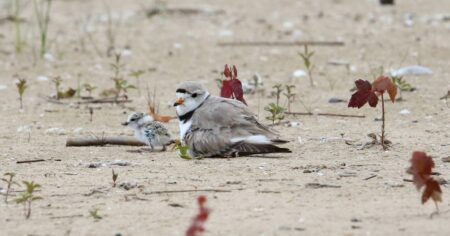
Word began to spread about their long-awaited return.He hadn’t been spotted at his Texas home and the winds were right for travel. She was known to take off around the same time from her Florida island, sometimes arriving before him. Wishes of safe flights came in from across the country as Chicagoans itching to catch an early sight made plans to head to the beach.AdvertisementBy Thursday afternoon, Monty, the Great Lakes piping plover, was back in Chicago.Now, birders are waiting for Rose.AdvertisementThe endangered shorebird pair chose Montrose Beach as their summer nesting spot three years ago, going on to break records, fledge chicks and serve as symbols for a city as hopeful and hardscrabble as two birds, individually weighing less than a stick of butter, who picked an urban beach to save their species.Monty, recently seen in his breeding plumage, wasn’t spotted earlier this week at his Texas wintering grounds, where he touched down in August after a journey that took at most 53 hours. In previous years, Rose has arrived in Chicago first, en route from a Florida island off the Gulf Coast.Together they’ve flown more than 2,000 miles upon the first signs of spring to make it back to Chicago. Last year they arrived in the final days of April, the year before on the cusp of May.“It’s like your kids coming back from college,” said Tamima Itani, of the Illinois Ornithological Society and a leader in Chicago’s plover effort.Birders have been preparing for the plovers with a full monitoring schedule in place, a cleaned-up habitat ready to go and knowledge there will likely still be some surprises ahead.Monty and Rose first nested in Chicago in 2019, becoming the first plover pair to do so successfully in a generation. Their story gained traction in a David and Goliath saga that pitted the little birds against potential human disturbance on the scale of a multiday beachside EDM fest. The music festival was called off, the birds prevailed and in following years the pair faced more natural challenges.They’ve come to represent a conservation success story for a species once down to about a dozen nesting pairs, their efforts aided by Great Lakes habitat restoration and Chicagoans who’ve guarded the beach night and day, scaring away predators and raising awareness about why someone should care about two shorebirds in the first place.“The agony and the ecstasy of monitoring,” birder Eden Essex called it last year.AdvertisementMonty and Rose met on a Waukegan beach when they were less than a year old and returned to the suburb in 2018 for an initial nesting attempt that was a flop. In 2019, they fledged two chicks at Montrose. The next summer, they fledged three.Last summer at Montrose offered more beach space as water levels lowered and the Chicago Park District created a habitat expansion. Monty and Rose fledged two chicks — Imani and Siewka — after a skunk incursion resulted in their first nest devoured.Armand Cann, a biologist with the U.S. Fish and Wildlife Service, said lessons were learned from the ordeal and the nest enclosure is updated for this season. The agency has also worked with the Park District to get the habitat in shape. Various stakeholders will be on the lookout for storms, predators and yet unforeseen hurdles.“We can’t predict everything that’s going to happen but we’re going on the fly and making sure they hopefully have a successful nesting season,” Cann said.Last year’s season exceeded goals, with 74 nesting pairs and 123 wild chicks fledged — the highest count since 2018. The total included three offspring of Nish, one of Monty and Rose’s 2020 chicks who went on to father the first Ohio nest in more than 80 years. Nish was seen with Rose on her Florida island this fall.Monty, Rose and progeny, including Nish, signal that more plovers may settle in urban areas, Cann said.Advertisement“In an idealistic way, I really hope one day, maybe this year, maybe another year, that we’re able to gain a second pair,” Cann said. “Whether that’s going to be at Montrose, Rainbow Beach, Illinois Beach State Park or maybe even Indiana Dunes.”And last season’s success bodes well for this summer’s nesting numbers.“I’m really optimistic about what some of the sites are going to be looking like around the Great Lakes,” said Jillian Farkas, the Great Lakes piping plover recovery coordinator with the U.S. Fish and Wildlife Service.There’s no word yet on Monty and Rose’s chicks, but some additional plovers have appeared in Chicago in recent days.One banded plover showed up at Rainbow Beach on the South Side. The female, hatched at Sleeping Bear Dunes, reached her Michigan grounds the next day. A cleanup at the beach, a site researchers say has promise for another plover pair, is planned for Saturday.An unbanded plover also appeared at Montrose. The bird is believed to be a Great Plains plover, the majority of which are unbanded, unlike the Great Lakes population. But that plover’s visit was a sign that other plovers may be heading north.AdvertisementEven if the plovers passing through don’t nest in Chicago, their visits are a sign of welcoming habitat, said Francie Cuthbert, a professor in the Department of Fisheries, Wildlife and Conservation Biology at the University of Minnesota, who has devoted decades to the plover recovery effort.“There are other birds besides Monty and Rose stopping in Chicago,” Cuthbert said. “It’s a positive thing. Even though that bird didn’t stay, it saw good habitat.”Plovers live five to six years on average, Cuthbert said, and some go on to live longer.“But all kinds of things can happen during migration, or any time of year,” Cuthbert said. “So we’re keeping our fingers crossed.”If Rose finds her way to Montrose Beach again, it may only be a matter of time before fuzz ball chicks on toothpick legs are flitting across the sand, adding to the list of plovers to look out for and the family tree of Chicago’s favorite birds.
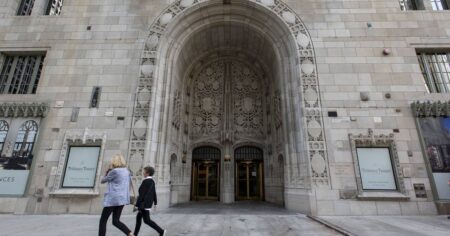
Judith McKenna, who is president and CEO of Walmart’s international division, and her husband Philip Dutton, on March 30 paid $4.9 million for a condominium on the 20th floor of the recently converted Tribune Tower.McKenna has been the head of Walmart’s overseas operations since 2018, and previously was chief operating officer for Walmart’s U.S. business.AdvertisementMcKenna is based in Bentonville, Ark., where Walmart has its headquarters. Elite Street could not determine why she and her husband decided to buy a place in Chicago, and a Walmart spokesman declined to comment.McKenna and Dutton bought the unit from the developers, Golub & Co. and CIM Group, which have converted the Tribune Tower from offices to condos. As a result, no details are available about the features in the unit.AdvertisementMcKenna and her husband also own a 6,500-square-foot house on 3.24 acres in Bentonville, which they have owned since buying it in 2013 for $1.1 million, according to the local assessor.Goldsborough is a freelance writer.Join our Chicago Dream Homes Facebook group for more luxury listings and real estate news.

The Chicago Bears, under new coach Matt Eberflus, wrapped up their April minicamp Thursday afternoon at Halas Hall. Overall it wasn’t an eventful week, but the team got important work done on the field and in the classrooms as the 2022 reboot continues.Here are four notable things we learned this week.AdvertisementQuarterback Justin Fields works out on April 19, 2022, during Bears minicamp at Halas Hall. (Brian Cassella / Chicago Tribune)The Bears’ media policy prevents us from sharing much detail from Thursday’s closed practice, but rest assured it wasn’t the finest hour for Fields or the passing offense. An abundance of sloppiness offered a loud reminder that this is a major work in progress.Yes, this was a small collection of April practices under a new coach and offensive coordinator. The Bears are installing a new offensive system with an incomplete stable of playmakers. Thus no major conclusions should be drawn from a handful of erratic moments on a spring Thursday.AdvertisementStill, the Bears’ long-term prospects are tied tightly to the speed of Fields’ development. And this week was a reminder that all the optimism about where Fields might be in his growth over the next year or two will be hard to validate until on-field progress is noticeable.Fields acknowledged earlier this week that learning a new offense in his second season is an unfortunate detour after spending such a big chunk of 2021 trying to figure out former coach Matt Nagy’s scheme.“It would be easier if it was the same offense as last year and we were just able to grow on that,” Fields said. “But it’s kind of a reset with learning this new offense and picking it up.”[ [Don’t miss] The Chicago Bears promised to get help for Justin Fields. So what are the odds of a reunion with WR Chris Olave? ]Loosely translated: Bumpy patches are to be expected. And Eberflus is well aware of that.With the entire team, Eberflus has emphasized the need to adopt a growth mindset, a concept that applies directly to Fields in the upcoming months.“What does that mean?” Eberflus said. “That means that I’m going to learn from my performance — good, bad or indifferent. I’m going to take one rep at a time and learn from it. What can I take from that rep? As you watch this tape with your coaches, how can you grow and get better?“Even if I throw a touchdown or I make a (tackle for a loss) or I throw an interception or I get beat over the top for a touchdown, there’s learning that takes place within that performance. We have to do a great job of learning through those performances.”Eberflus said he didn’t sense any frustration from Fields and the offense during Thursday’s mild turbulence. He also acknowledged the challenge Fields faces in having to absorb a new offense after 10 starts as a rookie in a different system.Advertisement[ [Don’t miss] Column: David Montgomery is embracing change at Halas Hall. How will the Chicago Bears running back fit the new scheme? ]“It’s the process of it,” Eberflus said. “It’s just like when you’re learning anything new — a new skill, an athletic skill or intellectual skill. For everybody, that takes time. It’s a process. You have to go through that. Just learn one day at a time.”Shaky sessions like Thursday’s are far more tolerable in mid-April than they will be in mid-August or beyond. For now, they are simply representative of the inevitable bumps in the road.Eddie Jackson stretches at Bears minicamp on April 20, 2022. (Brian Cassella / Chicago Tribune)Next week will mark the fifth anniversary of the Bears drafting Jackson. Former general manager Ryan Pace traded up to select the Alabama safety at No. 112 in Round 4. Now Jackson is the last survivor of a 2017 Bears draft class that included quarterback Mitch Trubisky, tight end Adam Shaheen, running back Tarik Cohen and offensive lineman Jordan Morgan.“It’s crazy to really think about that,” Jackson acknowledged after practice Thursday.It’s also crazy to think Jackson is heading into his sixth season with his third head coach and fourth defensive coordinator. That leaves him with, in Eberflus’ words, “a clean slate” to reestablish himself and show the new regime what’s next in his career.AdvertisementThe first impression he hopes to make? “I’m willing to buy in,” Jackson said. “Whatever it takes. Whatever they ask of me, I’m willing to do it.”Jackson’s early rise was impressive. He recorded eight interceptions, forced three fumbles, recovered four fumbles and scored five touchdowns in his first two seasons with Vic Fangio as his defensive coordinator.His production the last three years — two picks, one touchdown — hasn’t measured up. In addition to the fall-off in ball production, his tackling has been inconsistent and he hasn’t reliably prevented big plays.Jackson said his 2021 season “wasn’t the best at all.”“That was probably one of my worst seasons,” he said. “I gave up too many deep balls. I’m just trying to eliminate that.”[ [Don’t miss] As Roquan Smith gets acquainted with a new regime, he ‘absolutely’ wants to stay with the Chicago Bears long term ]As he fits into a new defense under Eberflus and coordinator Alan Williams, Jackson feels increasingly comfortable with how much he’s being asked to scan from the back end.Advertisement“(Now) you just see what’s in front of you and play,” he said.Eberflus said he has noticed a greater hunger in Jackson this month.“I can see it in his attitude and his demeanor,” Eberflus said. “I could see it in his eyes when I talk to him that he is energized. He sees this as a fresh start for him. I can see it in his practice, too, with just the way he’s carrying himself.”Bears coach Matt Eberflus walks the field on April 19, 2022, during minicamp at Halas Hall. (Brian Cassella / Chicago Tribune)Those are Eberflus’ words. They’ve been repeated for emphasis this week. And they will continue to be underscored for players throughout the rest of the spring and summer.Since taking the job in January, Eberflus has been intentional with the messages he’s hammering home for his team. By now, Bears players and fans are well aware of the coach’s H.I.T.S. principle — a desire for players to operate with hustle, intensity, a takeaway mentality and situational smarts.Eberflus’ goal of leading an “effort-based team” also revolves around the concept of finishing, of pushing as hard as possible through the end of every drill and every practice rep with a focus on the little details.AdvertisementOnce again, finish matters.“We detail that out with the players,” Eberflus said. “That’s by position. And we’ll talk to the guys about that: ‘This is a good finish here, this one needs to improve.’”[ [Don’t miss] Chicago Bears Q&A: Is there a position no one is talking about to target in Round 2? Who is playing left tackle to start minicamp? ]Asked for a specific example of a finishing correction he might make with players at this stage, Eberflus was happy to dive in, using an outside toss play to the right as his example.“The offensive line is going (to the right). And so you’ve got a defensive end on the back side and they’re not blocking him,” Eberflus said. “(The offensive linemen) are going to go climb to the linebackers. And that defensive end is chasing that play. Typically that play cuts up around the numbers or inside the numbers, right?“So let’s say the thing cuts up there and the defensive player could have made that play but he stops right around the split and he doesn’t finish. He stops a little short but he could have made the play. We’ll just tell him … ‘Hey, you’ve got to finish those last 3 yards. We want you to accelerate all the way to and through the tag.’ That would be an example of that.“Another example would be a receiver on the back side blocking that same play. He’s supposed to climb up to the safety. But say he gets halfway in the middle of the field and he stops. Well, that’s not good enough. You have to keep on going to that safety and finish that block. That matters. That matters in the NFL. It matters at every level. We can do that better than anybody else does. And that’s what we’re going to try to do.”AdvertisementDefensive end Trevis Gipson stretches on April 20, 2022, during Bears minicamp at Halas Hall. (Brian Cassella / Chicago Tribune)When the Bears traded standout pass rusher Khalil Mack to the Los Angeles Chargers last month, it was a symbolic page flip and an indicator the team is building for the future. It also presented increased opportunity for others to step up in Mack’s absence.Robert Quinn enjoyed a remarkable 2021 season, setting a single-season team record with 18½ sacks. But after Mack went on injured reserve with a foot injury in November, Gipson took his game to a new level and finished his second season with seven sacks and five forced fumbles.“I like him a lot,” Eberflus said. “With the film I saw from last year, we know he had the sack production. He’s an athletic, long player who’s able to capture the edge, able to level rush and has a good motor on him. So we’re excited about his athletic ability on the corner.”The Bears drafted Gipson in the fifth round two years ago out of a 4-3 system at Tulsa in which he was a traditional hand-on-the-ground defensive end. Over the last two years, he put in a significant effort to change himself into a reliable outside linebacker in a 3-4 system.Now, with Eberflus bringing a 4-3 defense back, Gipson is finding the adjustments smooth and natural.[ [Don’t miss] Will the Chicago Bears try to move into the 1st round? Brad Biggs’ NFL mock draft 2.0. ]“It’s actually more comfortable for me,” Gipson said this week. “I can get off (the ball) faster with my hand in the dirt. In a two-point (stance), I’m looking around. There’s a bunch of movement in the backfield (to account for). Now I can create more explosion when I have a hand in the dirt.”AdvertisementAs Gipson carves out a new role, Eberflus is eager to see how much Gipson can move around as a pass rusher.“It’s really just trying to figure out where he fits holistically in our defense,” Eberflus said.

A former paralegal who worked in bankruptcy at a Chicago law firm is accused of embezzling more than $600,000 from accounts, officials said Thursday.Becky Louise Sutton, 66, formerly of Park Forest, is charged with three counts of wire fraud and three counts of embezzlement from the estate of a debtor, according to a statement from the U.S. attorney’s office in Chicago. AdvertisementAn indictment was returned Wednesday for Sutton, of Austin, Texas, who embezzled the money from 2009 to 2018 while she worked at the law firm, according to the statement.Sutton placed “fraudulent transfers” of bankruptcy funds from fiduciary bank accounts intended for creditors to accounts she handled — including her own personal bank account, credit card account, student loan account and mortgage, the statement said.AdvertisementIn one instance, Sutton used a company with a name similar to a creditor to disguise her transfer of the money, according to the statement, which said the indictment seeks forfeiture from Sutton of $611,263 in alleged criminally derived proceeds.Sutton’s arraignment in federal court in Chicago has not yet been scheduled.rsobol@chicagotribune.com
A former paralegal who worked in bankruptcy at a Chicago law firm is accused of embezzling more than $600,000 from accounts, officials said Thursday.Becky Louise Sutton, 66, formerly of Park Forest, is charged with three counts of wire fraud and three counts of embezzlement from the estate of a debtor, according to a statement from the U.S. attorney’s office in Chicago.AdvertisementAn indictment was returned Wednesday for Sutton, of Austin, Texas, who embezzled the money from 2009 to 2018 while she worked at the law firm, according to the statement.Sutton placed “fraudulent transfers” of bankruptcy funds from fiduciary bank accounts intended for creditors to accounts she handled — including her own personal bank account, credit card account, student loan account and mortgage, the statement said.AdvertisementIn one instance, Sutton used a company with a name similar to a creditor to disguise her transfer of the money, according to the statement, which said the indictment seeks forfeiture from Sutton of $611,263 in alleged criminally derived proceeds.Reached by phone Thursday evening, a lawyer representing Sutton, Gal Pissetzsky, said Sutton plans on pleading not guilty and declined to immediately elaborate. “She was just indicted today…we’re going to wait until we get the discovery,” Pissetzsky said. Sutton’s arraignment in federal court in Chicago has not yet been scheduled.rsobol@chicagotribune.com