


Author: staff


Chicago police shot a man after responding to a domestic disturbance call in the Far South Side’s Pullman neighborhood Friday evening, officials said.Around 5:40 p.m., police and paramedics responded to a call of a domestic disturbance in the 11200 block of South Langley Avenue “that resulted in one individual being shot by police,” said Tom Ahern, Chicago Police spokesperson.AdvertisementThe man shot was taken to Advocate Christ Medical Center in Oak Lawn in critical condition, said Chief Walter Schroeder, spokesperson for the Chicago Fire Department.The suspect’s firearm was recovered, Ahern said, adding no police officers were injured.AdvertisementThe Civilian Office of Police Accountability had members on scene, said COPA spokesperson Ephraim Eaddy.Check back for details.scasanova@chicagotribune.com

MINNEAPOLIS — Chicago White Sox shortstop Tim Anderson received a one-game suspension and an undisclosed fine for “his inappropriate actions toward fans” during Game 1 of Wednesday’s doubleheader against the Cleveland Guardians at Progressive Field, Major League Baseball announced Friday.Anderson is appealing and was in the lineup for Friday’s series opener against the Minnesota Twins at Target Field.AdvertisementCameras caught Anderson making a middle-finger gesture after something was said from the crowd before the bottom of the eighth inning. Anderson declined to discuss the topic before Thursday’s game in Cleveland.He addressed a tough day in the field Wednesday, which included three errors in the 11-1 Game 1 loss, saying: “It’s something that you can learn and grow from, and it’s a sign that you’ve got to keep working.”AdvertisementAnderson missed the first two games of the season after his appeal of a three-game suspension handed down in the final week of 2021 was reduced by one game.

Chicago Cubs first baseman Frank Schwindel can’t help but reminisce sometimes when watching catcher Willson Contreras deftly unleash throws to nab would-be base stealers.Schwindel was once known for his arm behind the plate, then a minor-leaguer in the Kansas City Royals organization. The Cubs don’t want to dwell on a scenario that would require them to use an emergency catcher. But should that occur, Schwindel would be the unexpected yet obvious choice.AdvertisementSchwindel started 67 games at catcher over three minor-league seasons in the Royals’ farm system, most recently in 2015. He even caught Cubs teammate Alec Mills in 2014 when they played for Low A Lexington. Schwindel featured a great arm behind the plate, posting an elite 39% caught-stealing rate in 2013 rookie ball and 40% in 2014.“I used to get excited when I see somebody take off and throw it down, it was a lot of fun,” Schwindel told the Tribune. “But I didn’t like doing much anything else. I picked everything I could, blocking stuff, especially in A-ball when the pitcher doesn’t know where it’s going, how am I supposed to know where it’s going?”AdvertisementThe Cubs’ emphasis in finding a quality backup catcher after last season unknowingly created more lineup flexibility.When the Cubs signed veteran Yan Gomes before the lockout, the designated hitter had not officially been added to the National League. Although it was an expected change in the collective bargaining agreement, now that the DH is in place, manager David Ross has made sure to give Contreras enough rest early in the season to pay off in the summer.At times, though, the catchers’ offensive profiles make it worth playing them together. Friday night’s game against the Pittsburgh Pirates marks the third time in the last week Ross put Contreras and Gomes in the same lineup thanks to the DH spot. The offensive boost outweighs any potential risk the Cubs face in potentially being down to catcher if an in-game injury occurs.Cubs first baseman Frank Schwindel catches a throw to end the top of the seventh inning against the Brewers on April 7, 2022, on opening day at Wrigley Field. The Cubs won 5-4. (Brian Cassella / Chicago Tribune)If the Cubs need Schwindel to catch in an emergency, he would be happy to fill in. Schwindel even has a catcher’s mitt at his apartment that he’s doing work on, “but hopefully I won’t need that.” His experience at catcher has paid off at first base. He believes he possesses good hands because he used to pick so many balls in the dirt behind the plate, forcing him to keep his body and hands well-positioned.“If I’m catching 100-mph heaters, standing in front of a ground ball is not as bad,” Schwindel said.Chicago Tribune SportsWeekdaysA daily sports newsletter delivered to your inbox for your morning commute.Schwindel’s bat-to-ball skills and hot hitting earned him playing time last season. While his offensive production understandably garners more attention, he takes the defensive side of his game seriously too. After getting called up after the trade deadline, Schwindel often could be seen working with bench coach Andy Green before games at first base.“He’s hungry to be known as one of the elite defensive first basemen, and he didn’t show up with that reputation, so he’s growing,” Green said this week. “He’s put a lot of work into what he does, before the pitch reading pitches, reading swings, and he’s doing a really nice job.”Schwindel turned his fourth 3-6-3 double play of the season to end the first inning Friday against the Pittsburgh Pirates, the most among big-league first basemen. The Miami Marlins’ Jesus Aguilar has recorded two, the only other first baseman to have tallied more than one such double play. Schwindel has made those plays look easy with proper positioning, footwork and making sure he has a clear angle to throw to avoid hitting the base runner heading to second.Advertisement“Those are some of the toughest double plays to turn,” Green said.Schwindel’s improved prepitch routine and readiness as the ball is entering the zone has stood out to Ross through the first 13 games.For a rotation that features pitchers such as Kyle Hendricks and Marcus Stroman — who rely on ground balls for success — solid infield defense is a must. While the middle infield in particular gets a lot of defensive attention, especially with the Cubs’ frequent shifting, a steady and improved Schwindel would go a long way toward helping their defense.“I always thought he had nice hands and glove, it’s just about getting his feet to react when the ball was hit,” Ross said. “I thought he’s done a much better job of doing that from now and then at the back end of last season than when he first got here.”

MINNEAPOLIS — AJ Pollock faced Lucas Giolito at the Chicago White Sox complex in Arizona earlier this week while both were recovering from injuries.The result of an at-bat depends on which player you ask.Advertisement“The wind was going 40 mph to left field, so it was kind of cutting balls,” Pollock said before Friday’s game against the Minnesota Twins at Target Field. “(One at-bat) would have been a popup to mid-outfield. The other one to center either an out or maybe a home run.The outfielder added with a smile: “He’s going to call it an out, I’ll call it a homer and we’ll both feel good about it. Stats don’t matter. There were no stats there.”AdvertisementPollock returned from the injured list Friday and was in the starting lineup in center fielder for the series opener against the Twins. He had been out since April 9 when he suffered a strained right hamstring after a single in the third inning of the second game of the season in Detroit.DETROIT, MI – April 8: AJ Pollock #18 of the Chicago White Sox watches his RBI-single during the second inning of Opening Day against the Detroit Tigers at Comerica Park on April 8, 2022, in Detroit, Michigan. (Photo by Duane Burleson/Getty Images) ** OUTS – ELSENT, FPG, CM – OUTS * NM, PH, VA if sourced by CT, LA or MoD ** (Duane Burleson / Getty Images)“I think I’m in a good spot, don’t want to jinx anything,” Pollock said. “They did a great job with me. We’ll go out and play some baseball.”The Sox received more positive news, deciding to not place Luis Robert on the IL after a scare Thursday. Robert left the game against the Cleveland Guardians at Progressive Field in the eighth inning with a groin strain after running to first on a groundout.“He did the MRI and it’s what we hoped for,” Sox manager Tony La Russa said. “He felt a little tug and he stopped so he didn’t keep running through it. I would think (he’s) not playing these three (against the Twins) and (the team is) off Monday.“If we can play him Tuesday and not lose him for 10 days (on the IL), it’s huge.”Pollock liked having the chance to bat against Giolito, who is expected to return from a left abdominal strain Sunday, while ramping up.“Honestly, for me you get to go face one of the top pitchers in the game, I got to get three at-bats off him, that’s pretty awesome,” Pollock said. “That was better than any rehab assignment you can ever do, in my opinion.”White Sox right fielder AJ Pollock walks off the field with a trainer after suffering a strained right hamstring during a game against the Tigers on April 9, 2022, at Comerica Park in Detroit. (Duane Burleson / Getty Images)Pollock already was scheduled to go on paternity leave around the time of the injury. He got to go home for the birth of his daughter.Advertisement“That was important,” he said. “Honestly, it was a weird way to do it. I was expecting a three-day deal and I was going to miss three games anyway. Missed a couple of more because of a tweaked hammy. A wild time, very excited, very blessed to be able to go back there and do that. It was amazing. And we had a good place to do rehab for the hamstring too.“It all worked out well.”Pollock had four hits in his first seven at-bats with a double, one RBI and a run before the injury. He’ll try to pick up where he left off.“You never know until you get out there,” Pollock said. “I just feel like, keep the process and whatever that means, if it’s results, great, if not, keep doing it and usually the results follow. We’ll see.”[ Don’t miss: Chicago White Sox are swept in a doubleheader against the Cleveland Guardians, falling 11-1 and 2-1 ]Pollock is also ready for any outfield assignment.“Just a little bit different, the nuances of each one,” Pollock said. “I’m just going in there, I’m ready to play. They’re going to tell me where I fit in and I’ll get out there and do my job and help the ball club.”AdvertisementIn Friday’s corresponding roster move, the Sox placed reliever Matt Foster on the Family Medical Leave List. Foster has a 1.42 ERA and five strikeouts in five relief appearances.

Chicago Public Schools CEO Pedro Martinez and his wife, Berenice, paid $690,000 for a four-bedroom house on the Near West Side in October.A Chicago native and a former chief financial officer for CPS, Martinez in September was appointed CEO of CPS by Mayor Lori Lightfoot, and his appointment was confirmed by the Chicago Board of Education. Immediately prior, he had been superintendent of the public school system in San Antonio, Texas, for six years.AdvertisementOn the West Side, Martinez and his wife bought a house in the Illinois Medical District. Built in 1991, the house has 3 ½ bathrooms, a fireplace in the living room, hardwood floors, a terrace overlooking the backyard, a lower level rec room, a second-floor owner’s suite with two walk-in closets, a covered outdoor living room and a top floor with two bedrooms and a large skyline-view terrace.The couple bought the house for less than the $728,000 than the previous owner had paid for it in 2007. Those owners first listed the house in July for $750,000, and cut their asking price later that month to $715,000 before they struck a deal Aug. 3 to sell the home to Pedro and Berenice Martinez. That Aug. 3 real estate contract was more than a month before Lightfoot publicly announced that she had chosen him as CPS’ CEO.AdvertisementPaz Martinez of Realty 123, who represented the couple, said she could not comment on her clients or even on their identities. However, she told Elite Street that “the property is in a very affluent neighborhood with a high volume of top-tier professionals.”“The property itself is tastefully designed with functionality, aesthetics that are pleasing to the eye and a modern interface with a flair of Chicago classic structural design,” she said.The house had an $18,192 property tax bill in the 2020 tax year.Goldsborough is a freelance writer.Join our Chicago Dream Homes Facebook group for more luxury listings and real estate news.

The wait is nearly over for 1.6 million Illinois Facebook users who filed claims in a landmark $650 million biometric privacy settlement.Their $397 checks should be in the mail beginning May 9, according to Chicago attorney Jay Edelson, who brought the lawsuit against Facebook seven years ago.Advertisement“Not only did we demonstrate that privacy cases can put real money back into the pockets of the class, we also showed that, when it comes to securing biometric privacy, the wind is at our collective backs,” Edelson said Friday.The payouts follow a ruling last month by the U.S. Court of Appeals for the 9th Circuit, which upheld the February 2021 class-action settlement over Facebook’s alleged violations of Illinois’ biometric privacy law. Two Illinois class members, Dawn Frankfother and Cathy Flanagan, who objected to the awarding of $97.5 million in attorneys’ fees agreed they “will not take any further action in this matter,” freeing up the distribution, according to an April 11 court filing.AdvertisementThe settlement class included about 7 million Facebook users in Illinois for whom the social network created and stored a face template after June 7, 2011. To qualify, Facebook users had to live in the state for at least six months over the previous nine years. More than one in five eligible Illinois Facebook users filed a claim by the November 2020 deadline.The claim form included name, address and preferred payment method. The claims administrator plans to begin mailing checks May 9, Edelson said. Electronic payments will go out in mid-May, and if any transfers are unsuccessful, a check will be issued to the claimant after 30 days.Class members who successfully filed online received an email confirmation upon submission. Most people who got a notice and submitted a claim were approved, Edelson said.Estimates of the payouts to class members have ranged between $350 and $400 during the lengthy settlement process. The final tally after expenses and fees is expected to come in at $397 for each class member, subject to final accounting.In April 2015, Edelson filed the lawsuit in Cook County Circuit Court on behalf of plaintiff Carlo Licata, alleging the social media giant’s use of facial tagging features without consent was not allowed under Illinois privacy law. The case was moved to Chicago federal court and then California federal court, where it attained class-action status.“When we started this case seven years ago, we knew we were in for an enormous fight,” Edelson said. “The ability to collect biometric information was at the core of Facebook’s business and they are one of the most heavily resourced companies in the history of the planet.”In November, Facebook announced it would shut down its facial recognition system amid “growing concerns” over the widespread use of the technology. As a result, Facebook said it planned to delete more than a billion facial recognition templates it had stored, putting an end to the feature that automatically recognized if people’s faces appear in memories, photos or videos.The Illinois Biometric Information Privacy Act, which was passed in 2008, is considered the strictest in the U.S. and requires companies to get permission before using technologies such as facial recognition and fingerprint scans to identify customers.Advertisementrchannick@chicagotribune.com
The wait is nearly over for 1.6 million Illinois Facebook users who filed claims in a landmark $650 million biometric privacy settlement.Their $397 checks should be in the mail beginning May 9, according to Chicago attorney Jay Edelson, who brought the lawsuit against Facebook seven years ago.Advertisement“Not only did we demonstrate that privacy cases can put real money back into the pockets of the class, we also showed that, when it comes to securing biometric privacy, the wind is at our collective backs,” Edelson said Friday.The payouts follow a ruling last month by the U.S. Court of Appeals for the 9th Circuit, which upheld the February 2021 class-action settlement over Facebook’s alleged violations of Illinois’ biometric privacy law. Two Illinois class members, Dawn Frankfother and Cathy Flanagan, who objected to the awarding of $97.5 million in attorneys’ fees agreed they “will not take any further action in this matter,” freeing up the distribution, according to an April 11 court filing.AdvertisementThe settlement class included about 7 million Facebook users in Illinois for whom the social network created and stored a face template after June 7, 2011. To qualify, Facebook users had to live in the state for at least six months over the previous nine years. More than one in five eligible Illinois Facebook users filed a claim by the November 2020 deadline.The claim form included name, address and preferred payment method. The claims administrator plans to begin mailing checks May 9, Edelson said. Electronic payments will go out in mid-May, and if any transfers are unsuccessful, a check will be issued to the claimant after 30 days.Class members who successfully filed online received an email confirmation upon submission. Most people who got a notice and submitted a claim were approved, Edelson said.Estimates of the payouts to class members have ranged between $350 and $400 during the lengthy settlement process. The final tally after expenses and fees is expected to come in at $397 for each class member, subject to final accounting.In April 2015, Edelson filed the lawsuit in Cook County Circuit Court on behalf of plaintiff Carlo Licata, alleging the social media giant’s use of facial tagging features without consent was not allowed under Illinois privacy law. The case was moved to Chicago federal court and then California federal court, where it attained class-action status.“When we started this case seven years ago, we knew we were in for an enormous fight,” Edelson said. “The ability to collect biometric information was at the core of Facebook’s business and they are one of the most heavily resourced companies in the history of the planet.”In November, Facebook announced it would shut down its facial recognition system amid “growing concerns” over the widespread use of the technology. As a result, Facebook said it planned to delete more than a billion facial recognition templates it had stored, putting an end to the feature that automatically recognized if people’s faces appear in memories, photos or videos.The Illinois Biometric Information Privacy Act, which was passed in 2008, is considered the strictest in the U.S. and requires companies to get permission before using technologies such as facial recognition and fingerprint scans to identify customers.Advertisementrchannick@chicagotribune.com
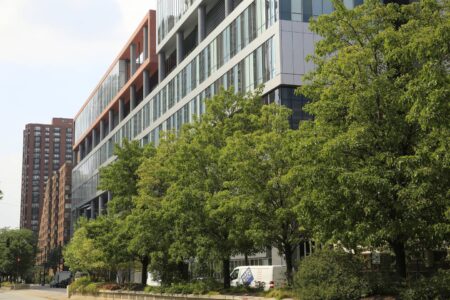
The head of Chicago Public Schools said Friday he will not fire Jones College Prep’s principal despite the recommendation of the high school’s Local School Council because of “insufficient evidence of misconduct.”The LSC voted 8-2 last month to request the start of dismissal proceedings against Principal P. Joseph Powers for allegations including violation of the district’s residency policy to failure to address “systemic” discrimination issues and mismanagement of misconduct reports and school financial matters. After the vote, CPS CEO Pedro Martinez had 45 days to decide whether to fire Powers.Advertisement“While the investigations are ongoing, based on a review of your materials and discussions with representatives of the investigative bodies looking into this matter, there is insufficient evidence of misconduct by Mr. Powers at this time on which to base an action for involuntary dismissal,” Martinez wrote in a letter Friday to the LSC.Jones College Prep High School in the South Loop in 2013. (Chris Walker / Chicago Tribune)“We all have a duty to Jones’ students to work collaboratively to ensure that they are successful in school and in life,” Martinez said. “I encourage the Local School Council and Dr. Powers to hit the reset button on their relationship and focus their energies on productive actions that will advance the interests of students.”AdvertisementPowers did not immediately respond to a Tribune request for comment Friday, but he has defended his 13-year tenure to the school community. The LSC vote about him came after hours of debate in which many parents and teachers offered support while others said it is time for change at the selective enrollment school in the Printers Row neighborhood.Three parents who sit on the LSC wrote an 11-page letter to Martinez and Inspector General Will Fletcher in February that outlined their concerns about Powers. One of the major charges was that Powers rents an apartment in Chicago but owns a residence in Missouri and uses that address for his driver’s license, and car and voter registration.CPS’ residency policy says employees hired after November 1996 are required to be residents of Chicago, with some waivers granted. Powers told the school community he visits his wife on weekends at their home in St. Louis.Another complaint is that Powers failed to report or discipline one teacher for alleged misconduct and another for inappropriate behavior involving students.LSC chairperson Cassie Creswell, one of the letter writers, expressed disappointment in Martinez’s response to the LSC Friday.“I’m surprised and, frankly, disgusted. It’s really, really disturbing that they would leave him in place,” Creswell told the Tribune. She said Martinez was presented with “an extremely strong case” for Powers’ dismissal.“He is violating the CPS residency policy and has been for 14 years. And I think we provided a very strong case that he has been failing to report extremely serious misconduct and abuse against students,” Creswell said. “CEO Martinez said in the fall that not just abusers, and not just those who had committed the misconduct, but those who failed to report that misconduct will be removed from a school while investigations are ongoing. And now he’s gone back on that.”Creswell and the other two letter writers, Sarah Ma and Leni Manaa-Hoppenworth, did not run for LSC reelection this week. The council will have several new faces when it is seated in July.AdvertisementAt a forum last month, LSC candidates talked of increasing the transparency of council activities, uniting the school community and making the school, which serves nearly 2,000 students, more equitable. Nearly 37% of Jones students are white, 29% are Latino, 15% are Asian, and about 12% are Black, according to CPS data.When it was composed of different members, the LSC easily renewed Powers’ principal contract in December 2019 for four more years.tswartz@tribpub.com
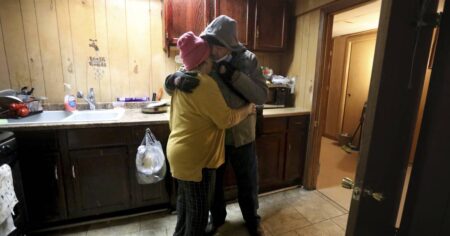
For several months, the Chicago Tribune and Injustice Watch teamed up to report on the challenges facing Illinois’ aging undocumented population in a four-part series of stories focused on access to health care and housing.The project was inspired by ongoing stories of community members undergoing financial hardship, yet remaining resilient. And it was backed by a report that revealed that the senior undocumented population will increase by 1,300% in the next decade in Illinois.AdvertisementMost immigrants without legal status arrived in the country decades ago and have lived here without a viable pathway to citizenship. Mexican immigrants will make up two-thirds of the undocumented older adult populations in Illinois, followed by immigrants from Eastern Europe, Eastern and Southeastern Asia, and Central America.Now, this generation of immigrants faces the prospect of having lived and died in the shadows. Undocumented immigrants are blocked from accessing social programs that many seniors rely on, such as food stamps, public housing, Medicare and Social Security insurance — programs that they pay billions of dollars into every year. Their families and communities weave a patchwork of formal and informal resources to make up the difference.AdvertisementLocal activists and organizers say it’s up to state and local governments to protect all seniors regardless of their immigration status at the lack of federal assistance.What does it all mean? At noon on Wednesday, join Chicago Tribune reporter Laura Rodríguez Presa and Injustice Watch reporter Carlos Ballesteros for a Facebook Live conversation in Spanish, featuring a panel of experts who will help dissect the series, its meaning and potential effect.Panelists:Luvia Quiñones: Serves as the Health Policy Director at the Illinois Coalition for Immigrant and Refugee Rights (ICIRR). In this role, Quiñones oversees the Immigrant Health Care Access Initiative and in collaboration with ICIRR’s members develops ICIRR’s health policy agenda with a special focus on access to health care and on health care reform.Erendira Rendon: Vice president of Immigrant Justice at The Resurrection Project (TRP). Rendon created TRP’s Immigrant Justice Department and serves as the organization’s lead strategist and manager of local and statewide campaigns that affect the lives of immigrants. Rendon is the daughter of undocumented seniors.Adela Carin: A community lawyer helping to connect undocumented seniors to resources available in the Chicago area.
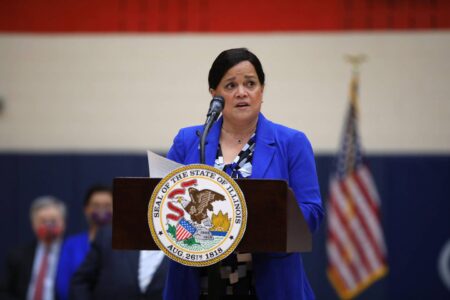
Hundreds of Illinois school districts are awaiting their share of $87 million in funding mistakenly allocated to Chicago Public Schools, which has been asked to reimburse the state for the overpayment.A total of 769 school districts are slated to be reimbursed for the shortfall, which officials with the Illinois State Board of Education attributed to a coding error dating back to the launch of Evidence-Based Funding for Student Success Act, which was signed into law by former Gov. Bruce Rauner in August 2017.AdvertisementThe new Evidence-Based Funding changes the way school districts receive the bulk of state funds, sending more resources to Illinois’ most under-resourced students “ensuring all schools have the resources they need to provide a safe, rigorous, and well-rounded learning environment for all students,” according to ISBE.At the top of the state’s reimbursement list is Elgin-based Unit School District 46, which is owed $5.2 million; followed by Rockford School District 205, owed $3.3 million; Plainfield School District 202, owed $3 million; Community Unit School District 300, owed $2.6 million and Waukegan Community Unit School District 60 owed $2.1 million.AdvertisementCPS spokeswoman Mary Fergus said in a statement Friday that “the error made by an ISBE contractor in 2018 during the initial development of the enrollment verification system for Evidence-Based Funding (EBF) has caused an overpayment to CPS in the amount of $87.5 million. We are in discussions with ISBE and the General Assembly about the impacts on CPS and the state budget.”ISBE Superintendent Carmen Ayala was not available to comment on the funding error, or how the state plans to recoup the overpayment to CPS.State Superintendent of Education Dr. Carmen I. Ayala at South Elgin High School announcing Illinois K-12 school districts will receive federal funding to support students as they return to the classroom after distance and hybrid learning due to COVID-19 on March 31, 2021 in South Elgin. (Stacey Wescott / Chicago Tribune)But ISBE spokeswoman Jackie Matthews said a “multiyear payment plan has been discussed.”“We have had several conversations with CPS and will continue to work with the district to resolve this matter,” Matthews said in a statement Friday.District 46 Superintendent Tony Sanders, whose suburban district was hit hardest by the ISBE funding mistake, said he learned of the state’s Evidence-based Funding miscalculation from the Chicago Tribune earlier this month.He recently received an email from the state explaining the district is owed and will be reimbursed $5.2 million, Sanders said.“I’m just pleased they found the error and are working to correct it, so I give the state and the General Assembly credit,” Sanders said.Sanders, whose district enrolls about 36,000 students, with nearly 60% from low-income families, said he is a strong supporter of the new Evidence-based Funding model, which he said increases equity by allocating adequate state funding to underserved communities.AdvertisementProponents of Evidence-based Funding say the model is integral to providing educational equity for students statewide, as school districts in Illinois are funded primarily by local property taxes, which can vary dramatically and typically provide more robust resources to schools in affluent communities.At Plainfield School District 202, which enrolls about 25,000 students, with more than a third from low-income families, spokesman Thomas Hernandez said district officials are not yet sure how they will use the roughly $3 million they are owed from the state.“We are happy to be made whole, and are in the first part of our budgeting process, so the timing is good,” Hernandez said.ISBE spokeswoman Matthews said this week that the agency “identified the discrepancy” while preparing an EBF data report in December 2021 “and immediately began investigating.”“After identifying that there was a discrepancy in the enrollment counts for CPS, ISBE needed to conduct a thorough investigation to confirm the existence and scope of the error and determine the source of the error,” Matthews said.Describing the EBF calculations as “very complex,” and including more than 17,000 data points and more than 240,000 Excel formulas, Matthews said “determining the cause of the discrepancy required conducting extensive recalculations and reconfirming enrollment counts and other data elements.”Advertisement“Once ISBE identified the coding error that was causing the discrepancy, ISBE needed to determine the scope of the error, including the districts and EBF payments impacted,” Matthews said.ISBE administrators notified board members of the discrepancy in mid-February “but at that time staff were still investigating the scope of the problem, including how much CPS was overpaid and its impact on other districts,” Matthews said.ISBE “flagged the discrepancy for CPS in mid-March while ISBE was still working to calculate the scope of the issue,” Matthews said. The amount overpaid to CPS was confirmed the week of March 30.When Gov. J.B. Pritzker’s administration took over in January 2019, the Evidence-Based Funding “code had been deployed for two years already and had passed the ‘real world test’ with no issues,” Matthews said.“Changing functioning code introduces risk. It would have violated best practice to go back and review the code after two years of ostensibly successful implementation,” Matthews said.“ISBE has now added an additional independent data calculation validation step to ensure accuracy moving forward and is pursuing an external audit of the entire EBF formula,” she said.AdvertisementRon O’Connor, assistant superintendent of business services at Community Consolidated School District 59, which has schools in Arlington Heights, Elk Grove Village, Des Plaines and Mount Prospect, said that while the district is owed only about $23,000 from the state, the reimbursed funding is appreciated.“Every dollar counts for education, especially in these days of high inflation,” O’Connor said. “We are always committed to working with the state and I am pleased that they are initiating a process for auditing the EBF formula so that the right funds go to the right districts.”kcullotta@chicagotribune.com