




In May 2022, Alma survived a car accident that left her with several chronic injuries. But after being released from a hospital near Little Village, the trauma continued with constant calls from debt collectors seeking payment for more than $10,000 in medical bills she accrued from the nearly yearlong treatment she’s received for her injuries.
Alma, 69, who did not want to provide her last name out of privacy concerns, cried for help during a virtual news conference Tuesday morning at which health advocates called for the support of Protect Illinoisans from Unfair Medical Debt, proposed state legislation that would require health care institutions to proactively screen uninsured patients for public health care coverage options and financial assistance prior to processing their medical bill.
Though Alma qualified for Medicaid benefits under the Illinois expansion of health coverage for older adults regardless of immigration status passed in 2020, she did not know about it until just a few months ago, almost a year since her initial hospitalization and care and too late for it to cover the medical expenses retroactively.
“I can’t work right now, I continue to face health problems as a result of the accident and only my family is trying to help me pay but I have too much to pay still, please help me,” Alma said in Spanish, hiding her face from the camera in tears.
It’s a burden countless undocumented immigrants share across the state, which the Tribune reported last year in collaboration with Injustice Watch in the series ‘Aging in the Shadows: Spotlighting the challenges facing Illinois’ aging undocumented population.’
The series highlighted that the number of undocumented seniors 65 and older will increase 1,300% in the next decade and that most are blocked from accessing social programs that many seniors rely on, such as food stamps, public housing, Medicare and Social Security — programs that they pay billions into every year.
On Tuesday advocates, political and community leaders said Protect Illinoisans from Unfair Medical Debt would require hospitals to assist eligible patients in applying for the benefits or connect them to an organization that can help with the process.
The group pointed to a new report released by the Illinois Coalition for Immigrant and Refugee Rights, Legal Council for Health Justice, and Community Catalyst that suggests medical debt is disproportionately carried by low-income Black, Latino, and immigrant families in the state, causing distress and more vulnerability to fall ill. A recent survey by community health workers across Chicagoland indicated that nearly 65% of the 114 immigrants polled were concerned about how they were going to pay a hospital bill, according to the report.
Alma said Tuesday she has not been able to work since the accident because of the injuries, and though she has coverage now, she is burdened by calls from debt collectors and has anxiety and depression as she tries to find a way to pay for it all.
Even though Illinois has championed bills to expand health care for immigrants and other populations at risk, more than 900,000 Illinoisans remain uninsured, according to a 2021 study by the Illinois Department of Health Care and Family Services. Over one-third of those residents are eligible for health coverage and many others are eligible for hospital financial assistance programs and charity care. But most do not access the benefits due to technology or language barriers, leaving the responsibility on individual patients to navigate the system to learn what they are eligible for and to file an often complex application process.
“The lack of enrollment has harmful consequences, including delay in seeking care, and waiting until health condition become chronic or even worse,” said Luvia Quiñones, senior director of health policy, ICIRR. Quiñones said that weekly she hears from community partners about individuals seeking help with medical debt and who could have been eligible for coverage through state-funded programs or other financial assistance.
The bill would be “a common sense solution that protects community members from unnecessary medical bills and it also ensures that hospitals get paid through programs that already exist,” said Rep. Dagmara Avelar, a Democrat from Bolingbrook and member of the Illinois Latino Legislative Caucus, which has advocated for an expansion of publicly funded health care for all in the state, including those who live in the state without authorization.
Elizabeth Cervantes said she and her immigrant family have been burdened by medical debt and often avoid going to the doctor, fearing more debt.
A few years ago, she said, a viral infection made her very ill and weak but “I hesitated and prolonged a visit to the hospital for over a week because I dreaded the thought of ending up with a bill I wouldn’t be able to pay,” Cervantes said.
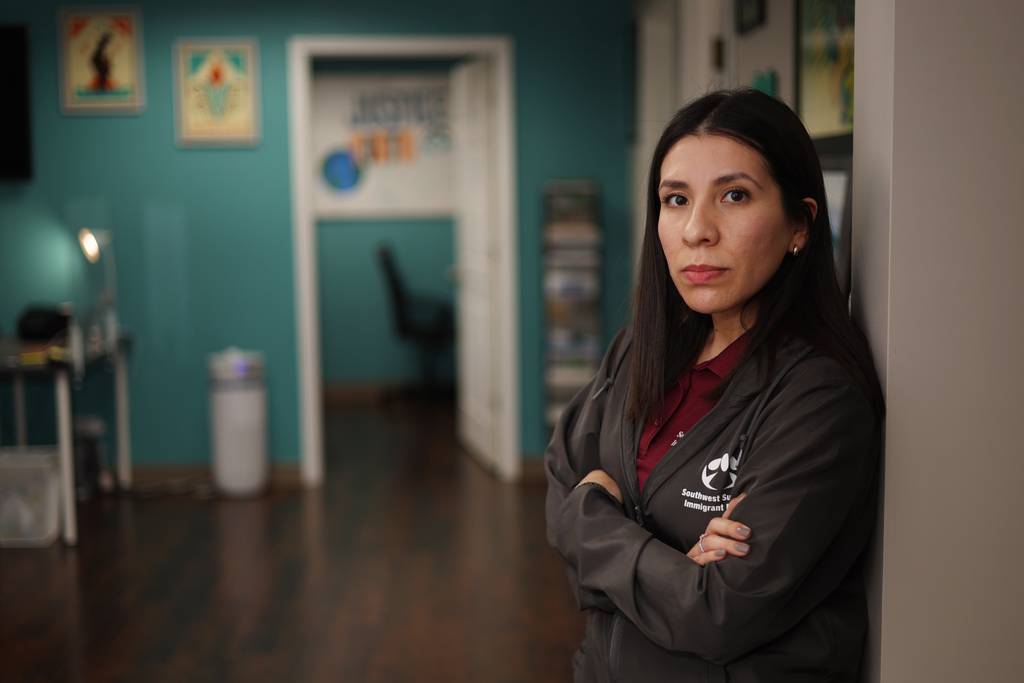
Cervantes is a DACA recipient who works for the Southwest Suburban Immigrant Project in Bolingbrook and she now dedicates her time to helping other immigrant families apply for programs or financial assistance available to them.
Cervantes said that those programs could mean life or death for some people who are often forced to choose between going to the doctor or paying for basic life necessities such as rent and groceries.
At a national level, less than 6% of adults with past due hospital bills, including about 9% of adults with income less than 100% of the federal poverty level — $13,590 per year for a single adult — were offered assistance from a particular nonprofit hospital to apply for Medicaid, according to research by the Kaiser Family Foundation. But researchfrom the report has shown that about half of nonprofit hospitals across the U.S. bill patients who would otherwise qualify for charity care.
Other states, including Colorado, New Mexico, and Vermont, have recently introduced legislation to strengthen their medical debt protection laws. A new law in Colorado, HB21-1198 health care Billing Requirements For Indigent Patients, ensures that hospital providers screen patients for public health coverage and discounted care, setting an enforceable standard for individual patients to hold hospitals accountable. Colorado’s law adds patient protections to reduce the number of Coloradans sent to collections and improved language access requirements.
While the crisis of medical debt disproportionately impacts Black and Latino communities, “it is an issue for working class communities throughout our country,” said Sen. Robert Peters, a Chicago Democrat.
One in 10 adults owe significant medical debt, according to a 2022 collaborative report by the Peterson Center on Healthcare and the Kaiser Family Foundation. Most are forced to cut spending on food, clothing, and other household items, and use their savings to pay for medical bills, borrowing money from friends or family members, or taking on additional debt.
larodriguez@chicagotribune.com


