


By Stacy M. Brown
NNPA Newswire Senior National Correspondent
The losses came steadily in 2025, not as a single rupture but as a quiet procession. Voices that once filled sanctuaries, arenas, studios, television screens, and living rooms went still. The year closed with Black America taking inventory not only of who died, but of what each life carried into the culture and what now remains behind.
From gospel and soul to film, television, activism, and sport, the deaths cut across generations. Some were expected after long lives. Others arrived with shocking speed. Together, they formed a ledger of Black excellence that shaped the country even when the country did not always return the favor.
Among the first major losses was Sam Moore, one half of the legendary duo Sam and Dave, whose gospel-rooted soul helped define an era. Moore died January 10 at 89, closing a chapter on a voice that powered songs still stitched into American music history
Days later, Atlanta lost DJ Unk, whose club anthems “Walk It Out” and “2 Step” became cultural shorthand for an entire moment in Southern hip hop. He was 43.
February brought a deeper reckoning. Roberta Flack died at 88, her voice measured, deliberate, and intimate in a way that reshaped R&B and pop. “The First Time Ever I Saw Your Face” and “Killing Me Softly” did not demand attention. They commanded it by restraint. Gwen McCrae, whose disco-infused soul powered dance floors for decades, died days earlier at 81. Roy Ayers, the vibraphonist behind “Everybody Loves the Sunshine,” followed, leaving behind a catalog that bridged jazz, funk, and hip-hop sampling culture.
The deaths were not confined to music. George Foreman, heavyweight champion, minister, and businessman, died in March at 76. His life traced an arc from Olympic gold to redemption, faith, and entrepreneurship. Voletta Wallace, the mother and steward of The Notorious B.I.G.’s legacy, died at 72, having spent decades protecting her son’s memory while navigating the machinery of fame that followed his death.
Spring brought another wave. Angie Stone died at 63 following a vehicle crash. Her voice carried the weight of lived experience, anchoring neo-soul with honesty rather than polish. D’Wayne Wiggins of Tony! Toni! Toné! died at 64, leaving behind a sound that defined Oakland R&B and a generation of Black romance songs that never apologized for vulnerability.
By summer, the losses extended further into television and cultural memory. Ananda Lewis, the MTV VJ whose presence offered intelligence and warmth during the network’s most influential era, died at 52. Walter Scott, co-founder of The Whispers, died at 81, closing the book on one of the most consistent vocal groups in R&B history.
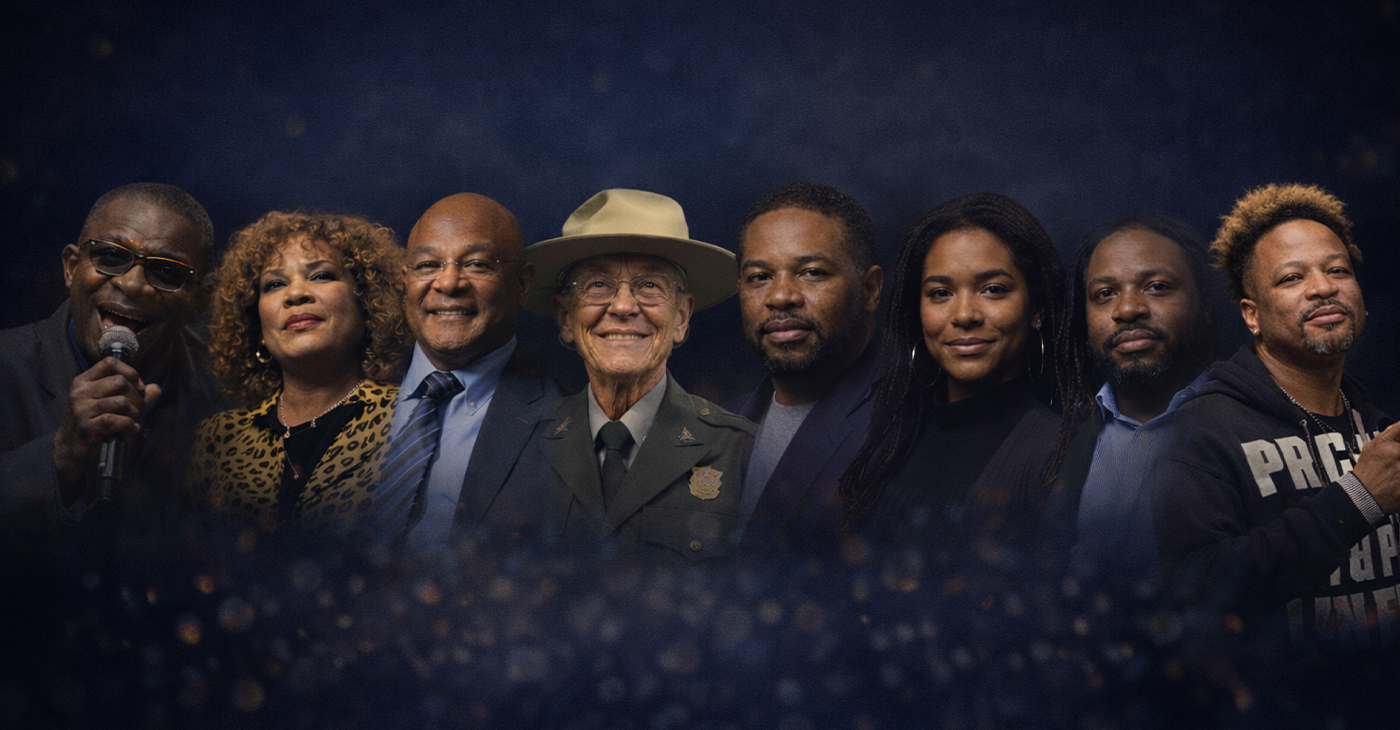
Later in the year came deaths that carried historical weight beyond entertainment. Betty Reid Soskin, the nation’s oldest National Park Service ranger, died at 104. She spent her final decades correcting the historical record, insisting that Black women’s labor and sacrifice during World War II be acknowledged by the country that benefited from it. Viola Ford Fletcher, the oldest known survivor of the 1921 Tulsa Race Massacre, died at 111, taking with her a living link to one of the nation’s most suppressed atrocities.
Actors who once defined Black television also left. Danielle Spencer, remembered as Dee on “What’s Happening,” died at 60 after a long battle with cancer. Malcolm-Jamal Warner, forever associated with Theo Huxtable yet far more expansive in his career, died at 54. He spent his later years directing, recording spoken word, and openly addressing mental health in Black communities.
Music losses continued into the fall. Don Bryant, the Memphis soul songwriter behind “I Can’t Stand the Rain,” died at 83, leaving behind a body of work that centered Black love without spectacle. Jimmy Cliff, the reggae pioneer whose voice carried protest and hope across borders, died at 81, closing a career that introduced global audiences to Jamaican music and political conscience.
The year ended with the death of Richard Smallwood at 77, one of gospel music’s most influential composers. His songs, including “Total Praise,” were not merely performed but lived, sung in churches during moments of grief, gratitude, and survival.
Other deaths documented in 2025 included Sly Stone, Michael Sumler, Kevin Arkadie, Carl Carlton, Phil Upchurch, Elden Campbell, Jamil Abdullah Al-Amin (H. Rap Brown), Rodney Rogers, Garry “Jellybean” Johnson, Kenny Easley, Micheal Ray Richardson, Lenny Wilkens, Marshawn Kneeland, Young Bleed, Posta Boy, Mtulazaji Davis, known as P.E.A.C.E., D’Angelo, Ike Turner Jr., Kimberly Hébert Gregory, Arthur Jones, Joshua Allen, Lawrence Moten, Assata Shakur, and Vivian Ayers Allen.
What unites these lives is not celebrity but consequence. Each shaped how Black people saw themselves and how the nation heard Black voices. Some fought for recognition. Others created space where none existed. All left evidence.
As Betty Reid Soskin once said as she contemplated history, “What gets remembered depends on who is in the room doing the remembering.”