




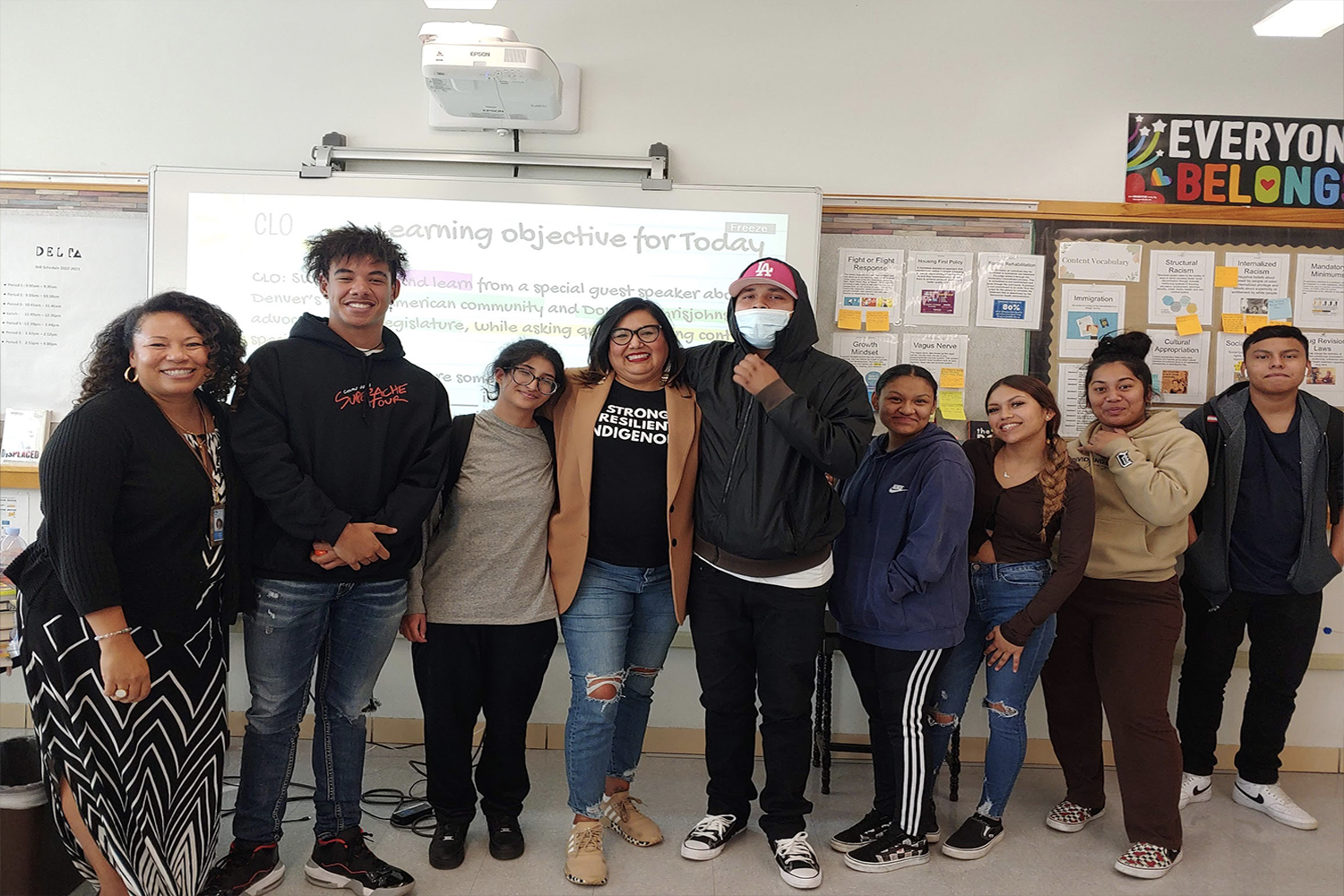
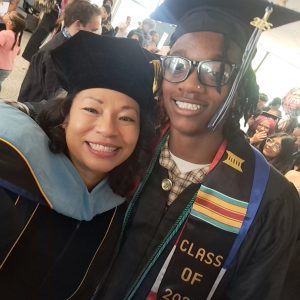
Janet Damon (left) is one of five recipients of The NEA Foundation’s Horace Mann Awards for Teaching Excellence and was Colorado Teacher of the Year in 2025.
Experts are always looking for ways to reduce stress in the classroom. Some districts have designed calm rooms with yoga mats and sound machines and others have brought dogs into schools to calm nerves. Some say artificial intelligence can give students the boost they need.
Yet as a veteran history teacher, I know the latest trends can’t easily replace what has always worked: truly connecting with our students in authentic and meaningful ways.
This is especially important at DELTA High School, an alternative high school in Denver where all of our teachers partner with students who have faced challenges in life and in traditional school settings.
A student I’ll call Cassie illustrates the situation. One day, she passed me a sticky note that said, “Please do not ever call on me.”
After class, I asked Cassie about the note and she explained that she had paralyzing anxiety. It was so severe that she often walked out of classes in her last school. She would sometimes disappear for days, leaving her mother feeling frustrated. We were Cassie’s last chance to graduate.
As I formed a positive relationship with Cassie, I discovered that she was passionate about women’s rights. During our civics unit, she researched income equality.
The lesson required a presentation and I asked if she wanted to present to me or the entire class or me — she chose to stand in front of the class.
During her talk, a young man interrupted her to give his opinion. Cassie didn’t walk out and didn’t lose her temper; she used her advocacy skills to make her case.
When class ended, she jumped for joy and said, “Ms. Damon, did you see me? Did you see what I did?” Cassie found that using her voice aided her in resolving conflicts.
This individual moment appears to reflect a broader trend. The Healthy Kids Colorado Survey, which samples middle and high school students across Colorado, found that high schoolers experiencing persistent feelings of sadness or hopelessness dropped by 14 percentage points between 2021 and 2023 (the most recent reporting years).
Youth can heal and flourish when schools embrace our approach, which focuses on deep listening and a belief in the power of care.
Let me share an example. When I met “Aiden,” he was exhausted and often struggled to stay awake in class.
As I worked with him, he explained that his dad was dealing with a serious illness and the loss of family income forced Aiden to pick up part-time jobs that ended late at night. In the morning, his mom was still working and needed him to take his siblings to school. He felt overwhelmed and defeated.
By listening to his experiences, I knew he needed more support. Our school counselor helped him find a job closer to school while I opened my class at lunchtime for him to have one-on-one time to catch up with coursework.
By the end of his second year, his father had recovered and Aiden joined the football team, beginning a new chapter of his high school experience.
I was overjoyed when Aiden emailed me, writing that he wanted to apply for college and asking for my help with an application letter. He was accepted to college, earns good grades, and excels on the college football team.
Our student body faces every hurdle you see in the news, including housing insecurity, immigration fears, and incarceration of a parent or caregiver.
I believe that every school can help mend our communities. Indeed, we’re replacing trauma with collective healing through community, connection, and a spirit of collaboration. Research in other states shows that such an approach brings positive results across the board.
Indeed, it all starts by asking a student a simple question: “I’m here to listen, how can I help you to succeed?”
Damon is one of five recipients of The NEA Foundation’s Horace Mann Awards for Teaching Excellence and was Colorado Teacher of the Year in 2025.