




Meta/Facebook is threatening to remove all local news from its platform following news reports that proposed legislation to force Big Tech to pay publishers for news content is being added to a defense bill in a bid to win approval during the lame-duck Congress session.
The Journalism Competition and Preservation Act made it through the Senate Judiciary Committee in September, but is running out of time to pass before the end of the year, when the House will flip to Republican control. Including it in the National Defense Authorization Act, an annual “must-pass” bill, is seen as a strategy for getting it done before the new Congress convenes in January.
Advertisement
The legislative maneuver generated criticism Monday from Meta/Facebook, which issued a statement in opposition to the journalism act and its potential pairing with the defense act. The text of the defense bill has not been released, but a source familiar with the matter told the Tribune that lawmakers are considering adding the journalism measure to the legislation.
“If Congress passes an ill-considered journalism bill as part of national security legislation, we will be forced to consider removing news from our platform altogether rather than submit to government-mandated negotiations that unfairly disregard any value we provide to news outlets through increased traffic and subscriptions,” Meta/Facebook said in its statement, which was posted on Twitter.
Advertisement
A Google spokesman declined to comment.
The News Media Alliance, a Washington, D.C.-based newspaper trade organization that has lobbied in favor of the legislation, criticized Facebook’s statement but declined to comment on any efforts to include the measure in the defense bill.
“Facebook’s threat to take down news is undemocratic and unbecoming,” the News Media Alliance said in a statement Monday. “As the tech platforms compensate news publishers around the world, it demonstrates there is a demand and economic value for news.”
The Journalism Competition and Preservation Act would temporarily exempt newspapers, broadcasters and other publishers from antitrust laws to collectively negotiate an annual fee from Google and Meta/Facebook, which dominate the nearly $250 billion U.S. digital advertising market. Backers say it will boost struggling news organizations and level the playing field with Big Tech, while critics question whether local journalism or large media companies will be the true beneficiaries of the bill.
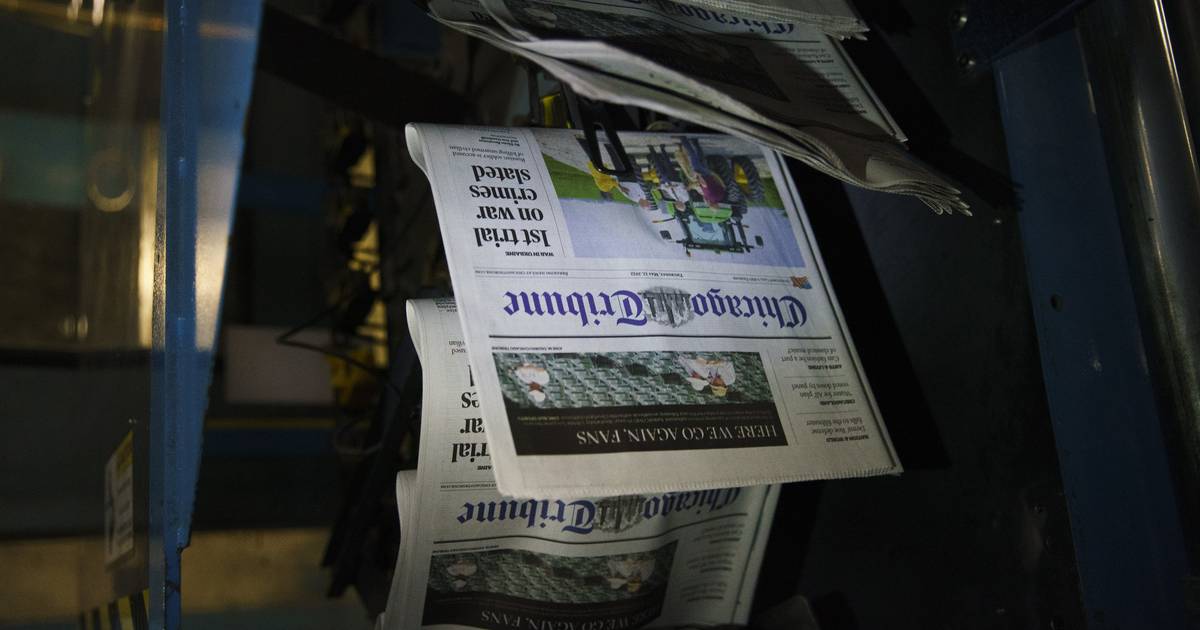
Introduced in the House and the Senate last year, Sen. Amy Klobuchar, D-Minn., is the lead co-sponsor of the bill, which covers thousands of local and regional newspapers, including the Chicago Tribune and other Tribune Publishing newspapers. The proposed legislation excludes large national publications such as The New York Times, The Washington Post and The Wall Street Journal.
Local TV and radio broadcasters — including network owned and operated stations — that publish original digital news content and meet other eligibility requirements would also be covered by the bill.
Opposition to the bill has been mounting over everything from the temporary antitrust exemption to undermining fair use on the internet. A coalition of 27 groups, including the American Civil Liberties Union, Common Cause, Public Knowledge and United Church of Christ Ministry, sent a letter to Congressional leaders Monday opposing the act and its possible inclusion in the defense legislation.
“This bill, despite months of advocacy and multiple revisions, contains far too many contradictions, complexities, and problems to be included in any omnibus or must-pass legislation,” the coalition said in the letter.
Advertisement
News publishers have struggled during the new millennium. Newspaper ad revenue, which peaked at $49.4 billion in 2005, fell by more than 80% to $9.6 billion in 2020, according to the Pew Research Center. More than a fourth of the nation’s newspapers have folded since 2005, according to a study by Northwestern University’s Medill School of Journalism.
In August, Gannett, the nation’s largest newspaper chain, laid off 400 employees, or about 3% of its U.S. workforce. Last week, Gannett began another round of layoffs, cutting its news division staff of 3,440 by 6%, or about 200 positions.
McLean, Virginia-based Gannett publishes USA Today and more than 230 other newspapers.
Big Tech is eating up most of the digital advertising pie. Google is projected to generate nearly $70.1 billion and Meta/Facebook $55.5 billion, or more than 50% of the total U.S. digital ad spend this year, according to Insider Intelligence.
Under the bill, the annual fee paid by Big Tech would be distributed to all local publishers that participate in the collective negotiations, with 65% of the allocation based on how much they spend on journalists as a proportion of their overall budget.
As legislators weigh forcing social media giants to pay for aggregating local news content, Facebook, which changed its name to Meta in October to reflect ambitions to expand its social media platform into the virtual reality metaverse, is moving in the opposite direction.
Advertisement
In 2019 Facebook agreed to pay licensing fees to The Wall Street Journal, New York Times, Washington Post and Chicago Tribune, among others, to run their content. But with revenues declining, the company announced in July it would no longer pay news publishers to aggregate curated stories.
On Monday, Meta/Facebook distanced itself even further from its former initiative to support local journalism.
“No company should be forced to pay for content users don’t want to see and that’s not a meaningful source of revenue,” the social media giant said in its statement.


