



Miriam Westheimer, Founder of the National Home Visiting Network and Chief Program Officer of Home Instruction for Parents of Preschool Youngers (HIPPY)
The transition to parenthood is far from easy – and even more difficult if parents don’t have support. Studies show that less than half of parents feel prepared for parenthood before the birth of their first baby, and only 18% feel confident as parents after their child arrives. While many external factors can affect a parent’s early experiences with their children, one thing is clear: new parents need support from people who understand their experiences.
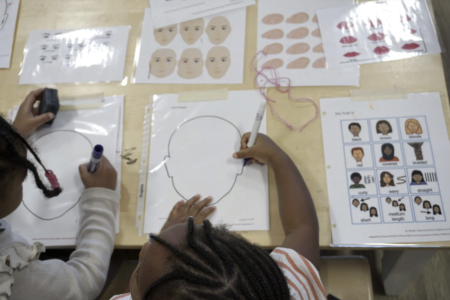
Home visiting programs, like Home Instruction for Parents of Preschool Youngsters (HIPPY), can help. These successful programs redefine empowerment. Under these models, designated community members, known as home visitors, don’t “bestow” power upon parents. Instead, home visitors affirm that parents simply need support to elevate their natural abilities. To provide that support, home visitors work alongside parents and other primary caregivers in a child’s home, taking family needs into account to tailor support. This might look like encouraging positive parenting practices or helping parents develop their children’s early math and reading skills. Home visitors can also help parents find resources in their communities, like daycare, health care, and more.
Peer-to-peer engagement is a central and striking feature of home visits. Often, the home visitors are parents themselves and draw on personal experience to connect with families. This model underscores a truth too often overlooked: credentials alone do not define an educator. Instead, genuine empathy among parents can be just as — if not more — impactful. Home visiting programs use peer-to-peer knowledge sharing to build on parents’ unique understanding of their children in three key ways:
- Parents are their children’s first teachers — and can have long-term positive effects on their children’s futures. Home visitors often teach parents the basics of educational play. This form of play has demonstrable positive developmental effects on children, specifically on early literacy, math, social and emotional, and other cognitive skills. These positive effects persist even after a child’s participation in a home visiting program has been concluded. As a result of home visiting programs and parents’ educational play, children experience increased school readiness, and participants will have higher rates of both school and college attendance. Children’s younger siblings often benefit from their older siblings’ participation, as well. Over the longer term, participants will see higher lifetime earnings totals due to their increased educational attainment and better employment outcomes.
- Parents can affect change beyond their own child’s education. We need to celebrate home visiting models not just as educational tools, but also as catalysts for civic engagement. Parents gain confidence from teaching their children, which empowers them to advocate within their communities. These programs are guided by the ethos of neighbors working alongside one another — a “we,” not an “I.” Through these relationships, parents see that it’s possible to initiate change on their blocks, in their neighborhoods, and their communities. And parents can go to civic meetings, stand up, and say, “I’m a parent, and these issues matter to me.” They move beyond passive roles to become active participants in their communities, influencing local policies and championing causes that affect not only their children but also our collective future.
- Parents find new opportunities to learn and grow as both parents and professionals. But programs like HIPPY don’t just inspire parents to participate in civic engagement. They also give parents a professional path forward. Through experiences in home visiting programs, some parents unlock a passion for early childhood education, leading to work as home visitors, pre-K professionals, or even K-12 educators. These parents are then inspired to share their knowledge with other parents, and they apply for jobs and are hired to work for programs like HIPPY as part of an individual equity accelerator model. In fact, after participating in the program, home visitors often experience an increase in their educational attainment and wages in the long run. Many home visitors are also incentivized to continue their education and develop their careers, moving into nonprofit management with home-visiting partner organizations or community organizing. Home visitors invest in parents, and parents invest in their children. This kind of “triple workforce” development uplifts everybody, from kids to parents to entrepreneurs.
While becoming a parent can be challenging, programs like HIPPY can make the process easier—and empower parents in new ways. Home visiting programs are about so much more than teaching parents how to facilitate educational activities for their children. They are also powerful platforms for transforming parents into community leaders and advocates, redefining what it means to educate and engage.
HIPPY has dedicated staff, school partners, service agencies, community leaders, advocates, and families in 20 states and the District of Columbia, comprising a total of 96 HIPPY sites. HIPPY is a free program for parents of children ages 2, 3, or 4. To learn more about HIPPY, who qualifies, and where it’s available, please visit https://www.hippyus.org/