




Chicago rapper and activist Vic Mensa applied for — but so far has been denied — licenses to grow and sell marijuana in Illinois.
So he found another path to his goal. He started growing his own brand through an already-licensed cultivator.
Advertisement
As a result, he believes 93 Boyz is the first Black-owned cannabis company on the legal market here. It sells what it calls the “heaviest, headiest gas” flower and joints in local dispensaries.
“Weed is a unifier,” Mensa told the Tribune. “It’s a connector. A lot of great relationships are built on it. You rarely see people in a smoking session break into a fist fight. That’s not the energy of weed.”
Advertisement
That Mensa had to go around the licensing process to became first out of the gate again illustrates the difficulties particularly facing minority companies trying to get started in the almost exclusively white-owned marijuana industry in Illinois.
The Illinois Department of Agriculture reports it has issued 88 craft grower licenses in the past year — but only six are moving forward with construction. More than a dozen more are close to that point.
As for financing, the state Department of Commerce and Economic Development told the Tribune that it has approved just three loans for craft growers that are in the process of completing their financing, with five others expected to be approved in the coming week.
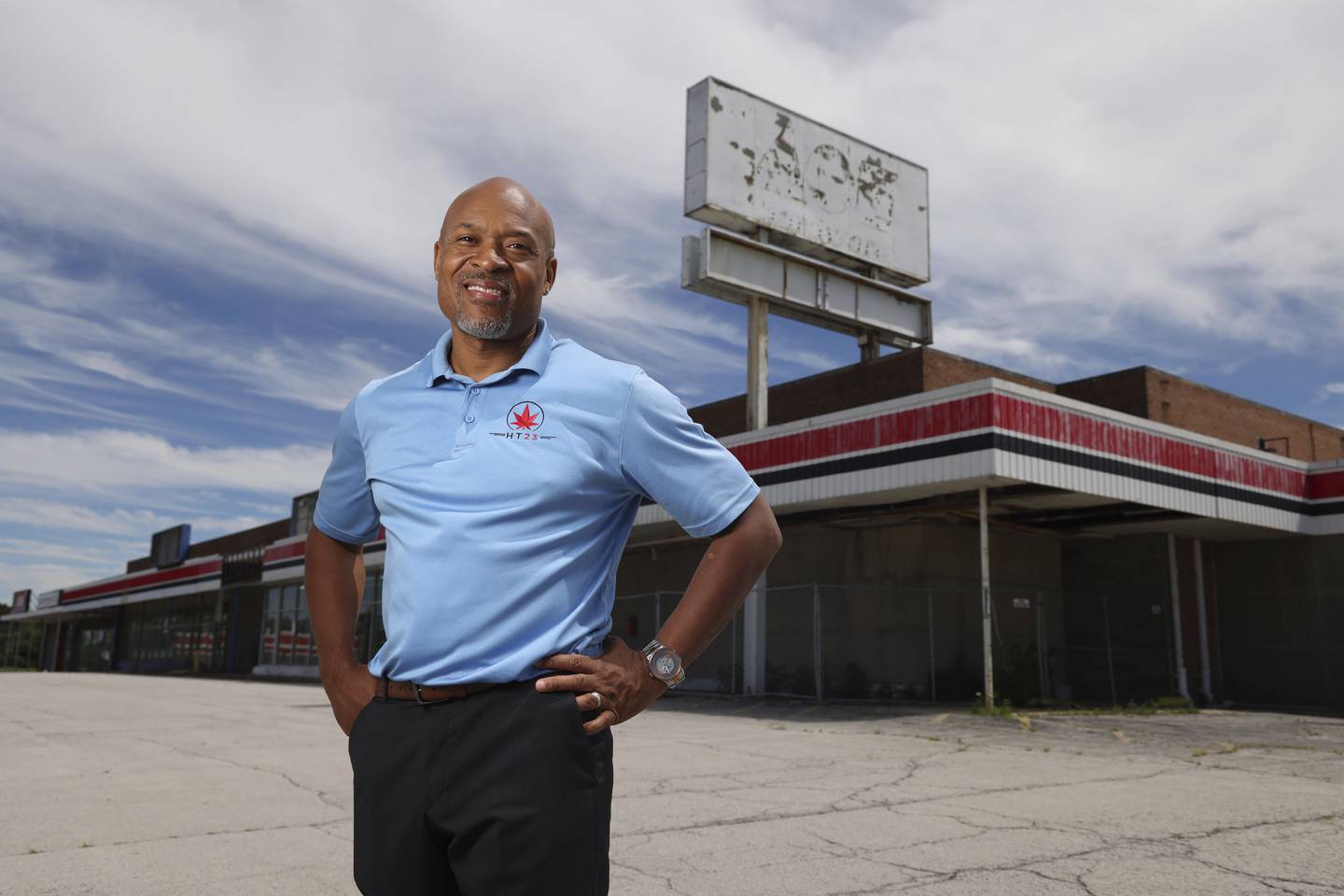
Reese Xavier Walton knows the difficulties of getting a craft growing business started. His Black-owned HT23 team won a license, but was financed by family and friends, with none of the deep-pocket investors or big names that got in on the ground floor of the industry.
His company couldn’t clear the credit check required by the state’s private partner financiers to qualify for the state’s low-interest loans, funded with cannabis taxes. In response to the Tribune’s questions about that, the DCEO issued a statement saying it “is in the process of evaluating program improvements to help the program realize its vision,” with more details to come in the coming weeks.
HT23 will hit a “brick wall” unless it can raise some of the $9 million needed to renovate a former strip mall in Chicago Heights, Walton said. To get started on a small part of the facility, it’s trying to crowdsource the first half-million or more, selling shares for $250 apiece.
On Sunday, HT23 held a tour of its facility, in a former boxing gym and hardware store, by invitation only, to attract bigger investors.
“Social equity in cannabis is more than a dream, it’s something that can happen, but it’s challenging without funding and support,” Walton said.
Advertisement
While rising construction costs are a problem, the main obstacle facing craft growers is the state’s legal limit on their size: 5,000 square feet of flowering growing area — a drop in the bucket compared with the 210,000 square feet allowed already established growers.
Because of that limit on the amount of product they can produce, entrepreneurs say, investors won’t lend them the money they need.
Attorney Scott Redman, head of the Illinois Independent Craft Growers Association, and whose Drecisco team won a license, said one cannabis investment company told him flat-out they wouldn’t fund any craft growers because the growing space is too small for the business to be viable.
“There needs to be some path forward, or we’re going to be stuck with a bunch of licenses that can’t go anywhere,” Redman said. “If we can’t finance, the only alternative is to sell our licenses.”
The purported intent of the size limit was to make it easier for small businesses to get started, but it instead has protected existing growers that got licenses beginning in 2015, after medical marijuana was legalized. Now, if the licenses are sold, they would likely go to other big multistate operators that have the money to buy them.
Craft growers hope to address the situation by getting lawmakers to increase the size limit substantially.
Advertisement
This year and last, the state has announced the award of 88 total craft grower licenses, and this summer, 182 retail stores — but only about six craft growers have gotten preconstruction permits, officials said.
Gov. J.B. Pritzker called it “powerful steps toward addressing the decades of injustice preceding cannabis legalization.”
While those licensees are struggling to get up and running, Mensa won’t have to wait. Rather than having to start a business from scratch, he agreed to have the award-winning Aeriz cultivator produce his cannabis, through subsidiary Wellness Group Pharms LLC in downstate Anna.
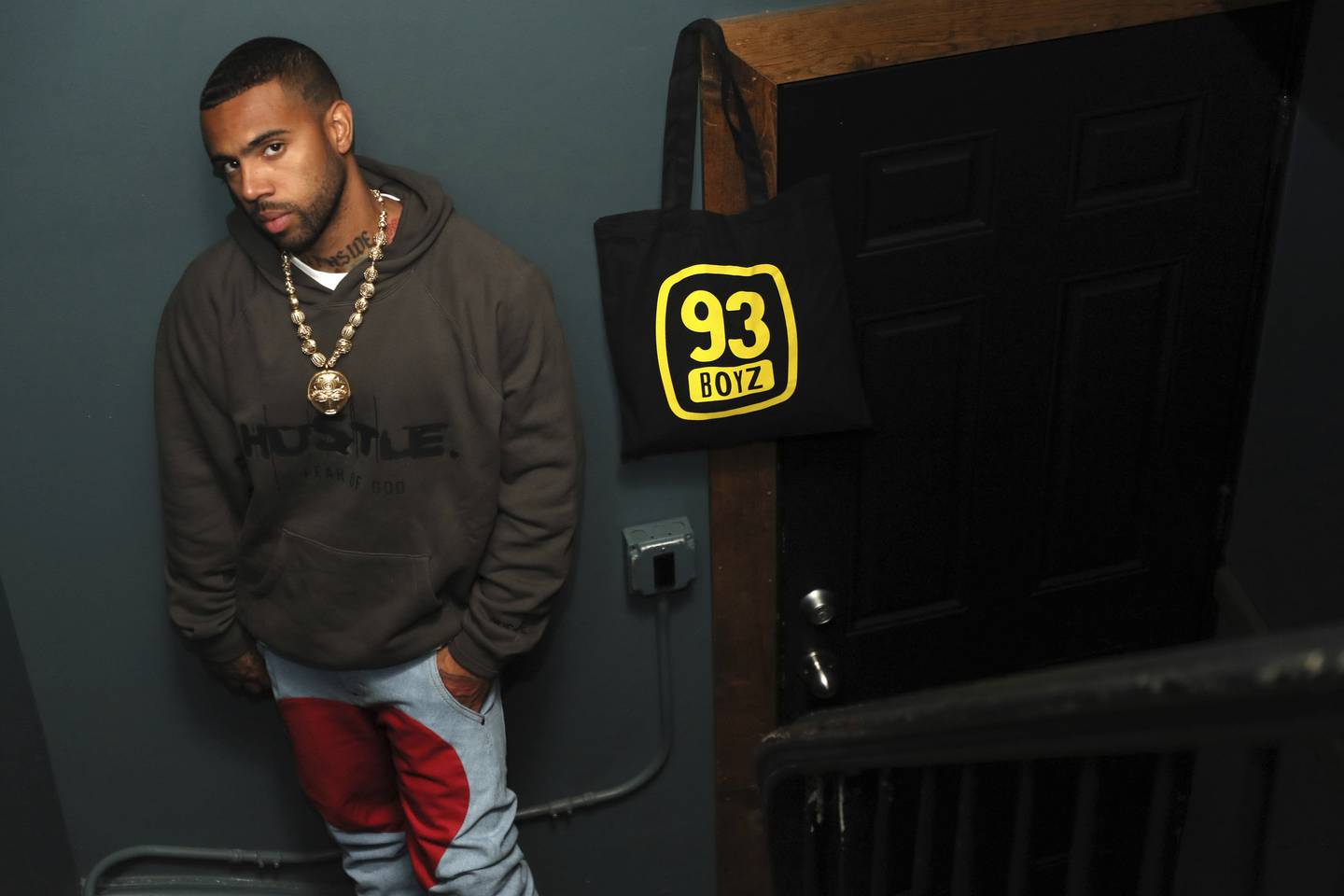
Aeriz is based in Chicago, and uses aeroponics to grow cannabis without soil in a clay bead medium. It collaborates with Mensa on the genetics, recipe and procedures to follow to make his proprietary blend. 93 Boyz held a launch party Saturday to celebrate.
Licensing cannabis is a model that’s becoming increasingly common, particularly among celebrities such as Snoop Dogg, Willie Nelson and the estate of Bob Marley. Since federal law still prohibits marijuana, companies can’t ship the product across state lines, so they must license production in each state that allows it.

Daywatch
Weekdays
Start each day with Chicago Tribune editors’ top story picks, delivered to your inbox.
Mensa, of Hyde Park — who was charged with felony possession of LSD and mushrooms at a Washington, D.C., airport in January — said selling weed was his “first hustle,” and helped fund his start in music. He criticized the state licensing process and said he hopes to bring some “flavor” to a corporate weed culture in Illinois.
Advertisement
He also plans to reinvest in people incarcerated in the war on drugs, first by donating a portion of proceeds to his Books Before Bars program. Aeriz said it’s bought 1,000 books to send to Cook County Jail and state prisons.
The Illinois cannabis program has not delivered yet on its stated goal of social equity, Mensa said, acknowledging that many other Black-owned businesses can’t get money to get started. “But a lot of people are committed to seeing it happen in one way or another,” he said.
In addition to the new growers, 54 cannabis infusers, which make edibles and other cannabis-infused products, and 189 transporter businesses have been licensed in Illinois as well, and several are getting near starting operations.
Statewide, almost 5,000 employees are licensed to work at cannabis grower, infuser and transporter businesses.
But the department recently issued a policy that infusers may not extract THC or other cannabinoids from the plant, and may not make vape cartridges or joints, which makes infusers more dependent on growers.
And growers are licensed to transport their own products, severely limiting the amount of business available for transporters.


