

Browsing: Local Stories
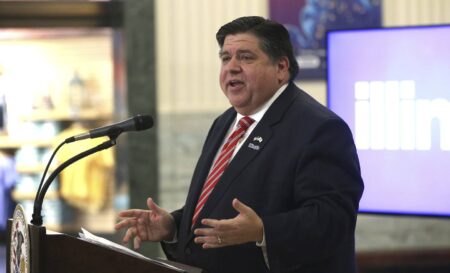
Illinois on Thursday received its third credit upgrade in less than a year after previously going more than two decades without one, bolstering Gov. J.B. Pritzker’s reelection campaign message that he and fellow Democrats are slowly fixing the state’s long-running financial problems.Even with the upgrade, Moody’s Investors Service said Illinois’ credit remains lower than any other state in the nation. That’s in large part due to the state’s long-term debt issues, including pensions that remain significantly underfunded, and its sluggish economy relative to other states.AdvertisementStill, Pritzker publicized the bump as he announced the news at the Thompson Center in the Loop.Gov. J.B. Pritzker announces a new Illinois tourism campaign at the Shedd Aquarium in Chicago on April 18, 2022. (Antonio Perez / Chicago Tribune)“There is more work to be done, of course, but step by step, rung by rung, we are steadily climbing the ladder out of the hole that was dug over decades, and Illinois’ future is bright,” Pritzker said.AdvertisementThursday’s credit hike from Moody’s comes after the ratings agency last year elevated the state’s credit to two notches above junk bond status from one, the first upgrade for Illinois since Republican George Ryan was governor. S&P Global Ratings followed suit soon after, and while Fitch Ratings still has Illinois at its lowest investment grade, the firm has signaled an upgrade could be in the offing.Higher bond ratings mean the state generally is able to borrow money at lower interest rates, ultimately saving money for taxpayers.The positive financial news gave Pritzker another opportunity to tout the $46 billion state budget and $1.8 billion election-year tax relief plan he signed into law Tuesday — a plan he’s repeatedly promoting in TV commercials for his reelection campaign.The spending plan for the budget year that begins July 1 and other measures are allowing the state to deposit $1 billion into its rainy day fund, make an additional pension payment of $500 million on top of a required $9.6 billion contribution, and devote more than $1 billion toward paying off old employee health insurance bills.The state also has paid off $3.2 billion in emergency coronavirus loans from the Federal Reserve ahead of schedule and, using federal aid from President Joe Biden’s American Rescue Plan, paid down $2.7 billion of a $4.5 billion deficit in its unemployment insurance trust fund.“When I came into office, Illinois had a structural deficit of nearly $3 billion, and between 2015 and 2017 our state suffered an astonishing eight credit downgrades,” Pritzker said. “We’ve now repeatedly balanced the budget and secured three upgrades in under a year.”Still, the state has nearly $140 million in unfunded pension liabilities and has yet to come up with a plan to repay the remaining $1.8 billion unemployment fund debt, among other challenges.House Speaker Emanuel “Chris” Welch, a Hillside Democrat who is looking to defend a 73-45 supermajority over Republicans, joined Pritzker in pinning the blame for the state’s money problems on past legislatures and governors, particularly Republican predecessor Bruce Rauner.AdvertisementDemocrats have “turned Bruce Rauner’s $17 billion debt into a surplus, and now we’re using that financial stability to make historic investments in human services and public safety, and put money back into the pockets of hardworking families,” Welch said in a statement, referring to the state’s previously towering pile of backlogged bills.Despite the plaudits from Wall Street, Republicans said massive federal stimulus efforts, including $8.1 billion last year from the American Rescue Plan, have papered over deeper budgetary problems.“The truth is, Pritzker continues to put Illinois on a path toward fiscal insolvency by increasing state spending and failing to address the systemic issues that are causing people to flee this state,” Senate GOP leader Dan McConchie of Hawthorn Woods said in a statement. “Should he remain in office next year, he is going to be confronted with a major hangover after the federal money dries up and state spending is at a record high.”The larger economic issues cited by Republicans are factored into the Moody’s analysis and the ratings agencies have so far given the General Assembly and the Pritzker administration credit for not using the one-time influx of revenue to fund ongoing expenses.In addition to the rating upgrade, Moody’s affirmed its stable outlook for Illinois’ finances, which “balances the state’s recent financial progress with underlying challenges that will remain in place for some time.”dpetrella@chicagotribune.comAdvertisementSign up for The Spin to get the top stories in politics delivered to your inbox weekday afternoons.
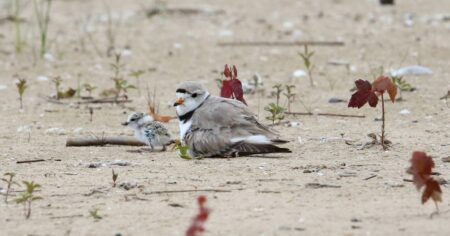
Word began to spread about their long-awaited return.He hadn’t been spotted at his Texas home and the winds were right for travel. She was known to take off around the same time from her Florida island, sometimes arriving before him. Wishes of safe flights came in from across the country as Chicagoans itching to catch an early sight made plans to head to the beach.AdvertisementBy Thursday afternoon, Monty, the Great Lakes piping plover, was back in Chicago.Now, birders are waiting for Rose.AdvertisementThe endangered shorebird pair chose Montrose Beach as their summer nesting spot three years ago, going on to break records, fledge chicks and serve as symbols for a city as hopeful and hardscrabble as two birds, individually weighing less than a stick of butter, who picked an urban beach to save their species.Monty, recently seen in his breeding plumage, wasn’t spotted earlier this week at his Texas wintering grounds, where he touched down in August after a journey that took at most 53 hours. In previous years, Rose has arrived in Chicago first, en route from a Florida island off the Gulf Coast.Together they’ve flown more than 2,000 miles upon the first signs of spring to make it back to Chicago. Last year they arrived in the final days of April, the year before on the cusp of May.“It’s like your kids coming back from college,” said Tamima Itani, of the Illinois Ornithological Society and a leader in Chicago’s plover effort.Birders have been preparing for the plovers with a full monitoring schedule in place, a cleaned-up habitat ready to go and knowledge there will likely still be some surprises ahead.Monty and Rose first nested in Chicago in 2019, becoming the first plover pair to do so successfully in a generation. Their story gained traction in a David and Goliath saga that pitted the little birds against potential human disturbance on the scale of a multiday beachside EDM fest. The music festival was called off, the birds prevailed and in following years the pair faced more natural challenges.They’ve come to represent a conservation success story for a species once down to about a dozen nesting pairs, their efforts aided by Great Lakes habitat restoration and Chicagoans who’ve guarded the beach night and day, scaring away predators and raising awareness about why someone should care about two shorebirds in the first place.“The agony and the ecstasy of monitoring,” birder Eden Essex called it last year.AdvertisementMonty and Rose met on a Waukegan beach when they were less than a year old and returned to the suburb in 2018 for an initial nesting attempt that was a flop. In 2019, they fledged two chicks at Montrose. The next summer, they fledged three.Last summer at Montrose offered more beach space as water levels lowered and the Chicago Park District created a habitat expansion. Monty and Rose fledged two chicks — Imani and Siewka — after a skunk incursion resulted in their first nest devoured.Armand Cann, a biologist with the U.S. Fish and Wildlife Service, said lessons were learned from the ordeal and the nest enclosure is updated for this season. The agency has also worked with the Park District to get the habitat in shape. Various stakeholders will be on the lookout for storms, predators and yet unforeseen hurdles.“We can’t predict everything that’s going to happen but we’re going on the fly and making sure they hopefully have a successful nesting season,” Cann said.Last year’s season exceeded goals, with 74 nesting pairs and 123 wild chicks fledged — the highest count since 2018. The total included three offspring of Nish, one of Monty and Rose’s 2020 chicks who went on to father the first Ohio nest in more than 80 years. Nish was seen with Rose on her Florida island this fall.Monty, Rose and progeny, including Nish, signal that more plovers may settle in urban areas, Cann said.Advertisement“In an idealistic way, I really hope one day, maybe this year, maybe another year, that we’re able to gain a second pair,” Cann said. “Whether that’s going to be at Montrose, Rainbow Beach, Illinois Beach State Park or maybe even Indiana Dunes.”And last season’s success bodes well for this summer’s nesting numbers.“I’m really optimistic about what some of the sites are going to be looking like around the Great Lakes,” said Jillian Farkas, the Great Lakes piping plover recovery coordinator with the U.S. Fish and Wildlife Service.There’s no word yet on Monty and Rose’s chicks, but some additional plovers have appeared in Chicago in recent days.One banded plover showed up at Rainbow Beach on the South Side. The female, hatched at Sleeping Bear Dunes, reached her Michigan grounds the next day. A cleanup at the beach, a site researchers say has promise for another plover pair, is planned for Saturday.An unbanded plover also appeared at Montrose. The bird is believed to be a Great Plains plover, the majority of which are unbanded, unlike the Great Lakes population. But that plover’s visit was a sign that other plovers may be heading north.AdvertisementEven if the plovers passing through don’t nest in Chicago, their visits are a sign of welcoming habitat, said Francie Cuthbert, a professor in the Department of Fisheries, Wildlife and Conservation Biology at the University of Minnesota, who has devoted decades to the plover recovery effort.“There are other birds besides Monty and Rose stopping in Chicago,” Cuthbert said. “It’s a positive thing. Even though that bird didn’t stay, it saw good habitat.”Plovers live five to six years on average, Cuthbert said, and some go on to live longer.“But all kinds of things can happen during migration, or any time of year,” Cuthbert said. “So we’re keeping our fingers crossed.”If Rose finds her way to Montrose Beach again, it may only be a matter of time before fuzz ball chicks on toothpick legs are flitting across the sand, adding to the list of plovers to look out for and the family tree of Chicago’s favorite birds.

A former paralegal who worked in bankruptcy at a Chicago law firm is accused of embezzling more than $600,000 from accounts, officials said Thursday.Becky Louise Sutton, 66, formerly of Park Forest, is charged with three counts of wire fraud and three counts of embezzlement from the estate of a debtor, according to a statement from the U.S. attorney’s office in Chicago. AdvertisementAn indictment was returned Wednesday for Sutton, of Austin, Texas, who embezzled the money from 2009 to 2018 while she worked at the law firm, according to the statement.Sutton placed “fraudulent transfers” of bankruptcy funds from fiduciary bank accounts intended for creditors to accounts she handled — including her own personal bank account, credit card account, student loan account and mortgage, the statement said.AdvertisementIn one instance, Sutton used a company with a name similar to a creditor to disguise her transfer of the money, according to the statement, which said the indictment seeks forfeiture from Sutton of $611,263 in alleged criminally derived proceeds.Sutton’s arraignment in federal court in Chicago has not yet been scheduled.rsobol@chicagotribune.com
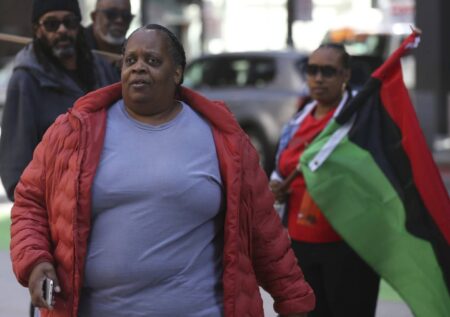
The maternal grandmother of slain teen Laquan McDonald said she still wants federal charges to be pressed against his shooter, former Officer Jason Van Dyke, despite U.S. Attorney John Lausch’s office’s statement earlier this week saying federal prosecutors will not bring a case against the one-time cop.Tracey Hunter, 55, McDonald’s grandmother, appeared Thursday morning at Federal Plaza in the Loop with about a dozen other activists to urge the public to still fight for federal charges against Van Dyke.Advertisement“I want justice. I want justice for my grandson, and I want justice now,” Hunter said. “I want federal charges. John Lausch, if you’re not going to do your job, you need to step down.”Activists at the gathering called for the public to call Lausch’s office and other federal representatives to ask for federal charges.AdvertisementLaquan McDonald’s maternal grandmother Tracey Hunter, family members and supporters are attend a news conference demanding a federal civil rights prosecution of Jason Van Dyke on April 21, 2022. (Antonio Perez / Chicago Tribune)Jason Van Dyke has already been tried and convicted in Cook County court for McDonald’s death, and federal law sets an extraordinarily high bar to prove criminal civil-rights violations in such a case — “more stringent than the state charges on which Mr. Van Dyke was convicted,” according to a statement from Lausch’s office.“Federal prosecutors would need to prove to a jury beyond a reasonable doubt that Mr. Van Dyke willfully deprived Mr. McDonald of a constitutional right,” the statement read. “To do that, prosecutors would have to prove not only that Mr. Van Dyke acted with the deliberate and specific intent to do something the law forbids, but also that his actions were not the result of mistake, fear, negligence, or bad judgment.”The decision not to bring federal charges was made in consultation with McDonald’s family, according to the statement Monday.When asked who was part of that consultation, Tracey Hunter said she and her daughter, McDonald’s mother, were not included and believed it was Laquan’s great uncle, Rev. Marvin Hunter, who she said should no longer be the spokesperson for the family.Rev. Hunter did not immediately respond to a request for comment.Tracey Hunter said she did not know about the U.S. attorney’s office’s decision until she received phone calls from reporters asking about it.“We did not get no phone calls (from the U.S. attorney’s office) about nothing,” she said. “ … When it all boils down to it, my grandson ain’t coming back. I got to live with this for the rest of my life. My daughter has to live with this for the rest of her life.”Hunter said when she talked to her daughter on the phone after learning of the U.S. attorney’s decision to not pursue federal charges, her daughter was silent.Advertisement“She couldn’t even talk. That’s all she could say, ‘What? What?’” she said.Lausch’s office declined to comment on the situation Thursday.It is rare for federal authorities to announce that they have declined to charge someone. But in the wake of Van Dyke’s release from prison after a relatively short sentence, high-profile figures such as the Rev. Jesse Jackson and the head of the NAACP had called on the Department of Justice to consider bringing a case that could put him back behind bars.Tyrone Williams holds up a sign as Laquan McDonald’s family and supporters urge a federal civil rights prosecution of Jason Van Dyke, across from the Dirksen Federal building in Chicago on April 21, 2022. (Antonio Perez / Chicago Tribune)Van Dyke was convicted of second-degree murder and aggravated battery by a Cook County jury in 2018; he spent a little more than three years behind bars for McDonald’s death before his release in February. The 2014 shooting, captured on police video, sent shock waves from neighborhood streets to the mayor’s office at City Hall when footage was released more than a year later.Van Dyke withdrew his appeal of the Cook County conviction in fall 2020, so authorities’ decision not to charge on the federal level likely marks the end of his legal journey.The investigation into Van Dyke’s conduct was launched as a joint probe between state and federal authorities in April 2015. Then-Cook County State’s Attorney Anita Alvarez’s office charged Van Dyke with first-degree murder in state court in November of that year, while the federal investigation remained ongoing.AdvertisementFederal prosecutors could not simply charge Van Dyke with murder again, the statement from federal prosecutors noted. Rather, they would have to prove that he willfully violated McDonald’s constitutional rights.Lausch’s office stated Monday that if Van Dyke were convicted on federal charges, the federal judge would have to consider that Van Dyke had already served a prison sentence, and that he can no longer serve as a law enforcement officer.“Given these factors, there is a significant prospect that a second prosecution would diminish the important results already achieved,” the statement read.Justin Blake arrives to a news conference where Laquan McDonald’s family and supporters demanded a federal civil rights prosecution of Jason Van Dyke. (Antonio Perez / Chicago Tribune)Van Dyke’s release from prison in February after less than four years in custody prompted many calls for federal prosecutors to charge him with civil-rights violations, or at least provide some closure regarding the federal probe that was launched after McDonald’s shooting.The week of Van Dyke’s release, protesters including Rev. Jesse Jackson as well as Tracey Hunter crowded near Federal Plaza downtown in a demonstration calling for Van Dyke to face federal charges.Several people who protested inside the courthouse were taken into custody and charged with misdemeanor civil contempt for violating the chief judge’s order governing demonstrations at Dirksen.Advertisementpfry@chicagotribune.com
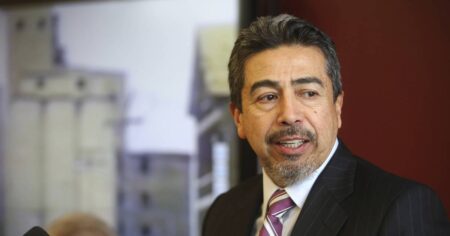
A federal prosecutor on Thursday delivered an impassioned defense of the deferred prosecution deal with former Ald. Daniel Solis, telling the federal judge overseeing the high-profile case that Solis’ cooperation was perhaps “singular” even in the city’s long history of political corruption.“Some may view (Solis’ cooperation) as being with little precedent, but what Mr. Solis did also was with little precedent,” Assistant U.S. Attorney Amarjeet Bhachu said during a status hearing in Solis’ case. “He didn’t just talk. He took action. He worked with the federal government for six years to expose corruption.”AdvertisementBhachu was responding to a victim-impact statement from Solis’ replacement as 25th Ward alderman, Byron Sigcho-Lopez, who asked U.S. District Judge Andrea Wood to consider Solis’ “rampant and unchecked corruption” when deciding whether to go along the deal, which will leave Solis with a clean slate in three years if he continues to cooperate.Sigcho-Lopez urged the judge in the two-page letter to consider “scaled and appropriate penalties” that reflect the seriousness of Solis’ conduct, which he said did long-term damage to the citizens of the ward.Advertisement“If former Alderman Solis is not held accountable/charged, we feel that our hard work to reform will be undone,” Sigcho-Lopez wrote.Bhachu, however, told Wood on Thursday that the letter overstated Solis’ misconduct and failed to take into account the unprecedented level of his cooperation.When Solis was confronted by investigators back in 2016, Bhachu said, he “had a choice” about what his path would be, including to refuse to cooperate, deny accountability, and fight any charges that came his way.“That is an easy path that many in this city to date have followed,” Bhachu said. “Mr. Solis chose a more difficult path, judge. He cooperated with the government for approximately six years. When we asked him to meet, he did so. When he was asked to make a recording with a third party, he did it.”During the course of his cooperation, Solis personally made “hundreds of recordings” and helped form the basis of government requests for wiretaps on others, Bhachu said. Solis’ efforts make him one of the most significant government witnesses of the last several decades.“A lot of people talk about cleaning up corruption, and often all it amounts to is talk,” Bhachu said. “It’s rare when someone actually delivers, and in this regard, Mr. Solis delivered.”Bhachu also said Solis has suffered for his corruption, even if it won’t include a felony conviction. He lost his seat in the City Council, he can’t run for public office again, and he’s been ostracized by former colleagues, according to the prosecutor.“Life is never going to be the same for him again,” Bhachu said. “These are all real consequences.”AdvertisementAfter Bhachu finished, Solis’ attorney, Lisa Noller, said she had nothing to add, “Because we agree with all of it.”At the conclusion of the hearing, Wood agreed to exclude time in Solis’ deferred prosecution deal, meaning his case will be set for dismissal on April 8, 2025 as long as he continues to cooperate with the ongoing investigations.Solis’ legal saga began in 2016 when he secretly agreed to wear a wire for federal investigators and helped build racketeering cases against Ald. Edward Burke and then-House Speaker Michael Madigan, two of the longest-serving and most powerful politicians in the state.The deferred prosecution deal was signed by Solis on the day after Christmas 2018 and kept secret for nearly 3 ½ years before the U.S. attorney’s office on finally put it on the record earlier this month.As part of the deal, Solis was charged in a one-count criminal information with corruptly soliciting campaign donations from a real estate developer in exchange for zoning changes in 2015, when Solis was head of the City Council Zoning Committee.At Solis’ arraignment last week, Assistant U.S. Attorney Amarjeet Bhachu told Wood he’d learned the city may want to intervene in Solis’ case as a victim. Bhachu said that while the U.S. attorney’s office “always invites the participation of victims in criminal cases,” he thought it was “doubtful” that the city would legally qualify as a victim given the facts of the Solis case.AdvertisementHours later, Mayor Lori Lightfoot, who has been highly critical of Solis’ deal, issued a statement that called him out for violating the public trust “in profound ways” but stopped short of any seeming attempt to derail the deferred prosecution.Instead, Lightfoot, a former federal prosecutor, said she had instructed the Law Department to file a victim impact statement with the court.“Because of all of the crimes that have been put on the public record, Solis victimized the residents of his ward and residents in the entire city, all of whom were deprived of the integrity and honesty that should be sacrosanct with all public officials,” the mayor said. “No one is above the law and Chicago residents expect that their elected officials will be held accountable.”It was not the first time Lightfoot has been critical of Solis. After the Tribune reported on Solis collecting his pension after leaving office in 2019, Lightfoot said she was “confident he will face a moment of reckoning.”“What that will be, when that will be, that is not under my control,” Lightfoot said that fall.She has since publicly and privately criticized the deal prosecutors reached with Solis, calling it “unconscionable” that he might not face a conviction or lose his pension.AdvertisementIn his letter, Sigcho-Lopez detailed a number of ways in which he says Solis’ corrupt zoning practices allegedly have harmed his ward, from displacing thousands of low-income residents in Pilsen to letting politics trump the public interest in important development projects in Chinatown.“The harm caused by this corruption is generational,” the letter stated. “The people of the 25th Ward continue to feel the aftermath.”He also touched on the pending cases against Burke and Madigan, who have both pleaded not guilty. In particular, Sigcho-Lopez said lobbyists connected to the alleged corruption schemes “will continue to be rewarded with public contracts without any accountability, if convicted parties are perceived to be ‘let off the hook.’ “Noller could not immediately be reached for comment. A spokesman for U.S. Attorney John Lausch also could not be reached.“As Mayor, it is my priority that all efforts are made to ensure that individuals engaged in City business are doing so with honesty and integrity. Over the past week, the City has had productive conversations with the U.S. Attorney’s office regarding defendant Daniel Solis. Given the discussions, the City sees no need to formally intervene. Separate and apart from this specific proceeding, we will continue to aggressively protect our residents and notably our taxpayers against individuals who commit crimes or otherwise unethically obtain city resources.”jmeisner@chicagotribune.com
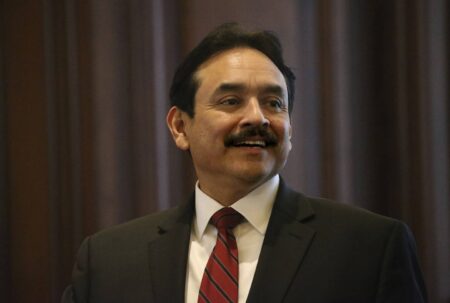
Two longtime Democratic state senators whose names have come up as part of the wide-ranging federal corruption probe that led to charges against former Illinois House Speaker Michael Madigan have dropped their reelection bids.Sens. Tony Muñoz of Chicago, an assistant majority leader, and Steve Landek, who doubles as mayor of Bridgeview, withdrew their names from the June 28 primary ballot, each likely clearing the way for their political allies to take over the respective seats. Neither Muñoz nor Landek has been accused of any wrongdoing.AdvertisementMuñoz, a former Chicago police officer who’s been in the Senate since 1999, could not immediately be reached for comment Thursday, but he issued a statement announcing he plans to retire when his term is up in January.“I was taught at a young age that hard work and determination is the key to success,” Muñoz said. “I have applied this to everything I have accomplished, especially as a state senator.”AdvertisementState Sen. Tony Muñoz listens in during a Senate hearing at the Illinois Capitol building in Springfield on April 7, 2022. (Antonio Perez / Chicago Tribune)With no candidate in the June 28 Republican primary for the newly drawn 1st Senate District, Muñoz’s withdrawal leaves son-in-law Javier Loera Cervantes as the sole candidate on the ballot. There is, however, an objection pending against Cervantes’ nominating petition.Landek, who was appointed to a vacant Senate seat with Madigan’s help in 2011, declined to comment on his decision. But with him out of the running, the only remaining candidate on the primary ballot is Democrat Mike Porfirio, a Lyons Township trustee who previously worked as Landek’s chief of staff in his Senate office and also as public works director in Bridgeview. No Republicans are currently running for the seat.Neither Cervantes nor Porfirio could be reached for comment.By putting their names on the ballot and then withdrawing after the filing period is closed, Muñoz and Landek likely warded off other potential candidates who might have been interested in running for an open seat but wouldn’t have wanted to take on an incumbent.Landek is expected to remain in the Senate until the end of his term and he also continues to serve as Bridgeview mayor, a job he first won in 1999. He is also the head of the Democratic Organization of Lyons Township.Had Landek remained on the ballot it would have been the first time he faced voters since his name surfaced in a sweeping federal corruption probe that led to the indictment of Madigan and a guilty plea from Landek’s former neighboring state senator, Martin Sandoval. A Chicago Democrat, Sandoval died in December 2020 of COVID-19 after pleading guilty to bribery and tax charges and agreeing to cooperate with federal prosecutors.Federal agents who raided Sandoval’s Springfield office in September 2019 seized a number of items, including a flash drive with “Landek written on it,” according to search warrant documents.Landek, who shared an office suite and a legislative assistant with Sandoval, has not been charged with any wrongdoing.AdvertisementSign up for The Spin to get the top stories in politics delivered to your inbox weekday afternoons.One month later, in October 2019, Landek told the Tribune the flash drive likely contained information about office bills, rents and phones, and possibly legislation he sponsored for the Illinois Municipal League. He said at the time that he hadn’t been interviewed by federal authorities.Sen. Steve Landek, D-Bridgeview, is seen on the Senate floor at the Illinois Capitol in Springfield on Jan. 3, 2013. (E. Jason Wambsgans / Chicago Tribune)When federal agents descended on village hall in southwest suburban Lyons two days after raiding Sandoval’s state Capitol office, “items related to the Democratic Organization of Lyons Township” were among the records they sought, according to a search warrant.The list of items that were seized in the Lyons raid also included a framed photograph of Lyons Village President Christopher Getty with Muñoz. Muñoz, like Sandoval, came up through the now-defunct Hispanic Democratic Organization, a Chicago patronage army backed by then-Mayor Richard M. Daley.In October 2019, Muñoz issued a statement saying that questions about the photo were “the first time I’m hearing about this.”“Our local government officials visit the Capitol while we’re in session, and I often meet with and take pictures with them,” he said at the time.AdvertisementSeparately, a court filing earlier this year in the federal case against former state Rep. Luis Arroyo, who has pleaded guilty to a bribery scheme involving sweepstakes gambling machines, revealed that Muñoz testified before a grand jury in the matter.A motion from Arroyo’s attorneys seeking probation rather than prison time noted Muñoz testified that Arroyo only approached him to arrange a meeting. Muñoz had previously sponsored a measure that would have banned the machines, which died in the House after being approved without opposition in the Senate.In February 2020, the village of Bridgeview, where Landek is mayor, received a federal grand jury subpoena for a range of documents, including communications with Madigan and his longtime confidant Michael McClain, a former state lawmaker and lobbyist who was charged alongside the former speaker last month in a 22-count federal indictment.As part of the February 2020 subpoena, authorities also sought communications with Madigan’s hand-picked alderman, Marty Quinn, 13th, and his brother Kevin Quinn, who’d been ousted from the speaker’s political organization over sexual harassment allegations.Most of the documents requested in the subpoena were for information related to Raymond T. Nice, a longtime precinct captain in Madigan’s 13th Ward organization. Authorities sought contracts, invoices and tax records, among other documents. While Nice is not named in the Madigan indictment and has not been charged, the Tribune has reported that prosecutors alleged Nice was designated a subcontractor and had payments funneled to him through a ComEd lobbyist. Nice did little or no work, prosecutors said.As the Tribune has previously reported, Bridgeview was among the more than half-dozen suburbs that awarded insurance business to the firm that employed Madigan’s son, Andrew.AdvertisementBridgeview selected Mesirow Financial as its broker for risk management insurance in December 2010, about a month before Michael Madigan presided over a meeting of local Democratic Party leaders who unanimously chose Landek to replace retiring Sen. Lou Viverito. In 2012, Landek declined to say whether Andrew Madigan was involved in securing the three-year contract, but he said all insurance brokerage deals in the village went through a competitive bidding process.The federal indictment of Michael Madigan alleges that during a 2018 meeting about a potential appointment to a state board, he asked then-Ald. Danny Solis, who was wearing a wire, to steer insurance business to his son.dpetrella@chicagotribune.com
Federal charges unsealed in Chicago on Thursday allege three dealers participated in a massive art and sports memorabilia fraud scheme involving forged signatures of baseball greats Babe Ruth, Lou Gehrig, and Cy Young, as well as phony paintings purportedly by artists such as George Ault, Ralston Crawford and others.Charged in the 34-page indictment were brothers Donald Henkel and Mark Henkel, of Michigan, as well as Raymond Paparella, of Boca Raton, Florida.AdvertisementThe wire fraud charges alleged Donald Henkel purchased items such as paintings, baseballs, baseball bats, celebrity photographs and books, record albums, programs and even “vintage pens” for use in the scheme.The Henkel brothers then used a series of co-conspirators, including Paparella, as “straw sellers” to conceal the brothers’ involvement and pass the fake items off as legitimate to galleries and collectors across the country, the indictment alleged.AdvertisementMany of the items eventually netted hundreds of thousands of dollars in illicit sales, which was split among the co-conspirators, the indictment alleged.Among the victims of the 15-year fraud scheme was a Chicago-area auction house, according to the indictment. Other victims included art galleries and auction houses in New York, Texas, Pennsylvania, Michigan, California and London.One of the first schemes alleged in the indictment was the 2005 sale of baseballs purportedly signed by early greats Honus Wagner and Christy Mathewson to a sports memorabilia dealer in Exton, Pennsylvania.The Henkel brothers allegedly recruited an associate, identified only as Co-Schemer A, to provide false information about the authenticity of the baseballs to the victim, who sold them at auction for $121,000, the indictment alleged.In March 2016, Donald Henkel allegedly contacted the Chicago-area auction house about the sale of a fraudulent painting by Crawford, a famous American abstract painter, lithographer and photographer who died in 1978.Henkel had “made the painting falsely appear like one of Crawford’s works,” titled “Smith Silo Exton,” including adding a phony signature on the work, according to the charges. The fake painting sold for about $395,000, and about $300,000 of the proceeds went back to Henkel, the indictment alleged.Attorneys for the three defendants were not listed in court records Thursday afternoon.The case is the latest in a long line of fraud investigations involving doctored art and sports memorabilia in Chicago’s federal court.AdvertisementNearly a decade ago, a Florida art gallery owner was sentenced to a year in prison for participating in an international scheme that reaped millions by passing off phony prints as originals signed by masters from Pablo Picasso to Marc Chagall.In 2017, Arkansas collector John Rogers received a 12-year sentence for altering sports memorabilia items to make them appear authentic and using proceeds from the fraud to repay customers who had figured out the items were fakes.In one instance, Rogers had a trophy company fix a nameplate to a Heisman replica to make it look like it was the authentic 1978 trophy awarded to University of Oklahoma running back Billy Sims, according to court records.jmeisner@chicagotribune.com
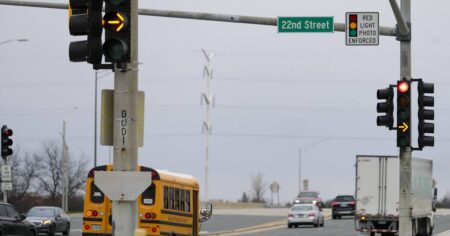
Tony Ragucci, a former cop and longtime mayor of Oakbrook Terrace, pleaded not guilty Thursday to federal charges stemming from a sprawling bribery investigation involving red-light cameras.Ragucci, 66, was charged in a criminal information made public earlier this week with one count each of honest services wire fraud and filing a false tax return. He faces up to 20 years in prison if convicted, but sources have said he is cooperating with investigators and expected to plead guilty at a later date.AdvertisementA longtime police officer who was elected mayor of Oakbrook Terrace in 2009, Ragucci is the latest suburban politician to be indicted on charges he accepted cash to allow red-light cameras into his town. He resigned from office more than two years ago amid revelations of the federal investigation.Among those charged so far in the same overall probe are former state Sen. Martin Sandoval; former Crestwood Mayor Louis Presta; John O’Sullivan, the former Worth Township supervisor and state lawmaker; and political operative Patrick Doherty.AdvertisementSources told the Tribune that new charges against others in the investigation were expected soon.Ragucci’s arraignment before U.S. Magistrate Judge Jeffrey Gilbert was held by telephone due to ongoing COVID-19 protocols at the Dirksen U.S. Courthouse.Ragucci spoke only briefly to acknowledge that he understood the proceedings and the conditions of his release on a recognizance bond. His not guilty plea was entered by his attorney, Michael D. Krejci.Prosecutors accused Ragucci of accepting thousand of dollars after the state in 2017 let his suburb put red-light cameras at a busy, but arguably safe corner outside a west suburban mall.According to federal prosecutors, the year before the cameras became operational, Ragucci was paid off as part of a scheme in which the red-light camera firm paid a 14% commission on revenue generated on the cameras to another firm it had hired as a “sales consultant” to get village business. That consulting firm’s officials then paid a portion of the commission to Ragucci, first $3,500 a month, then an amount based on how much cash the cameras generated, prosecutors alleged.The then-mayor also directly accepted $12,500 cash from an official of the red-light camera firm as contracts were renewed, unaware that the official was secretly working with federal investigators on a wide-ranging corruption probe, prosecutors alleged.The alleged payments were being made at a time the Tribune was investigating how Ragucci and red-light camera firm SafeSpeed were able to get cameras installed at the busy but relatively safe intersection of Illinois Route 83 at 22nd Street, a corner shared by Oakbrook Terrace and neighbor Oak Brook.[READ MORE] Following ex-Oakbrook Terrace Mayor Anthony Ragucci’s indictment, activists call for end of red-light camera program »AdvertisementOak Brook officials fought the cameras, saying the corner didn’t need them, and the Illinois Department of Transportation had the final call because the cameras would be put on a state route. IDOT had previously deemed the corner too safe for cameras, then there were even fewer crashes, yet somehow IDOT reversed course to allow the cameras.That reversal came after Sandoval, the then-powerful head of the Senate Transportation Committee, intervened on SafeSpeed’s behalf, as did another state senator, Tom Cullerton.Sandoval, who died of COVID-19 in December 2020, admitted to accepting bribes from the SafeSpeed official, Omar Maani, who at the time was secretly working with federal investigators. Cullerton later admitted to taking part in an unrelated ghost payroll scheme and awaits sentencing.The charges against Ragucci came the same month that federal prosecutors pushed for a two-year sentence for Presta, the former Crestwood mayor, who admitted to taking a cash-stuffed envelope from Maani in exchange for Presta’s support of lucrative SafeSpeed cameras there.SafeSpeed and its CEO, Nikki Zollar, have denied any wrongdoing, saying that any bribes offered by Maani occurred without the company’s knowledge.In a statement released after Ragucci’s arraignment Thursday, SafeSpeed said the company “remains both shocked and saddened that one of its former colleagues was engaged in criminal conduct and recruited outside individuals to help further his self-serving activities.”Advertisement“Their actions were clearly in their own self-interest and done without SafeSpeed’s knowledge and undercut the important work SafeSpeed does,” the emailed statement read. “The criminal activity of a few individuals does not and should not reflect the values and integrity of SafeSpeed, its employees, and its clients.”jmeisner@chicagotribune.com
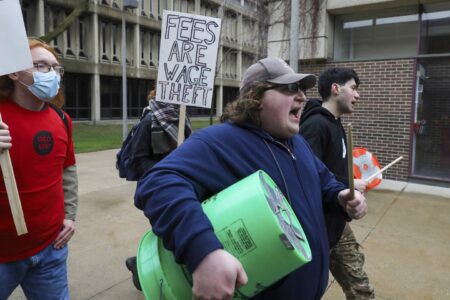
Students at the University of Illinois at Chicago are only two weeks away from finishing the semester, but now graduate student workers and teaching assistants are not holding office hours or helping professors after they went on strike Monday.On Wednesday, more than 50 graduate and undergraduate students organized a rally with leaders from other Chicago-area labor unions to show support and help form protest pickets around the UIC campus.AdvertisementThe Graduate Employees Organization has been bargaining with the university for more than a year over a contract for the 2021-22 school year. The organization is seeking a raise in wages, reduction of student fees that workers are charged, better health care, adding no-lockout language to the contracts and trying to overhaul their nondiscrimination and harassment policy. The university and the union have yet to reach an agreement. The graduate student workers have been working without a contract since August 2021.GEO members held a strike vote after a semester and a half without a contract, and earlier this month the union announced that 97% of its 1,500 members voted in favor of a strike, said Adam Pratt, 26, co-president of GEO who is a Ph.D. student and teaching assistant in the mathematics department.AdvertisementGraduate Employees Organization workers march on the University of Illinois at Chicago campus as they begin a strike over wages and fees April 18, 2022. (Jose M. Osorio / Chicago Tribune)UIC posted a statement on its website saying normal operations would continue during the work stoppage. In some cases, this might mean more work for faculty and students.“I know my boss is really worried about getting grades submitted and that’s something that just cannot happen right now with the strike,” Pratt said, referring to the professor of the class he is assisting. There are 150 students in the class, so if the strike continues, the professor will have to grade all the final exams without help. “We’re all just gonna have to hope that the university starts making improvements and we can move together towards a fair contract and the strike can be over.”Pratt said other classes in his department, like Calculus I, have around 1,000 students and five professors. Without the T.A.s in those courses, the five professors will be left to grade all of the final exams, again without help from assistants.“We started with raises equal to Loyola University (around a 30% raise), but we’ve come significantly down since then to a 21% raise,” Pratt said. “We wanted to cut all of our fees and have them reimburse because the fees are a way of basically doing wage theft to our graduate workers.”These fees, paid by all students, account for around 10% of the workers’ $20,615 minimum salary for the nine months of the school year. “We also wanted to decrease the cost of health care both for graduate workers and their dependents and the university wants to increase the cost even for the same coverage, which is not particularly good coverage,” Pratt added.Lidia Aguilar, 36, was one of the students singing chants in the picket line at the UIC Science and Engineering Labs. She is a doctorate candidate in the Hispanic studies department and a T.A. for the Spanish for bilinguals undergraduate course.“I don’t want to be here, I want to be with my students; it’s our last two weeks together,” said Aguilar, who is an international student from Spain. “This lack of raise has affected my ability to pay my (university) fees, the ability to see my family once a year because it’s $1,000 to go to my hometown in the south of Spain, so I spent a whole year saving so I can spend Christmas with them and I haven’t been on a summer break in my country for eight years.”Graduate Employees Organization workers march on the UIC campus on April 18, 2022, as they begin a strike over wages and fees. (Jose M. Osorio / Chicago Tribune)“Also something very important about international students is that we cannot work outside of campus,” Aguilar said. “I cannot be a barista at Starbucks, a T.A. is the only option that I have a job while I am a student in this country because of my visa status, and it’s not enough. … My landlord raised my rent by $100 and I cannot afford to stay in my apartment, so it’s really hard not (to) know what the future contract brings to my paycheck.”AdvertisementMeg Rock, 35, a doctoral student in the College of Education and an assistant, also sees the strike as the only way to get fair treatment.“I’m here because I want to be a teacher,” Rock said. “I’m not here because I like sitting outside in the cold. I want to be supporting my students, but it doesn’t feel good to know how much my fellow workers are hurting. There have been many times where I’ve been on bargaining sessions on Zoom and I have to turn off my camera so that I can cry because of the experiences of harassment or difficulty of fellow workers are so painful.”In a statement released by UIC hours after the rally on Wednesday, officials said they wish to reach an agreement soon. “With 21 of 27 issues agreed upon in our good-faith negotiations to date and sessions scheduled for today and tomorrow, April 20 and 21, we believe much can be resolved through continued dialogue at the bargaining table.”“U of I was able to provide the president of their system a 40% pay increase (in 2020). Enough is enough,” said John Miller, president of University Professionals of Illinois Local 4100. “The university has to get its priorities right. … It is not a time to prioritize administration and management, it is time to prioritize the students and the people who do all the work, including all of the graduate employees.”Susan Hurley, executive director of Chicago Jobs With Justice, said there is an issue with the University of Illinois system. “There is no reason why the boss of a public institution being paid with tax dollars should be making over $600,000 a year,” she said. “The value of the education that is provided here is the fruit of your labor and I think you deserve to be compensated fairly for that. This university wouldn’t function without all of you.”AdvertisementGraduate Employees Organization workers march on the UIC campus as they strike over wages and fees on April 18, 2022. (Jose M. Osorio / Chicago Tribune)In a coffee shop in the UIC area, two undergraduate seniors, Maahi Shah and Yesha Prajapati, were talking about the recent protests on campus.“I think it is a little bit stressful for some students because they don’t know how their next few weeks of academics might be affected,” Shah, 22, said. “But at the same time, I think it’s pretty understandable because the T.A.s have to use that pressure point to be able to get the university to make some compromises and be able to discuss something urgently.”Prajapati, 21, remembered there was a similar strike by GEO during her first year, in 2019, and thinks not a lot of progress has been made. “I feel like it’s really repetitive and I feel like UIC should be providing T.A.s with what they need instead of just repeating the cycle.”tmijares@chicagotribune.com
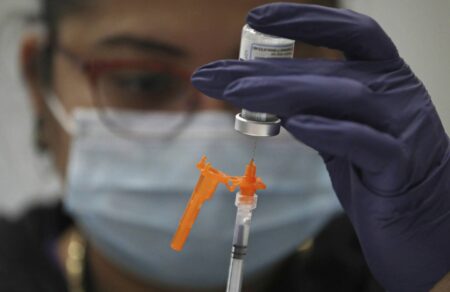
An Illinois appellate court on Wednesday sided with Chicago Public Schools in vacating a temporary restraining order that prevented the district from taking employment action against six CPS teachers for refusing to submit proof of vaccination or undergo weekly tests for COVID-19.The ruling restores the district’s ability to enforce the requirement while a lawsuit challenging the practice continues in a downstate courtroom.Advertisement“We stress the weekly test defendant is requiring plaintiffs to take is noninvasive, nonharmful, self-administered, free to the teachers, available on school property, and can be taken during paid working hours,” Justice John W. Turner, of the 4th District Appellate Court in Springfield, wrote in a unanimous decision.“While it may be questionable why only unvaccinated employees are required to take these weekly tests, the tests and the manner defendant makes the tests available to its employees do not appear unreasonable,” the judge wrote.AdvertisementDownstate attorney Tom DeVore, who represents the six teachers, declined to comment. In a statement, CPS said it “has made the safety and well-being of our students and staff a priority since the onset of the pandemic.”The district continued: “The appellate court’s ruling confirms the district’s right to act affirmatively on behalf of our school communities. As of today, more than 90% of CPS employees are vaccinated, demonstrating a shared commitment to keeping our employees, students, and their families safe.”Sangamon County Circuit Judge Raylene Grischow granted the temporary restraining order against CPS on April 8.Grischow entered a similar temporary restraining order in February as part of a challenge to Illinois Gov. J.B. Pritzker’s school COVID-19 policies such as universal masking, quarantining for unvaccinated close contacts of an infected person, and testing for unvaccinated staff members.Martha Arevalo of Broadway Medical Center fills a syringe with a COVID-19 vaccine during a vaccination event at Chicago Teachers Union headquarters, Jan. 27, 2022. (John J. Kim / Chicago Tribune)Pritzker appealed the decision, which the appellate court dismissed as moot because school COVID-19 rules from the Illinois Department of Public Health had been allowed to expire. The Illinois Supreme Court declined to hear the case, vacating that temporary restraining order, and Pritzker dropped the statewide masking requirement the same day.CPS later dropped its mask mandate, but maintained its vaccine and testing requirements for employees.DeVore sought a new temporary restraining order last month after two of his clients were told by CPS to submit proof of vaccination, test for COVID-19 or risk being placed on a nondisciplinary administrative leave of absence without pay. The other four teachers had continued to test weekly, DeVore said. He argued the employees were not provided their right of due process of law.The district announced an employee vaccine mandate in August, with exceptions for staff members who qualified for religious or medical exemptions. CPS backed off its mandate in October, saying unvaccinated staff members could keep their jobs as long as they tested weekly for the virus.AdvertisementCPS says 9% of its staff — about 4,400 employees — are required to test.The district paused its in-school COVID-19 testing program last week because of spring break. Thirty-four adults tested positive for the virus Monday and Tuesday through the free program. It’s unclear how many of those staff members are unvaccinated because CPS doesn’t provide that information. The testing program is available to vaccinated staff members as well as students.After CPS dropped its mask mandate last month under legal pressure from DeVore, the district has experienced an uptick in cases. Health and school leaders have said it’s nothing to be concerned about.tswartz@tribpub.com