

Author: staff


The Chicago Bulls need to push the pace.The Bulls succeed when their pace is frenetic, bordering on frantic. They’re rarely the biggest or strongest team on the court — especially in their playoff series against the Milwaukee Bucks. But when the Bulls speed up to harass opponents on defense and push the open court on offense, they can take advantage of their small-ball mindset to disrupt a game.AdvertisementThe opposite happened in their jarring, 111-81 loss Friday in Game 3 against the Bucks.“We have to run better,” Bulls coach Billy Donovan said. “Our pace is way too slow. We’ve got to space the floor. We’ve got to run and we’ve got to get out. At times we moved way, way too slow.”AdvertisementExpandAutoplayImage 1 of 24Chicago Bulls guard Zach LaVine (8) heads to the locker after a 111-81 loss to the Milwaukee Bucks at United Center on April 22, 2022, in Chicago. (John J. Kim/Chicago Tribune)After Bobby Portis slotted in for Bucks forward Khris Middleton because of an MCL sprain, the Bulls should have entered Game 3 with the upper hand in speed. The Bucks started three players 6-foot-10 or taller, creating a towering presence that shut down the paint. With a smaller lineup of quick guards and adaptable forwards like Patrick Williams and DeMar DeRozan, the Bulls could have pushed the pace.But they didn’t. The Bulls scored only five points in transition in Game 3, continuing a trend from Game 2 (six fast break points) and Game 1 (five points). Bulls guards hesitated when they caught the ball with numbers or space to attack, slowly bringing the ball up against a fully set Bucks half-court defense.Chicago Tribune SportsWeekdaysA daily sports newsletter delivered to your inbox for your morning commute.“They’re a terrific defensive team and they’re good in every area they protect,” Donovan said. “They get back in transition and they rebound. But when you have opportunities to get out in transition in open court situations where the floor — even if it’s not uneven, it’s cross matched or different matchups are happening, the side of the floor is overloaded — you’ve got to be able to attack. I didn’t think we played with enough pace.”Transition ball comes less easily when the opposing team is making shots. The Bucks shot 51.5% from the field and 42% from 3-point range in the first three quarters before putting in bench players to ride out the final 12 minutes.[ [Don’t miss] Column: Chicago Bulls fans were ready to rock the United Center — but Grayson Allen plays the villain to perfection ]The lack of fast break offense for the Bulls was further stymied by the Bucks’ improved ball protection, which resulted in only nine turnovers after coughing up a combined 36 in Games 1 and 2.“I can do a better job rebounding and pushing, getting the ball in my hands and playing a little bit faster,” guard Zach LaVine said. “But if we don’t get any stops it’ll be hard to get out in transition.”Creating pace will need to be catalyzed by guards from the moment the Bulls rebound the ball. But LaVine said the team’s sluggishness also stemmed from an air of defeat after the Bucks took an early 19-point lead.The Bulls looked exhausted by the end of the first quarter and defeated by the end of the half. But to grind out a series against the Bucks, the Bulls can’t allow a double-digit lead to crush their pace of play.Advertisement“When we take the ball out of bounds, we can’t hang our head,” LaVine said. “We’ve got to go onto the next play. Get it out fast, move on, push it up the court a little bit.”

Tigers star Miguel Cabrera delivered the 3,000th hit of his decorated career Saturday, becoming the 33rd major-leaguer to reach the mark and the first player from Venezuela to accomplish the feat.Still an imposing presence at 39, Cabrera made history by grounding an opposite-field single to right in the first inning of Detroit’s game against Colorado.AdvertisementCabrera immediately raised his right arm as he headed toward first base. The crowd at Comerica Park gave him a rousing ovation and fireworks were shot out of the scoreboard.The milestone hit came off Antonio Senzatela, a fellow Venezuelan, in the first game of a day-night doubleheader.AdvertisementA two-time AL MVP, a Triple Crown winner and an 11-time All-Star with four batting titles, Miggy’s place among the Major League Baseball greats already was assured long before this afternoon in Detroit.As a 20-year-old rookie, Cabrera helped the Florida Marlins win the 2003 World Series championship. All these years later, stamping his name onto the 3,000-hit list had a nice ring, too.And it’ll certainly look good on a plaque in Cooperstown someday.Cabrera became just the seventh player with 500 home runs and 3,000 hits. He joined an exclusive club with Hank Aaron, Willie Mays, Eddie Murray, Rafael Palmeiro, Albert Pujols and Alex Rodriguez.Last August in Toronto, Cabrera connected for his 500th homer. He’s now at 502 in his 20th season.Cabrera is the seventh Latino player to make the 3,000 chart — the hit tied him on the overall list with the late Roberto Clemente.Pujols was the previous player to reach 3,000 hits, doing it in 2018. He was at 3,308 going into Saturday and, at 42 with St. Louis, has said this is his final season.The next hitter to reach 3,000? Hard to say.AdvertisementRobinson Canó trailed Cabrera on the active list with 2,630 going into Saturday and is 39 years old. Yadier Molina, also 39, followed at 2,116.Among younger players, Jose Altuve (32) has 1,783 and Freddie Freeman (32) had 1,722. Mike Trout (30) was at 1,428.Cabrera got three hits Wednesday to get to 2,999, then struck out in his final at-bat of the night. He went 0 for 3 Thursday and was intentionally walked his final time up against the Yankees, drawing loud boos and chants from Detroit fans.The milestone remained on deck when Friday night’s game against Colorado was rained out.Cabrera was the third player to get his 3,000th hit while with Detroit, joining Ty Cobb and Al Kaline.While age has diminished his power to clear any fence and smash opposite-field shots to right-center, Cabrera has enjoyed a monster career at the plate.AdvertisementCabrera became the first major leaguer in 45 years to win the Triple Crown by leading the league in batting average, home runs and RBIs in 2012. That year, he won his first of two straight MVP awards and helped Detroit reach the World Series, during a stretch that included four straight division championships.“He is one of the great right-handed hitters ever,” Yankees manager and former Marlins teammate Aaron Boone said this week.“And 3,000 hits, 500 homers, that’s obviously rarefied air. He’s done it, you know, in bigger ballparks his entire career, between Florida and here also. You know, he’s an all-timer. He’s in that, probably inner circle, of even the Hall of Fame. It’s been a special career,” Boone said.Cabrera boosted his total most often against James Shields, getting 27 hits against the former Tampa Bay, Chicago White Sox, Kansas City and San Diego pitcher.Detroit acquired Cabrera in a trade with the Marlins in 2007, with Dontrelle Willis also going to the Tigers in a deal for Andrew Miller and Cameron Maybin. Cabrera had 842 hits at the time.The swap came a year after the Tigers lost the World Series to St. Louis, in the hope that Cabrera would help them win the championship for the first time since 1984.AdvertisementThe Tigers, though, never won it all with their superstar. Detroit was swept by San Francisco in the 2012 World Series and spent a decade in a rebuilding mode that bottomed out with 310 losses between 2017-19.After Cabrera was an All-Star for the 11th time in 2016, his production declined and Detroit’s rate of success did as well.The Tigers made bold moves in the offseason in a quest to be relevant with Cabrera serving as a draw to bring fans to the ballpark and to hit about one ball per game into the outfield grass with savvy swings after crushing baseballs with incredible force earlier in his career.A top prospect in the minors, Cabrera made his big league debut in June 2003. He announced his presence to the whole baseball world that October.Brushed back by a couple of heaters from Yankee ace Roger Clemens, Cabrera came back to launch a home run off the Rocket in helping the Marlins win the World Series.Cabrera is almost twice as old now and is still a kid at heart, recently taking the grounds crew’s three-wheel bicycle for a ride during batting practice.AdvertisementAnd, one of the game’s all-time greats can still get a base hit against some of the world’s best pitchers.
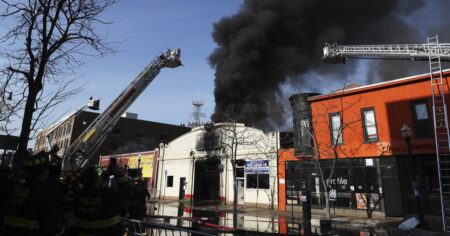
An extra-alarm fire broke out early Saturday morning at an auto-repair business in the Ravenswood neighborhood on the North Side causing extensive damage to three buildings, Chicago Fire Department officials said.Shortly after 5 a.m., firefighters were called to the scene in the 5000 block of North Clark Street, said Chicago Fire Department Deputy District Chief Walter Schroeder.AdvertisementAt some point, more equipment and firefighters were called to the scene once the fire started to spread to adjacent buildings.The roof of one building collapsed, and power and gas lines were shut down while firefighters worked to extinguish the blaze, Chief Schroeder said.AdvertisementFirefighters were still at the scene addressing hot spots, and officials said it would take time as they complete and extensive overhaul of the structures.The Red Cross was on the scene helping those who live in above apartments that may have experienced smoke and water damage.“I am not sure if anyone will be displaced until we see the extent of damage,” Schroeder said.Traffic in the area has been shut down as firefighters continue to work. At least one person who was effected by high CO readings and smoke was taken to Weiss Memorial Hospital, he said.The cause of the massive fire is under investigation.
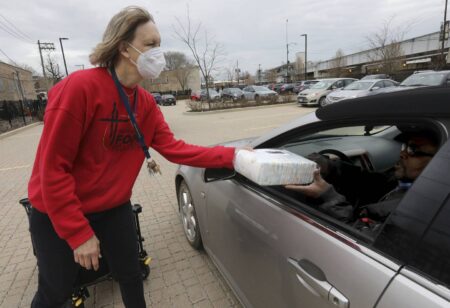
On a blustery afternoon in Lawndale, Beverly Harris waited in line outside Harmony Community Church for her turn to select from bags of apples and cartons of eggs, romaine lettuce and puff pastry from the food pantry in the church’s basement.Though she had never needed to get food at a pantry before, Harris, of Lawndale started coming about two months ago. Now, she visits the pantry most Wednesdays. The cost of everything is high. Every week, Harris said, it seems like the line outside the church gets longer and longer.Advertisement“Everybody needs help that I know of,” she said. Harris always leaves the pantry with enough food, and when she has more than enough, she shares with other people who need it, she said.Harris is among a growing number of people who have turned to food pantries in recent months as grocery prices skyrocket amid rising inflation. Food pantries across the city said they are seeing increased demand as dollars don’t stretch as far at the supermarket and people feel the pinch on the price of everything from household goods to gas.AdvertisementDiane Carioscio, the food pantry’s director, said visits to the pantry started increasing toward the end of February, and the pantry is now serving about 25% more people than is typical. Carioscio attributes the increase to the rising cost of food, as well as the end of some government aid programs that were available earlier in the COVID-19 pandemic.Diane Carioscio, director of the food pantry at Harmony Community Church, helps hand out diapers as people line up in their vehicles to get food and supplies at the pantry in the North Lawndale neighborhood on April 20, 2022. (Antonio Perez / Chicago Tribune)“We are also in a food desert,” she said, meaning residents need to travel farther than they do in other neighborhoods to get to a grocery store. That means the price of gas, which has also risen precipitously, creates another barrier to food access.Rosemarie Spears walked to the church Wednesday from her home nearby; gas prices are too high for her to drive, she said.“My car is parked and not moving at all,” she said. “I have two feet.”Spears said she’d been coming to the pantry for about a year, after she lost her job as a preschool teacher on the South Side. Spears used to receive unemployment, although that aid has since been cut off, she said. She had a baby girl six months ago and was able to get on food stamps recently.Spears said she was considering starting a garden to grow her own produce, as are other people she knows. “They’re talking about, well, if we grow our fruits and vegetables, then we’ll be good,” she said. “But what about the bread, and the beans and the rice?”AdvertisementGrocery and supermarket prices were 8.6% higher this February than in February 2021, according to the U.S. Department of Agriculture. Prices are expected to keep rising: the agency predicts grocery prices will increase between 3% and 4% this year, with the extent of inflation varying from product to product. Fresh fruit prices are expected to increase between 5% and 6% percent, with dairy prices expected to increase between 4% and 5% and fats and oils between 6% and 7%. The price of poultry, which could also be affected by an outbreak of avian influenza, is expected to increase by 6 to 7%.Volunteer Jackie Kareb, left, gives out food as dozens line up at the food pantry at Harmony Community Church in the North Lawndale neighborhood on April 20, 2022. (Antonio Perez / Chicago Tribune)At the same time, many government aid programs that helped families get through the beginning of the pandemic have expired. Sophie Milam, vice president of public policy and advocacy for the Greater Chicago Food Depository, noted the monthly payments some families received as part of the expansion to the child tax credit ended last year.AdvertisementFederal nutrition programs such as SNAP, Milam said, are adjusted for inflation only once a year. That means people who are dealing with surging food prices right now will not see their aid adjusted until October. Some help is available; in Chicago, families will be able to apply for a $500-per-month pilot cash assistance program starting Monday. An analysis from Northwestern University evaluating food insecurity in the Chicago metro area in late January and early February found more than 16% of households struggling with food insecurity. That percentage was highest among Black and Latino households, with 29% and 24% experiencing food insecurity, respectively, compared with 11% of white households. Families with kids were also more likely to struggle with access to food, the report found.Demand is up at food pantries across Cook County, said Maurice Cousin, director of food access capacity for the Greater Chicago Food Depository. The depository provides food to roughly 400 pantries, soup kitchens and shelters in Cook County. The food depository has provided food to pantries for free during the pandemic, and plans to do so for the upcoming fiscal year “and the foreseeable future,” Cousin said. A number of food pantry directors credited the program, at least in part, with their ability to keep high-quality food in stock.Pastor Sandra Gillespie, who runs a food pantry at the Chosen Tabernacle church in Englewood, said she’s started to see demand surge over the last five or six months, particularly among seniors.“I am literally talking to seniors who have to make a decision: am I going to buy my medicine or am I going to buy some food?” Gillespie said. “You’re getting $16 a month in food stamps, that’s not taking you very far with these surging prices.”People in their vehicles drive up to receive free food, given out by volunteers at the food pantry at Harmony Community Church in Chicago’s north Lawndale neighborhood, April 20, 2022. (Antonio Perez / Chicago Tribune)The pantry doesn’t need to ration the food they give out, at least not yet, Gillespie said. “If my numbers continue to rise again, I see that on the horizon,” she said.AdvertisementLakeview Pantry, which operates in Lakeview and Humboldt Park as well as online, saw monthly visits increase over 18% in March than in January, according to spokesperson Greg Trotter. During the same period, the organization saw demand from households with children increase more than 25%.“A lot of folks are just really struggling with the prices at the grocery store,” said Kellie O’Connell, Lakeview Pantry’s CEO. “When they go in, their dollar doesn’t stretch as far as it used to. So they’re leaving the grocery store with less food for their families, for themselves, and then turning to a food pantry to supplement the groceries that they need for the week or for the month.”The Pilsen Food Pantry is serving 300 to 360 people each week, said executive director Evelyn Figueroa. “It has just not stopped,” she said. That’s more people than the pantry was serving in March 2020, she said, though the pantry was relatively new at the time and more people are aware of its services now.Most food pantry directors said demand was not close to reaching the heights it soared to at the beginning of the pandemic, when some people flocked to pantries for fear of food shortages. And despite supply chain problems, pantries generally aren’t having trouble keeping enough food on the shelves or serving everyone who shows up, although they’ve had to remain flexible when certain items are hard to get or their dollar doesn’t go as far as it used to.Cousin said the surge in egg prices, for instance, meant the food depository had to switch to buying medium eggs instead of large ones in order to source the same amount of product.Advertisement“We have to buy less, or there’s certain things we can’t buy,” Figueora said.“We all hate having days where there are carrots for the first 50 people,” she said. “We’d like there to be carrots for all the people.”As the world gets back to normal, Cousin said, he wants people to understand that the communities hardest hit during the pandemic because of a lack of investment will be slow to recover.“In no way is this pandemic or the effects of it in the food insecurity space over,” Cousin said. “Those most hardest hit will be on the road to recovery for years to come.”tasoglin@chicagotribune.com

When you’re shopping in the garden center, how do you know you’re getting a healthy plant?“Don’t just judge by the green part you can see,” said Stephanie Adams, a pathologist in plant health care at The Morton Arboretum in Lisle. “Look at the roots, which are just as important.”AdvertisementHere are some tips from Adams for choosing good plants:Read the label. “The first step is to make sure you’re buying the right kind of plant for the place where you’re going to put it,” she said. Consider the amount of sunlight the plant requires, and be sure it is hardy in USDA winter hardiness zone 5, which applies to most of the Chicago area. If the plant is a tree or shrub, find out how tall and wide it will ultimately grow so you know if it will fit in the space you have available. Make sure the plant is a good match for the soil conditions in your garden.AdvertisementJudge the color. Most plants should be a uniform medium green. If a plant’s leaves are not uniformly green, make sure the white splotches or the purple tinge is the appropriate color for that cultivated variety and doesn’t represent a problem. Some cultivated varieties are bred to have differently colored leaves. For example, a plant with yellowish leaves might have been bred that way, or it might be a naturally green plant that is losing chlorophyll because of a disease. The label should make it clear what the plant is intended to look like.Look for symmetry. Among perennials and shrubs, choose plants with evenly distributed leaves and stems all the way around.Check for healthy roots. “Ask permission to gently pull the plant from its pot and examine the roots,” Adams said. “It’s common sense, like looking under the hood before you buy a car.” In annuals, vegetables and most perennials, roots should be white. Roots of trees and shrubs may be yellowish or brown. You should be able to see plenty of roots distributed throughout the soil. The roots and soil should be moist.Avoid plants with diseased roots. “If you buy a plant with bad roots, you’re set up for failure,” Adams said. A sickly plant will disappoint you, and it also may introduce disease-causing fungus spores or bacteria to your garden soil, where they may infect other plants. “Diseased roots are usually brown, sometimes even black,” she said. “They might look squishy or flat, like a shoelace, because they’ve collapsed.” Avoid dried-out roots too.Spot-check flats. “When I’m buying a flat of plants, I usually pull up one or two plants from the middle to check the roots,” Adams said. “If any plants in the flat look poor — either the leaves or the roots — I won’t buy it. A disease could be spreading through the whole flat.”Too many roots? No problem. On a plant that you will transplant, it’s not a problem if it looks pot-bound, with roots that completely fill the pot, or if it has circling roots. “You can correct that at planting,” she said. For pot-bound plants, make cuts around the outside of the root ball and fluff out the fine roots to encourage them to grow out into the soil. For circling roots, cut them or pull them apart to direct their growth outward into the soil. “The main roots should grow out like the spokes of a wheel.”Avoid pot-bound houseplants and container plants. It is important to avoid buying a that is pot-bound if you will be keeping it in the same container. Or, transplant it to a larger pot so its roots won’t be overcrowded all summer.Get a guarantee. For major purchases, such as trees and large shrubs, make sure the garden center gives you a written guarantee, and be prepared to do your part. “The guarantee will only protect you if you have correctly planted and cared for the plant,” Adams said. “It won’t cover a plant that dies because you forgot to water it.”AdvertisementFor tree and plant advice, contact the Plant Clinic at The Morton Arboretum (630-719-2424, mortonarb.org/plant-clinic, or plantclinic@mortonarb.org). Beth Botts is a staff writer at the Arboretum.

Dear Amy: My older sister is 75 and unmarried.She has three grown children in their 50s. I am eight years younger than she.AdvertisementMy sister has always avoided aging and seems in denial about mortality.When I visited the family a few months ago for her 75th birthday party, my niece expressed concern to me that my sister has made no provisions for death or unexpected illness.AdvertisementShe has no will, power of attorney, advance medical directive, or burial or cremation instructions. Attempts by my niece and her siblings to discuss any of this with my sister are quickly dismissed. My sister refuses to talk about it.Last year I shared with my sister my general estate plan, including the fact that I have a will, power of attorney, trust, and advance medical directive, and gave the names of my appointees.I had hoped that sharing such information might nudge her to do similar planning. No luck. My niece is concerned that she and her siblings will be left holding the bag to make critical medical and other decisions for their mother without any idea of what she would want, and that the three siblings might not agree.This is not about monetary inheritance, as my sister doesn’t have a lot of money. My niece has asked me to try to influence my sister to at least prepare an advance medical directive and burial or cremation instructions.Should I stay out of this or get involved — and, if so, how?– Concerned SisterDear Concerned: Yes, you should attempt to speak to your sister about this. It might be best not to overwhelm her with estate planning, but do encourage her to appoint a health care proxy as a start.Given that you are savvy, well-prepared, and substantially younger than your sister, might you be the right person to take this on?AdvertisementMy home state has health care proxy forms and very easy to understand instructions on the state’s government website. A directive can be simply worded or very detailed. You will need two witnesses but (in my state) it is not necessary to have it notarized.Do a search for the state your sister lives in, discuss the forms with her, and if she would like you and you are willing, fill the forms out with her and notify her children of her decision. She can always change her mind later.Dear Amy: My grandmother was married and widowed four times. Her resting place remains unmarked because the family had a very ugly argument about what should go on her headstone.It has been 20 years now. All of her children have passed away.I would like to put a nice headstone up for her, but have no idea what to put on it.She had children with the first two husbands, so I do think that it might be appropriate to use all of her names. What do you suggest?Advertisement– WonderingDear Wondering: It is such a good thing for you to finally mark your grandmother’s gravesite.My answer is assuming that your grandmother’s four husbands are not buried in this particular family plot.If I were doing this, I would include her full birth name, as well as her final surname (assuming that she legally took her last husband’s surname). I would also include her children’s names, if allowable.For instance: Mary Besemer Clark Jones (birth and death dates)Loving mother of Stacy Randolph Carter (birth and death dates)AdvertisementAnd Steven Alden Fox (birth and death dates)The cemetery will have guidelines and suggestions. Some cemeteries will only allow names of people included on headstones if those persons are actually buried in that plot. Make sure to check with the cemetery director before you make your decision.Dear Amy: Several years ago, you suggested that a woman “make friends with her fears,” name them “Stan,” then tell Stan to “get lost.”Like everyone, I have my issues. The most destructive to me are my tendency to live in the past and to hold grudges.Every time I start re-living negative events from my past, I tell my “Stan” I simply don’t have time for him now, and then deliberately distract myself, just like you said.Ask AmyDailyNo-nonsense advice for better living delivered to your inbox every morning. For a limited time, sign up for the Ask Amy newsletter and get the book “Ask Amy: Essential Wisdom from America’s Favorite Advice Columnist” for $5.IT WORKS! Immediately and easily!AdvertisementI’m a lot happier, now that I’ve made friends with Stan.– A Friend of StanDear Friend: I remember writing that advice, and although I am unable to find the original column, I’m so happy you’ve made friends with your own “Stan.”Got a question for Amy? Enter it here and we’ll send it to her.Sign up here to receive the Ask Amy newsletter to get advice e-mailed to your inbox every morning, and for a limited time — get the book “Ask Amy: Essential Wisdom from America’s Favorite Advice Columnist” for $5.©2021 Amy Dickinson.
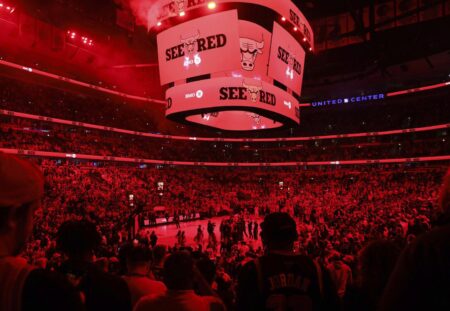
Chicago Bulls fans were ready to rock Friday night before Game 3 at the United Center.But they also were ready to boo and got it out of their system in the second half of the Bulls’ embarrassing 111-81 loss to the Milwaukee Bucks.AdvertisementA night that began with so much anticipation turned ugly early by the first quarter as the Bulls surrendered meekly to give the Bucks a 2-1 edge in the series.Bucks guard Grayson Allen was dancing on one foot during a third-quarter timeout as someone in sunglasses and an Ayo Dosunmu jerysey appeared on the video board lip-syncing “Ice Ice Baby.” The man Chicagoans love to hate came off the bench to pour in a team-high 22 points, hitting five 3-pointers to “ice ice” the Bulls.AdvertisementGreeted with a loud chorus of boos every time he touched the ball after entering the game midway through the first quarter, Allen made Bulls fans sing the blues by the end of the night.“I just blew it off at this point,” Allen said afterward in an interview outside the Bucks locker room.You’re immune by now?“I don’t if I’m immune, but definitely used to it,” he said with a grin.ExpandAutoplayImage 1 of 24Chicago Bulls guard Zach LaVine (8) heads to the locker after a 111-81 loss to the Milwaukee Bucks at United Center on April 22, 2022, in Chicago. (John J. Kim/Chicago Tribune)It didn’t seem to matter that stopping Giannis Antetokounmpo was a far more important matter for the Bulls than Allen. The “Greek Freak” is likable, after all, and Allen was the one who made the flagrant foul on Alex Caruso that fractured Caruso’s right wrist and jeopardized the Bulls’ season.Allen silenced the crowd with three 3 pointers in less than four minutes as the Bucks opened a 16-point first-quarter lead at 33-17. LaVine didn’t sore until 2:05 remained in the quarter, and Allen ripped the ball out of Tristan Thompson’s hands on the baseline with three seconds left to deny them a scoring opportunity.Donovan said before the series the Caruso-Allen incident was in the past and no one gave it a second thought.“After it happened, I don’t really ever think it was ever an issue that was brought back up with our team,” he said. “These guys are pros. It’s over and done with. It’s been addressed. … Maybe there was a little bit more storyline around the fact once we got ready to play them again after Alex had gotten hurt, maybe a little bit.”AdvertisementAllen said he didn’t hear from Bulls fans before the Caruso incident.“Pretty much just this year,” he said. “I still get it from a random group at an arena.”And the former Duke star added it was “fun” playing in the hostile environment, insisting the treatment by Bulls fans didn’t motivate him.“I don’t think so, because it’s almost weird when it doesn’t happen,” he said. “I’ve played so many games in my career where the boos have been there, where it’s kind of a return to normal almost.”The Bulls took a page from the White Sox’s playbook Friday, albeit with far less success.Just as the Sox asked fans to wear black for their playoff opener on the South Side in October, the Bulls announced a “See Red” campaign to turn the United Center into a sea of red for Game 3.AdvertisementThe lighting and graphics on the video boards at the West Side stadium also featured a red theme, making for an eerie look during introductions that resembled a nightclub at closing time.Red lighting fills the stadium for Game 3 of the first-round playoff series between the Bulls and Bucks on Friday at the United Center. (John J. Kim / Chicago Tribune)This obviously was going to be a pivotal game in the series after the Bulls stole Game 2 on Wednesday night at Fiserv Forum in Milwaukee, swiping home-court advantage from the Bucks in the best-of-seven series.The Bulls were aided in their Game 2 win by a large contingent of fans who traveled up Interstate 94 for the game. When the Bulls went on a run at the start of the fourth quarter to open up a big lead, it almost sounded as if they were playing in the United Center.The Bulls also were one of the better home teams in the NBA for most of the season, though they entered the playoffs having lost four straight at the United Center, finishing with a 27-14 home record after losing to the Miami Heat, Bucks, Boston Celtics and Charlotte Hornets over the final week.They lost both home games to the Bucks in the regular season, including a 21-point drubbing on April 5.But the playoffs are a different animal. The Bulls were 0-3 at the United Center in their last playoff appearance in 2017 and have lost six straight since their last win on May 8, 2015, a Game 3 victory over the Cleveland Cavaliers in the Eastern Conference semifinals.AdvertisementSo does home-court advantage mean as much as it did during the regular season?Apparently not, at least when it comes to the United Center.The crowd was rocking at the outset Friday after an opening 3-pointer by Nikola Vučević. But the fans were seemingly more ready than the Bulls, who started out 3-for-14 from the field and fell into a double-digit hole 7½ minutes into the game.It was almost a carbon-copy replay of the Game 1 start, when poor shooting put the Bulls behind the eight ball and forced them to claw their way back. This time the hole was too deep, and fans began heading for the exits by the end of the third quarter.The Bulls trailed by 24 points late in the first half and went into the locker room down 60-41, shooting 39.5% from the field and being outscored 22-10 in the paint.Allen had 14 points in 15 minutes, with four 3-pointers and a steal. He also blocked a Patrick Williams layup attempt with two minutes left in the second quarter, putting an exclamation mark on his first-half performance.AdvertisementWhen Williams turned the ball early in the third quarter and Antetokounmpo slammed home a resounding dunk on the other end, making it a 26-point game, Bulls fans began to boo. They kept it up the rest of the night as the Bucks kept piling on.“I think we knew we could shoot better and score better than the first two games,” Allen said. “But other parts of the games, that’s just how it is. Sometimes you just have to win ugly games. We can’t just expect to make shots.”Chicago Tribune SportsWeekdaysA daily sports newsletter delivered to your inbox for your morning commute.Allen played the part of the villain to perfection, and his near-perfect game was one that will be remembered in Milwaukee for a while.Bulls fans have long memories, and Allen is likely to remain remains Public Enemy No. 1 at the United Center until further notice, just as agitators John Starks and Bill Laimbeer were in playoffs past.Allen said the Bucks know they didn’t silence Bulls fans for good.“They’ll be back Sunday, probably just as loud as it was today,” he said. “Chicago will be back. They’ll make adjustments. They’re be ready. We can’t get into that trap of being happy, thinking things will be easy because we won a game.”AdvertisementEvery playoff series needs heroes and villains, and this one was not going to be any different.The playoffs were back on the West Side, and everyone had a part to play in the minidrama between the Bulls and Bucks.Unfortunately for Bulls fans, the villain had his moment in the sun.
The Chicago Bulls returned to the United Center for their first playoff game in five years with home-court advantage and the momentum of a road win at their back.But they limped out of Game 3 with a 111-81 beatdown as the Milwaukee Bucks bounced back like a reigning NBA champion to take a 2-1 lead in the first-round series.AdvertisementBulls fans poured into the United Center with frenetic excitement, drowning out the team’s introduction videos. But that enthusiasm dulled in the first quarter of the blowout. By the time Patrick Williams threw away a turnover in the third quarter, scattered boos began to swell from the crowd.The 30-point drubbing was the second-worst playoff loss in franchise history behind a 115-78 defeat to the Miami Heat in the 2013 Eastern Conference semifinals.Advertisement“Without question (the Bucks) were the aggressor,” coach Billy Donovan said. “I thought we lost our way when we had a hard time scoring and making shots. When that started happening, we had way too many breakdowns on defense. … Any team that wins championships, they know how to respond.”The Bucks ripped off a 13-0 run in the second quarter to cement a 19-point halftime lead, then went on a 13-0 run in the third quarter to stretch the lead to 29 points.DeMar DeRozan fell flat on the heels of a postseason-career-high 41-point performance in Game 2, scoring 11 points and turning the ball over three times as the Bucks smothered him outside the paint. Zach LaVine struggled similarly with the Bucks ball pressure, finishing with 15 points and two turnovers. Patrick Williams went 0-for-9 after a solid Game 2.“We’ve got to go out there and compete better,” DeRozan said. “We can’t let our missed shots dictate us offensively.”Nikola Vučević led the Bulls in scoring with 19 points for the second time in the series, but he cooled off from 3-point range after opening with a pair in the first quarter.Giannis Antetokounmpo finished with 18 points, seven rebounds and nine assists in 29 minutes before sitting out most of the fourth quarter. But Grayson Allen stole the show for the Bucks.Chicago Tribune SportsWeekdaysA daily sports newsletter delivered to your inbox for your morning commute.The Bulls crowd greeted Allen with a chorus of boos when he entered the game, still upset after the guard fractured Alex Caruso’s right wrist with a hard foul in January. But Allen quickly sucked the air out of those jeers, going 5-for-7 from 3-point range and scoring 22 points to lead the Bucks bench to a combined 47 points.“He knocked down big shots,” LaVine said. “They did a good job of putting us in rotations, and he was the guy that we were leaving. We’re going to have to look into that if he’s going to shoot the ball that way.”AdvertisementMeanwhile, the Bulls bench barely contributed. Coby White was the only reserve to score in the first half, and the bench contributed 26 only points on the night despite playing nearly all of the fourth quarter.Bobby Portis stepped in to the starting lineup to replace guard Khris Middleton, who sprained the MCL in his left knee in Game 2 and is out for the series. It paid off for the Bucks and Portis, who finished with 18 points and 16 rebounds.The larger lineup allowed the Bucks to seal off the paint, forcing the Bulls into midrange jumpers and 3-pointers. The Bulls didn’t take a free throw until the 3-minute, 8-second mark of the second quarter and went to the foul line only 10 times.Despite the blowout scoreline, DeRozan said the Bulls are committed to shaking the loss off ahead of Game 4 at noon Sunday at the United Center.“Whether we lost by 30 or we lost by one point, we’ve got to come back, compete and protect our home court and tie this thing up,” DeRozan said. “Regardless, a loss is a loss. I would have felt the same way.”

Many Ukrainian families around the world and in Chicago celebrate the Orthodox Easter this Sunday but like the resurrection of Christ in their faith, this year they hope to see suffering turning into joy become a reality for Ukraine.Liliya Lymar, 54, the director of Ukrainian Studies at St. Volodymyr Ukrainian Orthodox Cathedral, is one of those people.AdvertisementAfter returning from Sunday Easter Mass at 5 a.m., Lymar and her family — as in many Ukrainian houses in Chicago — will begin their feast with their blessed Paska bread, eggs, and meats.But before feasting, she plans to FaceTime her sisters who recently were displaced from Kyiv and are now refugees in Europe to tell them “Він воскрес” (“He is risen!” in Ukrainian). Her sisters will reply “Indeed, He is risen” and they will begin to eat together miles away but united by a screen.Advertisement“It’s not going to be as joyous as it has been all the time,” said Lymar, 54, who moved to the United States with her family from her home in Kyiv in 1999.“We are very happy to be in America, to have everything and to have a home, but our minds are always in Ukraine and worrying about the people who we have there,” Lymar said. “Most of our conversations will be about Ukraine and about how the victory will come soon.”The Orthodox Ukrainian Church is the biggest religion in Ukraine, with over 67% of the population declaring adherence to this faith in a 2018 survey by the Razumkov Centre.Since the Christian Orthodox church is also the main religion in Russia, the U.N. Secretary-General Antonio Guterres appealed on Tuesday for a halt in fighting in Ukraine during the Holy Week, invoking the Easter holiday to plead for a four-day “pause” to allow humanitarian aid and evacuations, The Associated Press reported.Additionally, the head of Ukraine’s Orthodox church asked clergy and the faithful on Wednesday to forgo night Easter services in areas of the country affected by fighting, fearing Russian bombardments will continue during the Orthodox Easter period, Reuters reported.This year’s Holy Week celebrations began on Holy Thursday.At St. Volodymyr Cathedral, 2250 W Cortez St. in the city’s Ukrainian Village neighborhood, the 7 p.m. service was well attended with over 50 people who went to see the service in Ukrainian with a bit of English from the Archbishop Daniel Zelinskyy, who came to Chicago from the Ukrainian Orthodox Church’s national headquarters in New Jersey.“His sermon was so good!” said Lymar, who lives near the cathedral.Advertisement“It was all about Ukraine because he takes care of a lot of aid that is sent to Ukraine and he was telling his experience of how things are and people were crying. It was a bit of a very somber service, but this is what the Passion of Christ is for us,” Lymar said.Around noon on Good Friday, Lymar began preparing the dough for her Paska, the traditional egg bread with a soft and airy crumb. These intricately braided loaves are proud centerpieces of the Easter dinner table in Ukraine and other Eastern European countries.After letting the yeast rise, she made the dough and left it to rest “the Ukrainian American way” in a coffee tin. After baking the Paska, she decorated it with a sugar frosting and colorful sprinkles. “Paska” also means Easter in Ukrainian.Although many Ukrainian families bake their own Paska breads, many also buy them in some of the famous bakeries and restaurants in Chicago’s Ukrainian Village like Shokoland, Ann’s Bakery & Deli, and Old Lviv. Their reservations for Paska breads and other traditional Ukrainian Easter meals, however, were already completely booked weeks in advance.Good Friday was about venerating the Holy Shroud by walking it around the temple three times, symbolizing the burial of Christ, she said. After the ceremony by Father Ivan Lymar, who is Liliya Lymar’s husband, they left the Holy Shroud in the center of the church and people placed flowers around it, like they would put flowers in the tomb of a loved one.The Liturgy of the Great Saturday begins at 10 a.m. in St. Volodymyr Cathedral with the sorrow of Jesus Christ’s death, complete with black fabric decorations. But during the middle of the service, the priests proclaim “Let God arise” and the atmosphere changes.AdvertisementSaturday at 11:30 p.m., around 500 Orthodox Christians reunite under the roof of the cathedral to witness the resurrection of God by the coming of midnight. Families from Chicago and its suburbs traditionally visit the church every year for Easter, but due to COVID-19, some haven’t been able to, making this year’s celebration even more special.During the Easter service, the archbishop, the priests and deacons bless every family’s basket with Psyanky (traditional ornamented Ukrainian Easter eggs), raw eggs, Paska and meats.The service ends at 3 a.m. Sunday, when families return to their homes to celebrate this important holiday for Ukrainian Orthodox Christians.
Many Ukrainian families around the world and in Chicago celebrate the Orthodox Easter this Sunday but like the resurrection of Christ in their faith, this year they hope to see suffering turning into joy become a reality for Ukraine.Liliya Lymar, 54, the director of Ukrainian Studies at St. Volodymyr Ukrainian Orthodox Cathedral, is one of those people.AdvertisementAfter returning from Sunday Easter Mass at 5 a.m., Lymar and her family — as in many Ukrainian houses in Chicago — will begin their feast with their blessed Paska bread, eggs, and meats.But before feasting, she plans to FaceTime her sisters who recently were displaced from Kyiv and are now refugees in Europe to tell them “Він воскрес” (“He is risen!” in Ukrainian). Her sisters will reply “Indeed, He is risen” and they will begin to eat together miles away but united by a screen.Advertisement“It’s not going to be as joyous as it has been all the time,” said Lymar, 54, who moved to the United States with her family from her home in Kyiv in 1999.“We are very happy to be in America, to have everything and to have a home, but our minds are always in Ukraine and worrying about the people who we have there,” Lymar said. “Most of our conversations will be about Ukraine and about how the victory will come soon.”The Orthodox Ukrainian Church is the biggest religion in Ukraine, with over 67% of the population declaring adherence to this faith in a 2018 survey by the Razumkov Centre.Since the Christian Orthodox church is also the main religion in Russia, the U.N. Secretary-General Antonio Guterres appealed on Tuesday for a halt in fighting in Ukraine during the Holy Week, invoking the Easter holiday to plead for a four-day “pause” to allow humanitarian aid and evacuations, The Associated Press reported.Additionally, the head of Ukraine’s Orthodox church asked clergy and the faithful on Wednesday to forgo night Easter services in areas of the country affected by fighting, fearing Russian bombardments will continue during the Orthodox Easter period, Reuters reported.This year’s Holy Week celebrations began on Holy Thursday.At St. Volodymyr Cathedral, 2250 W Cortez St. in the city’s Ukrainian Village neighborhood, the 7 p.m. service was well attended with over 50 people who went to see the service in Ukrainian with a bit of English from the Archbishop Daniel Zelinskyy, who came to Chicago from the Ukrainian Orthodox Church’s national headquarters in New Jersey.“His sermon was so good!” said Lymar, who lives near the cathedral.Advertisement“It was all about Ukraine because he takes care of a lot of aid that is sent to Ukraine and he was telling his experience of how things are and people were crying. It was a bit of a very somber service, but this is what the Passion of Christ is for us,” Lymar said.Around noon on Good Friday, Lymar began preparing the dough for her Paska, the traditional egg bread with a soft and airy crumb. These intricately braided loaves are proud centerpieces of the Easter dinner table in Ukraine and other Eastern European countries.After letting the yeast rise, she made the dough and left it to rest “the Ukrainian American way” in a coffee tin. After baking the Paska, she decorated it with a sugar frosting and colorful sprinkles. “Paska” also means Easter in Ukrainian.Although many Ukrainian families bake their own Paska breads, many also buy them in some of the famous bakeries and restaurants in Chicago’s Ukrainian Village like Shokoland, Ann’s Bakery & Deli, and Old Lviv. Their reservations for Paska breads and other traditional Ukrainian Easter meals, however, were already completely booked weeks in advance.Good Friday was about venerating the Holy Shroud by walking it around the temple three times, symbolizing the burial of Christ, she said. After the ceremony by Father Ivan Lymar, who is Liliya Lymar’s husband, they left the Holy Shroud in the center of the church and people placed flowers around it, like they would put flowers in the tomb of a loved one.The Liturgy of the Great Saturday begins at 10 a.m. in St. Volodymyr Cathedral with the sorrow of Jesus Christ’s death, complete with black fabric decorations. But during the middle of the service, the priests proclaim “Let God arise” and the atmosphere changes.AdvertisementSaturday at 11:30 p.m., around 500 Orthodox Christians reunite under the roof of the cathedral to witness the resurrection of God by the coming of midnight. Families from Chicago and its suburbs traditionally visit the church every year for Easter, but due to COVID-19, some haven’t been able to, making this year’s celebration even more special.During the Easter service, the archbishop, the priests and deacons bless every family’s basket with Psyanky (traditional ornamented Ukrainian Easter eggs), raw eggs, Paska and meats.The service ends at 3 a.m. Sunday, when families return to their homes to celebrate this important holiday for Ukrainian Orthodox Christians.