


Author: staff

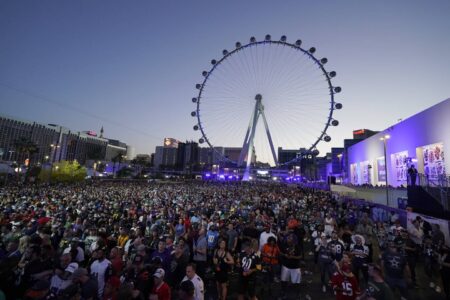
Thursday was an exercise in waiting for Chicago Bears general manager Ryan Poles. Inside the team’s draft room at Halas Hall, Poles had a snack table and extra reserves of patience to help him pass the time during the NFL draft’s first night. But he didn’t have a first-round selection.That meant two hours and 33 minutes of observing and adjusting, of hand-wringing and fist-pumping. Thirty-two players were drafted in the first round with Georgia pass rusher Travon Walker going No. 1 to the Jacksonville Jaguars and the Minnesota Vikings picking Georgia safety Lewis Cine with the night’s final selection.AdvertisementNow Poles gets his chance. The 36-year-old GM will enter the party Friday with two second-round selections (Nos. 39 and 48) and another in the third (No. 71).[ [Don’t miss] When do the Chicago Bears pick? What do the mock drafts say? Everything you need to know about the 2022 NFL draft. ]The Bears have plenty of holes to fill on their roster and for now own only six selections. Poles will have to be resourceful and might have to get creative to make the most of his first draft as GM.AdvertisementAfter Thursday’s first round, here are 10 things you should know about the Bears and the rest of draft weekend.NFL fans attend the draft on April 28, 2022, in Las Vegas. (Steve Luciano/AP)This year’s quarterback class was widely considered to be ordinary. That’s why teams looking to upgrade that position this offseason heated up the trade market in March.The Denver Broncos dealt for Russell Wilson. The Cleveland Browns rolled the dice on Deshaun Watson. The Indianapolis Colts landed Matt Ryan. And the Washington Commanders reeled in Carson Wentz.Three other teams dipped into free agency to sign potential starters with the Pittsburgh Steelers signing former Bear Mitch Trubisky as a potential bridge option, the Atlanta Falcons giving Marcus Mariota a fresh start and the Miami Dolphins bringing in Teddy Bridgewater as a potential Plan B behind Tua Tagovailoa.So how would all of those toppled dominoes from earlier this spring affect the draft?Pittsburgh’s Kenny Pickett was the first quarterback to come off the board Thursday night, selected 20th by the Steelers. That was the latest the first quarterback was selected since 1997, when Jim Druckenmiller lasted until No. 26 before the San Francisco 49ers picked him.No other quarterbacks were picked in Round 1.Before Thursday, a quarterback had been picked No. 1 in the previous four drafts and multiple quarterbacks had been selected in the top 10 of every draft since 2014.AdvertisementThe Bears were without a first-round selection, having dealt it to the New York Giants as part of the 2021 trade up to snag quarterback Justin Fields. That pick wound up slotted at No. 7 with the Giants using it on Alabama offensive tackle Evan Neal.New Giants general manager Joe Schoen, who also interviewed for the Bears GM opening in January, had two top-10 picks, the first coming at No. 5, where he selected Oregon edge rusher Kayvon Thibodeaux. Schoen might have been considering Neal with the fifth pick. But when cornerbacks Derek Stingley and Sauce Gardner went third and fourth, the board shifted in a way that allowed Schoen to wait on selecting an offensive tackle.For record-keeping purposes, the Bears dealt four picks to the Giants last year to jump from No. 20 to No. 11 to grab Fields. In 2021, the Giants used the No. 20 selection on receiver Kadarius Toney and a fifth-round selection from the Bears at No. 164 as part of a deal that allowed them to trade up five slots in Round 3 for cornerback Aaron Robinson.They still have a fourth-round selection from the Bears (No. 112) in their wallet for Saturday.Central Michigan offensive lineman Bernhard Raimann runs a drill during the NFL combine on March 4, 2022. (Darron Cummings/AP)For those hoping Poles’ efforts to support Fields lead him to the offensive line shelf first, the best available tackles heading into Friday are Central Michigan’s Bernhard Raimann, Washington State’s Abraham Lucas, Ohio State’s Nicholas Petit-Frere and Minnesota’s Daniel Faalele.AdvertisementRaimann and Petit-Frere are on the Tribune’s lengthy “best players still available” list.The Bears had a bottom-three passing offense in 2021, averaging just 188.8 yards per game. No team saw its quarterbacks sacked more with Fields, Andy Dalton and Nick Foles taken down a combined 58 times.At last week’s voluntary minicamp, the new Bears coaching staff looked at second-year tackles Teven Jenkins and Larry Borom on the right and left sides, respectively. But Poles won’t shy away from adding a potential starter up front this weekend.Nine offensive lineman were picked Thursday night.Poles and his staff kept a close eye on the Round 1 run on receivers in which six were taken in the first 18 picks, including four in a five-pick span from No. 8 to No. 12.USC’s Drake London was the first receiver selected, picked eighth by the Falcons. Ohio State’s Garrett Wilson went two picks later to the New York Jets. Then the New Orleans Saints and Detroit Lions engineered aggressive trades up to get Ohio State’s Chris Olave and Alabama’s Jameson Williams, respectively. The Lions jumped 20 spots to No. 12 to grab Williams.Advertisement[ [Don’t miss] Column: Ryan Poles didn’t mention receiver as a strength of this draft. Is that a sign the Chicago Bears are targeting the position? ]Later in the first round the Commanders took Penn State’s Jahan Dotson at No. 16, and Arkansas’ Treylon Burks went to the Tennessee Titans at No. 18.From the menu of 12 possible Day 2 receiver targets for the Bears, 10 are still on the board. That list — with scouting reports here — includes Georgia’s George Pickens, Western Michigan’s Skyy Moore, Cincinnati’s Alec Pierce, North Dakota State’s Christian Watson and Alabama’s John Metchie III.In a nutshell, Poles has plenty of intriguing options, particularly if he opts to address that need with his first selection at No. 39. But the Bears should still be in the mix for a good receiver if they wait until No. 48.[embedded content]Two teams got rid of established receivers Thursday night. The Baltimore Ravens sent Marquise “Hollywood” Brown to the Arizona Cardinals to reunite with his college quarterback, Kyler Murray, and the Titans sent A.J. Brown to the Philadelphia Eagles.Eagles general manager Howie Roseman put together a blockbuster deal for A.J. Brown, giving up the No. 18 selection plus a third-round pick and then finalizing a four-year contract extension with the standout receiver worth up to $100 million. The Titans quickly used the No. 18 pick to draft Burks.AdvertisementThe Cardinals traded the No. 23 pick for Hollywood Brown, and the Ravens then traded that selection to the Buffalo Bills for the 25th pick and a fourth-rounder.Man, what a spring this has been on the receiver market with headline-grabbing trades, record-breaking contracts and Thursday’s impressive first-round draft class.Memphis wide receiver Calvin Austin III runs the 40-yard dash at the NFL combine on March 3, 2022. (Charlie Neibergall/AP)Four years ago, the Bears dipped into the University of Memphis talent pool on Day 2 of the draft to grab a receiver with top-tier quickness and a full tank of competitive tenacity. Anthony Miller had joined the Tigers as a walk-on, then driven himself to become the program’s all-time leading receiver.“The Memphis grind is one of a kind,” Miller said the night he was drafted at No. 51.Miller’s career in Chicago fizzled, however, after his seven-touchdown rookie season. The Bears traded him last summer and he failed to break through in subsequent stops with the Houston Texans and Steelers.All of that is simply background information as another Memphis receiver, Calvin Austin III, sits on the Day 2 draft menu with the Bears seeking to add weaponry for Fields. Like Miller, Austin also entered the Tigers program as a walk-on before emerging as a playmaking standout. He, too, has eye-catching quickness and a hunger to win plus a library of game film that is like a 32-ounce energy drink for talent evaluators.Advertisement“Man, he’s fun to watch,” ESPN senior draft analyst Todd McShay said.Added NFL Network draft expert Daniel Jeremiah: “That dude is just a blur.”[ [Don’t miss] NFL draft storylines for Chicago Bears: Ryan Poles’ biggest dilemma, the hole at wide receiver and the appeal of trading down ]Coming off a 74-catch, 1,149-yard, eight-touchdown season at Memphis, Austin went to the combine and ran the 40-yard dash in 4.32 seconds before adding a vertical jump of 39 inches and a broad jump of 11 feet, 3 inches. That kind of explosion reduces the understandable worry about his size: 5-foot-9, 162 pounds.Miller’s NFL nosedive shouldn’t have anything to do with Austin’s projected potential. And maybe Austin will be the Day 2 receiver Poles falls in love with because of what Jeremiah calls his “juice.”“It’s instant. There’s no buildup to it,” Jeremiah said. “It just happens right now. He’s going to run by people at the next level.”Nine teams made multiple selections Thursday with the Giants and Jets picking twice apiece in the top 10. The Giants, as noted above, put together the Thibodeaux-Neal pairing, while the Jets went with a combination of Gardner at cornerback and Wilson at receiver with the Nos. 4 and 10 picks.AdvertisementThe Jets later traded back into the back end of Round 1, working a deal with the Titans for the No. 26 pick, which they used on Florida State edge rusher Jermaine Johnson.The other teams who picked more than once were the Lions, Texans, Saints, Jaguars, Green Bay Packers, Ravens and Kansas City Chiefs.The nine teams besides the Bears that sat out Thursday’s action were the 49ers, Broncos, Browns, Cardinals, Colts, Dolphins, Tampa Bay Buccaneers, Los Angeles Rams and Las Vegas Raiders.ExpandAutoplayImage 1 of 46Head coach Matt Eberflus walks the field, April 19, 2022, during Chicago Bears minicamp at Halas Hall. (Brian Cassella / Chicago Tribune)As of Thursday night, the Bears had 65 players on their roster, leaving 25 vacancies to fill as they piece together a 90-man roster for organized team activities, minicamp and training camp. Yet they have only six selections over the next two days. You do the math.It will take more than this draft class to replenish the roster with talent and quality depth. And given the overall strength of this year’s draft pool, don’t be surprised if Poles does substantial work on the undrafted free agent market Saturday night and into Sunday.The COVID-19 pandemic created a ripple effect in college football, with the NCAA granting all players from the 2020 season an added year of eligibility. That, in turn, added volume to this draft with folks around the league believing the later rounds will include some notable value picks.AdvertisementJeremiah tried to put things in perspective last week. He typically tries to study about 400 players as he works through his pre-draft grades and analysis.“Usually I get to about 350 or 360 and then it’s a mad scramble to find some more guys to get to that 400 number,” Jeremiah said. “This year I got to 400 pretty easily.”This draft comprises 262 picks. That means quality players can be found in the seventh round and undrafted free agency.Don’t be shocked if Poles opts not to use all three of his draft choices Friday night as he looks to expand his first draft class beyond six players. To do so, he will have to be ready to wheel and deal, looking for opportunities to trade picks — or even players? — for added draft capital.[ [Don’t miss] NFL draft in Las Vegas: Bellagio fountains, scuba divers, slot machines — and a Ferris wheel ]In fact, it would be surprising if the Bears didn’t trade down at least once in this draft to collect more picks.As we noted earlier this week, Poles isn’t averse to trading up if he sees something he really likes. But he was pretty clear Tuesday that he wasn’t leaning in that direction with the current state of his roster and the draft capital available.Advertisement“You have to know where your team is at and how many picks you have,” Poles said. “And it’s a big-picture decision. Because there is an effect of losing picks to move up and get that player.”For those wondering when they should tune in to the draft to catch the Bears picks Friday, we have you covered. Barring any trades up or down, of course.The Bears are scheduled to go on the clock first with the No. 39 pick. Over the last five years, that selection has been made as early as 6:32 p.m. and as late as 6:47. The No. 48 pick has come in the 7:14-7:30 range. The ballpark for No. 71 in the third round is 8:35-9:01. You’re welcome.
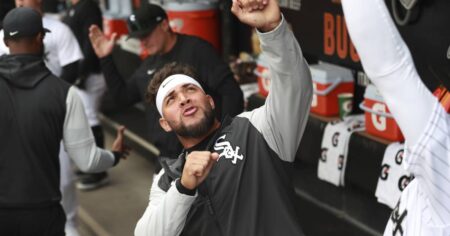
Yoán Moncada sprinted to first base during a workout Thursday morning at Guaranteed Rate Field.A few moments later, Moncada raced from first to third. Eventually, Moncada headed to home plate.AdvertisementThe Chicago White Sox third baseman, who is recovering from a right oblique strain, is looking forward to the chance to run — and hit — in a game this weekend when he begins a rehab assignment with Triple-A Charlotte.[ [Don’t miss] A ‘cruel’ 10-inning loss for the White Sox is their 9th in 10 games: ‘This game will drive you nuts’ ]“I am feeling much better,” Moncada said Wednesday through an interpreter. “I thank God. I’m going to start playing in Charlotte and see how it goes. But I’m feeling pretty good.”AdvertisementMoncada is slated to play for the Knights on Saturday. The Sox will be patient with his return.“He’s been swinging really well here, so he may come out there and just (have) 15 at-bats and look like he’s ready,” Sox manager Tony La Russa said Wednesday. “But it may take him 25, no way to predict it.“It’s always a mistake to bring a guy up to the big leagues before he’s ready. Because he’s going to struggle and then he’s got to get out of the struggle. It’s better to come in here ready to play.”ExpandAutoplayImage 1 of 18Chicago White Sox third baseman Jake Burger (30) breaks his bat while grounding into a double play in the second inning against the Kansas City Royals at Guaranteed Rate Field on April 28, 2022. (John J. Kim/Chicago Tribune)Moncada suffered the injury during the final day of spring training in Glendale, Ariz. The Sox placed him on the injured list April 5.The switch hitter said he felt the impact of the injury mostly when swinging from the left side.“I felt it sometimes when I was playing defense, when I moved to the right side,” Moncada said. “But it’s mostly in my swing. Right now, I feel much better. I don’t feel anything when I’m fielding and just a little bit when I hit. It’s not a big deal right now.”Moncada slashed .263/.375/.412 with 33 doubles, 14 home runs and 61 RBIs in 144 games in 2021.“For me personally, it’s been very, very difficult not being able to be on the field and helping the team, especially this month,” he said. “But there’s just so little I can do and I’m doing everything I can to get ready to come back and help the team.Advertisement“(I’ve been) just cheering up the guys, trying to motivate them. At the same time, even though I’m sidelined, I’m working to join them and to help them too.”[ [Don’t miss] Why Liam Hendriks doesn’t like intentional walks: ‘I’m never thinking about putting somebody on,’ the White Sox closer says ]Injuries have hampered the Sox early this season, with left fielder Eloy Jiménez (torn right hamstring) among the latest.“It’s very hard, honestly,” Moncada said. “It’s hard to see that unfortunate situation that he has been put into last year (missing almost four months with a ruptured left pectoral tendon) and now this year again. “But there’s so little you can control in this game. You try to do your best, try to be prepared every day and stuff like that happens. I am hoping he’s going to come back stronger, and he knows that everybody here wishes him the best.”Jiménez stumbled after crossing first base Saturday and exited the game against the Minnesota Twins. His estimated recovery time is six to eight weeks.Starting pitcher Lance Lynn could be back by late May, La Russa said Thursday. The right-hander had right knee surgery to repair a torn tendon after suffering an injury during a Cactus League game.AdvertisementReliever Joe Kelly (right biceps nerve injury) is expected to be in Charlotte this weekend with Moncada.“I’m excited to be able to start playing again,” Moncada said. “I was wishing for that for several weeks and now I’m going to start, so that’s good.”
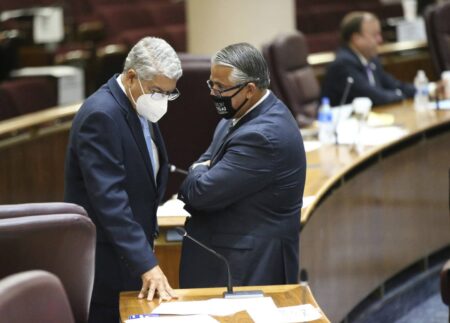
With a deadline approaching to avoid the first Chicago ward map referendum in three decades, Latino aldermen failed this week to convince City Council colleagues to let them make changes to the design of the 50 wards they’re set to present to voters.That effectively cuts a map created by good-government groups out of a possible late June decision by voters on the shape of Chicago’s wards for the next decade. The development also sets up a potential head-to-head ballot showdown between the Latino proposal and a map favored by most of the council’s Black Caucus and others.AdvertisementBut there’s still plenty of time for aldermen to lay down their sabers and reach a deal before the May 19 deadline to avoid the referendum.In political terms, three weeks is forever, and Chicago aldermen have a well-established history of gnashing their teeth at one another for months only to come to an eleventh-hour agreement on a map rather than letting voters choose.AdvertisementIn the latest twist of the monthslong fight, the Latino Caucus hoped to get the council Wednesday to suspend its rules and for a majority of aldermen to pass either their map or the one backed by the Black Caucus and others. Doing so would have allowed the Latino Caucus to then amend its map for the June referendum in order to reflect changes it agreed to this year with the good government groups, including CHANGE Illinois.But the Latino Caucus didn’t have the votes and didn’t bring the proposal to the council.Latino aldermen had hoped that presenting a compromise map with CHANGE Illinois would bolster their argument to voters that their version is fairer to all Chicagoans, with officials who crafted the so-called People’s Map working with them to make the case.The partnership with good-government advocates could also have helped them label a competing map as one crafted in a backroom by political insiders. That’s the map backed by the City Council Rules Committee, which is now favored by 34 aldermen, including most of the Black Caucus.The chair of the Latino Caucus, Ald. Gilbert Villegas, 36th, said the caucus still hopes to convince People’s Map backers to join them in advocating for the Latino Caucus map, even though it cannot be amended to reflect changes the two groups agreed upon.“We hope to be able to make the case to them that our two maps are very similar, that our process of creating our map has been far more transparent and that we’ve worked harder to keep communities intact” than the architects of the Rules Committee map, Villegas said.Black Caucus chair Ald. Jason Ervin, 28th, said a deal could be made before the deadline if supporters of the Latino map are ready to compromise.Advertisement“I think they need to realize they shot their shot (with the failed People’s Map partnership), and that a majority, more than a majority of the council and Chicagoans aren’t with them on this,” Ervin said. “We’ve made compromises. If they’re willing to do that, there’s a chance we could get there.”Latino Caucus Chair Ald. Gilbert Villegas, 36th, right, with Ald. Roberto Maldonado, 26th, during a City Council meeting in September. (Antonio Perez / Chicago Tribune)Without the agreed-upon amendments to the Latino map, which is supported by 15 aldermen, the People’s Map backers have said they won’t work to pass it in the June referendum.“I won’t say it’s impossible, but the likelihood is that we will simply be educating people about the maps on the ballot and what the data says,” said Chaundra Van Dyk, project manager for the CHANGE Illinois government ethics organization that was a key player in the creation of the People’s Map.CHANGE Illinois Executive Director Madeleine Doubek expressed disappointment in the council’s refusal to allow the amendments to the Latino map, saying aldermen who declined to support it “did so to make sure the people of Chicago have no say in shaping their communities for the next 10 years.”“In doing so with time running out, they are knowingly stopping Chicagoans from having the option of voting June 28th on the only ward map with aldermanic support that the people of the city helped design,” Doubek said in a statement.It remains to be seen whether the June 28 referendum takes place. Mayor Lori Lightfoot has by and large remained on the sidelines of the fractious council fight, but she could still play a part in brokering a deal before May 19, as her predecessor, Rahm Emanuel, did in helping 41 aldermen (the minimum needed to avoid a referendum) come to agreement on a map following the 2010 U.S. census.AdvertisementSign up for The Spin to get the top stories in politics delivered to your inbox weekday afternoons.The front in the fight shifted slightly Wednesday, as new 11th Ward Ald. Nicole Lee announced she joined 33 other council members in endorsing the Rules map. Lee, who was appointed by Lightfoot to complete the term of Ald. Patrick Daley Thompson after his conviction in a federal tax fraud case, said it’s the best option for unifying her constituents as well as the Asian American community.“It’s the clear leader in creating the strongest opportunities for Asian American voters and keeps more of today’s 11th Ward together,” Lee said at a City Hall news conference. “It’s imperative for my community that our voices are strongly represented now and into the future.”The remap fight has dragged on since the early fall, highlighting and deepening conflicts that have long simmered among aldermen of different ethnicities.Some Latino aldermen are still smarting from the remap following the 2010 census, believing they should have gotten more majority-Latino wards then.AdvertisementBlack aldermen argue the Latinos are in danger of overextending themselves by creating more Latino wards than they can consistently win.The proposed Black Caucus map that the council Rules Committee has endorsed creates 16 Black-majority wards, 14 Latino wards and an additional ward with a Black plurality.The proposed Latino map has 16 Black-majority wards and 15 Latino-majority wards following 2020 U.S. census data showing Chicago’s Latino population climbed and Latinos overtook Blacks as the city’s second-largest racial or ethnic group while the Black population continued to fall.Chicago voters last faced a referendum on the ward maps following the 1990 census. Following that referendum, a group of aldermen and others filed a federal lawsuit challenging the result that ended up costing taxpayers $20 million.jebyrne@chicagotribune.comayin@chicagotribune.com
Haleigh Hutchinson gave birth to her son late last year in the midst of a COVID-19 outbreak and immediately had to watch him undergo heart surgery. Charlie is now a happy, 9-month-old but his heart problems mean that contracting the virus could be dangerous for him.So Hutchinson, 29, of North Aurora, has been anxiously waiting for a vaccine to be authorized for young children. In the meantime, she stays away from church and other community venues. Her son hasn’t met her family and friends.Advertisement“My son and really all the kids who couldn’t get the vaccine are kind of like sitting ducks in this,” Hutchinson said. “It’s like … society has moved on and has made the kids feel like, well, ‘If they die, they die.’ ”Moderna on Thursday submitted a request to the Food and Drug Administration for emergency authorization of its COVID-19 vaccine for children younger than 6, a welcome development for parents who have faced long waits to vaccinate their youngest children, particularly for those like Hutchinson, who have immunocompromised kids.AdvertisementVaccine trials for young children have greater regulatory and ethical concerns and naturally come last after such measures have been tested and authorized for older people. But the long wait, beset with some delays, has stalled a return to normal for some families with babies and toddlers. In February, Pfizer had to delay its request for emergency authorization for the same age group in order to further test a third shot after its two-dose regimen was found to be not as effective in the youngest age bracket.“It’s a process that has taken longer than anyone really anticipated,” said Dr. Bill Muller, an infectious disease specialist at Lurie Children’s Hospital and the site lead there for the Moderna trials.The wait partially has to do with how vaccine trials for children are set up, Muller said, but could also be due to resources stretched thin as the FDA and drug companies are in the process of testing and evaluating boosters, treatments for COVID-19 and other vaccines and treatments.“In the bigger picture of vaccine authorization throughout history, this has still been really quick,” he said.Muller estimated that it could be several weeks before the FDA makes its decision, as it moves through its normal steps for evaluating vaccine trials.Meanwhile, parents of young children are feeling the strain.“It has been so stressful just waiting, and waiting,” said Laura Hohm, mother of a 4-year-old daughter who is not yet eligible. “It seems like for families with children in this age group, it’s been dangled in front of us and then taken away so many times.”Laura Hohm with her children, Charlotte, 8, left, and Catherine, 4, at their Aurora home on April 28, 2022. Hohm is looking forward to being able to get a booster COVID vaccine for Charlotte and a first vaccine for Catherine. (Chris Sweda / Chicago Tribune)Margot Taylor, a 36-year-old mother in Lincoln Square, has a 2-year-old daughter. She’s rarely eaten out during the pandemic or seen family.Advertisement“Today, my husband has four shots of the vaccine and my daughter has none,” she said.Vaccine trials for children differ from those for adults, which look for whether participants develop a symptomatic case of the virus. For children, researchers track whether the inoculation generates an immune response to determine if it’s effective.Moderna’s vaccine is currently approved for adults 18 and older, while Pfizer’s vaccine is approved for children 5 and older.In announcing its authorization request, Moderna said its vaccine had good safety results and a “robust neutralizing antibody response” in children 6 months to under 6 years old. The trials also found that the vaccine had an efficacy rate of 51% in children 6 months to 2 years and 37% in 2 to under 6 years.While those figures are noticeably lower than the effectiveness of Moderna’s vaccine when it was authorized for adults late 2020, Moderna notes that the trials were conducted during the omicron wave, when vaccines were largely also less effective in preventing infection for adults, though continued to prevent serious hospitalization and death.Muller said it’s not an apples-to-apples comparison because the earlier adult vaccination trials better “matched” the strain of COVID-19 circulating at the time. He said the vaccines for children may eventually be approved as a three-dose regimen to increase efficacy.AdvertisementMuch still needs to be done to achieve higher vaccination rates of eligible children, aged 5 to 11, as well, he said. Only 38% of children in Illinois in that age range have been fully vaccinated, according to information from the American Academy of Pediatrics.“There’s still is a lot of work to do on messaging for vaccines in general,” Muller said. “It needs to be emphasized that the benefits and safety of the vaccine far exceed the risk.”mabuckley@chicagotribune.comtmijares@chicagotribune.com

The Chicago Tribune has extended to June 17 the deadline for nominations for our 13th annual Top Workplaces special report, in which we explore how organizations create and sustain a positive and productive culture. We’ll also compile a list of this year’s top workplaces in the Chicago area.So far, more than 375 organizations have signed up to participate.AdvertisementA top workplace is successful because its employees enjoy their work, embrace their mission and feel like valued teammates.This year those qualities are more important than ever as companies begin to emerge from the pandemic and, in many cases, start asking employees to return to the office. How will organizations navigate this time of transition and help employees thrive?AdvertisementTo qualify for consideration as a top workplace, an organization must have at least 100 employees in the Chicago area. Nominations are open to all employers, including nonprofits.Now through June, nominated companies that agree to participate will distribute to employees an easy-to-complete, confidential survey developed by the Tribune’s research partner, Energage, which will calculate the list of top workplaces. Last year, Energage surveyed more than 2 million employees at more than 8,000 organizations on these topics.There is no fee to participate. Top performers will be recognized in the report and in an online directory.To nominate a company, go to www.chicagotribune.com/nominate or call 312-878-7356.

Dear Amy: My mom has invited me, my husband, and our two teenagers to her home
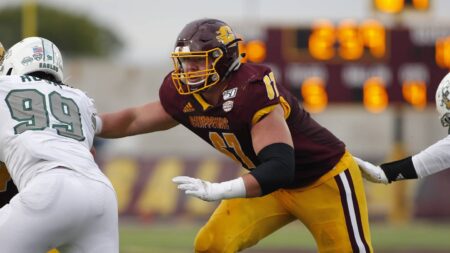
Ryan Poles didn’t make a splash on his first draft night as Chicago Bears general manager, but that was expected.The Bears didn’t have a first-round pick because former GM Ryan Pace traded it last year to move up to draft quarterback Justin Fields, and Poles didn’t execute a trade up into the first round Thursday night.AdvertisementInstead he will try to select impactful players Friday on Day 2, when the Bears have the Nos. 39 and 48 picks in the second round and No. 71 in the third round.Nine offensive linemen, six wide receivers and four cornerbacks were selected in the first round, but many other interesting prospects are available. Here are some noteworthy players still on the board at the Bears’ three biggest positions of need and a handful of other prospects who might merit consideration.Advertisement[ [Don’t miss] When do the Bears pick? What do the mock drafts say? Everything you need to know about the 2022 NFL draft. ]Central Michigan’s Luke Goedeke plays against Eastern Michigan on Oct. 5, 2019, in Mount Pleasant, Mich. (Al Goldis/AP)Luke Goedeke, G, Central Michigan: Teammate Bernhard Raimann has been discussed more widely by draftniks, but league personnel have been buzzing about Goedeke since his pro day workout. He played right tackle for the Chippewas but likely will be a guard as a pro.Cam Jurgens, C, Nebraska: If the Bears like the idea of sliding Lucas Patrick over to right guard, they could add Jurgens as a rookie who should compete for a starting role immediately.Dylan Parham, G, Memphis: After failing in their bid to add Ryan Bates as a restricted free agent, the Bears have a need at right guard. Adding Parham after a trade down in Round 2 or in Round 3 could fill that void.Nicholas Petit-Frere, OT, Ohio State: A right tackle for the Buckeyes in 2020, he shifted to the left side last fall. Petit-Frere has the athleticism to remain on the left side but would need to be developed.Bernhard Raimann, OT, Central Michigan: A transfer student from Austria, Raimann arrived at Central Michigan as a tight end before being converted to the offensive line. He settled in at left tackle during the COVID-shortened 2020 season and showed real improvement last fall. Some thought he was a potential first-round pick, but knee issues might have dropped him on some boards.Clemson cornerback Andrew Booth Jr. plays against Pittsburgh on Oct. 23, 2021, in Pittsburgh. (Keith Srakocic/AP)Andrew Booth Jr., Clemson: The Bears have a real need at nickel cornerback, and that could be where Booth projects best in the NFL. Some thought he would be selected in the back half of the first round.Kyler Gordon, Washington: Many figured he would go in Round 1 with Huskies teammate Trent McDuffie. The Bears need a starter opposite Jaylon Johnson, so it’s possible if Gordon is available the position could trump their needs on the O-line and at receiver.Roger McCreary, Auburn: Played well in press man last season, when he led the SEC in pass breakups.AdvertisementCam Taylor-Britt, Nebraska: Skilled zone corner could be a good fit for what coach Matt Eberflus wants to do on defense, especially in Round 3.Tariq Woolen, Texas-San Antonio: Rare combination of size (6-foot-4, 205 pounds), length (33⅝-inch arms) and speed (4.26 seconds in the 40-yard dash) makes Woolen an intriguing Day 2 prospect.Memphis wide receiver Calvin Austin III runs after catching a pass against Central Florida on Oct. 22, 2021, in Orlando, Fla. (Phelan M. Ebenhack/AP)Calvin Austin III, Memphis: The former walk-on is small at 5-8, 170 pounds. But he’s also lightning quick and ran a 4.32-second 40-yard dash at the combine.John Metchie III, Alabama: Known for his toughness, Metchie was sidelined in December with an ACL tear and didn’t participate in on-field pre-draft activities. But before that he had 96 catches for 1,142 yards and eight touchdowns in 13 games in 2021.Skyy Moore, Western Michigan: Touted for his crisp route running, savvy in getting open and willingness to make contested catches. He had 95 catches for 1,292 yards and 10 touchdowns in 2021.George Pickens, Georgia: A gifted wide receiver whose stock dropped after he missed most of the 2021 season with a torn ACL. His best season came as a freshman in 2019 (49 catches, 727 yards, eight touchdowns).Advertisement[ [Don’t miss] 12 intriguing wide receiver options for the Bears in the NFL draft ]Alec Pierce, Cincinnati: The former Glenbard West multisport athlete utilizes size, athleticism and speed to make an impact, including 52 catches for 884 yards and eight touchdowns in 2021.Wan’Dale Robinson, Kentucky: After two seasons at Nebraska, he transferred to Kentucky and had 104 catches for 1,334 yards. He’s undersized but athletic and excellent with the ball in his hands.[embedded content]Jalen Tolbert, South Alabama: A smooth playmaker who totaled 2,559 receiving yards and 16 touchdowns in his final two seasons, though he’ll have a big jump in level of competition in the NFL.Christian Watson, North Dakota State: He has explosiveness and speed — which he showed off with a 4.36-second 40-yard dash at the combine — to go with solid production at the FCS level. But he’s another one who has a leap in competition ahead.Houston defensive lineman Logan Hall (92) breaks through the Temple line on Nov. 13, 2021, in Philadelphia. (Chris Szagola/AP)Logan Hall, DL, Houston: He made a top-30 visit to Halas Hall and has the versatility to be used similarly to how Eberflus deployed DeForest Buckner in Indianapolis.Nik Bonitto, edge, Oklahoma: He had 32 tackles for a loss and 18½ sacks in his college career, including 15 sacks over the last two seasons. He ran the 40-yard dash in 4.54 secondsAdvertisementArnold Ebiketie, edge, Penn State: After transferring from Temple for his fifth-year senior season, he totaled 17 tackles for a loss, 9½ sacks and two forced fumbles.Boye Mafe, edge, Minnesota: Mafe had 15 sacks in his college career, including seven in 2021. He’s a fast, explosive athlete who needs development.David Ojabo, edge, Michigan: The Scottish-Nigerian edge rusher had 11 sacks and five forced fumbles in 2021. But he suffered a torn Achilles tendon at Michigan’s pro day and is recovering.[ [Don’t miss] NFL draft Day 1: Defensive players taken with the 1st 5 picks before a run on wide receivers and offensive linemen ]Nakobe Dean, ILB, Georgia: Dean doesn’t play a position of great need for the Bears. But many analysts rank the 2021 Butkus Award winner and first-team All-American as the best player available, with some having predicted he would go in the middle of the first round.Jaquan Brisker, S, Penn State: He was named a second-team All-American by multiple outlets as a fifth-year senior in 2021 after transferring from junior college in 2019. A defensive leader for the Nittany Lions, he had 153 tackles, 9½ for a loss, five interceptions and 14 pass breakups in 21 career starts.Kerby Joseph, S, Illinois: Joseph had five interceptions, seven passes defended and three fumble recoveries in 2021.AdvertisementJalen Pitre, S, Baylor: The versatile safety had two interceptions, nine passes defended, three forced fumbles, three sacks and 18 tackles for a loss as a fifth-year senior.
Ryan Poles didn’t make a splash on his first draft night as Chicago Bears general manager, but that was expected.The Bears didn’t have a first-round pick because former GM Ryan Pace traded it last year to move up to draft quarterback Justin Fields, and Poles didn’t execute a trade up into the first round Thursday night.Advertisement[ [Don’t miss] When do the Bears pick? What do the mock drafts say? Everything you need to know about the 2022 NFL draft. ]Instead he will try to select impactful players Friday on Day 2, when the Bears have the Nos. 39 and 48 picks in the second round and No. 71 in the third round.Nine offensive linemen, six wide receivers and four cornerbacks were selected in the first round, but many other interesting prospects are available. Here are some noteworthy players still on the board at the Bears’ three biggest positions of need and a handful of other prospects who might merit consideration.AdvertisementCentral Michigan’s Luke Goedeke plays against Eastern Michigan on Oct. 5, 2019, in Mount Pleasant, Mich. (Al Goldis/AP)Luke Goedeke, G, Central Michigan: Teammate Bernhard Raimann has been discussed more widely by draftniks, but league personnel have been buzzing about Goedeke since his pro day workout. He played right tackle for the Chippewas but likely will be a guard as a pro.Cam Jurgens, C, Nebraska: If the Bears like the idea of sliding Lucas Patrick over to right guard, they could add Jurgens as a rookie who should compete for a starting role immediately.Dylan Parham, G, Memphis: After failing in their bid to add Ryan Bates as a restricted free agent, the Bears have a need at right guard. Adding Parham after a trade down in Round 2 or in Round 3 could fill that void.Nicholas Petit-Frere, OT, Ohio State: A right tackle for the Buckeyes in 2020, he shifted to the left side last fall. Petit-Frere has the athleticism to remain on the left side but would need to be developed.Bernhard Raimann, OT, Central Michigan: A transfer student from Austria, Raimann arrived at Central Michigan as a tight end before being converted to the offensive line. He settled in at left tackle during the COVID-shortened 2020 season and showed real improvement last fall. Some thought he was a potential first-round pick, but knee issues might have dropped him on some boards.Clemson cornerback Andrew Booth Jr. plays against Pittsburgh on Oct. 23, 2021, in Pittsburgh. (Keith Srakocic/AP)Andrew Booth Jr., Clemson: The Bears have a real need at nickel cornerback, and that could be where Booth projects best in the NFL. Some thought he would be selected in the back half of the first round.Kyler Gordon, Washington: Many figured he would go in Round 1 with Huskies teammate Trent McDuffie. The Bears need a starter opposite Jaylon Johnson, so it’s possible if Gordon is available the position could trump their needs on the O-line and at receiver.Roger McCreary, Auburn: Played well in press man last season, when he led the SEC in pass breakups.AdvertisementCam Taylor-Britt, Nebraska: Skilled zone corner could be a good fit for what coach Matt Eberflus wants to do on defense, especially in Round 3.Tariq Woolen, Texas-San Antonio: Rare combination of size (6-foot-4, 205 pounds), length (33⅝-inch arms) and speed (4.26 seconds in the 40-yard dash) makes Woolen an intriguing Day 2 prospect.Memphis wide receiver Calvin Austin III runs after catching a pass against Central Florida on Oct. 22, 2021, in Orlando, Fla. (Phelan M. Ebenhack/AP)Calvin Austin III, Memphis: The former walk-on is small at 5-8, 170 pounds. But he’s also lightning quick and ran a 4.32-second 40-yard dash at the combine.John Metchie III, Alabama: Known for his toughness, Metchie was sidelined in December with an ACL tear and didn’t participate in on-field pre-draft activities. But before that he had 96 catches for 1,142 yards and eight touchdowns in 13 games in 2021.Skyy Moore, Western Michigan: Touted for his crisp route running, savvy in getting open and willingness to make contested catches. He had 95 catches for 1,292 yards and 10 touchdowns in 2021.George Pickens, Georgia: A gifted wide receiver whose stock dropped after he missed most of the 2021 season with a torn ACL. His best season came as a freshman in 2019 (49 catches, 727 yards, eight touchdowns).Advertisement[ [Don’t miss] 12 intriguing wide receiver options for the Bears in the NFL draft ]Alec Pierce, Cincinnati: The former Glenbard West multisport athlete utilizes size, athleticism and speed to make an impact, including 52 catches for 884 yards and eight touchdowns in 2021.Wan’Dale Robinson, Kentucky: After two seasons at Nebraska, he transferred to Kentucky and had 104 catches for 1,334 yards. He’s undersized but athletic and excellent with the ball in his hands.[embedded content]Jalen Tolbert, South Alabama: A smooth playmaker who totaled 2,559 receiving yards and 16 touchdowns in his final two seasons, though he’ll have a big jump in level of competition in the NFL.Christian Watson, North Dakota State: He has explosiveness and speed — which he showed off with a 4.36-second 40-yard dash at the combine — to go with solid production at the FCS level. But he’s another one who has a leap in competition ahead.Houston defensive lineman Logan Hall (92) breaks through the Temple line on Nov. 13, 2021, in Philadelphia. (Chris Szagola/AP)Logan Hall, DL, Houston: He made a top-30 visit to Halas Hall and has the versatility to be used similarly to how Eberflus deployed DeForest Buckner in Indianapolis.Nik Bonitto, edge, Oklahoma: He had 32 tackles for a loss and 18½ sacks in his college career, including 15 sacks over the last two seasons. He ran the 40-yard dash in 4.54 secondsAdvertisementArnold Ebiketie, edge, Penn State: After transferring from Temple for his fifth-year senior season, he totaled 17 tackles for a loss, 9½ sacks and two forced fumbles.Boye Mafe, edge, Minnesota: Mafe had 15 sacks in his college career, including seven in 2021. He’s a fast, explosive athlete who needs development.David Ojabo, edge, Michigan: The Scottish-Nigerian edge rusher had 11 sacks and five forced fumbles in 2021. But he suffered a torn Achilles tendon at Michigan’s pro day and is recovering.[ [Don’t miss] NFL draft Day 1: Defensive players taken with the 1st 5 picks before a run on wide receivers and offensive linemen ]Nakobe Dean, ILB, Georgia: Dean doesn’t play a position of great need for the Bears. But many analysts rank the 2021 Butkus Award winner and first-team All-American as the best player available, with some having predicted he would go in the middle of the first round.Jaquan Brisker, S, Penn State: He was named a second-team All-American by multiple outlets as a fifth-year senior in 2021 after transferring from junior college in 2019. A defensive leader for the Nittany Lions, he had 153 tackles, 9½ for a loss, five interceptions and 14 pass breakups in 21 career starts.Kerby Joseph, S, Illinois: Joseph had five interceptions, seven passes defended and three fumble recoveries in 2021.AdvertisementJalen Pitre, S, Baylor: The versatile safety had two interceptions, nine passes defended, three forced fumbles, three sacks and 18 tackles for a loss as a fifth-year senior.
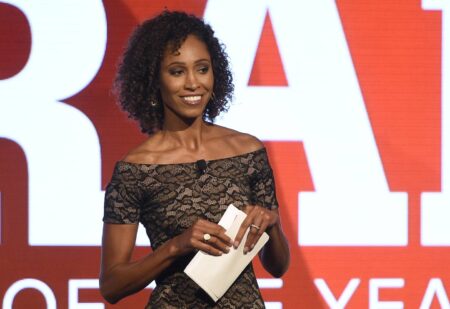
She thought it was worth a shot.ESPN broadcaster Sage Steele sued her employer Thursday, claiming the company “sidelined” her after she spoke about her hesitation to get the COVID vaccine.Advertisement Sage Steele speaks at the 15th annual High School Athlete of the Year Awards in Marina del Rey, Calif., on July 11, 2017. (Chris Pizzello/AP)Disney, which owns ESPN, required all employees to get vaccinated by Sept. 30, 2021. Steele said late that September that she got the shot. She remains employed by ESPN.“I respect everyone’s decision, I really do,” she said on Jay Cutler’s podcast. “But to mandate it is sick and it’s scary to me in many ways.”AdvertisementIn the lawsuit, Steele claimed that after her podcast appearance, ESPN removed her from prime assignments and shunted her to the side, USA Today reported.Steele called ESPN’s move “a knee-jerk reaction” and said the company “relied on the misleading characterizations of her comments, bowed to groupthink and forced (her) to publicly apologize and suspended her for a period of time in October 2021,” according to NBC News.In addition to her mandate criticism on the podcast, in a conversation about her one Black parent and one white parent, Steele questioned Barack Obama’s Blackness.“I’m like, ‘Well, congratulations to the president. That’s his thing,’” she said about the former president selecting “African-American” on the Census. “I think that’s fascinating considering his Black dad was nowhere to be found, but his white mom and grandma raised him, but hey, you do you. I’m going to do me.”Steele also suggested that her numerous media colleagues who have been sexually harassed by sports figures were on some level asking for it.“When you dress like that, I’m not saying you deserve the gross comments,” she said to Cutler. “But you know what you’re doing when you’re putting that outfit on, too. Like, women are smart, so don’t play coy and put it all on the guys.”ESPN responded to the lawsuit by saying: “Sage remains a valued contributor on some of ESPN’s highest profile content, including the recent Masters telecasts and anchoring our noon SportsCenter,” according to NBC News. “As a point of fact, she was never suspended.”
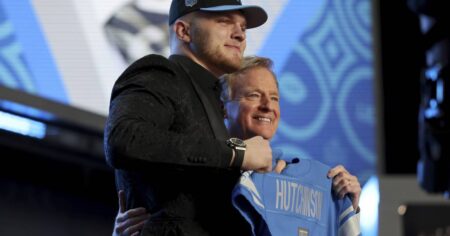
LAS VEGAS — De-fense, de-fense.That was the chant at the outset of the NFL draft Thursday night, with the first five selections coming on that side of the ball, including edge rushers Travon Walker of national champion Georgia to the Jacksonville Jaguars and Aidan Hutchinson of Michigan to the Detroit Lions at Nos. 1 and 2.AdvertisementIt’s the first time in 31 years that no offensive player went in the first five picks. So naturally, the next seven choices were on offense.But no quarterbacks, hardly a surprise in a draft rich with linemen, receivers and defensive backs.AdvertisementThe 6-foot-5, 275-pound Walker, who has some raw elements to his game but an extremely high ceiling for his skills, joins former Clemson quarterback Trevor Lawrence as the second straight No. 1 pick by the Jaguars. Walker was a one-year starter whose production (13 tackles for a loss and 9½ sacks) doesn’t jump out because he was part of a deep rotation at Georgia. His talent level certainly impressed the Jaguars, the NFL’s worst team the last two years.“He’s an athletic freak,” Georgia defensive coordinator Will Muschamp told The Associated Press. “I swear to God he could line up at middle linebacker and go be fine. I would take him at No. 1 and not even blink.”The Jaguars didn’t blink.Commissioner Roger Goodell began the proceedings by estimating more than 100,000 fans were on hand at the theater built specifically for the draft. Walker was not in Las Vegas.Hutchinson, a sack master whose consistency and relentlessness helped the Wolverines to their first College Football Playoff, is staying home as a pro. The 6-6, 265-pounder, whose father, Chris, was a star player at Michigan in the 1990s, was the Heisman Trophy runner-up last season.“I always wanted to be at Detroit. I’m grateful to be a Lion,” he said.Cornerbacks Derek Stingley Jr. and Ahmad “Sauce” Gardner went next to the Houston Texans and New York Jets.LSU’s Stingley is the grandson of former New England Patriots receiver Darryl Stingley, who was paralyzed in a 1978 preseason game. Gardner, of Cincinnati, was a major reason the Bearcats broke through into the College Football Playoff last season. He wore a brash bejeweled necklace proclaiming his nickname and an accessorized chain with a bejeweled sauce bottle.AdvertisementThe defensive run concluded with Oregon edge rusher Kayvon Thibodeaux to the New York Giants.“I’m at this nirvana. I’m at peace,” he said, noting that Giants Hall of Famer Michael Strahan has been a mentor. “It’s put up or shut up.”When teams got around to the other side of the ball, they couldn’t stop. It began with North Carolina State tackle Ikem Ekwonu to the Carolina Panthers and Alabama tackle Evan Neal to the Giants. Both teams are needy, to say the least, up front.The Atlanta Falcons, depleted of playmaking wide receivers, got USC’s Drake London before the Seattle Seahawks went for tackle Charles Cross of Mississippi State. Then came three more wideouts: Garrett Wilson of Ohio State to the Jets and college teammate Chris Olave to the New Orleans Saints — who traded up with the Washington Commanders for the 11th slot — and Alabama’s Jameson Williams, coming off a serious knee injury, to the Lions, who moved up in a deal with the division-rival Minnesota Vikings.Another Georgia standout, defensive tackle Jordan Davis, was taken by the Philadelphia Eagles at No. 13 after yet another deal, getting matters back to the defensive side.