


Author: staff


The U.S. Drug Enforcement Administration has suspended an Evergreen Park pharmacy’s ability to dispense certain controlled substance medications, after it allegedly gave patients dangerous amounts and combinations of drugs.The DEA issued an order to Evergreen Park Pharmacy on Wednesday immediately suspending the pharmacy’s ability to give patients certain medications including oxycodone, morphine, codeine and Valium. Certain drugs are labeled as controlled substance medications because of their potential for abuse and risk.AdvertisementThe order came after a DEA investigation revealed alleged regulatory violations and an Illinois Prescription Monitoring Program review showed that excessive opioids and dangerous drug combinations were allegedly given to three patients. A pharmacy expert who reviewed records found that the quantities and combinations of drugs dispensed to the three patients allegedly were “not for legitimate medical purposes, and could have led to respiratory failure and death,” the DEA Chicago division said in a news release.Hani Abdallah, a pharmacist and the pharmacy’s owner, said Thursday when contacted by the Tribune that the pharmacy did nothing wrong and plans to fight the suspension. The pharmacy is still dispensing other types of medications not covered by the suspension.AdvertisementAbdallah said he knows the three patients well, and they were all using the medications for legitimate purposes. He said they started on high amounts of the medications, but he was able to lower them.“I think I did a good job at bringing them down, and for the DEA to come in and do that, it’s just not right,” Abdallah said.When suspensions are issued, pharmacies have the right to administrative hearings before an administrative law judge renders a final decision about whether to revoke a pharmacy’s registration to legally dispense controlled substance medications. State-licensed pharmacies must be registered with the DEA to legally dispense controlled substance medications.In recent years, doctors and pharmacies have come under scrutiny for how they prescribe and dispense certain medications, such as opioids, which can be addictive and lead to death when people overdose on them.The state and nation have been dealing with an epidemic of opioid addiction, exacerbated by the pandemic.In 2020, the number of opioid deaths in Illinois rose 33% compared with 2019, according to Gov. J.B. Pritzker’s office. In March, Pritzker announced a statewide Overdose Action Plan to help address the issue in some of the state’s hardest-hit areas.

Metra is preparing to replace nearly a dozen aging rail bridges along a stretch of Chicago’s North Side, marking the long-delayed next phase of a bridge project that began more than a decade ago.Metra officials say their preferred plan for the project on the busy Union Pacific North Line would mean minimal changes to commuter train schedules. But property owners who live near the project raised concerns that the construction plan will harm them and their homes.AdvertisementThe $262 million project involves replacing 11 bridges, nearby track and retaining walls along the Union Pacific North Line between Fullerton Avenue in Lincoln Park and Cornelia Avenue in Roscoe Village. The bridges are around 120 years old, and are beyond their useful life span, Metra has said.The project is still being designed, but Metra’s preferred option involves shifting the tracks about 20 feet to the west within the existing railroad property, in a series of moves that will allow service to continue on two tracks during construction.AdvertisementA train travels over the railroad bridge on West Fullerton Avenue, just west of Clybourn Avenue in Chicago on April 28, 2022. (Jose M. Osorio / Chicago Tribune)Underpasses would get new lighting and improvements, and Roscoe Street and Cornelia Avenue would be lowered to keep the current clearance between the streets and the new, larger bridges, which would be slightly raised in most other places. A bridge at Lincoln Avenue and Addison Street would be refurbished and painted, but not replaced.Construction is expected to begin in summer 2023 and last five years.The work is part of a broader effort to replace 22 bridges along the line and rebuild the Ravenswood station. It was initially set to begin in 2010 at a cost of $185 million at the time, and last eight years.The first part of the work was delayed about a year after Metra tried to reduce service to a single track during construction, wreaking havoc for commuters and leading to complaints about late and crowded trains, the Tribune previously reported. The agency eventually revised plans so it could keep two tracks in service and avoid major schedule changes, raising the expected cost.Years later, parts of the project were again delayed by budget issues, partly linked to state funding concerns at the time and partly to the expense of installing a federally-mandated train safety system, the Tribune has reported. Work on the first 11 bridges farther north along the line has been completed, and the Ravenswood Station construction is expected to be finished this year, Metra spokesman Michael Gillis said.Bridge underpasses would get new lighting and improvements, and Roscoe Street and Cornelia Avenue, seen here, would be lowered to keep the current clearance between the streets. (Jose M. Osorio / Chicago Tribune)Metra learned its lesson from the earlier attempt to reduce service to a single track for the first 11 bridges, Gillis said. The agency considered reducing service to a single track this time around, as well as other construction options, but deemed they would lead to delays and higher construction costs.If it moves forward as planned, the new round of construction work is not expected to interrupt service during weekday rush periods. Slow zones might be needed at times, Metra said, and trains could be funneled onto a single track outside of rush hour.Metra recently tweaked scheduled on the Union Pacific North Line, including eliminating four midday trains, though Gillis said their elimination was largely tied to a different construction project. The number of trains the agency is now running on the line is comparable to 2019 levels.AdvertisementThe construction comes as Metra looks to continue reclaiming riders. One day this week, Metra provided 14,500 passenger trips on the Union Pacific North Line, about 42% of pre-COVID-19 levels. Gillis said Metra hopes more riders will have returned by the time construction starts.“We hope (nearby homeowners) understand that the bridges need to be replaced, and we need to do it in a way that the line is still operational,” Gillis said.That was one point of contention for homeowners who packed a recent public meeting, asking questions and grilling project leaders during a heated discussion. Some said Metra’s focus should not be on disrupting service for commuters in the short term at the expense of the long-term effects on their property.Sharl Ludwig was among a group of homeowners who live along the west side of the train line who are upset with the construction plan. She said her property backs onto the tracks, and she worried about the effects of increased vibrations on her century-old home and fumes from diesel engines that would be running closer to her house.Ludwig also worried that putting up a new retaining wall will block her route out of her backyard in an emergency, she said.“It’s going to change a lot of people’s lives, and most of them not for the good,” she said.AdvertisementJoe Hesse, who lives on the east side of the tracks, said he feels bad for people on the other side of the tracks who will have trains running closer to their properties. He also worries about noise, traffic and street closures throughout the area for years during construction.He and his neighbors have planted a garden along a swath of the railroad embankment in an effort to clean up and beautify the area, and he imagines at least some of it will be destroyed during construction. Still, he understands the need for the project.“They have to redo the bridges,” he said. “They’re falling apart.”A person walks their dog underneath the railroad bridge on West Fullerton Avenue, just west of Clybourn Avenue on April 28, 2022. Union Pacific is planning to replace tracks and rebuild 11 aging bridges along the Union Pacific North line between Fullerton and Addison. (Jose M. Osorio / Chicago Tribune)Union Pacific owns the train tracks, but Metra is on the hook for the project because the stretch of tracks is not used by freight trains, Gillis said.For decades there were three sets of tracks on the line, but the third set was removed around 1980 by the owners at the time. Metra does not intend to add a third set of rails but will maintain space for them after the project.Metra is also undertaking bridge work elsewhere in Chicago, Gillis said. In one instance, bridges farther north on the Union Pacific North Line near Peterson and Ridge avenues will be replaced as part of construction of a new station.AdvertisementOther bridges being rebuilt this year include one on the Milwaukee North Line on Chicago’s Northwest Side and on the Rock Island line on the South Side. Repair work is taking place on Metra Electric bridges.The Union Pacific North Line has a particularly large number of bridges through Chicago compared with other Metra lines, Gillis said.sfreishtat@chicagotribune.com
Metra is preparing to replace nearly a dozen aging rail bridges along a stretch of Chicago’s North Side, marking the long-delayed next phase of a bridge project that began more than a decade ago.Metra officials say their preferred plan for the project on the busy Union Pacific North Line would mean minimal changes to commuter train schedules. But property owners who live near the project raised concerns that the construction plan will harm them and their homes.AdvertisementThe $262 million project involves replacing 11 bridges, nearby track and retaining walls along the Union Pacific North Line between Fullerton Avenue in Lincoln Park and Cornelia Avenue in Roscoe Village. The bridges are around 120 years old, and are beyond their useful life span, Metra has said.The project is still being designed, but Metra’s preferred option involves shifting the tracks about 20 feet to the west within the existing railroad property, in a series of moves that will allow service to continue on two tracks during construction.AdvertisementA train travels over the railroad bridge on West Fullerton Avenue, just west of Clybourn Avenue in Chicago on April 28, 2022. (Jose M. Osorio / Chicago Tribune)Underpasses would get new lighting and improvements, and Roscoe Street and Cornelia Avenue would be lowered to keep the current clearance between the streets and the new, larger bridges, which would be slightly raised in most other places. A bridge at Lincoln Avenue and Addison Street would be refurbished and painted, but not replaced.Construction is expected to begin in summer 2023 and last five years.The work is part of a broader effort to replace 22 bridges along the line and rebuild the Ravenswood station. It was initially set to begin in 2010 at a cost of $185 million at the time, and last eight years.The first part of the work was delayed about a year after Metra tried to reduce service to a single track during construction, wreaking havoc for commuters and leading to complaints about late and crowded trains, the Tribune previously reported. The agency eventually revised plans so it could keep two tracks in service and avoid major schedule changes, raising the expected cost.Years later, parts of the project were again delayed by budget issues, partly linked to state funding concerns at the time and partly to the expense of installing a federally-mandated train safety system, the Tribune has reported. Work on the first 11 bridges farther north along the line has been completed, and the Ravenswood Station construction is expected to be finished this year, Metra spokesman Michael Gillis said.Bridge underpasses would get new lighting and improvements, and Roscoe Street and Cornelia Avenue, seen here, would be lowered to keep the current clearance between the streets. (Jose M. Osorio / Chicago Tribune)Metra learned its lesson from the earlier attempt to reduce service to a single track for the first 11 bridges, Gillis said. The agency considered reducing service to a single track this time around, as well as other construction options, but deemed they would lead to delays and higher construction costs.If it moves forward as planned, the new round of construction work is not expected to interrupt service during weekday rush periods. Slow zones might be needed at times, Metra said, and trains could be funneled onto a single track outside of rush hour.Metra recently tweaked scheduled on the Union Pacific North Line, including eliminating four midday trains, though Gillis said their elimination was largely tied to a different construction project. The number of trains the agency is now running on the line is comparable to 2019 levels.AdvertisementThe construction comes as Metra looks to continue reclaiming riders. One day this week, Metra provided 14,500 passenger trips on the Union Pacific North Line, about 42% of pre-COVID-19 levels. Gillis said Metra hopes more riders will have returned by the time construction starts.“We hope (nearby homeowners) understand that the bridges need to be replaced, and we need to do it in a way that the line is still operational,” Gillis said.That was one point of contention for homeowners who packed a recent public meeting, asking questions and grilling project leaders during a heated discussion. Some said Metra’s focus should not be on disrupting service for commuters in the short term at the expense of the long-term effects on their property.Sharl Ludwig was among a group of homeowners who live along the west side of the train line who are upset with the construction plan. She said her property backs onto the tracks, and she worried about the effects of increased vibrations on her century-old home and fumes from diesel engines that would be running closer to her house.Ludwig also worried that putting up a new retaining wall will block her route out of her backyard in an emergency, she said.“It’s going to change a lot of people’s lives, and most of them not for the good,” she said.AdvertisementJoe Hesse, who lives on the east side of the tracks, said he feels bad for people on the other side of the tracks who will have trains running closer to their properties. He also worries about noise, traffic and street closures throughout the area for years during construction.He and his neighbors have planted a garden along a swath of the railroad embankment in an effort to clean up and beautify the area, and he imagines at least some of it will be destroyed during construction. Still, he understands the need for the project.“They have to redo the bridges,” he said. “They’re falling apart.”A person walks their dog underneath the railroad bridge on West Fullerton Avenue, just west of Clybourn Avenue on April 28, 2022. Union Pacific is planning to replace tracks and rebuild 11 aging bridges along the Union Pacific North line between Fullerton and Addison. (Jose M. Osorio / Chicago Tribune)Union Pacific owns the train tracks, but Metra is on the hook for the project because the stretch of tracks is not used by freight trains, Gillis said.For decades there were three sets of tracks on the line, but the third set was removed around 1980 by the owners at the time. Metra does not intend to add a third set of rails but will maintain space for them after the project.Metra is also undertaking bridge work elsewhere in Chicago, Gillis said. In one instance, bridges farther north on the Union Pacific North Line near Peterson and Ridge avenues will be replaced as part of construction of a new station.AdvertisementOther bridges being rebuilt this year include one on the Milwaukee North Line on Chicago’s Northwest Side and on the Rock Island line on the South Side. Repair work is taking place on Metra Electric bridges.The Union Pacific North Line has a particularly large number of bridges through Chicago compared with other Metra lines, Gillis said.sfreishtat@chicagotribune.com
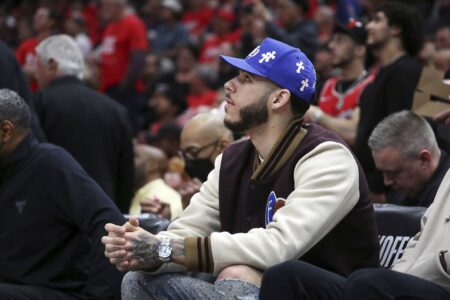
More than three months after tearing the meniscus in his left knee, Lonzo Ball is stuck in a standstill.The Chicago Bulls finally shut down their starting point guard for the season shortly before the playoffs after a bone bruise in the knee delayed his recovery from surgery. Even after the team’s exit from the first round of the playoffs Wednesday night, Ball remains in pain and unsure when his rehabilitation will end.AdvertisementBall said Thursday he will meet with another knee specialist during the first week of May. Although he hopes to avoid a second procedure, that isn’t off the table.“It’s very frustrating,” Ball said. “This year we had a lot of promise and I don’t think it was met, mainly due to a lot of health issues. But you can’t change your past. I think everything happens for a reason. For me now it’s just about moving forward and getting ready.”Advertisement[ [Don’t miss] As Zach LaVine enters free agency, DeMar DeRozan sets a high bar for his Bulls teammate: ‘Max player, max talent, max everything’ ]Ball played only 35 games of his first season in Chicago, averaging 13 points, 5.1 assists and 1.8 steals. The Bulls were a different team with Ball on the court — explosive on offense, smothering on defense.He brought a vision at point guard that the young talent on the Bulls bench couldn’t replicate, whipping no-look passes to unexpectedly open teammates and pinpointing passes from one baseline to the other to spark transition plays.As his rehab wore on, Ball’s teammates spoke with yearning about how good the team could be if Ball were healthy. But Ball said he couldn’t let himself ponder “what-ifs,” especially during the playoffs.Lonzo Ball watches in street clothes as the Bulls play the Bucks in Game 4 at the United Center on Sunday, April 24, 2022. (Terrence Antonio James / Chicago Tribune)“Every time you watch the game, you feel like you can leave an impact on the game,” Ball said. “But you can’t change what already happened. I couldn’t be out there, so I didn’t tell the guys, ‘Oh, I wish I was out there with y’all,’ or, ‘I could’ve been doing this if I was there.’Chicago Tribune SportsWeekdaysA daily sports newsletter delivered to your inbox for your morning commute.“It was more about them. They were there, they were ready and I was just encouraging them.”While his teammates focus on improving areas such as shooting and ballhandling, Ball has only one goal for the offseason: Get healthy and stay that way.In five NBA seasons, Ball has yet to last a full season without an injury. His list of ailments during his tenure with the Los Angeles Lakers and New Orleans Pelicans included a sprained MCL, a torn ankle ligament and injuries to his adductor, knee, hip flexor, shoulder and thumb. He averages 50.4 games per season — 64.6% of the total games possible (252 of 390) — and never has played more than 63 games in a season.[ [Don’t miss] Column: Bulls coach Billy Donovan had to deal with adversity all season, and Game 5 was no different ]Even more concerning is that this injury isn’t new for Ball. He tore the same meniscus in 2018, which adds pressure to make sure his rehabilitation is fully successful.AdvertisementBall can’t return to training until the pain in his knee subsides. Once he has crossed that threshold, he said he plans to spend his summer in Los Angeles focused on strengthening his lower body to create a more reliable base.With one of the longest contracts on the team — expiring in 2025 — Ball is a clear key to the Bulls future. But his future depends on his ability to complete a healthy season.“I don’t think anybody plays to get hurt. It’s just part of the game,” Ball said. “It’s been unfortunate for me my first couple years in the league, but hopefully I can turn it around next year.”
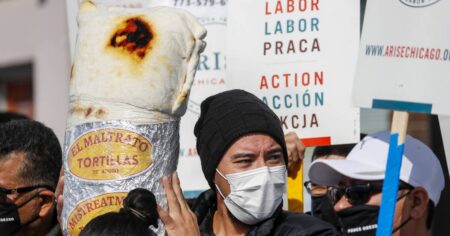
El Milagro committed “flagrant” violations of state labor law for allegedly denying employees proper meal breaks and has been referred to the Illinois attorney general’s office, according to the Illinois Department of Labor.In a notice of noncompliance dated March 23, the agency found the Chicago tortilla maker had violated the Illinois One Day Rest in Seven Act because employees regularly worked over 7.5 hours without required meal breaks. The Department of Labor found 112 meal break violations between Jan. 1 and July 31, 2021, and was fined $11,200 in total for those violations, according to the document.AdvertisementThe findings, which were released to the Tribune through a Freedom of Information Act request, come after workers at El Milagro filed a complaint with the Department of Labor in late October 2021.Advertisement“Because El Milagro has not paid these penalties or demonstrated that it has come in to compliance, this matter has been referred to the office of the Illinois attorney general for enforcement,” department spokesperson Paul Cicchini said in an email to the Tribune Wednesday.Drew Hill, a spokesperson for the attorney general’s office, said Wednesday the office had received the referral and would review it. “We do not have any further updates at this time,” Hill said.In a statement, El Milagro spokesperson Alejandra Moran said the company had not yet received communication from the attorney general’s office. She said should an action be filed based on “prior discussions with the Illinois Department of Labor,” the company “disputes the allegations and intends to vigorously defend the matter in court.”“The company is confident its ongoing commitment and dedication to employees, including fair wages, regular meal and rest breaks, and days off, will prevail,” Moran said. “El Milagro welcomes an unbiased review of the evidence, including facts that should have been considered as part of a fair and reasonable investigation.”When asked what facts she was referring to and whether the company had paid the fine, Moran said the company could not comment further on open legal matters.AdvertisementIn a statement, Arise Chicago, the nonprofit workers’ rights group organizing with the El Milagro workers, said the department’s findings were “sadly, not surprising based on what workers have reported to Arise Chicago.”“This is just more evidence that El Milagro has systematically violated its workers rights. And it amplifies how courageous the workers have been to stand up to exploitation,” Arise said. “We applaud IDOL for its investigation and look to the Illinois attorney general to fully enforce IDOL’s ruling.”Last September, employees at El Milagro staged a brief walkout, alleging low pay and unjust working conditions. After the walkout, workers were locked out of the facility, a practice Arise Chicago alleged was illegal.Earlier this month, workers said they had secured a slate of wage and workplace improvements after months of organizing. Employees said they were no longer required to work seven days in a row and had seen improvements like anti-sexual harassment training for managers and air conditioning in lunch rooms. Workers also saw two rounds of raises last year, which brought starting wages up to about $16.50 per hour, with most other workers now earning between $17 and $20 per hour, according to Arise Chicago.El Milagro disputed the wage increases were the result of worker activism.Workers said earlier this month that despite improvements, other changes were still necessary. They pointed to increases in the speed of work machines, which they described in a letter to company management as creating “hazardous and untenable” working conditions.AdvertisementThey also alleged the company had not followed through on a verbal commitment to provide Sundays off and that third-shift workers at the company’s 31st Street location were regularly sent home early in possible violation of Chicago’s Fair Workweek Ordinance.Shelly Ruzicka, communications and development director for Arise Chicago, said Wednesday workers were no longer reporting lost hours at the company’s 31st Street location. However, she said, they believed machine speeds were still dangerously high, and are still calling on the company to close on Sundays and to sit down with them to discuss their concerns.“El Milagro will not comment further on open legal matters,” the company said in a statement. “As it has for 70 years as a family-owned, local business, El Milagro continues to respect the rights of every employee, provides fair wages and attractive benefits, and operates with integrity.”Workers at El Milagro have also filed complaints with Chicago’s Office of Labor Standards and with the National Labor Relations Board. Representatives from each agency said investigations into those complaints were ongoing.Chicago Tribune’s Laura Rodríguez Presa contributed.tasoglin@chicagotribune.com
El Milagro committed “flagrant” violations of state labor law for allegedly denying employees proper meal breaks and has been referred to the Illinois attorney general’s office, according to the Illinois Department of Labor.In a notice of noncompliance dated March 23, the agency found the Chicago tortilla maker had violated the Illinois One Day Rest in Seven Act because employees regularly worked over 7.5 hours without required meal breaks. The Department of Labor found 112 meal break violations between Jan. 1 and July 31, 2021, and was fined $11,200 in total for those violations, according to the document.AdvertisementThe findings, which were released to the Tribune through a Freedom of Information Act request, come after workers at El Milagro filed a complaint with the Department of Labor in late October 2021.Advertisement“Because El Milagro has not paid these penalties or demonstrated that it has come in to compliance, this matter has been referred to the office of the Illinois attorney general for enforcement,” department spokesperson Paul Cicchini said in an email to the Tribune Wednesday.Drew Hill, a spokesperson for the attorney general’s office, said Wednesday the office had received the referral and would review it. “We do not have any further updates at this time,” Hill said.In a statement, El Milagro spokesperson Alejandra Moran said the company had not yet received communication from the attorney general’s office. She said should an action be filed based on “prior discussions with the Illinois Department of Labor,” the company “disputes the allegations and intends to vigorously defend the matter in court.”“The company is confident its ongoing commitment and dedication to employees, including fair wages, regular meal and rest breaks, and days off, will prevail,” Moran said. “El Milagro welcomes an unbiased review of the evidence, including facts that should have been considered as part of a fair and reasonable investigation.”When asked what facts she was referring to and whether the company had paid the fine, Moran said the company could not comment further on open legal matters.AdvertisementIn a statement, Arise Chicago, the nonprofit workers’ rights group organizing with the El Milagro workers, said the department’s findings were “sadly, not surprising based on what workers have reported to Arise Chicago.”“This is just more evidence that El Milagro has systematically violated its workers rights. And it amplifies how courageous the workers have been to stand up to exploitation,” Arise said. “We applaud IDOL for its investigation and look to the Illinois attorney general to fully enforce IDOL’s ruling.”Last September, employees at El Milagro staged a brief walkout, alleging low pay and unjust working conditions. After the walkout, workers were locked out of the facility, a practice Arise Chicago alleged was illegal.Earlier this month, workers said they had secured a slate of wage and workplace improvements after months of organizing. Employees said they were no longer required to work seven days in a row and had seen improvements like anti-sexual harassment training for managers and air conditioning in lunch rooms. Workers also saw two rounds of raises last year, which brought starting wages up to about $16.50 per hour, with most other workers now earning between $17 and $20 per hour, according to Arise Chicago.El Milagro disputed the wage increases were the result of worker activism.Workers said earlier this month that despite improvements, other changes were still necessary. They pointed to increases in the speed of work machines, which they described in a letter to company management as creating “hazardous and untenable” working conditions.AdvertisementThey also alleged the company had not followed through on a verbal commitment to provide Sundays off and that third-shift workers at the company’s 31st Street location were regularly sent home early in possible violation of Chicago’s Fair Workweek Ordinance.Shelly Ruzicka, communications and development director for Arise Chicago, said Wednesday workers were no longer reporting lost hours at the company’s 31st Street location. However, she said, they believed machine speeds were still dangerously high, and are still calling on the company to close on Sundays and to sit down with them to discuss their concerns.“El Milagro will not comment further on open legal matters,” the company said in a statement. “As it has for 70 years as a family-owned, local business, El Milagro continues to respect the rights of every employee, provides fair wages and attractive benefits, and operates with integrity.”Workers at El Milagro have also filed complaints with Chicago’s Office of Labor Standards and with the National Labor Relations Board. Representatives from each agency said investigations into those complaints were ongoing.Chicago Tribune’s Laura Rodríguez Presa contributed.tasoglin@chicagotribune.com
Charges were pending Thursday for a person who is in police custody after a fatal shooting outside the Brickyard Mall that left a 47-year-old “beloved” mental health expert at Cermak Health Services dead, authorities said.Jennifer Hamilton, 47, was shot and killed Wednesday at about 9:30 a.m. outside the Brickyard Mall, in the 6500 block of West Diversey Avenue, said Chicago police and her union, SEIU Local 73.AdvertisementCharges were still pending for the suspect, who is a “known offender,” said Officer Michelle Tannehill, a spokeswoman for Chicago police. According to Ald. Gilbert Villegas (36), whose ward covers that shooting scene, which was a Target parking lot, the shooting was domestic in nature. AdvertisementHamilton was outside when the assailant approached her and began to fire shots in her direction, according to Tannehill.Hamilton who died of multiple gunshot wounds, was pronounced dead at 10:20 a.m. at Loyola University Medical Center in Maywood, according to the Cook County medical examiner’s office, which ruled her death a homicide.Villegas stressed the need for the community to notify authorities if they see signs of domestic violence.Hamilton, who was “beloved by her coworkers,” was a union steward for SEIU Local 73 and worked as a mental health specialist at Cermak Health Services, located on the campus of the Cook County Jail, according to a statement from union President Dian Palmer.“Our union is devastated over the tragic loss of our dear member and union steward Jennifer Hamilton,” said Palmer’s statement.“For the past four years, Jennifer was a staunch advocate for her patients and for her union sisters and brothers. Jennifer had a sincere passion for her work in mental health. When you spoke with her, you understood her commitment to providing the best care possible for her patients, before and throughout the pandemic,” Palmer said in the statement.“Her tragic death will be felt by everyone whose lives she touched.”rsobol@chicagotribune.com
A high school student was dead on the scene when an Amtrak train hit him Thursday morning in the Logan Square neighborhood, authorities said.The boy, whose identity and age were not immediately available, was on train tracks near Armitage and Springfield avenues when Union Station-bound Amtrak Train 332 hit him about 9:35 a.m., according to Chicago Fire Department spokesman Larry Merritt and Amtrak.AdvertisementThe boy was pronounced dead by paramedics, according to Merritt.He was “trespassing” on tracks operated by Metra about 5 miles west of Union Station when he came in contact with the train, which was coming from Milwaukee, according to Marc Magliari, Amtrak spokesman.AdvertisementNone of the 105 passengers or crew members were injured and Amtrak is working with police, Metra and the Cook County medical examiner’s office, Magliari said.The situation caused delays and cancellations to Amtrak and Metra trains.Train 332 was terminated and the passengers were taken carried to their destination by a Metra train, according to Magliari.Normal Amtrak service was expected to resume later Thursday afternoon, while inbound and outbound Metra trains may be operating up to 30 minutes behind schedule, according to a service alert on Metra’s website, which added customers should expect “minor residual delays.”rsobol@chicagotribune.com
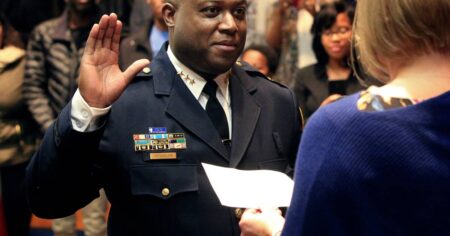
After nearly four years, Chicago finally has a new permanent U.S. marshal.The U.S. Senate on Wednesday confirmed the appointment of former Oak Park police Chief LaDon Reynolds as the next U.S. marshal for the Northern District of Illinois, one of the top federal law enforcement posts in the city.AdvertisementThe last person in the post, Edward Gilmore, abruptly resigned in May 2018 after he was found to have made an inappropriate comment about shooting a judge during firearms training, according to a report by the U.S. Department of Justice.Reynolds was selected more than two months ago after a bipartisan screening committee headed by former U.S. District Judge David Coar made the recommendation to Illinois Sens. Dick Durbin and Tammy Duckworth.AdvertisementBut his road to confirmation hit a snag in the politically polarized Senate Judiciary Committee, where a group of Republicans led by Arkansas Sen. Tom Cotton blocked all Justice Department nominees over an unrelated controversy involving federal law enforcement agents being sued over their actions during Black Lives Matter protests in Portland, Ore. in 2020.In February, Durbin, the committee’s chairman, blasted Cotton’s “obstructionist” efforts, saying it put politics before the safety of the American people.“Try to follow that logic, if you will,” Durbin said at the time. “(Cotton) is so committed to law enforcement, he is so committed to U.S. Marshals, he won’t let us appoint people to fill [U.S. Marshal] vacancies.”On Wednesday, U.S. Sen. Sherrod Brown (D-Ohio) asked for unanimous consent on 10 U.S. Attorney and U.S. Marshal nominees —including Chief Reynolds— and Republicans did not object, clearing the way for a voice vote that confirmed Reynolds to a four-year term.Afterward, Durbin and Duckworth released a statement calling Reynolds a “seasoned law enforcement veteran who will serve with distinction in this important role.”“He has the experience to succeed and help keep our communities and our federal judiciary safe,” the statement read.A spokesperson for Cotton was not immediately available for comment.Reynolds served since 2019 as the chief of police for the Oak Park Police Department before stepping down earlier this month. His began his law enforcement career in the near west suburb in 1994 rising to detective commander in 2010 and deputy police chief in 2017.AdvertisementHis commission must still be signed by President Joe Biden before he is formally sworn in, a process that should be completed over the next several days.Among other duties, the U.S. Marshals Service is tasked with protecting federal judges, apprehending fugitives, transporting federal prisoners, selling seized assets and operating the federal Witness Security Program.The Chicago field office is one of the organization’s busiest and typically attracts high-ranking law enforcement officials from across the country.The position has been vacant since Gilmore was forced to resign.The Tribune reported that the comment was directed at then-U.S. District Chief Judge Ruben Castillo, who said in an interview that he and Gilmore had “some tough exchanges” over courthouse security before Gilmore made the threat. Though the comment was apparently a joke, Castillo called the situation “unfortunate.”“This is a guy who could walk into my chambers with a weapon at any time, no problem,” Castillo said at the time. “What if it wasn’t a joke?”AdvertisementSince Gilmore’s resignation, the position has been filled by a series of acting U.S. marshals.jmeisner@chicagotribune.com

Higher U.S. menu prices and easing COVID-19 restrictions elsewhere helped McDonald’s offset troubled markets like China and Russia in the first quarter.Revenue rose 11% to $5.66 billion in the January-March period, topping Wall Street expectations of $5.57 billion, according to analysts polled by FactSet.AdvertisementThe Chicago burger giant announced in early March that it would temporarily close 850 stores in Russia. It continues to pay its 62,000 employees in the country. It also closed 108 restaurants in Ukraine in February and is paying its employees there as well.McDonald’s has said it expects to lose $50 million per month in sales from the Russian store closures alone.AdvertisementMcDonald’s spent $27 million on salaries, leases and supplier payments in Russia and Ukraine during the quarter. The company also said it has $100 million worth of inventory it will probably dispose of since its restaurants are closed.Excluding costs in Russia and Ukraine and other one-time items, McDonald’s earned $2.28 per share for the quarter, well ahead of analyst forecasts of $2.17 per share.Global same-store sales, or sales at stores open at least a year, rose nearly 12% for the quarter. The easing of COVID restrictions in many markets, including the United Kingdom, France and Brazil, boosted sales, McDonald’s said.In the U.S., same-store sales rose 3.5%. China reported negative same-stores sales as it struggled with a COVID resurgence and new restrictions.Shares of McDonald’s Corp. edged higher before the opening bell Thursday.