



On the campaign trail, both mayoral candidates paint sweeping visions of a shinier, more prosperous Chicago under their watch.
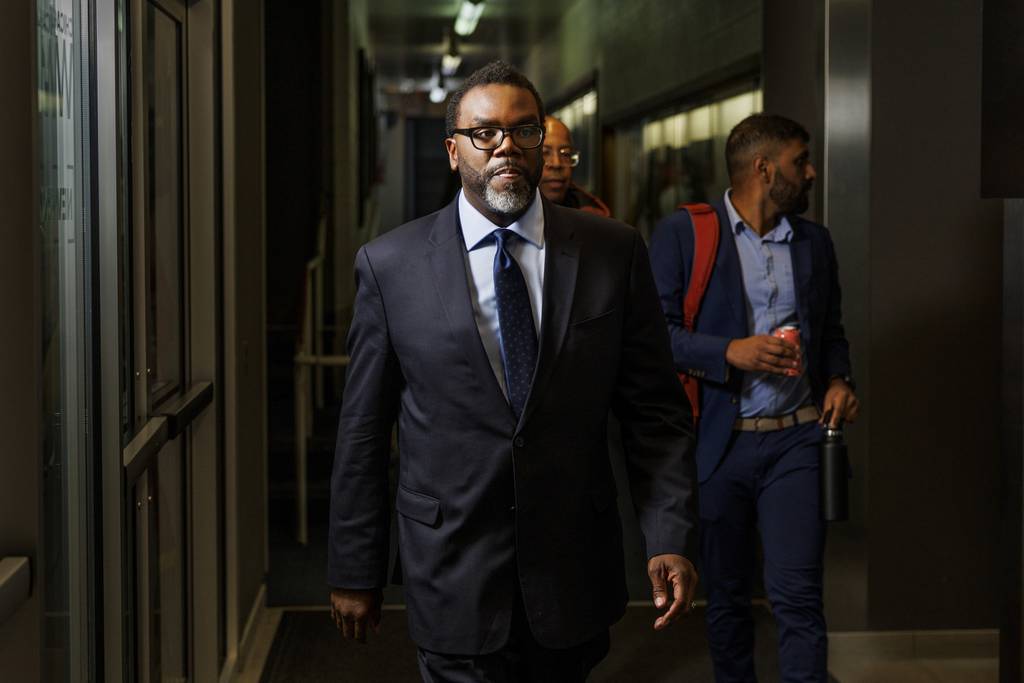
Brandon Johnson is known to deploy food analogies to explain why he believes the city — which he calls “one of the wealthiest economies in the world” — should invest in its poorest residents.
“What I’ve said repeatedly is that, too often the politics of Chicago, it forces communities to fight over one pie,” Johnson said in a radio interview the day after he made the April 4 runoff. “My philosophy is let’s just make more pies.” The Cook County commissioner has also used cakes, Oreos, grits and salsa for his “there’s enough for everybody” metaphor.
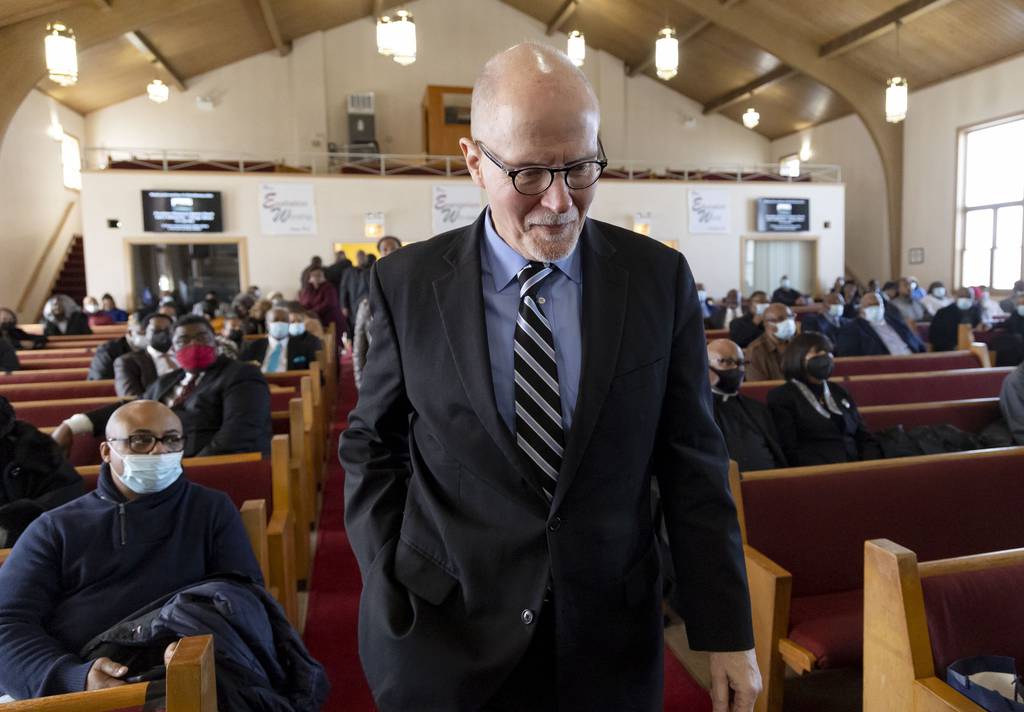
Paul Vallas, on the other hand, nearly runs out of breath at times as he outlines his multipronged plan to “seize” dilapidated buildings and vacant lots and shore up funding to inject new life into the South and West sides. The former Chicago Public Schools CEO has referred to this bundle of financial tools as his own “Burnham Plan,” in reference to the ambitious 1909 blueprint to reimagine the city.
“My legacy is not going to be public safety. My legacy is not going to be balancing budgets. My legacy — my real legacy — is going to be what I do to revitalize those communities that have long been underserved,” Vallas said at a church in Lawndale this month.
What they don’t often talk about: Chicago’s massive financial problems.
Under defeated Mayor Lori Lightfoot, City Hall has made real strides to shore up the city’s finances, but its financial health remains precarious — a familiar story in a city where mayors rarely enter the fifth floor with the fiscal house in order.
In 1983, Mayor Harold Washington stunned many when he revealed the city’s $150 million deficit, much worse than predecessor Jane Byrne had let on.
When Mayor Rahm Emanuel took office in 2011, he pegged the city’s budget shortfall at $636 million, blaming predecessor Richard M. Daley for profligate spending. Lightfoot faced similar circumstances in 2019, when she said Emanuel left her an $838 million gap.
Ralph Martire, a professor of public policy at Roosevelt University and executive director of the left-leaning Center for Tax and Budget Accountability, anticipates the next mayor will be in a similar boat. The center projects a deficit between $500 million and $600 million heading into 2024 — mirroring estimates in Lightfoot’s most recent budget forecast.
Unlike Lightfoot, Chicago’s next mayor won’t have a cushion of federal funds to rely on. The $1.9 billion the city received from the federal American Rescue Plan has largely been allocated. Most went to filling COVID-19 pandemic-induced budget holes in prior years, leaving little for whoever takes City Hall’s top job.
Adding to the tab: a reported asset loss of roughly 12% in the city’s pension funds from a stock market tumble in 2022, meaning bigger obligations loom ahead.
The local economy is still on shaky footing post-pandemic, stoking more uncertainty about future revenue collections. Tourism and convention business, CTA ridership and office and retail occupancy have not yet returned to 2019 levels.
In the last quarter of 2022, hotel occupancy was at 85% of 2019 levels, and Metra ridership at 37%, according to data from the Chicago Loop Alliance, a business organization. Average CTA ridership in January was about 60% of January 2019 levels, according to the transit authority. Real estate firm CBRE reported the vacancy rate among downtown office buildings ended last year at an all-time high: 21.4%, far above the 13.8% vacancy when the pandemic started, according to Crain’s.
All of that leaves Chicago facing tough headwinds, with potential economic problems looming across the country.
Even so, University of Chicago professor Justin Marlowe, who studies public finance, said Lightfoot leaves the city in better fiscal condition than her predecessors. She secured a long-sought casino that, once up and running, will help pay for lagging police and fire pensions, though even by city officials’ projections, it will only pay for roughly 9% of the annual retirement benefit costs.
Her last budget included a $242 million advance pension payment to blunt the impact of last year’s market downturn. Lightfoot’s efforts helped lead to credit rating boosts, increasing its standing among investors.
The challenge will be keeping that momentum going, and the two candidates have differing views about whether there is enough money already in the system or if they will need to raise revenue to do more, Marlowe said.
“At a very high level, the central contrast is, with Vallas, there seems to be an underlying assumption that there’s enough money in the system to do what he wants to do,” Marlowe said. “With Johnson, there’s not enough money in the system, there needs to be a reconfiguration to generate revenue and make the system more fair.”
As mayor, Lightfoot generally avoided big property tax increases but still hiked the city’s levy — from $1.54 billion in her first budget to $1.73 billion in 2023 — to keep up with rising pension costs. Lightfoot also implemented a policy tying property tax increases to inflation, which she argued made practical sense for both the city and taxpayers, eliminating the need for massive hikes while providing consistent pension funding.
Johnson has repeatedly said he wouldn’t raise residents’ property taxes, while Vallas said at a recent WGN debate he has “no intention of raising property taxes.” Both have vowed to do away with Lightfoot’s automatic inflation-tied increases.
The candidates’ property tax pledges have raised eyebrows among fiscal watchdogs, however, as it’s a key source of revenue. Roughly $1.4 billion of the city’s 2023 property tax levy was used for pension debts, and halting those hikes would force the next mayor to find money elsewhere to pay for their programs.
“Holding the property tax levy flat, when it’s by far and away the biggest revenue source funding this growing pension obligation, just doesn’t seem to me to be a very wise fiscal decision,” Martire said.
Still, Martire gave Johnson credit for putting forward a number of “potentially realistic alternatives to raise revenue” and “recognizing that the city of Chicago really can’t continue to provide the same level of services it does today, plus enhance its police department, plus provide more human services, plus meet its pension ramp, with its current revenue stream.”
“It just can’t,” Martire said. “I don’t see an accurate acknowledgment of that in Vallas’ approach.”
Some of Johnson’s revenue plans have drawn skepticism: He proposed a “big business head tax” of $4 per employee for certain companies, which his campaign says would generate roughly $20 million, and a “big banks, securities and speculation tax” to raise $100 million annually by charging $1 or $2 per securities trading contract.
The latter proposal would likely need authorization from state legislators, making it a long shot. Vallas counters it would drive away business.
Paula Worthington, a senior lecturer at the University of Chicago’s Harris School of Public Policy and former senior economist at the White House Council of Economic Advisers, warned that “capital is mobile,” particularly in a “Zoom or remote world.”
Emanuel moved to phase out the city’s former head tax in late 2011, describing it as a “job killer.” At the time, administration officials said it was bringing in $23 million a year.
Aldermen have previously heard criticism of efforts to implement a securities tax. At a 2020 hearing about a potential “LaSalle Street tax,” Chicago Mercantile Exchange Group CEO Terry Duffy warned aldermen of the ease at which they could pack up.
“We are no longer four walls with a trading floor,” and other states had offered them incentives to move, Duffy said.
While head tax proposals are “typically not super onerous,” Worthington said it could create problems.
“People are mobile too,” Worthington said. “If you have a big corporation and it’s anywhere near the margin of being subject to a head tax, it may change its plans.”
Other aspects of Johnson’s revenue plan include raising a projected $98 million via a jet fuel tax on airlines, ramping up the hotel levy by a total of $30 million and hiking the real estate transfer tax on properties over $1 million to fight homelessness.
Vallas has often said he will use surpluses from tax increment financing, or TIFs, to replace revenue lost during Daley’s pension holidays and help fund the city’s budget.
But TIF revenues are not a reliable source of income for long-term projects, and available surplus money can vary year-to-year, Martire warns. Those surpluses should only be used “to cover one-time expenses,” not ongoing operating expenses like plugging deficits. “Declaring annual surpluses also raises the bigger question of whether the underlying TIF districts are needed, or whether the city is diminishing its ability to promote economic development — the reason TIFs exist supposedly — just to deal with its budgetary pressures.”
Vallas has also promised tax relief and often talks about working with the state legislature to cap property tax increases on individual properties. That proposal would likely require substantive changes to state and county laws, experts say, and could result in other property taxpayers shouldering a higher burden. Should that not work, Vallas has said he would implement a city tax rebate program.
Vallas has also talked about investing in the South and West sides by creating an “independent community development authority” that will be in charge of doling out city funds and directing city agencies to spur local economic growth.
In addition, he floated a municipal “fair share investment trust” that would operate like the city’s own hedge fund, using an allotment of new TIF revenues, developer fees and gambling revenues for commercial and mortgage loans on the South and West sides.

That idea would also likely need state approval: Revenues from the Chicago casino are expressly dedicated to funding police and fire pensions.
Perhaps the boldest part of Vallas’ economic platform is his call to “seize” vacant or unclaimed property, whether an empty lot or a building, fix it up and turn it back to the community — along with a 10-year property tax abatement. Some areas he identified for this approach include along the Red Line on the South Side, which he says could see new housing, social service headquarters, retail strips and more. New abatements would also require Springfield approval.
“We have to create conditions to spur economic development along those lines,” Vallas said at a forum this month. “Some of those (CTA) lines go through communities that have been devastated.”
Johnson often criticizes Vallas on the campaign trail for not releasing a comprehensive plan for how he will pay for things and attacks Vallas for having just “three sentences on his website.”
“I mean, it’s pretty clear: No one knows what he’s saying,” Johnson said in a recent debate after his opponent answered a question on holding the line on taxes by saying he would tap into TIF surpluses. “I mean, that’s why it sounds confusing, because it doesn’t make any sense.”
Johnson was referring to a brief section on Vallas’ campaign page titled “What Would Paul Do About…” Under the “Budget?” section are three bullet points that speak broadly about aligning city spending with community values, creating an independent budget office and enacting a “truth-in-budgeting” ordinance to mandate disclosure of financial projections and other data to that office and the City Council.
Chicago’s mayor also appoints the boards and leadership at the city’s sister agencies, some of which are also facing significant financial pressures.
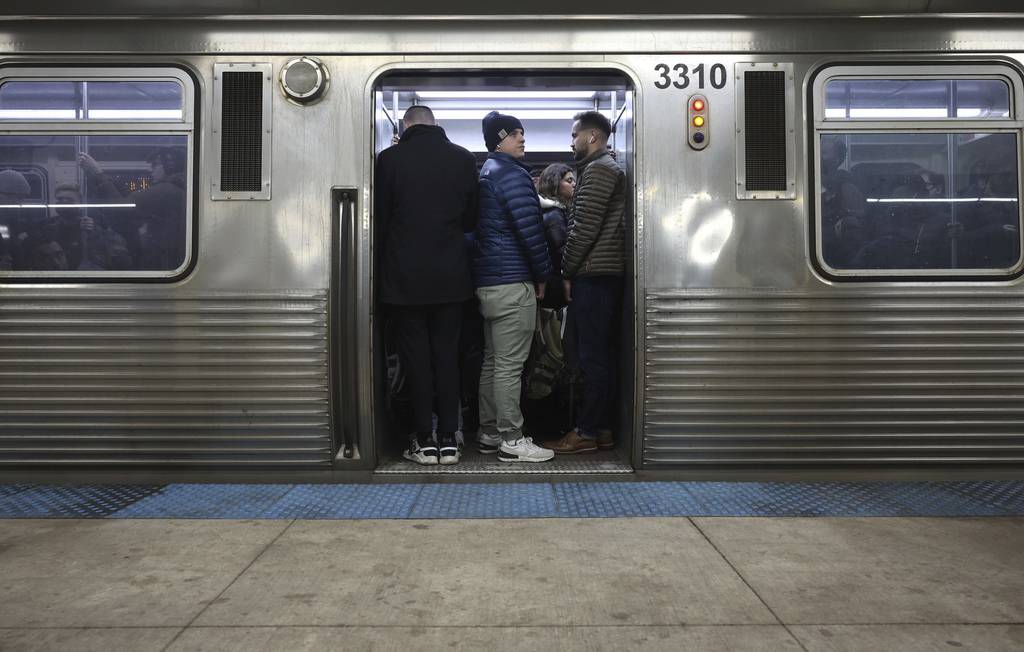
Transit agencies regionwide, including the CTA, are looking at a $730 million fiscal cliff. The CTA is still projecting it’ll run out of COVID-19 relief funds after 2025.
Already weighed down by a heavy debt burden and considered below investment-grade by rating agencies, Chicago Public Schools is facing a fiscal cliff of its own. An October report prepared for CPS predicted a potential deficit of $600 million as the city shifts more costs onto the district as it transitions to an elected school board. That shift “creates additional uncertainties and risks, both for CPS’s operating budget and for the finances of its students and their families,” the report said.
Recent added costs on the district’s balance sheet include $175 million for non-teacher pensions this year and $30 million per year for crossing guards and school police. The district’s latest budget totaled $9.5 billion and included a $140 million property tax hike. The watchdog Civic Federation opposed the budget, noting spending and personnel “continue to increase with no apparent cost containment strategies” while student enrollment fell. The district had “no public long-term financial plan outlining how the District will address its challenges going forward,” including the expiration of federal pandemic relief dollars.
Lightfoot’s Board of Education president, Miguel del Valle, raised the alarm about the district’s finances at a board meeting Wednesday where he said Chicago needs more money from state legislators and he wants to be “transparent” about a looming $600 million deficit.
“We hope that the next mayor will call (Springfield leaders) and say, ‘Guys, it’s time for us to get real on this. You’ve stalled long enough,’” del Valle said. “The work to get there has to begin now. Now. Now is the time.”


