


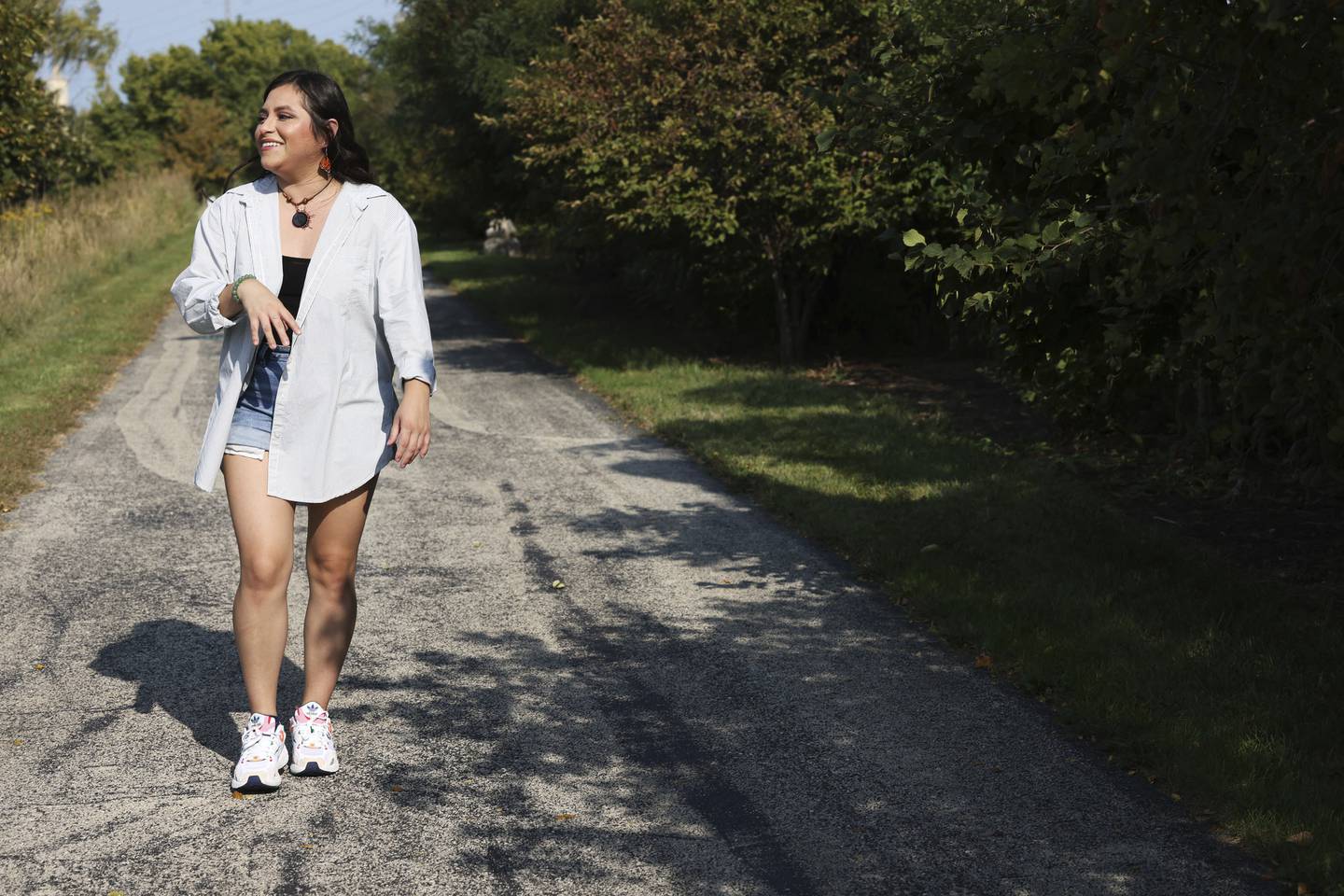
Two years ago, Citlalli Trujillo was researching the Chicago River as part of a fellowship at University of Illinois at Chicago.
She remembers looking at the curves and bends of the river on Google Maps and noticing that it cut through her neighborhood of Pilsen. She couldn’t find any access points in the area so she went to look for one.
Advertisement
Three generations of Trujillo’s family have lived in Pilsen, but it took some exploration and the help of three strangers to find the Canalport Riverwalk Park, a 5-acre park tucked under a bridge over the South Branch of the river and surrounded by communities that have long fought for environmental justice.
“The neighborhoods around here ended up sacrificing their access to the river, but they were also very vital and crucial to building Chicago,” Trujillo said. “They don’t get to experience the benefits of all the infrastructure, they mostly bear the burden.”
Advertisement
Nestled between several industrial centers, wild grasses and seating areas line the gravel path following the curve of the river. The air smells of exhaust from trucks passing on Ashland Avenue. Often, a few people can be found fishing on the bank, or the occasional jogger might pass by. But many in the surrounding neighborhoods of Pilsen, McKinley Park and Bridgeport said they’ve never heard of the park.
Now Trujillo is part of a project to help residents see this strip of green space as a true park rather than just an industrial zone.
On a bright September Saturday, the park teemed with life. Community members sketched designs of what environmental justice means to them with colored pencils. Representatives from Shedd Aquarium collected specimens from the river and visitors made “seed bombs” out of native plants, mushroom compost and clay.
That event marked one of the first opportunities for the team behind the grant-winning project Rio de Bienvenida, which means river of welcome, to introduce their mission to the neighborhood.
Artists Cynthia Weiss and Delilah Salgado said they hope to install a mosaic metal fence around a seating area to beautify the park.
To Weiss, the goal can be summed up by one picture. In it, Salgado’s 6-year-old daughter wears a flower crown and gasps at the reveal of a screen-printed tote, one of the activities from that day. The tote is emblazoned with a blue design that reads “fresh water future.”
That picture reminds Weiss that Rio de Bienvenida’s vision of a community space that connects people to a body of water that unites the entire city of Chicago, might be possible after all.
“This really could be a place for people to go,” Weiss said.
Advertisement
Salgado has lived for nearly a decade in McKinley Park, where residents have been fighting MAT Asphalt for years over a plant that opened in 2018 near a park and at least two schools. Residents say there was no community input and the plant often emits noxious smells.
“We didn’t know about it, and we didn’t hear about it, and I think we would all have been against it,” Salgado said.
She also didn’t know about the green space at Canalport, even though she lives five minutes away. Once she started bringing her kids there, she learned about another potential polluter: Sims Metal.
The Sims scrap-metal recycling facility is located directly across the river, with the sights and sounds of the operation on full display, but its emissions are currently unknown.
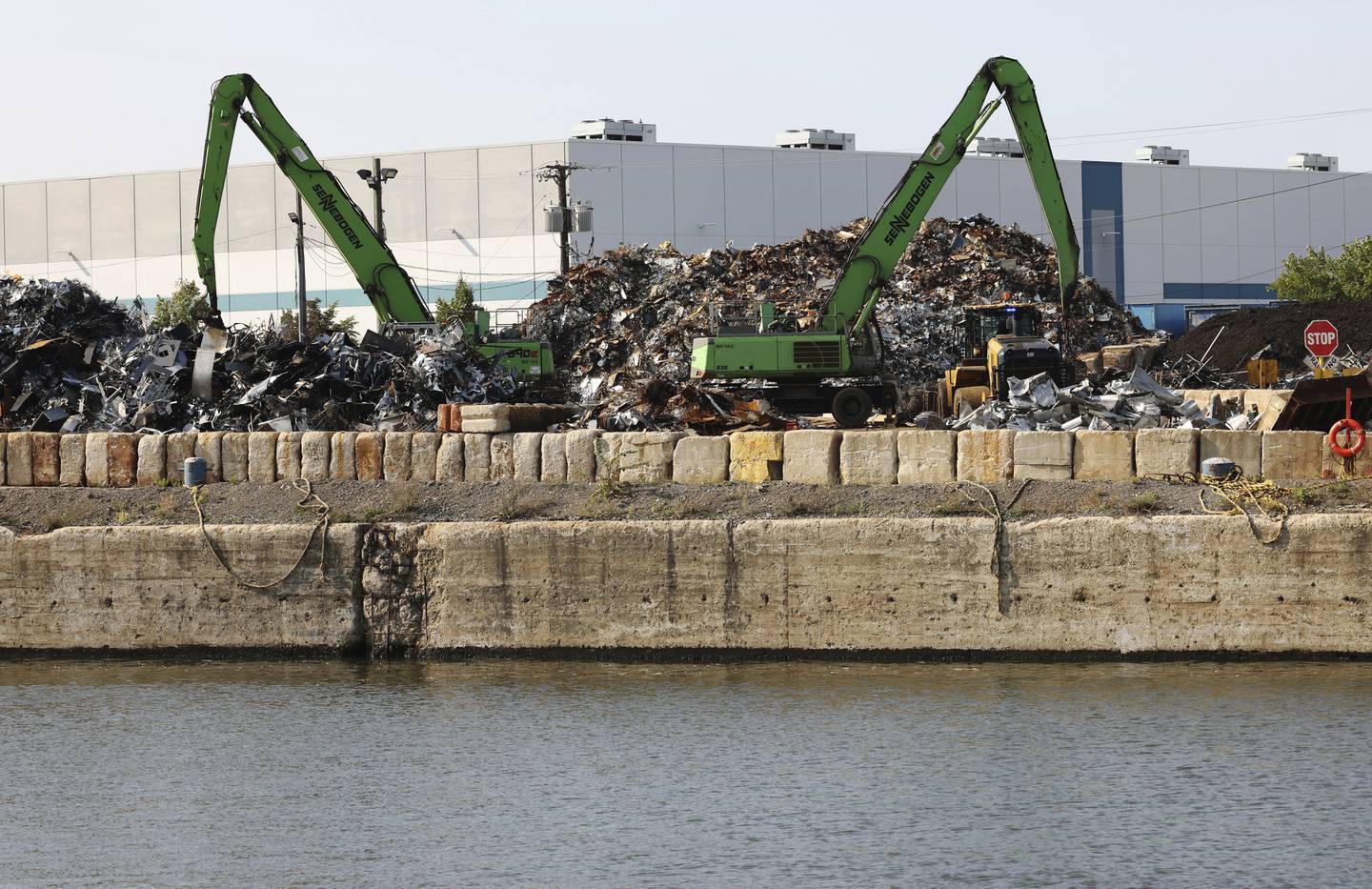
For years, the neighborhood has fought to shut down Sims as operating permits from the city and state remain in limbo. Sims is also facing regulatory action from the U.S. Environmental Protection Agency, which mandated the company monitor the ambient air around the facility starting Sept. 23.
Residents are holding a community meeting Thursday night at St. Paul Catholic Church to demand the city reject the operating permit.
Advertisement
Sitting on a bench at the park, Trujillo can watch the machinery move mounds of scrap metal.
“You don’t know what they’re spraying into the air as we’re speaking,” Trujillo said.
UIC’s Freshwater Lab, an initiative that aims to study human interactions with bodies of water, partnered with Weiss and Salgado to create the proposal for Rio de Bienvenida. Currently, the team is submitting their plans to the Chicago Park District for permission to proceed.
The group’s vision involves hosting workshops for community members to draw images of water and what environmental justice means to them, first on paper then converted to pieces of laser cut metal embedded in the fence. At the event in September, some of the sketches submitted by attendees depict fish, smiling children holding hands and an acknowledgment to Native American tribes that first occupied land near the river.
Future workshops will allow neighbors to create mosaic medallions to adorn the concrete center. The group is also hoping to plant trees at the park.
Through E(art)H Chicago, the group received $70,000 and is continuing to raise money for the project. The organization, pronounced Earth Art Chicago funded 11 projects across neighborhoods with the goal of inspiring action toward climate change and environmental justice. The art installations will open in June.
Advertisement
[ E(art)H Chicago awards $547,310 for art projects addressing climate change ]
Community engagement is a key part of the initiative, said Uzma Noormohamed, program director of the Illinois Science and Energy Innovation Foundation, the primary funder of E(art)H Chicago. Conversations about the environment can often be alienating, weighed down with scientific jargon.
“Art has this ability to bring emotions into the narrative and to connect people in ways that a lot of the scientific communication around climate and the environment can’t,” Noormohamed said.

Afternoon Briefing
Daily
Chicago Tribune editors’ top story picks, delivered to your inbox each afternoon.
In addition to beautifying the space, the Rio de Bienvenida project also aims to commemorate the history of the canal that the park overlooks. The Illinois and Michigan Canal, completed in the 1800s, linked the Mississippi River and the Great Lakes, making the city an industrial center. The opportunity for work attracted immigrants to the canal facilities, contributing to the majority Latino population that lives in Pilsen and the Lower West Side today.
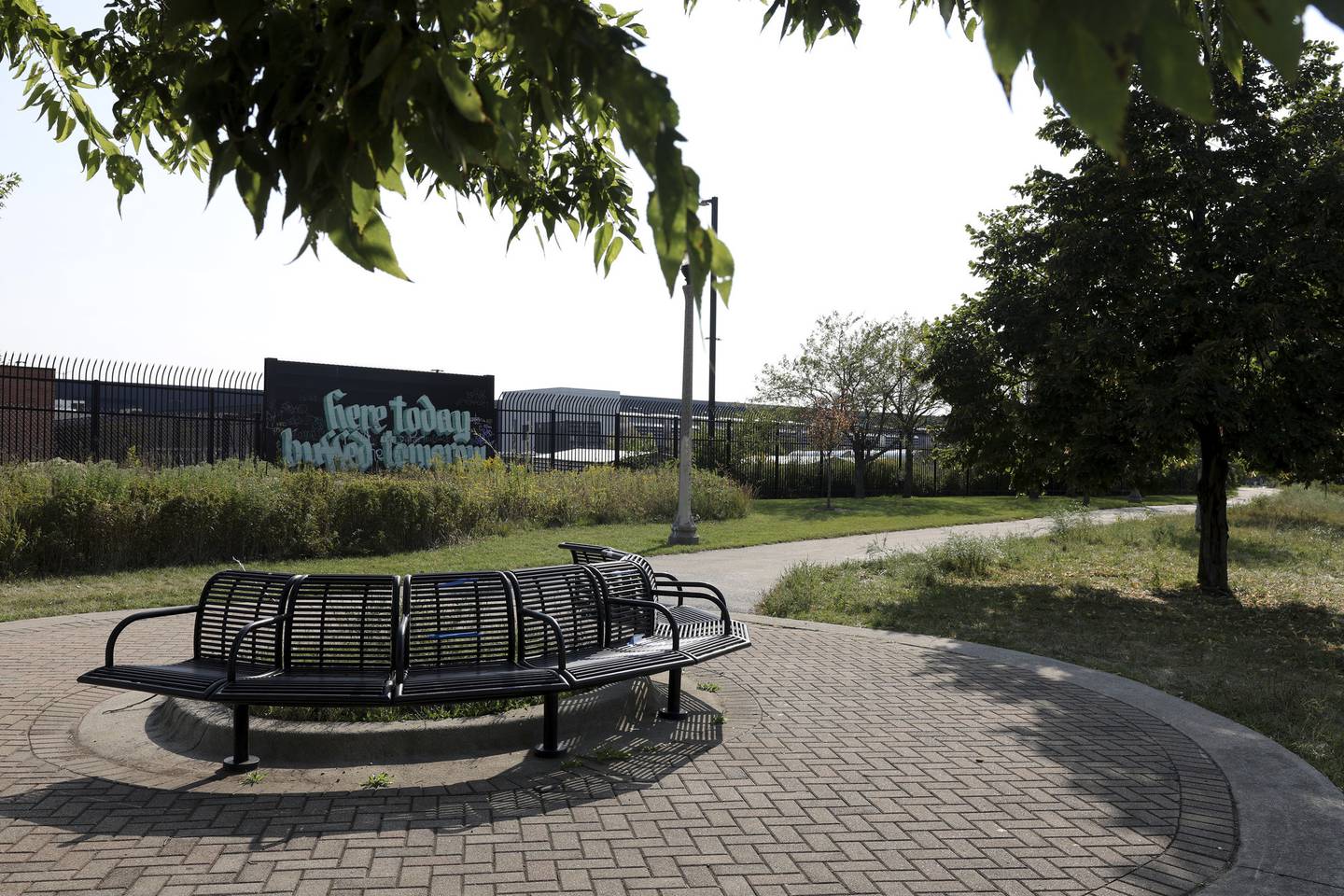
Chicago built the park in 2000 as part of an effort to develop the river corridors. The park was transferred to the Chicago Park District in 2001. Since then, the Park District has hosted cleanups at the site and has maintained the plants along the river, according to a spokesperson.
But the space is often marred by litter and filled with graffiti, including a bright teal piece that reads “here today, buffed tomorrow,” referring to the process of removing graffiti art. But the piece wasn’t buffed — it’s been there since at least 2020, Trujillo said.
According to the Park District’s website, there is no structured programming at the park, and it directs visitors to activities at Park No. 571 in Bridgeport, which features a two-story boathouse. That park is across the waterway from Canalport but getting to it requires a mile-long walk under Interstate 55.
Advertisement
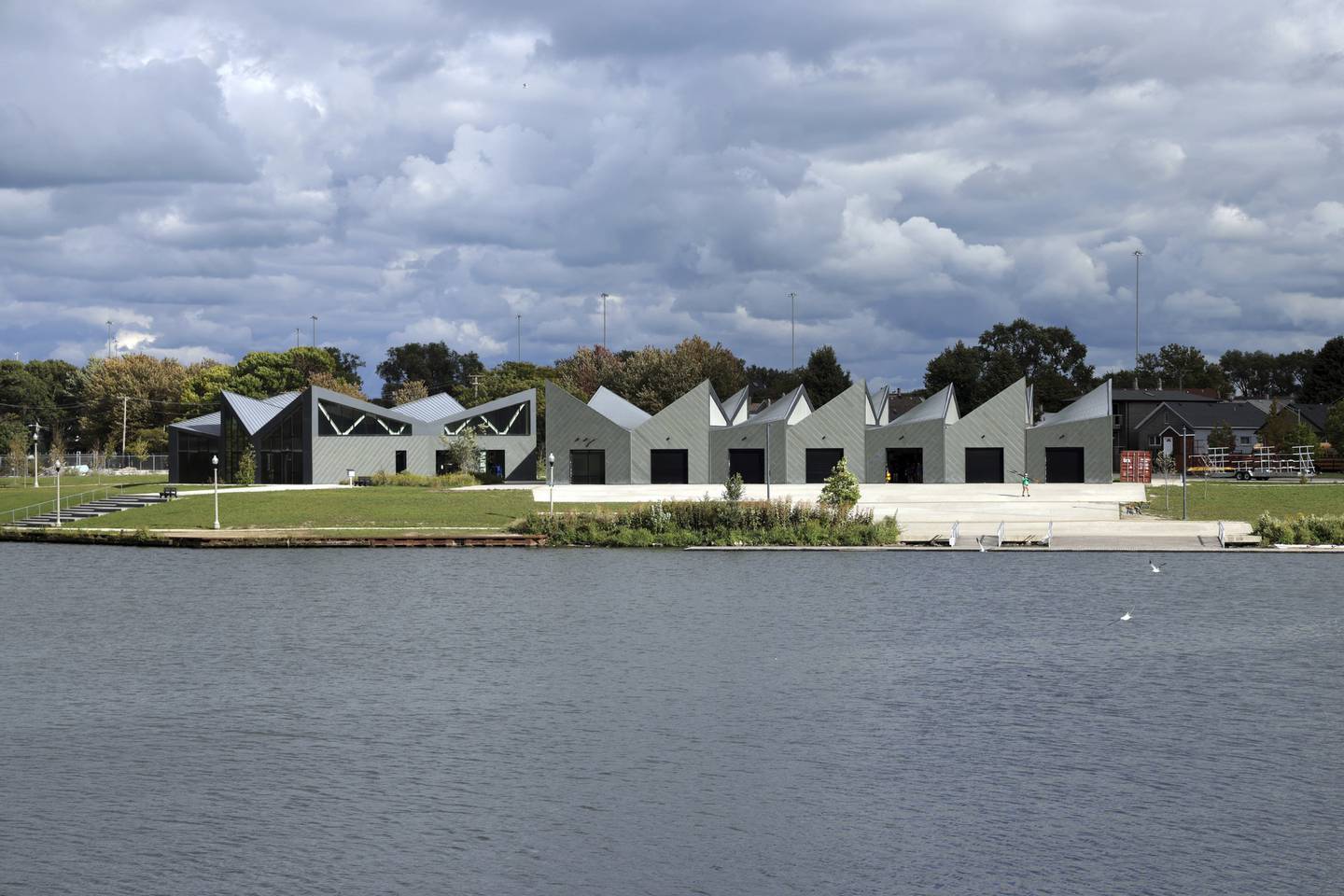
The difference between Canalport and Park No. 571 is stark, Salgado said.
“They have so many resources, so much green space, and so many beautiful houses, and I just want that for my community as well,” she said.