


By Dawn Montgomery
BPUSA Contributor
Since January, I have been exploring and writing about school choice options in Atlanta, Mississippi, and Louisiana. I’ve focused specifically on schools committed to empowering Black students and families. Southern Lab was the first stop on this journey but the last story I decided to publish.
More than an outstanding example of school choice, the Southern University Lab School in Baton Rouge is proof of what Black communities can build when existing institutions shut them out. The question is not whether school choice can work for Black families. The question is why more HBCUs aren’t building K–12 pathways of their own.
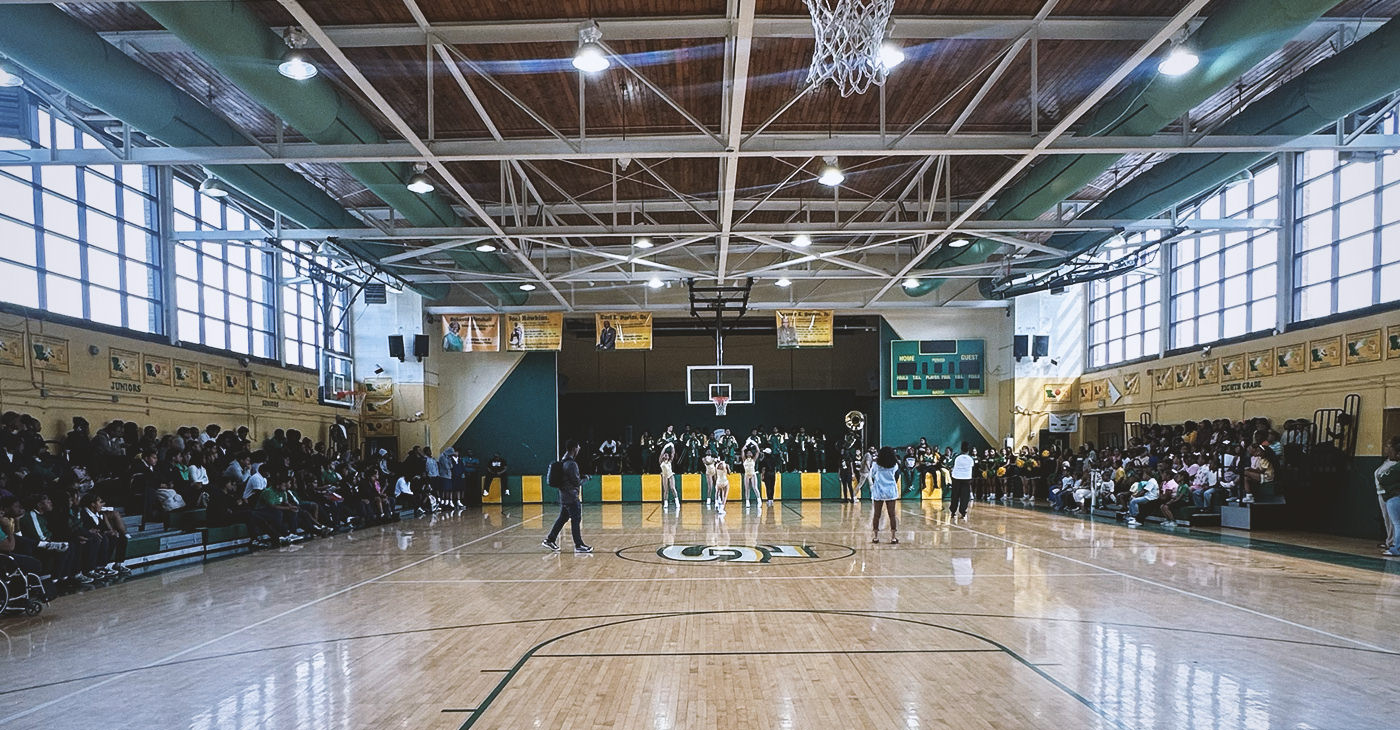
The day I arrived at the Southern University Laboratory School in Baton Rouge, Louisiana, the girls’ varsity basketball team was on the verge of winning its third consecutive division championship. The hallways were filled with students, teachers, and staff. The atmosphere was spirited and, dare I say, loud.
I’m from Mississippi, so I understand that type of carrying on. Game day is a time for celebration, and to NOT thank God for your school team on that day is surely a sin.
By the end of that school visit, something very specific shifted in me. I could not immediately put my finger on it. Then it “Dawned” on me. The Southern Lab School is a school choice option I had not considered. Their story is not only about legacy. It’s also about fortifying Black institutions.
In 1922, Jim Crow laws blocked Black student teachers from completing their classroom certification in segregated public schools. So, Dr. Joseph Samuel Clark, then president of Southern University, built a school on campus to train and certify them. He did not seek permission from the same state that righteously believed in locking them out. He simply solved the problem.
The school has changed its name over the years, which is perhaps the least significant detail in its history. However, what does matter is that it has remained on an HBCU campus for more than a century. That fact alone shapes everything about what it is and what it can do.
Connected to the College of Education, the Law Center, and the College of Science and Engineering, it functions as a school district within the Southern University system. Throughout the day, students move back and forth between the Lab School and the university, accumulating college credits before they graduate high school. I was told that roughly 33 percent of the staff and faculty are alumni.
Among them is the principal, Nadia Seals, who arrived at the Lab School in middle school, attended Southern, did her student teaching there, and never really left.
Herman Brister, the school’s director and a second-generation alum, put it this way: “You can come on this campus from pre-K to a PhD. Graduates return as teachers. Teachers’ children become students.”
That means a four-year-old who enters the Lab School can be taught by alumni, coached by alumni, and mentored by people who once walked those same halls. Then she can cross the street to the university she’s known since she could walk. Imagine that.
All of that on an HBCU campus, constructed when the state wouldn’t credential Black teachers.
Continuity is the architecture.
Brister said something else that stayed with me. He was talking about how the Lab School handles its high-level athletes.
“Many times, students are taken advantage of because of their athletic ability. But we safeguard our kids. We’ve had some of the top players in the nation, but when they walk around campus, they’re just a normal person. We don’t treat them any differently. We make them feel normal.”
As a journalist who has spent more than a decade covering college and professional athletes, I have seen what happens to black high school athletes in environments where they are not protected. For Black children, especially those marked early as exceptional, normal can be protection.
“We make them feel normal.”
Normal. That’s the whole argument.
There are more than a hundred historically Black colleges and universities in the United States. Only a small number operate K–12 laboratory schools. Most don’t.
But most could.
They have the campus. The community. The families who would trust an institution tied to their own university.
What Dr. Clark did in 1922 wasn’t just extraordinary—it was necessary.
Is that really out of reach for Howard University, Spelman College, Morehouse College, Tuskegee University, or Jackson State?
The moment our ancestors earned the opportunity to choose, we turned abandoned buildings into schools. They believed education was the currency that would fund Black futures.
Southern has protected both its university and its Lab School for a century. That’s the template.
The more time I spent there, the clearer it became that Southern Lab wasn’t waiting for the country or the state to decide whether Black education was worth defending.
When I asked Brister whether he was concerned about DEI rollbacks, he flat-out said, “No.”
Just like his predecessors, his focus is on the mission.
The Lab School exists because more than a century ago, a community understood something very important. Institutions shaped by the people they serve are the only ones that last.
I love that part of our story.
When life gives us lemons, we don’t just make lemonade.
We build institutions.
The post OP-ED: When Life Gives Us Lemons, We Build Institutions appeared first on BlackPressUSA.