




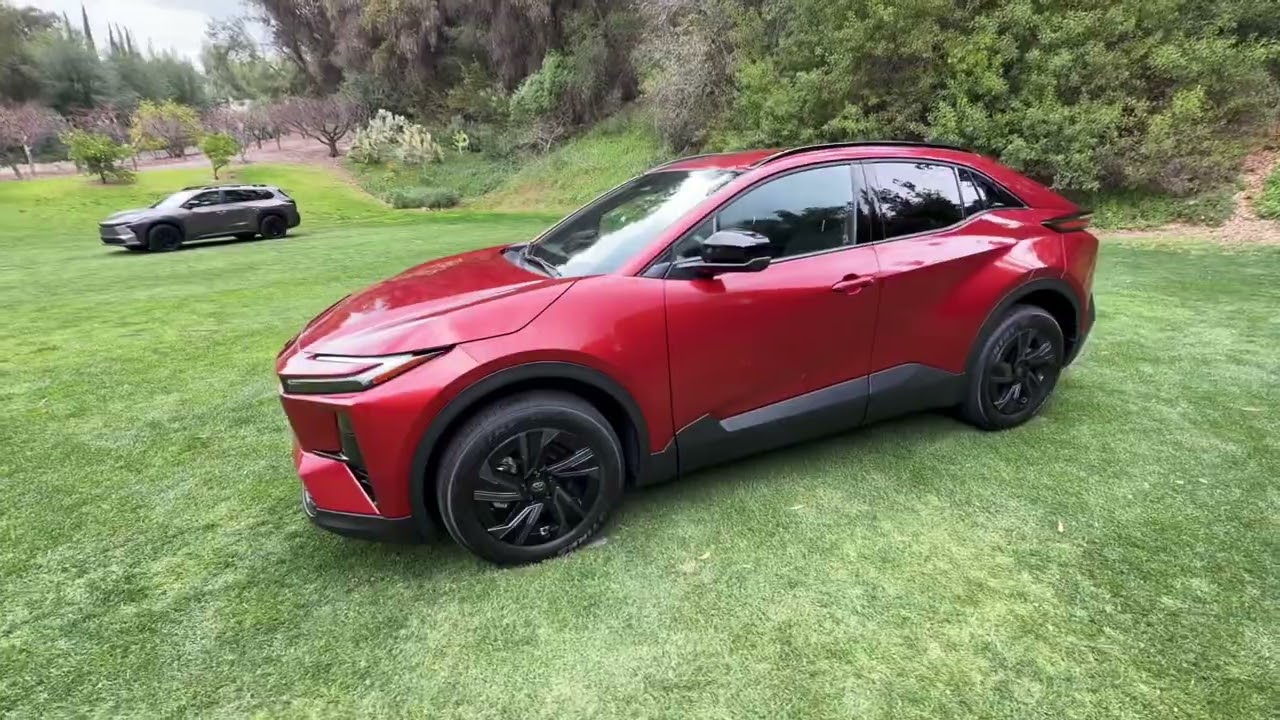
The Toyota C-HR left the American market quietly in 2022. It returns in 2026 as something entirely different — a fully electric compact SUV with 338 horsepower, standard all-wheel drive, and an EPA-estimated range of 287 miles. If you remember the original C-HR as an underpowered but stylish city runabout, erase that memory. This vehicle shares nothing with its predecessor except the name and the attitude.
At $38,550, the C-HR SE undercuts virtually every electric SUV in its class while delivering more horsepower than most of them. That is not a typo. Three hundred and thirty-eight horses for under forty thousand dollars — in an electric vehicle with all-wheel drive, a 1,500-watt power outlet, and Toyota Safety Sense 3.0. The math works.
Powertrain and Efficiency: Dual Motors, Serious Output
The C-HR SE is powered by dual electric motors — a 167-kilowatt unit at the front axle and an 88-kilowatt unit at the rear — fed by a 74.7-kilowatt-hour lithium-ion battery. Combined output is 338 system horsepower with all-wheel drive delivered as standard equipment. There is no front-wheel-drive base model to navigate around. Every C-HR SE leaves the factory sending power to all four wheels.
The 287-mile EPA-estimated range places the C-HR comfortably in daily-driver territory. Charge overnight at home using the included dual-voltage cable — it works on standard 120-volt household outlets and 240-volt wall boxes with a single cord — and most owners will never need a public charger for routine driving. The school run, the work commute, weekend errands, and the drive to your parents’ house across town — all on a single charge.
Exterior Design: Tandoori Demands a Second Look
The C-HR’s coupe-like profile is the most aggressive silhouette in Toyota’s current lineup. The roofline sweeps downward from the B-pillar toward the rear spoiler, creating a fastback proportion that looks more performance car than family hauler. It is compact without feeling small, athletic without trying too hard.
The 18-inch black alloy wheels with aero covers complement the Tandoori contrast.
Interior: Substance Over Flash
The front seats are heated with 8-way power adjustment and lumbar support for the driver. On cold mornings, the heated steering wheel eliminates the need to blast the cabin heater, which, in an electric vehicle, directly preserves your driving range. Toyota understands that every kilowatt-hour matters when you are running on battery, and targeted heating is smarter than whole-cabin heating.
And then there is the feature that elevates the C-HR from commuter to utility vehicle: a 1,500-watt AC power outlet in the cargo area. Plug in a portable blender at the tailgate. Run a small heater at the campsite. Charge power tools at a remote job site. Power a CPAP machine on an overnight road trip. This outlet transforms the C-HR from transportation into a mobile power source — and it comes standard.
The backup camera provides clear rear visibility, and the auto-dimming mirror reduces nighttime glare from trailing headlights.
The Honest Assessment: Pros and Cons
Pros:
– 338 horsepower and standard AWD for $38,550 is the most compelling performance-per-dollar equation in the electric SUV market
– 287-mile range handles real-world daily driving without range anxiety
– 1,500-watt AC outlet in the cargo area adds genuine utility beyond transportation
– NACS port with CCS1 and J1772 adapters covers every public charging scenario
– Dual-voltage home charging cable included — no separate purchase needed
– Coupe-like styling stands apart from the generic crossover silhouette
– Safe Exit Alert and Parking Assist with Auto Braking are premium safety features at a mainstream price
Cons:
– Six-speaker audio system is serviceable but not exceptional — serious music listeners will notice the limitations
– No kick sensor for the power liftgate at the SE trim level — button-operated only
– Fabric and SofTex seat combination, while practical, may feel less premium to buyers cross-shopping luxury brands
– No panoramic roof, head-up display, or digital rearview mirror at this trim — those features live in higher grades
The Verdict
The 2026 Toyota C-HR SE at $38,550 is the electric vehicle that makes the combustion-powered compact SUV obsolete for a significant portion of American families. It is faster, quieter, cheaper to fuel, and more technologically advanced than gasoline competitors at the same price — and it does not ask you to compromise on space, capability, or safety to get there.
Three hundred and thirty-eight horsepower. Two hundred and eighty-seven miles of range. Standard all-wheel drive. A 1,500-watt power outlet. Toyota Safety Sense 3.0 with Safe Exit Alert.
#autonetwork #autonetworkreports #povtestdrive #careview
Subscribe https://www.youtube.com/channel/UCuN8D-xz08dJGWXVDMEIA1A