



By Gianna Melillo
“Women’s equality cannot wait another century.”
- August 26 is the 102nd anniversary of women’s suffrage in the United States.
- In the century since ratification of the 19th amendment, significant gains have been made with regard to women’s rights.
- However, the economic toll of the COVID-19 pandemic on women, along with the recent decision to revoke a woman’s right to an abortion have some questioning whether American women are truly equal to men in 2022.
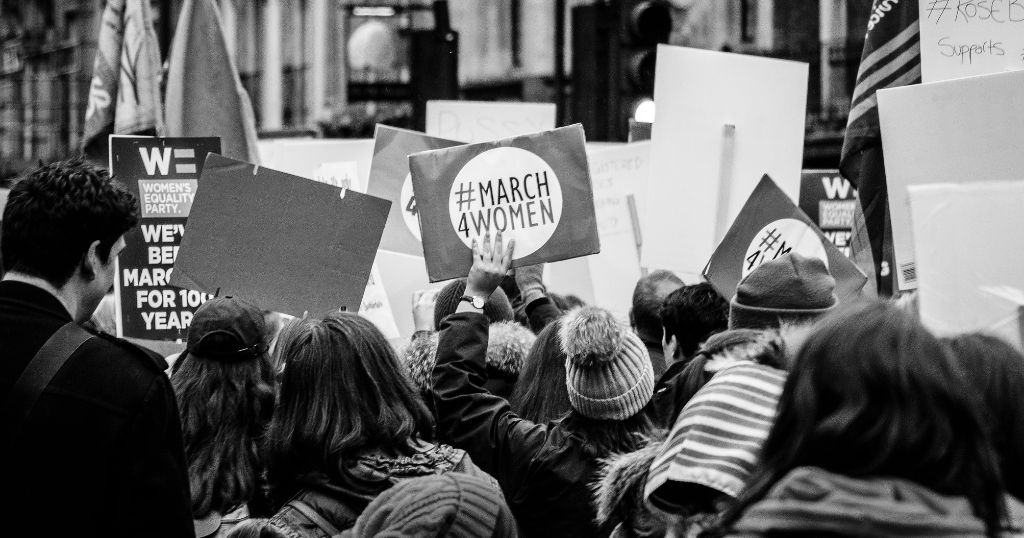
Friday, August 26, marks Women’s Equality Day, a motion first introduced in 1971 to commemorate August 26, 1920 — when women in the United States won the right to vote — and formally adopted in 1973.
One hundred years after women’s suffrage prevailed in its fight to amend the U.S. constitution, questions of equality remain at the forefront of the national conversation, especially in light of the Supreme Court’s recent decision to overturn Roe v Wade.
“On Women’s Equality Day, we honor the movement for universal suffrage that led to the 19th Amendment, celebrate the progress of women over the years, and renew our commitment to advancing gender equity and protecting women’s rights,” President Biden said in a proclamation.
“This commitment is more important than ever in the wake of the Supreme Court decision to overturn Roe v. Wade and eliminate a woman’s constitutional right to choose. My Administration is doing everything in its power to protect access to the reproductive health care that generations of women and activists have fought for, including abortion.”
To understand progress made and strides yet to be accomplished, it’s important to take a look back at the origins of the equal rights movement and track progress made throughout the years.
Decades of protest preceded the inclusion of the 19th amendment into the U.S. constitution.
Advocates, lead by early feminists Alice Paul and Carrie Chapman Catt, began to organize as early as the 1800s to win the right to vote, but the world’s first women’s rights convention — held in 1848 at Seneca Falls, New York — is credited with formally kicking off the movement in America.
Women’s suffrage was first proposed in 1878 and several states in the western region of the country adopted state provisions granting women the right to vote as early as 1912.
Although the 19th amendment was technically ratified on August 18, 1920, the move became official on the 26th, after then U.S. Secretary of State Bainbridge Colby signed a proclamation finalizing the motion.
However, for many women of color, the right to vote was not guaranteed until the Voting Rights Actwent into effect 45 years later.
In 1923, Paul went on to draft the Equal Rights Amendment (ERA) with Crystal Eastman, which would guarantee equal legal rights for all Americans regardless of sex and end legal distinctions between men and women with regard to divorce, employment, and other areas.
Nearly 100 years later, the amendment has yet to be included in the United States constitution, despite gaining support from the necessary 38 states. One hurdle of many precluding the amendment’s finalization is the fact five states have since rescinded their support. Ratification deadlines set by Congress following the measure’s approval have also expired.
The 1970s’ second wave feminism saw a resurgence of interest in passing the ERA. Its original text was tweaked in 1972 to read: “Equality of rights under the law shall not be denied or abridged by the United States or by any state on account of sex. The Congress shall have the power to enforce, by appropriate legislation, the provisions of this article.”
One year prior, Bella Abzug (D-NY) introduced the concept of Women’s Equality Day, to commemorate August 26 as the day women achieved suffrage, though two years passed before it became nationally recognized.
Abzug was a feminist and civil rights advocate who supported passage of the ERA throughout her tenure in office.
Despite the work of hundreds of women throughout American history, gender gaps in pay, employment, and leadership positions persist.
In 2020, American women earned 84 percent of that earned by men, meaning women would have to work an extra 42 days to make up for the difference, data from Pew Research show.
In recent years, the COVID-19 pandemic has derailed career trajectories for many working women given the fact women are more often caregivers for children, who demanded increased attention as school went online and day cares posed exposure concerns.
An analysis from the Brookings Institution found women are disproportionately represented in low-wage jobs and continue to face discrimination in the labor market. According to the report, “one out of four women who became unemployed during the pandemic reported the job loss was due to a lack of childcare, twice the rate of men surveyed.”
For women of color, the crisis took an even larger toll. A December 2020 jobs report found while men gained 16,000 jobs, women lost 156,000. However, further analyses of these data “show that white women actually gained jobs while Black and Latina women made up the majority of the losses,” wrote Arghavan Salles, a surgeon at Stanford University in 2021.
Some advocates still push for the passage of the ERA to address these widespread issues.
“Women’s equality cannot wait another century. That’s why I have been proud to join over 200 of my congressional colleagues on a bill to remove the arbitrary deadline from the ERA. In March 2021, I also re-introduced the ERA in the House, as I have in every session of Congress since 1997,” wrote Rep. Carolyn Maloney (D-N.Y.) in a recent editorial for The Hill.
“This Women’s Equality Day, let’s not leave it up to the next Congress to pass the ERA. This is the year we knock down any unnecessary obstacle to ensure that equal rights for women are enshrined in the Constitution once and for all.”
This article originally appeared on The Hill.