



September 7
1859—John Merrick, co-founder of the North Carolina Mutual Life Insurance Company was born on this day in 1859. He would help make the Durham, N.C., based firm the largest Black controlled insurance company in the nation. Merrick was born in Clinton, N.C. He died in 1919.
1957—Ghana becomes the first African country to break from White colonial rule and become an independent nation. The West African nation, once known as the Gold Coast, was led to independence by the dynamic Pan-Africanist Kwame Nkrumah. He championed the slogan “Africa for the Africans” and encouraged the participation of Blacks throughout the world in building a strong and free Africa. However, the U.S. educated Nkrumah would be overthrown in a military coup in 1966. He befriended American activists ranging from W.E.B DuBois to Martin Luther King Jr.
September 8
1925—On this day in 1925 a series of events are set in motion which would lead to one of America’s periodic trials of the century. In this case, prominent Black doctor Ossian Sweet moves into an all-White neighborhood in Detroit, Mich. The following day a crowd of nearly 1,000 angry Whites gather around his home in a bid to force him out. Sweet had anticipated trouble and had 11 family members and friends in the house to help defend his property. A shot rings out from the Sweet home killing one member of the angry mob. All 11 persons in the Sweet home are charged with murder. The family is defended by Clarence Darrow—one of the nation’s best known and most progressive lawyers. Sweet’s brother admits to firing the deadly shot, but Darrow convinces an all-White jury he acted in self-defense and they found him not guilty. Charges are then dropped against all the others. Sweet would later write “I have to die a man or live a coward.”
1965—Dorothy Dandridge, perhaps the most prominent African American actress of the 1940s and 1950s, commits suicide in Los Angeles, Calif. She had been suffering from a host of financial and emotional problems. In the early years of her career, she starred in a number of so-called “race films” oriented at Black audiences, but Hollywood “discovered” her and expanded her roles while simultaneously subjecting her to various forms of discrimination. Nevertheless, she would become the first Black actress nominated for an Academy Award in the Best Actress category. She was only 42 when she died.
September 9
1739—The so-called Stono, S.C., slave revolt begins. It was led by a slave from Angola named Jemmy. The group gathered near the Stono River about 20 miles from Charleston and began a march and insurrection, which resulted in the deaths of at least 25 Whites. Marching under a banner proclaiming “Liberty,” it took a couple of hundred armed Whites to put down the revolt.
1817—Merchant, anti-slavery activist and “Back to Africa” advocate Paul Cuffee dies on this day in 1817. Cuffee had been born free in Massachusetts in 1759. Shortly after America’s war for independence from Britain, Cuffee and his brother built a boat and started a trading business. Over time, Cuffee became a wealthy man. However, he grew frustrated with America’s injustices against Blacks and became a “Back to Africa” advocate. On Dec. 10, 1815, he sailed a group of free Blacks to the West African nation of Sierra Leone to establish a settlement. The settlement rapidly became successful but on a return trip to the U.S. in 1817, he died.
1817—This is the day that Alexander Lucius Twilight received his B.A. degree from Middlebury College and thus became the first African American college graduate. Twilight, born free in Vermont, would go on to become a Presbyterian minister and pastor at several churches.
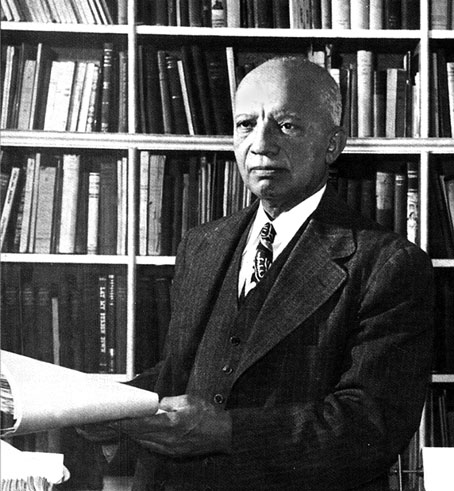
1915—The “Father of Black History,” Carter G. Woodson, leads the founding of the Association for the Study of Afro-American Life and History during a meeting in Chicago. It was originally called the Association for the Study of Negro Life and History. The organization became the nation’s leading organizing center for the dissemination of information on Black history. Woodson was also the founder of Negro History Week, which grew into the current day Black History Month.
1934—Renowned poet Sonia Sanchez was born Wilsonia Benita Driver on this day in Birmingham, Ala. She has authored more than a dozen books of poetry and has been a professor at several American universities. Sanchez joined the Nation of Islam in 1972 but left in 1975 following a dispute over the issue of women’s rights.
September 10
1847—John Roy Lynch is born into slavery on this day near Vidalia, La. Lynch would be among the first group of Blacks to serve in the United States Congress after slavery. He represented the state of Mississippi. Lynch would even serve as temporary chairman of the Republican Party National Convention. During this period, the Republicans were the more progressive and friendly-to-Blacks party. But as the period of Reconstruction faded and Southern politicians made it virtually impossible for Blacks to remain in political office, Lynch moved to Chicago and practiced law. He died in 1939 at the age of 92.
1965—Father Divine dies in Philadelphia, Pa. From about 1910 to his death in 1965, Father Divine was Black America’s foremost spiritual and cult leader. Indeed, he claimed to be God and his full self-given name was Rev. General Jealous Divine. Critics called him a charlatan and a religious scam artist. But initially as a traveling preacher and then from a base in New York City, Divine built his small church into the International Peace Mission—a large mass congregation with members and churches throughout the United States and several foreign countries. Little is known about his background, but he was probably born in Georgia and his real given name was probably George Baker. During his heyday, Divine’s only serious competition was another Black spiritual-cult leader by the name of Daddy Grace.
1976—Mordecai Johnson, the first Black president of historic Howard University in Washington, D.C., dies. He was one of the nation’s foremost educational leaders. He was 86 when he died.
September 11
1740—Was he America’s first Black doctor and or dentist? It is unclear but on this day in 1740 the Philadelphia Gazette carries a report of a “Negro” named Simon who was skilled in the abilities to “bleed and draw teeth.” During the colonial period, such a phrase was normally used in reference to doctors and dentists.
1851—In a fairly unusual development, a group of Blacks on this day in 1851 rout a group of slave catchers who had come to Christiana, Pa., to re-capture runaway slaves. One White was killed and a second one was seriously wounded.
September 12
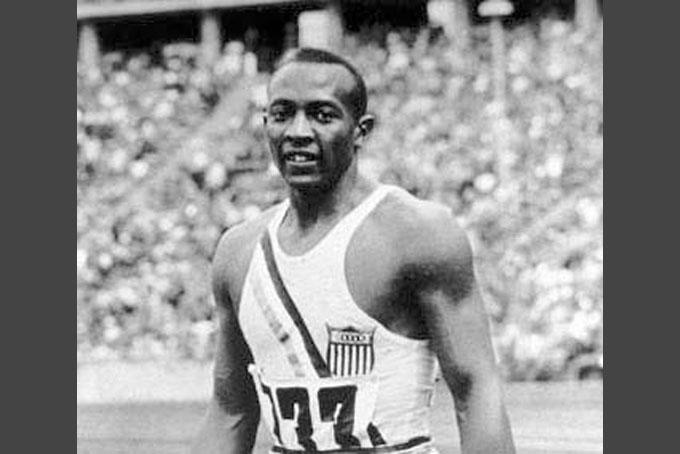
1913—Track and field athletic legend Jesse Owens is born on this day in Oakville, Ala. Owens would achieve international fame when he won four gold medals at the 1936 summer Olympic Games in Berlin, Germany. His feat helped undermine Adolph Hitler’s myth of Aryan or White superiority.
1977—One of the greatest unsung heroes of the struggle against then White-ruled South Africa’s system of racial suppression known as apartheid is murdered on this day by South African law enforcement officials. Steve Biko was a leader of the country’s Black Consciousness Movement. He believed that one of the most destructive attitudes undermining Black progress throughout the world was that Blacks were not truly proud to be Black.
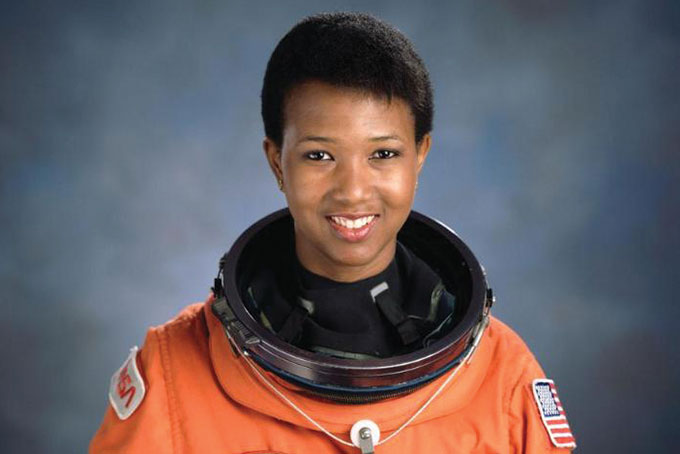
1992—Dr. Mae Jemison becomes the first African-American woman in space when she was launched from the Kennedy Space Center on this day as part of a joint U.S.-Japanese mission. Since resigning from NASA, the multi-talented Jemison has started a company which aims to improve health care in Africa. In addition to her native English, Jemison speaks Russian, Japanese and the East African language of Swahili.
September 13
1663—The first documented slave rebellion in America is set to take place. The revolt in Gloucester County, Va., involved Black slaves and White indentured servants. However, it was betrayed by a White indentured servant.
1885—Alain L. Locke, philosopher and the first Black Rhodes scholar is born. He became a professor at Howard University and one of Black America’s leading intellectual figures.
1962—In an event which demonstrated the tenacity of racism, especially in the South, Mississippi Gov. Ross Barnett pledged to defy the federal government and block the court ordered admission of a Black man—James Meredith—to the University of Mississippi. He made his declaration during a statewide television and radio address. Barnett said he would go to jail to prevent integration, arguing, “There is no case in history where the Caucasian race has survived social integration.” Despite his talk, Barnett would eventually relent and Meredith (with the aid of U.S. Marshals) was allowed to attend the university.
1971—Approximately 1,500 state troopers are ordered by Gov. Nelson Rockefeller to storm New York’s Attica prison to break up a takeover of the prison by Black inmates demanding better conditions. When the dust settled, the storming of the prison resulted in the deaths of 32 inmates and 10 guards who had been held hostage.

1996—Pioneering rapper Tupac Shakur dies from his wounds after being shot in Las Vegas, Nev. He was only 25. Shakur has now become a near cult figure among rappers. His killers were never brought to justice.
About Post Author