


November 2
1889—The last great African king is crowned. Menelik II became “Negusa Nagast” (King of Kings) of Abyssinia (Ethiopia). At that time Abyssinia included not only present day Ethiopia but parts of Kenya, Somalia and the Sudan. European colonialism would weaken and reduce the size of the kingdom. Menelik could trace his heritage back to King Solomon and the Queen of Sheba of the Christian Bible.
1903—Maggie L. Walker opens the St. Luke Penny Savings Bank in Richmond, Va. Walker was one of the most accomplished business women in Black American history having founded a bank, a newspaper, other businesses and a political party known as the Lily Black. Constant refrain in her speeches was “Let us put our money together…and reap the benefits.”
1983—Conservative Republican President Ronald Reagan signs the law that designates the third Monday in January as Martin Luther King Jr. Day. Shortly after the signing he angers some Blacks when in response to a reporter’s question he suggests that King may have been a communist.
November 3
1868—John W. Menard is elected to the U.S. Congress and was among the first group of Blacks to take a seat in that body during the Reconstruction period, which followed the Civil War. He defeated a White candidate in Louisiana’s 2nd District.
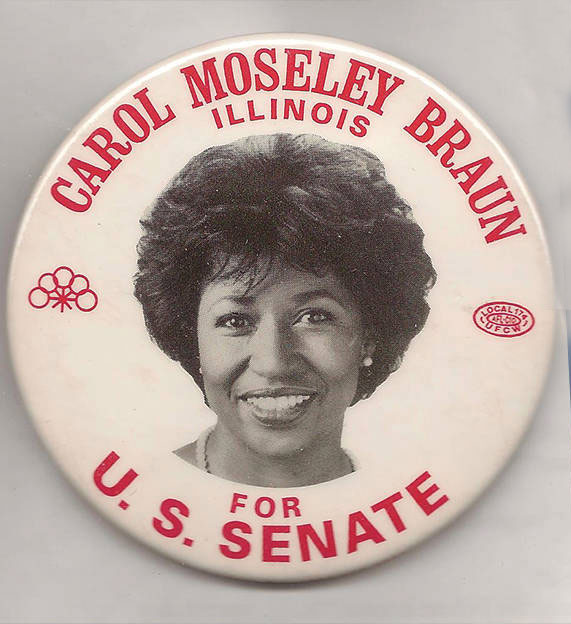
1992—Carol Moseley Braun, D-Ill., becomes the first Black woman elected to the United States Senate.
1992—James Clyburn becomes the first Black person elected to U.S. Congress from South Carolina since Reconstruction. He is now one of the most power people in Congress.
November 4
1872—P.B.S. Pinchback was elected to the United States Congress from Louisiana. He was one of the most colorful Blacks who took seats in Congress after the Civil War. His full name was Pinckey Benton Stewart Pinchback.
1872—Blacks actually take political power in Louisiana. C.C. Antoine is elected lieutenant governor; P.G. Deslonde become secretary of state; and W.B. Brown becomes superintendent of public education. Virtually all Black political gains would be taken away as Reconstruction gave way to the Jim Crow period.
1982—Scholar and educator Rayford Logan dies. He was one of Black America’s most prominent educators and historians, and the author of numerous books. He was also the longtime chairman of Howard University’s history department.
1999—Daisy Bates dies at 84. Her efforts and leadership helped integrate public school education in America. Bates was prominent in aiding the “Little Rock a group of Black students that integrated Central High School in Little Rock, Ark.
November 5
1867—The first Reconstruction Constitutional Convention takes place in Montgomery, Ala. In attendance were 90 Whites and 18 Blacks. Reconstruction would bring forth a period of tremendous political and educational advancement for ex-slaves after the Civil War. But Reconstruction was significantly undermined by the Hayes-Tilden of 1877 and the beginning of the anti-Black Jim Crow period.

1956—The Nat King Cole Show—the first Black hosted network television variety show—debuts. The show began with just 15 minutes and later expanded to half-an-hour but was pulled in 1957 for lack of advertiser support.
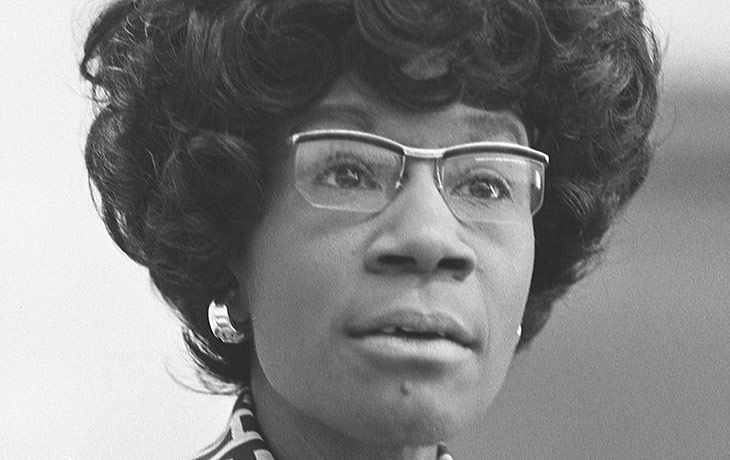
1968—Brooklyn, N.Y.’s Shirley Chisholm becomes the first Black woman elected to the U.S. Congress. She would later make an unsuccessful bid for the Democratic Party’s presidential nomination.
1974—Walter Washington becomes the first elected mayor of Washington, D.C., as the predominantly Black city gains limited voting rights. Washington had declined an earlier appointment to be the city’s commissioner because the proposal did not give him control of several city agencies including the police department.
November 6
1858—Samuel E. Cornish dies. Along with John Russwurm, he established the first black-owned and operated newspaper in America—“Freedom’s Journal.” The newspaper’s famous motto was “We wish to plead our cause.”
1860—Abraham Lincoln is elected the 16th president of the United States. His opposition to the expansion of slavery prompted slave-owning states to succeed from the union which brought about the Civil War. Lincoln’s opposition to slavery was more pragmatic than moral signified by his famous phrase—“A nation cannot exist half-slave and half-free.”
1900—James Weldon Johnson composes “Lift Ev’ry Voice And Sing.” The song becomes the “Black National Anthem.” In 1920, Johnson becomes the first Black head of the NAACP.
November 7
1837—Elijah P. Lovejoy, one of the White heroes of Black history, is killed by a pro-slavery mob while defending his anti-slavery newspaper in Alton, Ohio.
1841—The “Slave Revolt On The Creole” occurred when 125 Black slaves overpowered the crew of the slave ship Creole and sailed it to the Bahamas where they were granted freedom and political asylum.
1876—The disputed presidential election that changed the course of Black history occurs. The dispute led to the Hayes-Tilden Compromise. In order to be declared president, Republican Rutherford B. Hayes reached an agreement with southern Democrats, which had the effect of ending much of Reconstruction and the protection of Black rights. The Jim Crow era began with “Black codes” and other measures, which severely limited Black rights. Many of these rights were not restored until the 1960s.
1934—The first Black Democrat is elected to the United States Congress. His name was Arthur L. Mitchell. Up until this point in history, most Blacks were Republicans because of the roles of Abraham Lincoln and a group known as the “Radical Republicans” in ending slavery. Mitchell defeated Oscar DePriest for the congressional seat from Chicago.
1967—Riots spread throughout the nation. A Senate committee issues a report revealing that there were 75 major Black riots in cities across the nation. This compared with just 21 the previous year.
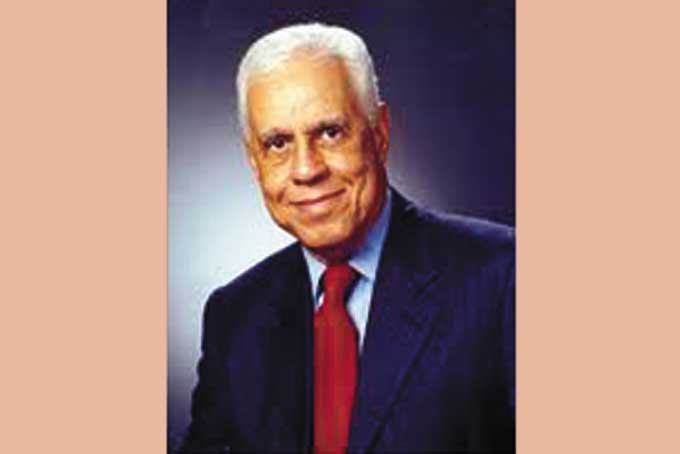
1989—L. Douglas Wilder is elected the first Black governor of Virginia since Reconstruction. Virginia was actually governed by a Black man for a brief period during Reconstruction.
November 8
1898—The Wilmington Massacre occurs. A mob of Whites launched a terror campaign against Blacks in Wilmington, N.C. They destroyed a Black newspaper plant, seized control of city government and officially left nine to 11 Blacks dead. However, the unofficial death toll was said to be closer to 100.
1932—Franklin Delano Roosevelt is elected president. During his 16 years in office Roosevelt instituted a series of New Deal programs designed to pull the nation out of the Great Depression. It was during his years in office that Blacks overwhelmingly switched from the Republican Party to the Democratic Party even though Roosevelt adopted some policies that angered Blacks.

1933—Actress Esther Rolle is born in Pompano Beach, Fla. She is best remembered for her role in the 1970s television series “Good Times.”

This Sept. 14, 1966, file photo shows Edward W. Brooke joining campaign workers in celebration, in Boston, after winning the Republican nomination for U.S. Senate. (AP Photo/Frank C. Curtin, File)
1966—Edward W. Brooke is elected the first Black U.S. senator since Reconstruction. He was a Republican from Massachusetts.
About Post Author