



Close Menu
  • Home
  • News
    • Local
  • Opinion
  • Business
  • Health
  • Education
  • Sports
  • Podcast

Subscribe to Updates

Get the latest creative news from FooBar about art, design and business.

What's Hot

Benda World Is Ready to Love

Angel Reese Wins 2026 WNBA Defensive Player of the Year

CalAIM Helped Alfred Flores Rebuild His Life. Why Can’t More Californians Access Its Benefits?

Facebook X (Twitter) Instagram
  • Lifestyle
  • Podcast
  • Contact Us
Facebook X (Twitter) Instagram Pinterest Vimeo
The Windy City Word
  • Home
  • News
    1. Local
    2. View All

    Youth curfew vote stalled in Chicago City Council’s public safety committee

    Organizers, CBA Coalition pushback on proposed luxury hotel near Obama Presidential Center

    New petition calls for state oversight and new leadership at Roseland Community Hospital

    UFC Gym to replace shuttered Esporta in Morgan Park

    Angel Reese Wins 2026 WNBA Defensive Player of the Year

    CalAIM Helped Alfred Flores Rebuild His Life. Why Can’t More Californians Access Its Benefits?

    How Inglewood’s Homeless Seniors Are Finding Relief Through Housing and Trauma-Informed Care

    Street Medicine Brings Care to Unhoused Angelenos — But Housing Remains the Missing Prescription – Observer Group Newspapers of Southern California, inc.

  • Opinion

    Rep Davis, Olive Post CDR., Call on Trump to Restore file of Black Vietnam War Hero to Website

    Capitalize on Slower Car Dealership Sales in 2025

    The High Cost Of Wealth Worship

    What Every Black Child Needs in the World

    Changing the Game: Westside Mom Shares Bally’s Job Experience with Son

  • Business

    Illinois Department of Innovation & Technology supplier diversity office to host procurement webinar for vendors

    Crusader Publisher host Ukrainian Tech Businessmen eyeing Gary investment

    Sims applauds $220,000 in local Back to Business grants

    New Hire360 partnership to support diversity in local trades

    Taking your small business to the next level

  • Health

    CalAIM Helped Alfred Flores Rebuild His Life. Why Can’t More Californians Access Its Benefits?

    How Inglewood’s Homeless Seniors Are Finding Relief Through Housing and Trauma-Informed Care

    Street Medicine Brings Care to Unhoused Angelenos — But Housing Remains the Missing Prescription – Observer Group Newspapers of Southern California, inc.

    OP-ED: Washington Has a Chance to Save Veterans’ Lives

    TILGHMAN: Why Parents of Children with IEPs Should Know Their School Bus Driver

  • Education

    Author Kristen Amundson Explains ‘The Grandparent Effect’ and How It’s Helping Children Thrive Through Love, Support, and Connection

    Responsible AI Development Requires a Seat at the Table for Black America

    COMMENTARY: Being Frank: a Safe Place

    Outnumbered: Elbert Cox’s Equation for Greatness

    Gov. Newsom’s Latest Appointees Include Sacramento Advocate for Formerly Incarcerated Students; State’s New Tech Chief

  • Sports

    Angel Reese Wins 2026 WNBA Defensive Player of the Year

    A Viral Moment with Purpose: Keep Your Head Up Gives Back

    HBCU Leaders, Corporate Partners Convene in D.C. to Strengthen Support for Black Colleges’ Athletic Programs

    NFL: Jalen Hurts did not fold; Caleb Williams goes down

    NBA All-Star Damian Lillard Returns Home for 15th Annual Backpack Giveaway

  • Podcast
The Windy City Word
Local

State seeks to combat food deserts with $20 million program to seed independent grocers

staffBy staffUpdated:No Comments4 Mins Read
Facebook Twitter Pinterest Telegram LinkedIn Tumblr Email Reddit
Share
Facebook Twitter LinkedIn Pinterest WhatsApp Email

The state of Illinois is creating a $20 million grant program aimed at bringing grocery stores to areas that lack easy access to fresh foods under a measure Gov. J.B. Pritzker signed into law Friday.

The program, which Pritzker touted in his budget proposal to lawmakers in February, was approved with broad bipartisan support during the legislature’s spring session, though Republicans voted against the $50.4 billion state budget that actually provides the funding.

Under the Illinois Grocery Initiative, the state Department of Commerce and Economic Opportunity will provide financial assistance and other support to independent for-profit and nonprofit retailers, co-ops, and local governments that open or preserve grocery stores in both urban and rural areas that lack or are in danger of losing them.

“We’ve too often seen large retail food chains leave these communities for greener pastures, or what they think are greener pastures,” Pritzker said during a bill-signing event in Venice, a town of about 1,500 across the Mississippi River from St. Louis. “The truth is a grocery store anchored in and run by people in the neighborhood is more likely to survive.”

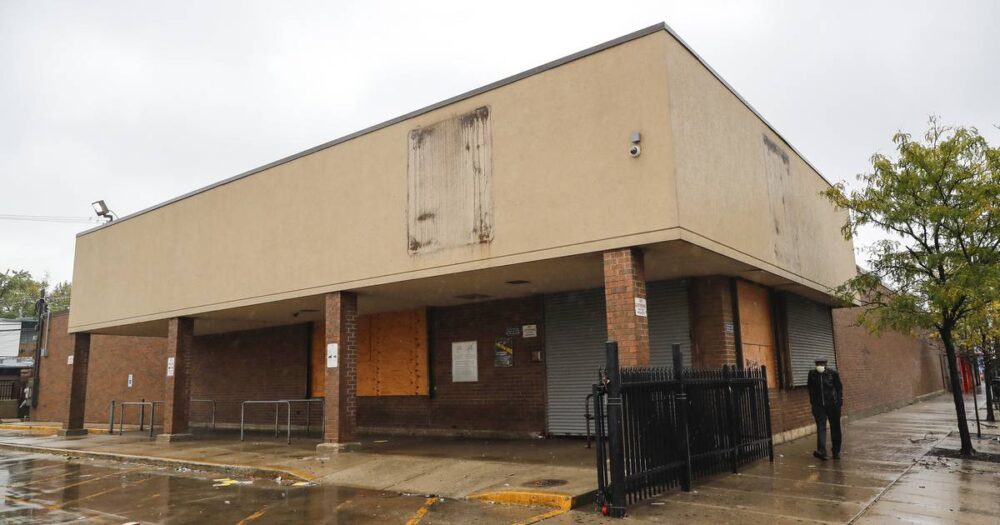
High-profile store closures by Walmart, Target and Whole Foods on the South Side of Chicago in recent years have highlighted the issue in urban communities, but some rural areas also lack access to grocery stores.

The law, which takes effect immediately, defines “food deserts” by certain income criteria and whether a large share of residents must travel long distances to reach a grocery store — half a mile in urban areas or 10 miles in a rural one. A 2021 study from the Illinois Department of Public Health found that nearly 3.3 million Illinois residents were living in areas that met those criteria.

The Department of Commerce and Economic Opportunity will be able to set up rules to designate other areas as food deserts based on criteria such as “poverty metrics and access to existing grocery stores.”

The bulk of the program’s funding will go toward financial assistance in the form of grants or loans for purposes such as feasibility studies, marketing, salaries and benefits for workers, down-payment or rent assistance, capital improvements, or for buying and establishing a new grocery store. Grant recipients also will qualify for other incentives such as tax exemptions on utilities and building materials.

Of the total funding, 20% will be set aside to help existing eligible stores upgrade to energy-efficient equipment.

Making better food options more available to people in low-income urban and rural areas across the state will pay dividends by improving people’s health and well-being, said Democratic state Sen. Christopher Belt of Swansea, who sponsored the measure in the Senate, where it was approved without opposition.

“The $20 million to fund this program pales in comparison to the dollars we spend on (emergency room) visits, health insurance programs, incarceration and loss of productivity,” Belt said. “If we truly are what we eat, then the return on investment of this program should be astronomical.”

First-term state Rep. Mary Beth Canty of Arlington Heights, the measure’s House sponsor, said she was asked to work on this issue by a group of kids from Chicago who saw major chains leaving the neighborhood.

“As lawmakers, we have several responsibilities, but the most important one is to build strong, safe and healthy communities for our constituents, families and children to enjoy,” Canty said. “And this means ensuring that our communities have everything they need to grow and thrive.”

Underscoring the widespread nature of the problem, Republican Sen. Dale Fowler of Harrisburg, who represents the southern tip of the state and co-sponsored the proposal, said there’s an entire county in his district without a single grocery store.

While support for the proposal was widespread, it wasn’t universal, winning approval in the House on a 96-17 vote.

During the debate this spring, one of the opponents, GOP Rep. Martin McLaughlin of Barrington Hills questioned the wisdom of having government involved in opening grocery stores, calling the bill “absolutely one of the dumbest ideas, from a taxpayer perspective, that I could imagine.”

Despite Friday’s fanfare, many of the specifics of the program have yet to be established, and officials have not provided a timeline for when grant applications will become available.

In addition to financial assistance, the program, once established, also will provide technical support with issues such as workforce development and supply-chain management.

dpetrella@chicagotribune.com

Share. Facebook Twitter Pinterest LinkedIn Reddit WhatsApp Telegram Email
Previous ArticleChamplified Health & Wellness Solutions partners with the American Diabetes Association and Baxter International Foundation for its inaugural 5K walk/run
Next Article Chicago police officer charged with abusing sleeping teens, filming child porn
staff

Related Posts

Youth curfew vote stalled in Chicago City Council’s public safety committee

Organizers, CBA Coalition pushback on proposed luxury hotel near Obama Presidential Center

New petition calls for state oversight and new leadership at Roseland Community Hospital

Leave A Reply Cancel Reply

Video of the Week
https://www.youtube.com/watch?v=AxFXtgzTu4U
Advertisement
Video of the Week
https://www.youtube.com/watch?v=OjfvYnUXHuI
ABOUT US


The Windy City Word is a weekly newspaper that projects a positive image of the community it serves. It reflects life on the Greater West Side as seen by the people who live and work here.

OUR PICKS

Why Are Hybrids Dominating the Auto Market Today?

2 Minute Warning with Rev. Elvin J. Dowling

2 Minute Warning LIVEstream – “Puff, Puff, Pass the Cash”

MOST POPULAR

CalAIM Helped Alfred Flores Rebuild His Life. Why Can’t More Californians Access Its Benefits?

How Inglewood’s Homeless Seniors Are Finding Relief Through Housing and Trauma-Informed Care

Street Medicine Brings Care to Unhoused Angelenos — But Housing Remains the Missing Prescription – Observer Group Newspapers of Southern California, inc.

© 2026 The Windy City Word. Site Designed by No Regret Medai.
  • Home
  • Lifestyle
  • Podcast
  • Contact Us

Type above and press Enter to search. Press Esc to cancel.