



The Oakland City Council voted unanimously this week to extend the city’s moratorium on AI data centers for 10 months – giving the city time to produce a policy that protects residents from the public health and safety dangers that are posed by the proliferation of data centers.
The moratorium extension, which passed at Tuesday’s council meeting, will keep the existing 45-day moratorium in place until Oct. 5, 2027.
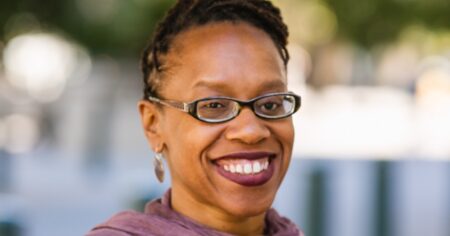
“We’re seeing basically an uprising across the country when it comes to how data centers are operating in regard to land use, impacts to the environment, excessive water use and pollution, air pollution, noise pollution, a host of things that are really negatively impacting communities,” said Councilmember Carroll Fife, who is leading the City Council’s efforts to pass the moratorium.
“I represent a district that many of these potential entities are interested in, and two of the giants in the tech industry have leased space in West Oakland, and there’s been another showing interest in a downtown location,” she said.
“I felt it was imperative that I take immediate action to protect Oakland residents from what we’ve seen happen in other parts of the country,” Fife continued. “This is not a rejection of technology. This is not a rejection of economic growth. It’s guardrails against an industry that we’ve seen steamroll individuals throughout the entire globe.”
The city must ensure that it has adequate guardrails and that the community is actively involved in decision-making, she said. “It’s important that our staff have the ability to do the appropriate study, and … to do the appropriate outreach to the community, so the community has a voice in anything that we do that will impact their lives.”
In her recent State of the City address, Mayor Barbara Lee backed the original 45-day moratorium, which passed on Oct. 6 and is set to expire on Nov. 20.
Lee supported the moratorium to give residents more time to consider before any projects move forward, saying, “Residents need to weigh in on any industry that’s trying to come to Oakland.”
Other California cities that already have passed data center moratoriums include San Francisco, Hayward, Oakley, Richmond, Monterey Park, Gilroy, South El Monte, Montebello, and Calexico.
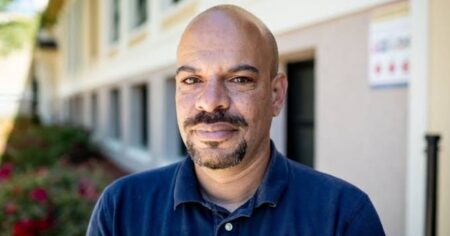
Speaking at the meeting, Bill Gilchrist director of the city’s Planning and Building Department, said that during the moratorium, the city is committed to “looking at areas that might be most severely impacted by land use and residential proximity, and making sure we engage members of the community who may historically have not been able to participate or be invited to participated (in this kind of discussion).”
“The idea for us is to ‘do no harm,’” he said.
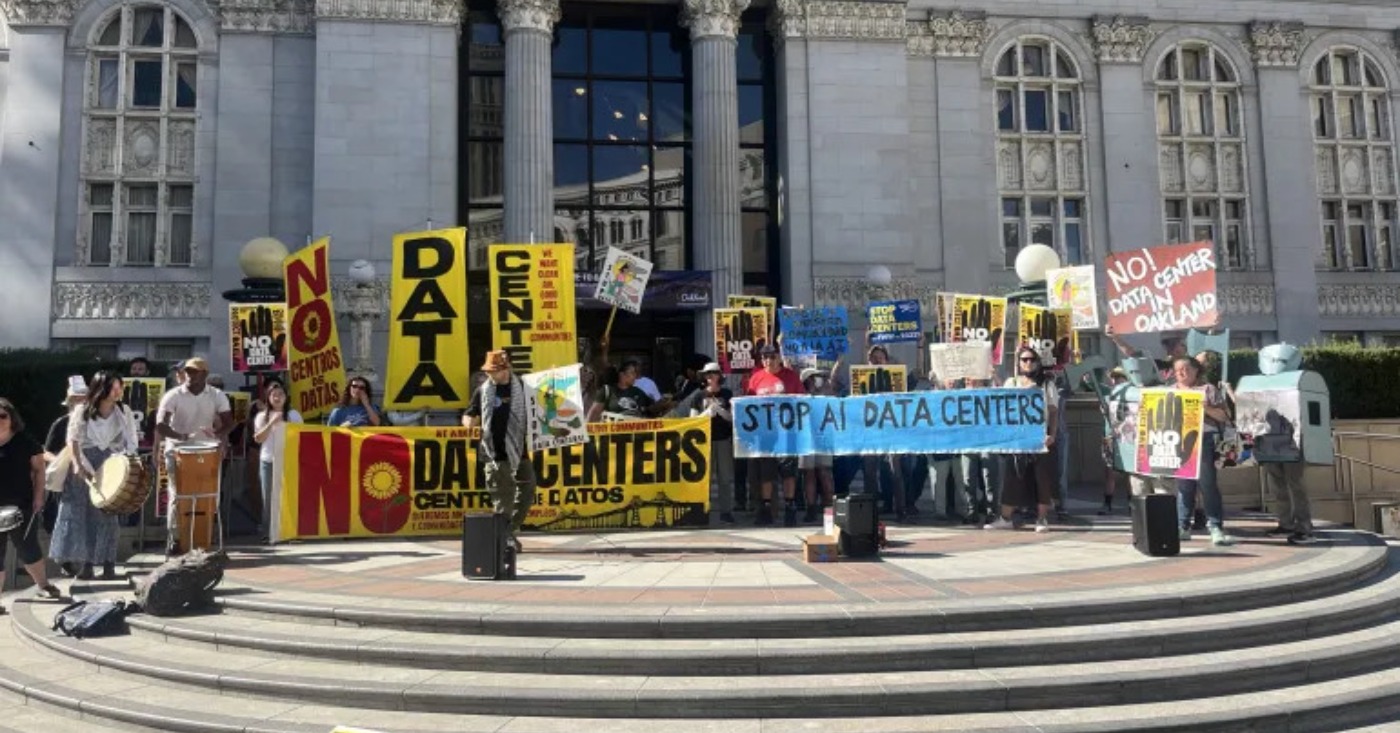
Thirty-five public speakers signed up to talk about on the moratorium extension. Almost of them supported the extension, some praising Fife for her leadership on the issue.
Some of the speakers urged the council to consider a permanent ban on data center development in the city.
Supporting the moratorium extension, Laney College professor Peter Brown said, “Don’t cast your vote today based on the illusion we’re operating in the old economy, where corporate investment in Oakland meant thousands of lasting, good-paying jobs, as well as property, business, and income taxes flowing into city coffers,” he said.
“Those days are long gone in this new economy, where every investment is just another asset to be exploited and used as collateral for more investment,” Brown continued. “Every corporate move is to extract from our communities.”
Nyah Tisdell, an East Oakland community organizer with Communities for a Better Environment (CBE), said, “We have community meeting every month…Community members say no (to data centers),” that will go straight to East Oakland, which already has so much industry, so much pollution, and we are trying to better our communities.”
A speaker for Care for Community Action (C4C) said her organization has surveyed more than 400 residents and found that 73% favor a permanent ban on all data centers being built in Oakland.
According to Rev. Leslie Bowling-Dyer, “Data centers are a part of the necessary infrastructure for the rise of an economically and politically untouchable class, and people are not just being lunatics displaying an irrational fear of technology. Technological innovation is not equivalent to social progress. Technological advance is not the problem in itself, but it’s the people who control it.”