


Four years ago, the Shedd Aquarium and local nonprofit Urban Rivers wanted to breathe new life into the Chicago River, a long relic of the city’s industrial history. The groups installed human-made floating islands filled with lush plants and greenery in the river’s North Branch, improving the well-being of local wildlife and Chicagoans alike.
The organizations are looking to bring these same benefits to the South Side, with plans to install a new set of floating wetlands totaling over 3,000 square feet in the river adjacent to Canal Origins Park.
Advertisement
The new project is possible through grants from the National Fish and Wildlife Foundation and the Pritzker Family Foundation. Organizers expect the floating wetland to be complete in the next week.
Jaclyn Wegner, director of conservation action at Shedd, said the islands are a first step in revitalizing the area. After about a year and a half of planning, Shedd and Urban Rivers are working to construct six wetlands in total, with hopes of unlocking untapped ecological potential.
Advertisement
“There’s a lot living here, but they are really lacking quality habitat,” Wegner said. “When you look out to the river, you see a lot of hard walls. You see a lack of vegetation, things that provide food and shelter for animals.”
The South Branch of the Chicago River has historically been developed for industrial needs, largely for moving goods and dumping. The floating islands will live near Bubbly Creek, which sits at the southern fork of the river. The name recalls a time when local slaughterhouses discarded animal carcasses in the water. The decaying remains would release bubbles that would rise to the water’s surface.
[ $1 million project aims to restore habitats and expand conservation efforts at Bubbly Creek ]
The effects of an industrialized river run deep, according to Wegner. Steel walls, infrastructure and barges have encroached on natural riverbanks and wildlife habitats. The habitat loss and pollution continue to make the rivers unwelcoming to wildlife and people, she said.
The addition of the floating islands may help buffer these effects, using plants to help create natural habitats along the Chicago River and encourage the return of native species of fish, birds and other wildlife. These islands can also build root systems that help filter contaminated or nutrient-dense water.
“We’re working on this floating wetland installation as kind of a first step to get there,” Wegner said.
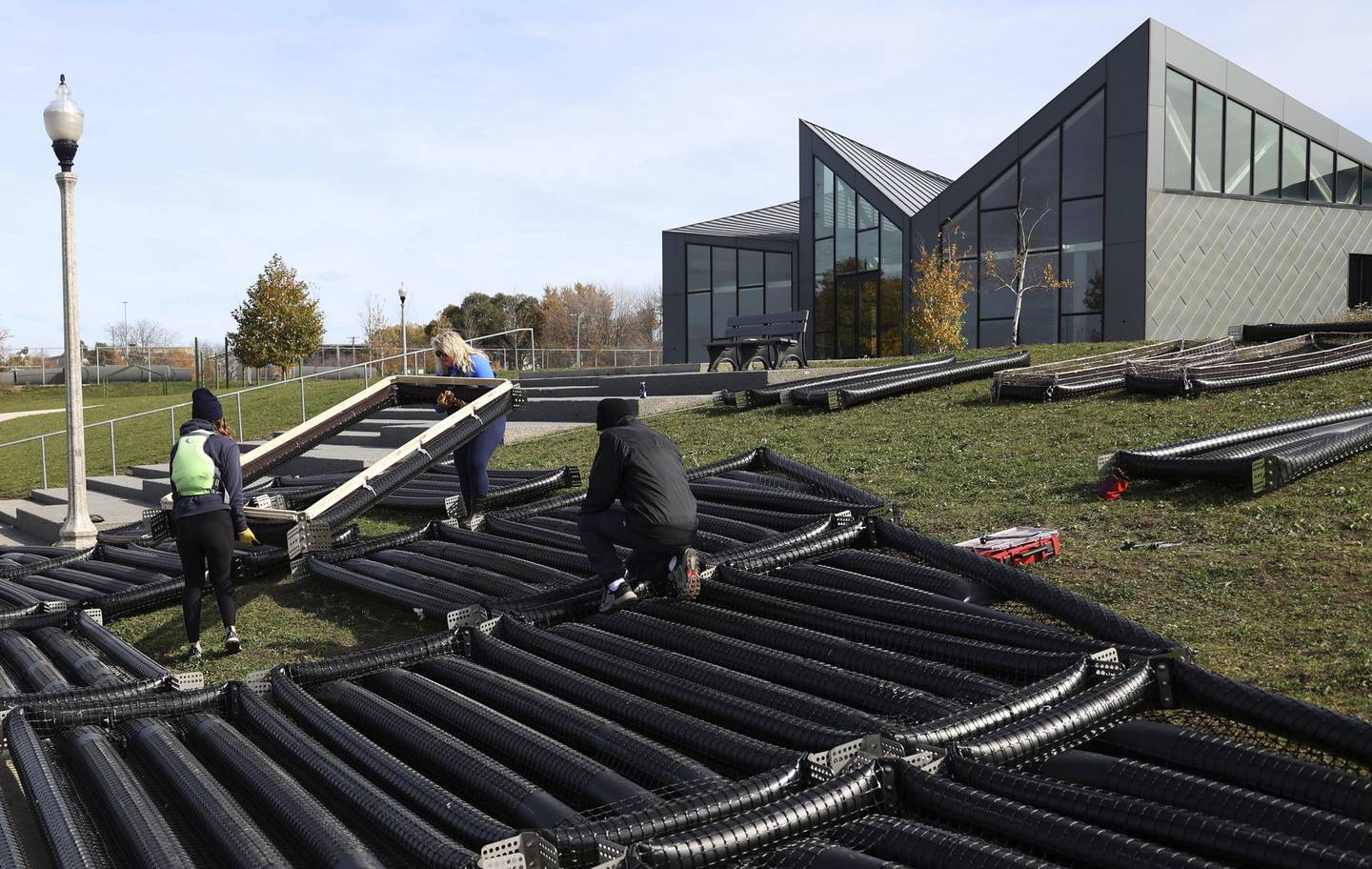
These human-made platforms float on the surface of the water and interlock to form larger islands, anchoring to the banks of the river.
The six floating wetlands will form a kind of archipelago of islands along the river. The islands come together piece by piece, almost like Legos, that can be arranged into different configurations. Some of the mats will incorporate a chained basket at the bottom for submerged plants, such as lilies. Fish and other wildlife can also use them as refuge.
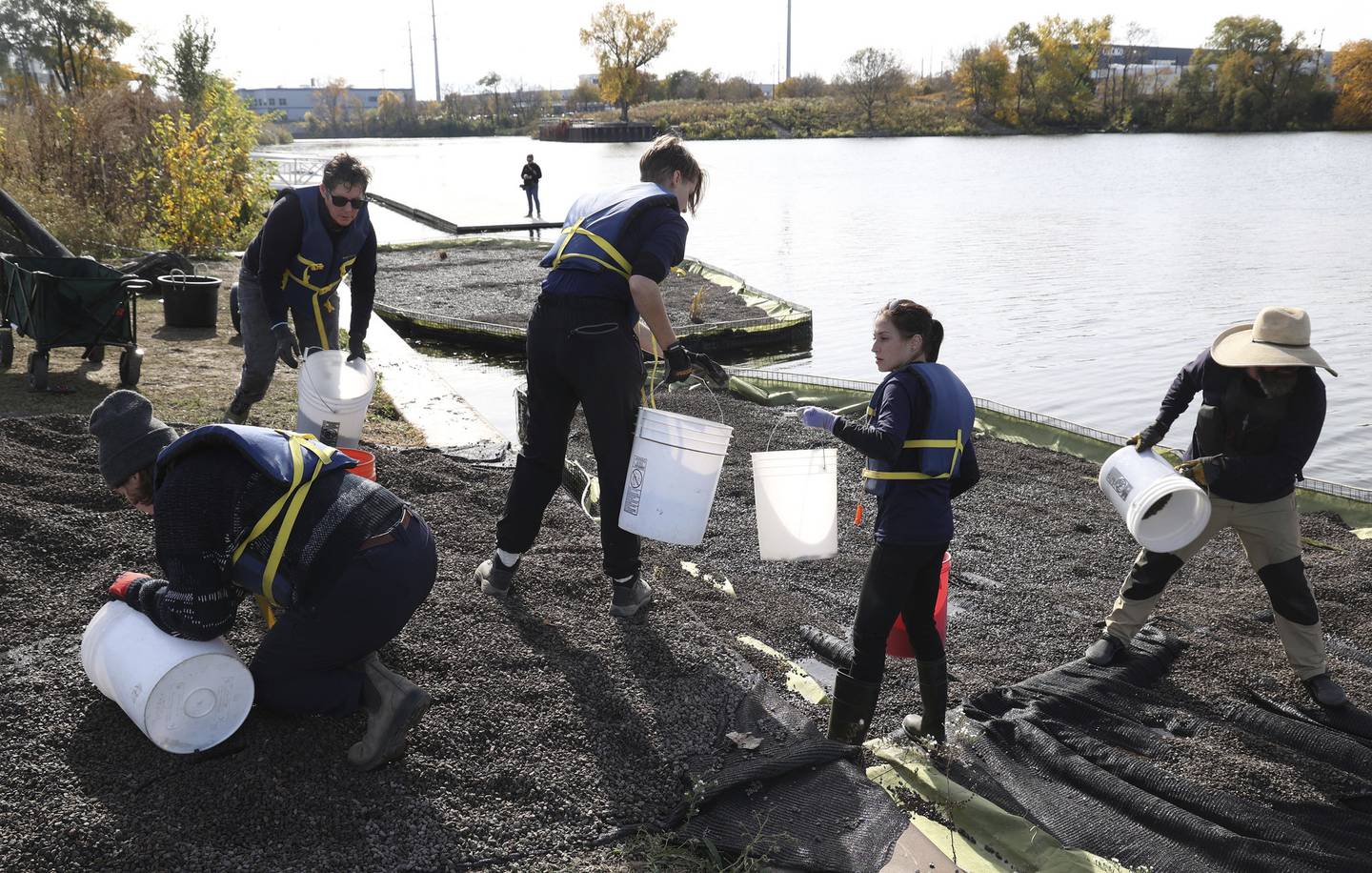
For the past week, volunteers from Shedd, Urban Rivers and the community have helped construct main pieces of the islands using a combination of plastic tubing, weed mat and fencing.
Advertisement
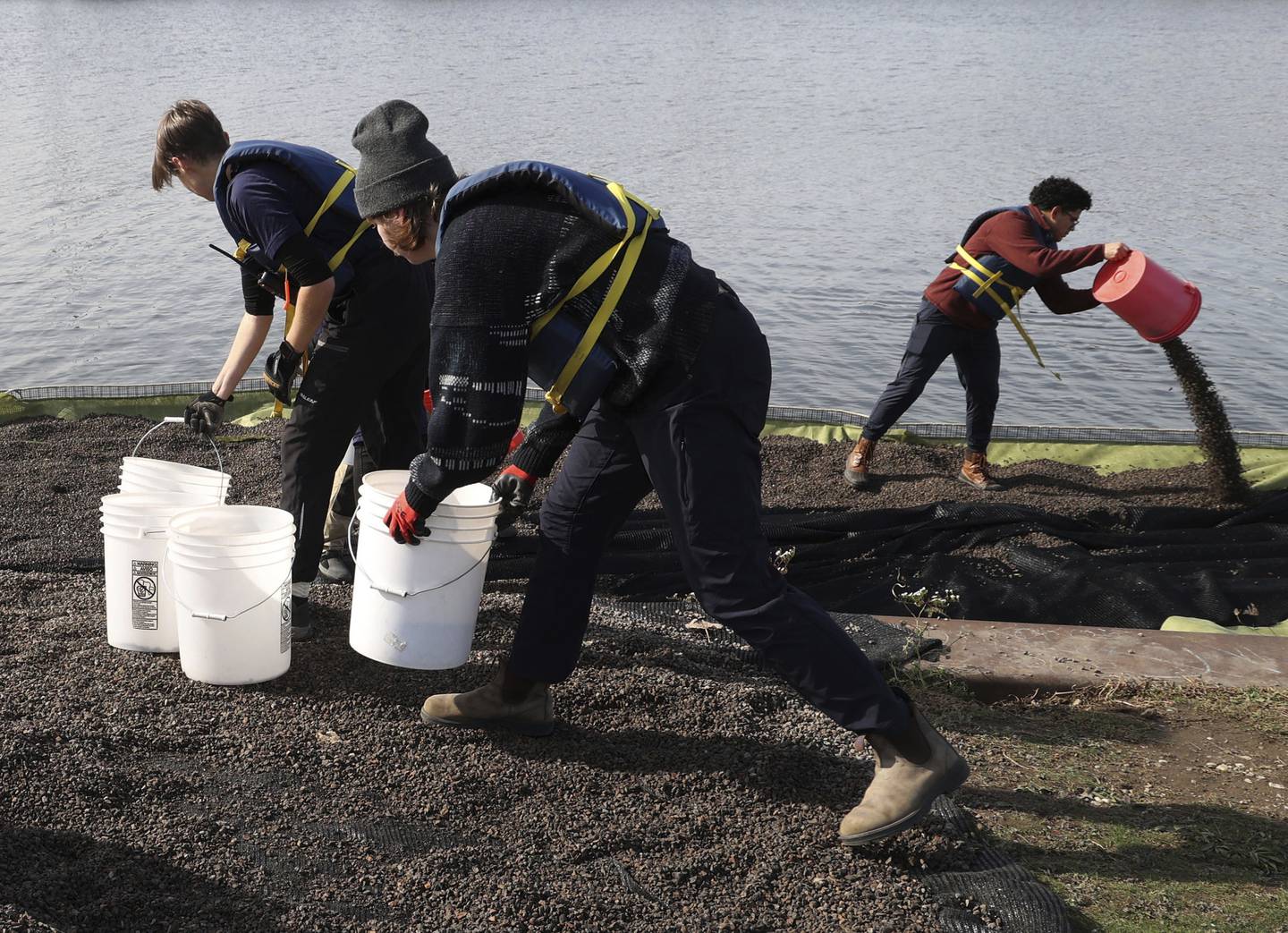
On Thursday, volunteers could be seen forming an assembly line to toss aquarium substrate along the top of the platforms. The plants will grip onto the substrate to grow above and beneath the water’s surface.
The installation process started just about a week ago, and locals have already shown interest in the work.
“We’ve had so many community members come by to say, ‘What are you doing here? This seems really interesting. I want to learn more,’ ” Wegner said. “Some of them run home to grab gloves and come back to volunteer.”
Northwestern graduate student Erin Snyder traveled a bit farther. She first came down from Edgewater last week to volunteer. She studies plant biology and conservation, so she felt especially excited to take part in an effort to improve Chicago’s natural space.
“Just seeing the amount of work that goes into this makes me excited to see it get out there,” Snyder said. “It makes me excited to see all the other projects that Urban Rivers and Shedd will do in the future.”
Wegner said Shedd has connected with a variety of organizations around the South Branch area, including around Pilsen and Chinatown, for this project. She said Shedd wants to continue engaging with local residents to help them feel invested in improving their natural space.
Advertisement
“We’re going to be doing a bunch of community engagement and programming for people to connect, to explore and really be part of improving the health of the river,” Wegner said. “That’s important for wildlife and also important for all of us.”
Shedd and Urban Rivers first partnered in 2018 to construct floating wetlands on the North Branch Canal of the Chicago River, a human-made channel along the east side of Goose Island, as part of a project known as Wild Mile.
Anecdotally, Shedd and Urban Rivers organizers saw the benefits, with residents sharing that they enjoyed the greenery and increased presence of fish, beavers and other wildlife.
Shedd, Urban Rivers and other environmental organizations have since identified unique possibilities for the South Branch.
Afternoon Briefing
Daily
Chicago Tribune editors’ top story picks, delivered to your inbox each afternoon.
Preliminary research looking at fish species along the North Branch and South Branch of the Chicago River yielded unexpected results. The study showed a larger than expected variety of aquatic life on the South Side. Researchers see the area as a biodiversity hot spot that wetland islands can further cultivate, said Nick Wesley, executive director of Urban Rivers.
“It’s just a fantastic area. Some of these places, they’re so isolated,” Wesley said. “They have a lot of potential for really creating a fantastic ecosystem. These (wetlands) just kind of add more habitat and more opportunities for that to really develop.”
Advertisement
“If you look at the lakefront, the development, that was very clear early on that it was first industry and then it became recreation,” Wesley said. “The river did not have that.”
He hopes the project can help give people more access to the wildlife and ecosystems in which they live.
“For people in urban areas, it’s hard to get good access to nature,” Wesley said. “The river is something that just flows through the entire city. It’s kind of a connecting piece, connecting different communities together.”
Wesley also sees the project as a way of envisioning a better future for those communities.
“This is such a fun project, but it’s really part of supporting diversity, especially within a city that is really developed more for the sake of industry,” Wesley said. “We’re trying to kind of rewind the clock, but also have a vision for what the future is going to be like.”


