



The buses filled with migrants from the Texas border continue to arrive in Chicago, but it’s easy to forget that people are on those buses, people with stories often overshadowed by politics and conversation around the flawed immigration system in America, or by the desperate need to find shelter, warm food and clean clothes for the new arrivals.
Nearly 4,000 migrants arrived in the city directly from Texas on the buses sent by Gov. Greg Abbott, according to city officials, but many more refugee seekers — mainly from Venezuela — have also been coming, on their own, to the promise of safety and job opportunities in Chicago.
Advertisement
Without any governmental help, a small house of worship on Division Avenue, Adalberto Memorial United Methodist Church, has turned into a temporary shelter that has housed nearly 100 migrants. Many have transitioned into more permanent housing and found jobs, establishing a network within the group to lend each other a hand in their new home, Chicago.
At the church, the migrants share their journeys, fears, and dreams. As some move out, others make room for new arrivals by cleaning up the sleeping areas in between church pews. And during Sunday service, everyone — those who have transitioned out and those who recently arrived — is invited to have lunch together.
Advertisement
“They are creating a new home, we give God thanks for their new home,” said Jacobita Cortes, the church’s pastor.
Beyond the new reality that the migrants face and the story of their desperate need to flee their home countries to undergo a journey north where most are now homeless, are people who once had homes, and jobs.
Here are some of their stories:
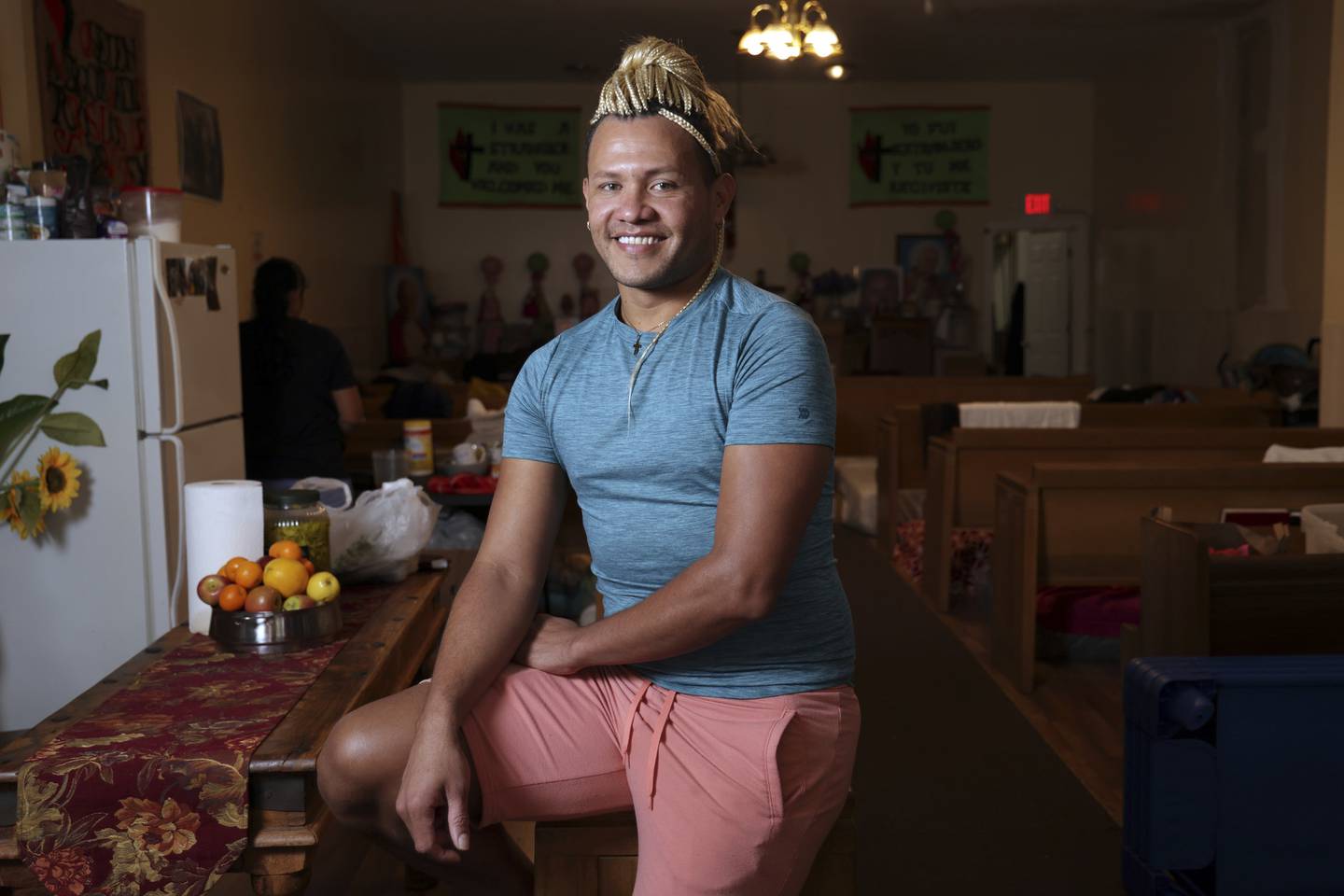
As the sun sets in Chicago, a small church in Humboldt Park fills with the smells of Venezuelan food and chatter as migrants arrive at their temporary home after a day of looking for work. A joyful Erly Jose Tovar, 40, welcomes people as they walk in.
He had been assigned to watch the makeshift shelter after arriving in the first week of September. He unlocks and locks the doors and makes sure that everyone is safe.
“I’m glad to be here,” he said with a smile, his long, blonde hair extensions carefully braided. Tovar is a hairstylist by trade who made his way to Chicago after being bused to Washington, D.C., where he heard of the beauty of the city and its job opportunities.
Migrating to the United States was never part of his plans. In fact, through his childhood he only ever dreamed of moving to Spain to eventually open his own hair salon.
“But it all seemed so distant,” Tovar said. Though full of dreams, his childhood was painful.
Advertisement
When he was 5 years old, his troubled mother gave him away to an aunt, he recalled as his voice began to break. But his aunt also didn’t care for him, leaving Tovar to practically live in the streets, begging for food through his childhood.
In his teens, his mom took him in again, but his stepfather would beat him so hard that Tovar decided to leave once again, this time for his grandmother’s home. That’s when he finally came out as gay, he said. But things took a worse turn. A family member raped him, according to Tovar, forcing him to seek refugee elsewhere.
The family of one of his friends took him under their wing for the rest of his teen years.
“I began to grow up and looked for ways to support myself,” Tovar said. He eventually learned to read with the help of a teacher who agreed to take him in their classroom without needing to register.
As he grew older, he found a livelihood in working the cornfields in rural towns; also an attempt to run away from discrimination and bullying for his sexual orientation, he said.
Advertisement
Tovar eventually learned to accept and embrace himself. He developed a love for hairstyling from a friend who had a beauty salon, he said.
“Those friends became my family,” Tovar said.
Before deciding to migrate north, he moved to Colombia with a distant cousin. There, he worked for several years until he saved enough money to make the journey north.
It was a chance for a whole new beginning, he said. A chance to start over and leave all the pain of his childhood behind.
So this new life, though uncertain, gives him hope of finally healing and finding peace, he said. “My dream is to have a family,” Tovar said emotionally. He wants to find a partner and get married. “Hopefully adopt kids at one point.”
“I would work so hard to give them everything, all the love and the things I didn’t have.”
Advertisement
Sitting on a church pew after eating dinner, Marianella Hernandez, 47, still savored the dish. “There’s so much food, I still can’t believe it, I may even get a stomach ache,” she smiled as she looked at her husband, Manolo Francisco Palma, 43, sitting next to her on a chair. In Venezuela, she said, their neighbors are struggling to feed their families because even working two jobs they can’t make ends meet. The prices of the food, if available at all, are inflated, “but the shelves at the stores (are) empty, “she said.
It was particularly heartbreaking for Hernandez to see her adult children unable to feed their own children. She shook her head and spoke a little softer when she recalled the days before the family decided to leave their whole life behind to make their way to America.
“I didn’t want to come, I was scared to cross that jungle, I was worried for my grandchildren, but we really had no other option. People don’t understand that,” Hernandez said.
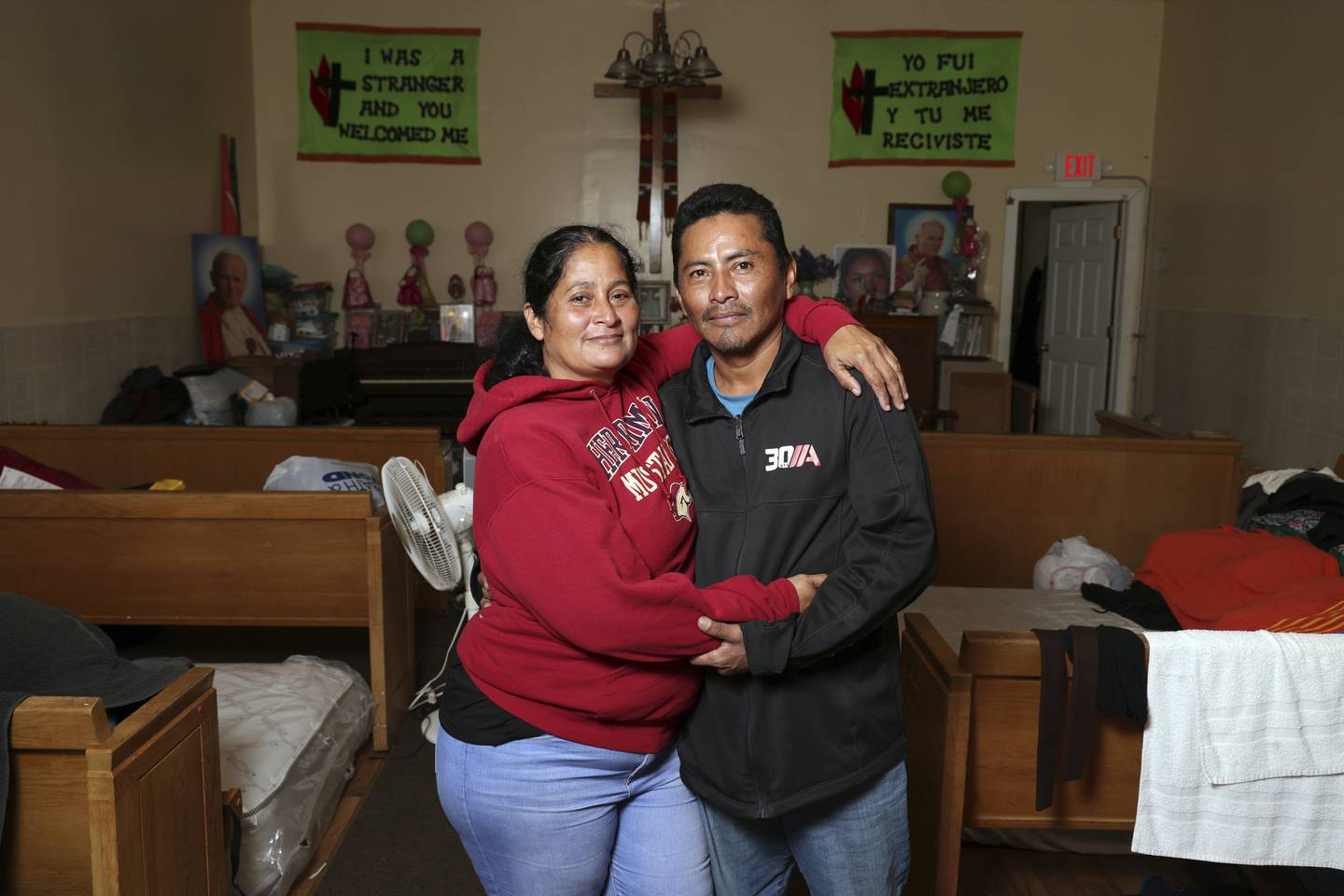
Their older son, Jhonder Adrian Garabito, 32, was the first one to leave their native town of Santa Fe de Tuy. He sold his motorcycles and most of his assets, leaving his wife and three young girls with only their bed and a fan, his mother said.
Hernandez gave him her blessing and he headed north. When he left, he promised he would immediately look for a job to save enough money to help the rest of his family reach the American Dream, Hernandez said.
He did. After just a few weeks of arriving, Jhonder found a job at a factory. He sent enough money to help bring over his wife and children, his two brothers and his parents.
Advertisement
The family was happy, and food was abundant.
Marianella and her husband began their own business selling fruits and vegetables from town to town in a small truck.
The business was sustainable, and even after the economic collapse that began in 2014, they were able to manage and in 2020, suddenly, the business picked up, she recalled. They even bought a new truck. Not once did it cross her mind that one day they would all flee their beloved town and leave their small home empty to migrate north, Hernandez said. But just as suddenly as business picked up, it all disappeared. “We had to sell our truck, then some of our other belongings. Then it was hard to feed the family,” she recalled.
So when her older son made the decision to migrate north, she and her husband felt the responsibility to support him and eventually follow him. For a while she tried to convince her husband to let her stay in Venezuela because she didn’t think she would survive the month’s journey to Chicago because of underlying health issues. But Manolo, her husband of 30 years, begged her to do it.
“I couldn’t leave her behind. We’ve spent a whole life together, it was already hard enough to leave everything behind,” Manolo said wiping away tears.
In Venezuela, the only thing left is their empty home and Hernandez’s 67-year-old mother.
Advertisement
Though she hopes to see her again one day, “as much as it hurts, I don’t know what will happen next,” Hernandez said.
“But we are happy to be here together,” she added. Manolo was specifically glad to be starting work already. His son was able to get him a job through a staffing agency.
“All we need is a place to live.”
For more than a decade, Robinson Briseño, 39, served as a police officer in Cojedes, Venezuela, a job that he grew into after joining the military in his youth. “I fell in love with the uniform, with helping others,” he said.
After growing up in a rural town and working the fields, Briseño found a way to better his life through his profession. He then went on get a degree to teach physical education and was a substitute teacher at a local school, he said. Through those years, he fathered seven children and he intended to support them as they sought higher education.
“It all sounds nice, but one thing is to hear the story and another one is to live it,” Briseño said while sitting on a church pew just two days after arriving in one of the buses sent from Texas transporting migrants.
Advertisement
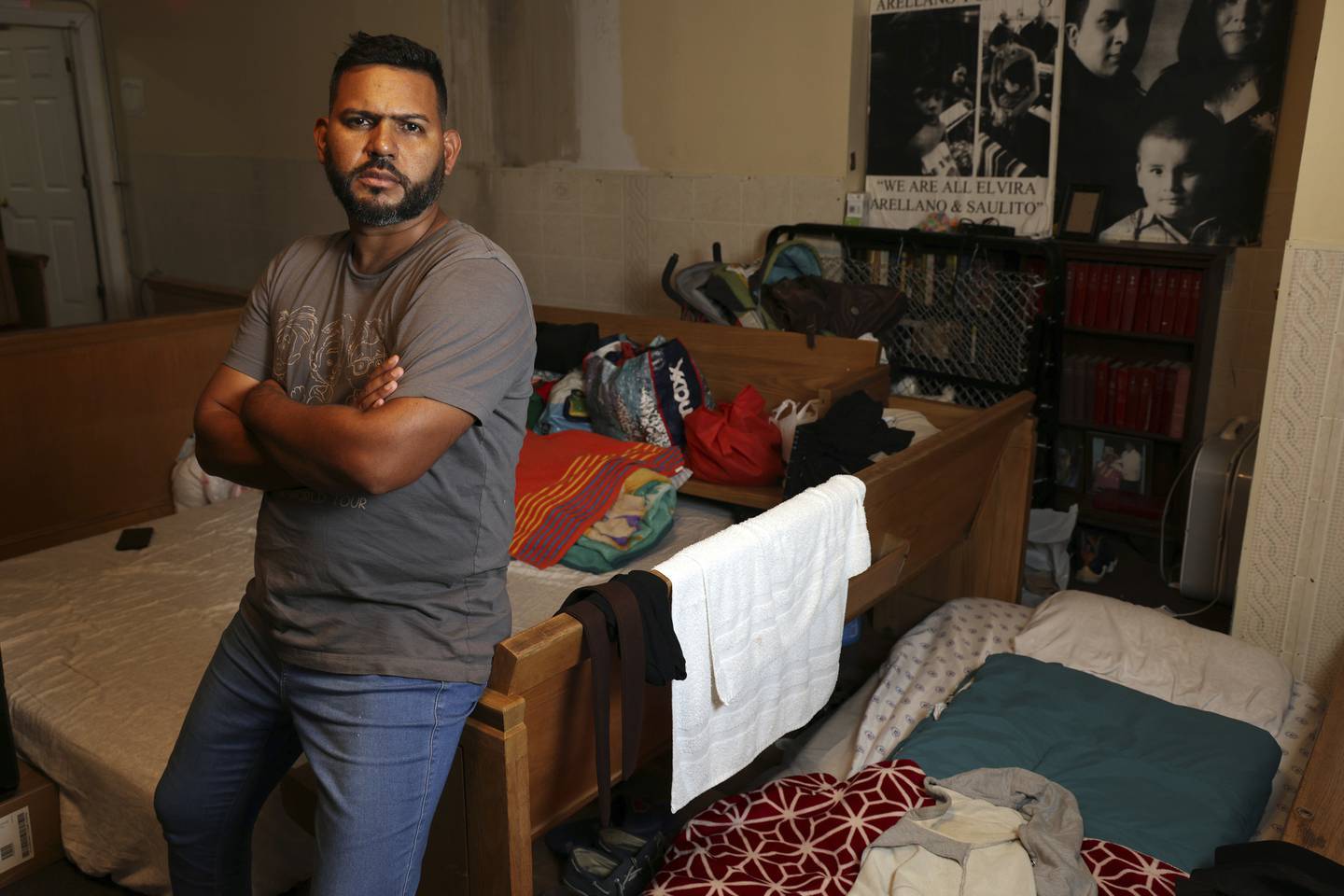
Though he tried to make enough to support his family, he couldn’t. His salary was not enough. “And even on the good days, seeing the other hungry children while I couldn’t feed mine, didn’t feel right,” Briseño said.
“It’s not easy to wear a uniform, to wake up every day in a country that is falling apart, to see people in the streets that are dying of hunger; and to then be forced to oppress those same people that are protesting and fighting against the corrupt government because they are hungry,” he said.
The only difference between those protesting and him was the uniform.
So he left it left it behind and believes that he could never return — for fear of retaliation from the governmental officials that he once served.
In Chicago, he reunited with two other former officers who also chose to leave Venezuela to migrate to the United States. The three are staying at the church until they find a new job, far away from the one they had in Venezuela.
“I hope that people take the time to know more about us: Some of us are professionals, engineers, lawyers, and many more,” Briseño said.
Advertisement
Zulmairys Massiel, 31, said, “I love being a mom.” Her three girls, one 10, another 5 and the youngest one 3, have finally started school since arriving in Chicago. “I thought they were going to be scared, but they have been so excited,” Massiel said. Attending school will give the girls some sense of normalcy amid so much uncertainty, she said.
The months since early June have been traumatic for the three young girls. Their father, Jhonder Adrian Garabito, 32, first left them in Venezuela when he took on the journey to migrate to Chicago. For a few days, the family lost touch with Garabito and didn’t know if he was dead or alive. “It was one of the most difficult times of my life,” Massiel said. “To tell the girls that their father was OK when we had no idea of his whereabouts.”
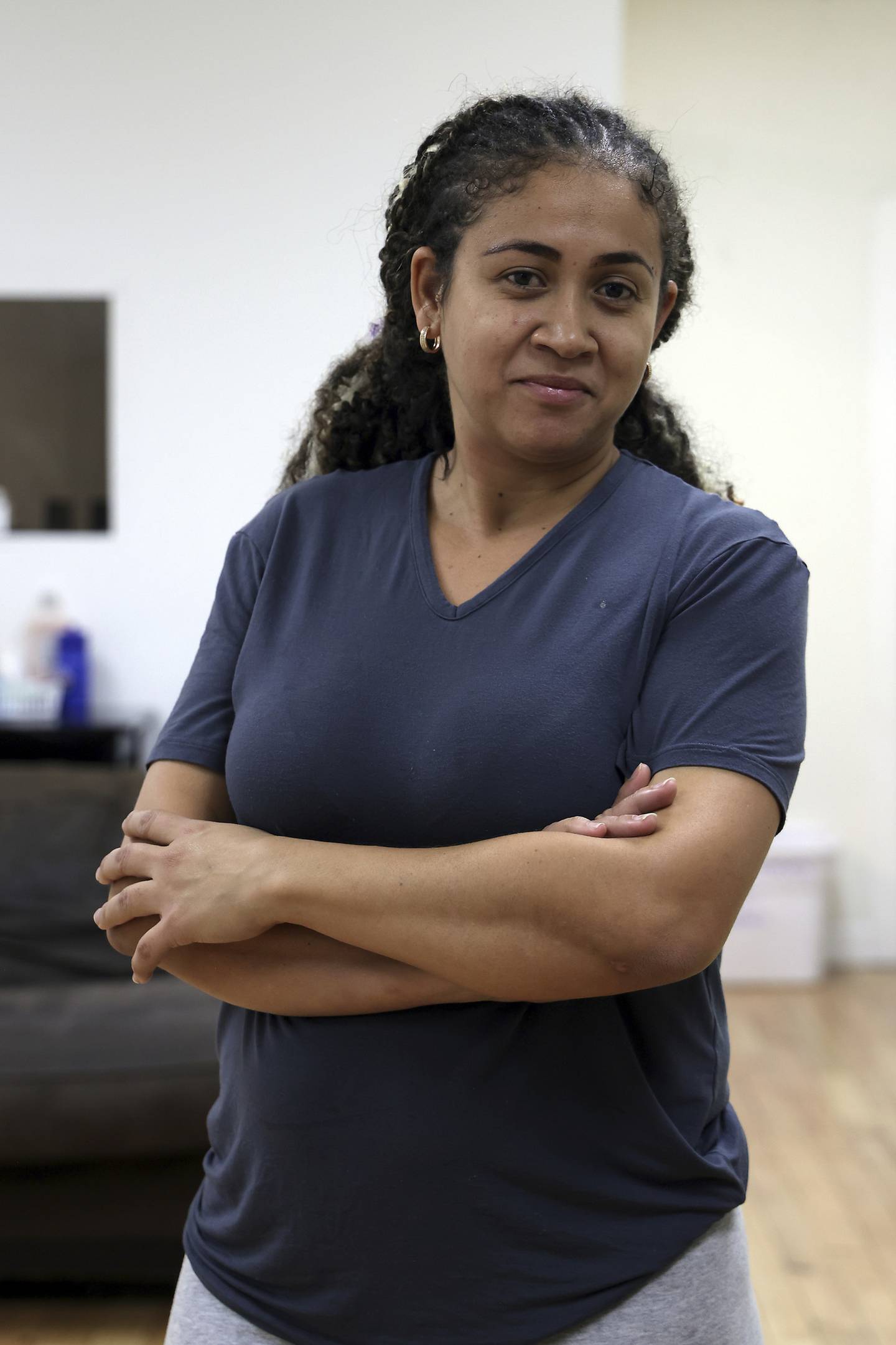
But she kept positive. Garabito had told her that once he arrived in the States, he would find a job and send enough money to bring them over.
“Thankfully,” he did. Massiel and her three girls began the migration north in mid-August and arrived in Chicago a month later. There was fear through the way, she recalls. “People say they rape women and children,” Massiel said. Her main concern was crossing the infamous Darién Gap, a jungle linking Colombia to Panama. Sequera was afraid she wouldn’t be able to protect her three girls, or herself from harm.
“I prayed every step of the way,” she said. In Chicago, Garabito waited for them.
He had paved the way for his two younger siblings and his parents too. When he arrived, he found help at Cortes’ church in Humboldt Park — he was one of the first migrants to arrive in the church — but quickly found a job in a nearby factory packing toys, he said. Cortes helped him to find a place to rent, to make sure that his wife and children had a place to live upon arrival.
Advertisement
The family has created a home out of an old empty storefront. “We’re getting ready for the cold,” Massiel said. The girls are excited to see snow for the first time. In Venezuela, the daughters were used to spending time playing outside while their mother dedicated her time to doing nails and their father helped with the family business of selling fruits and vegetables.
“My family and I have always been so hardworking, we had our own business,” he said. Garabito is Marianella Hernadez and Manolo Francisco Palma’s oldest son. His parents and his middle brother were the last ones to arrive. “So we are here to work and do better for our families,” he said.
Now in Chicago, Garabito and Massiel want to provide for their three girls and recover everything that they lost when they left their beloved Venezuela. “I want my girls to attend a good school, to go to college and have a career,” Massiel said. “Back home, I couldn’t afford to buy them their school uniform and there were few teachers.”
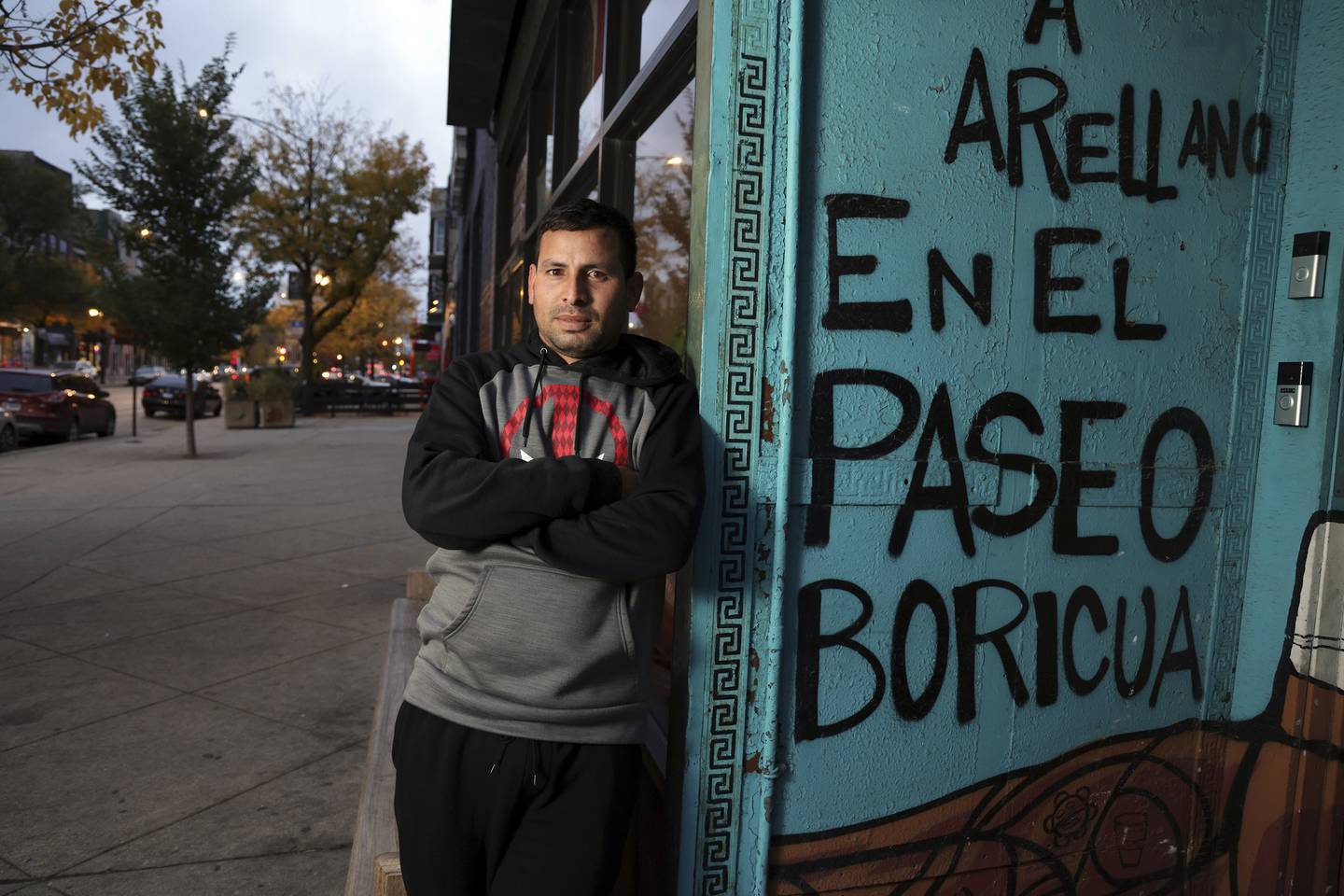
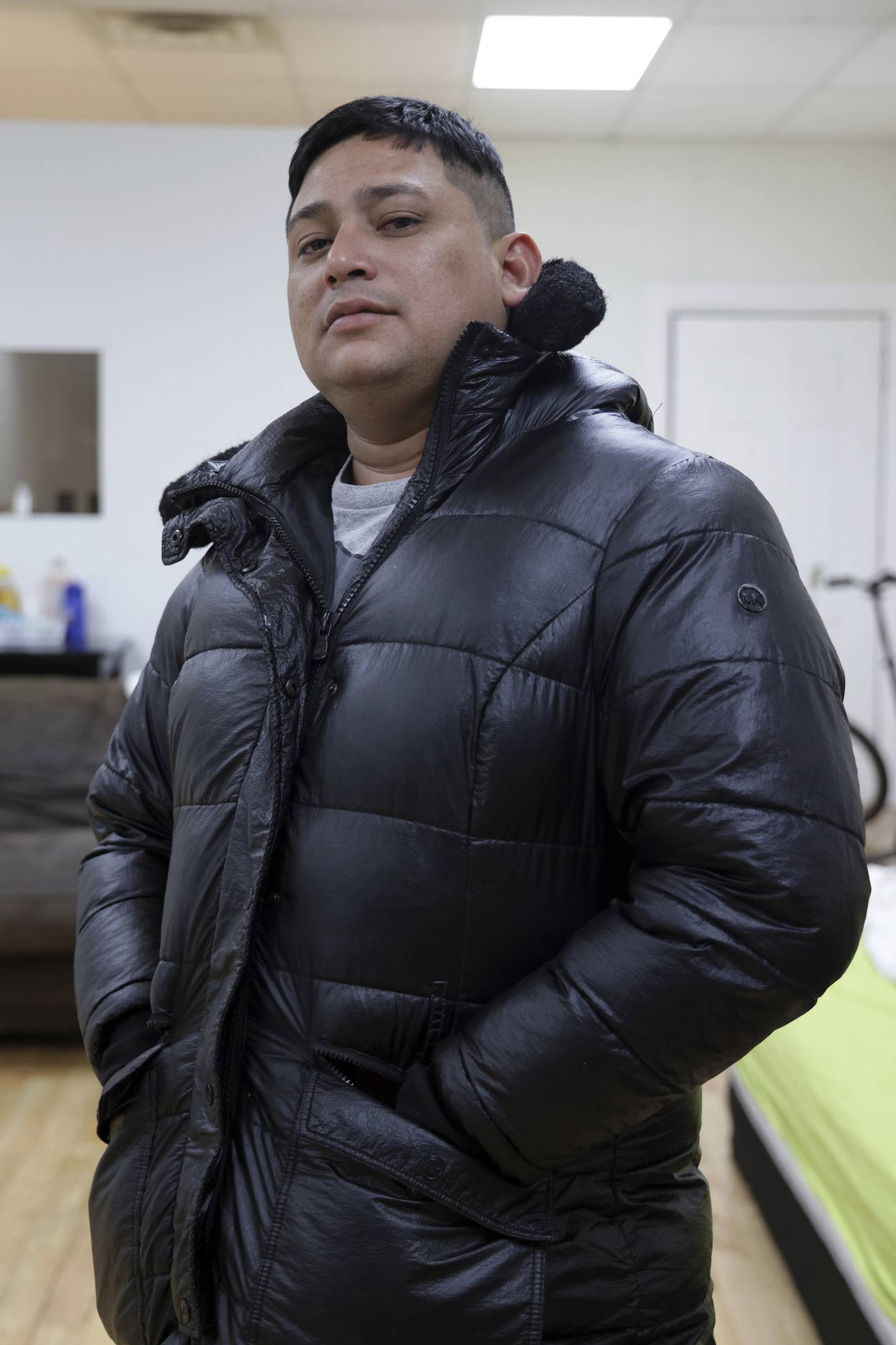
Just a days after arriving in Chicago from the Texas border, Jose Gregorio Rondon Benitez, 28, went out to look for work.
“I’ll do anything, work at a factory, restaurant, construction, I’ll learn and do the work,” he said. Through his 20s Venezuela was already suffering economically, he said. There are few jobs and the salary is mediocre. He tried his luck in Peru, where he met the mother of his only daughter, he said. Before that also spent time in Colombia. He has worked the fields, as bank security and a cashier, and driving a motorcycle from town to town to transport people. But the pay was also low, so when he heard that people migrating from Venezuela were being allowed in the United States while they filed their asylum case, he saved his money and left.
Advertisement
“I told my family I would be back if things don’t work out,” Rondon said. “But I hope it’s worth it.”
On the way, Rondon witnesses many more migrants, including women and children, returning to their home country, unable to continue the journey. Others were turned away at the border.
“So I feel blessed to have made it here,” he said.
He learned of the shelter at church through other migrants who gave him the pastor’s phone number. He called her and luckily there was room for him.
He remembers learning of Chicago in movies.
“I loved Chicago after hearing of the stadiums, the snow and its lake,” he smiled. “If I’m honest, I never thought I would actually come here.”
Advertisement
Rondon loved to live in Venezuela, he recalled. Though money was limited, he was set to make a life like many others had, working the fields or other blue-collar jobs. “I loved everything, the beaches, the scenery, the food and our people,” he said.
While he now tries his luck in Chicago, he will think of his daughter and partner in Peru. “It’s all for them,” he said. Rondon calls them almost every day. He also calls his mother in Venezuela.
“I feel destroyed because I need my family, but I also feel committed to work to make sure that I can help them,” Rondon said.
He wants to send money to help his daughter and younger relatives finish school so that they can too see the beauty of Venezuela before running away.
“I want my daughter to have everything I didn’t have,” Rondon said. “But if it doesn’t work out here, I will return with my family. All that matters is that at least I tried.”