




By Alaysia Lane | Minnesota Spokesman-Recorder
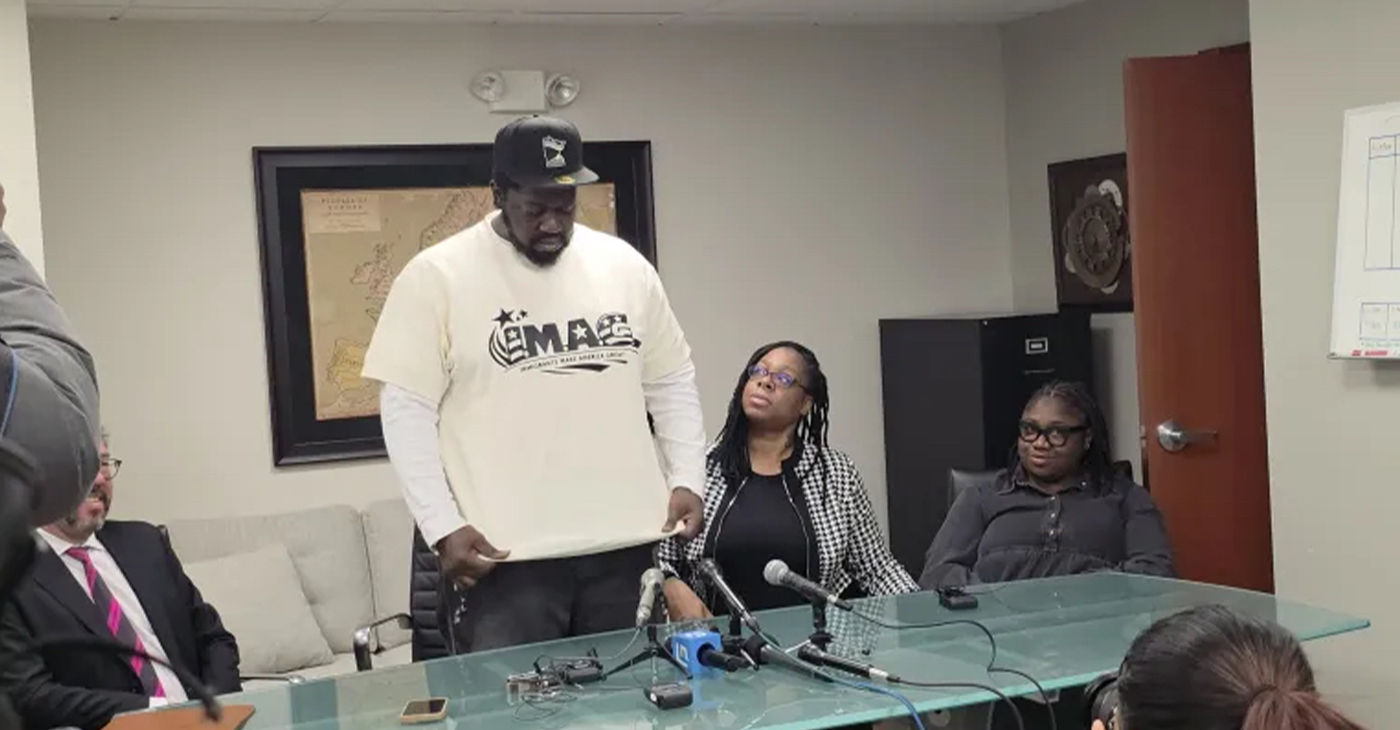
Garrison Gibson, a 38-year-old Liberian immigrant and father, was released from Immigration and Customs Enforcement custody for a second time after being re-arrested hours after a federal judge ruled his initial arrest unconstitutional.
Gibson’s attorney confirmed Friday afternoon that he is home with his family and required to wear an ankle monitor while remaining under immigration supervision. The second release followed a series of events that began with a warrantless raid on Gibson’s north Minneapolis home: an entry a U.S. District Court judge later ruled violated the Fourth Amendment.
“This is not just a mistake. This is a constitutional violation,” said immigration attorney Marc Prokosch.
According to Gibson and his family, federal agents arrived at their home around 9 a.m. Jan. 11, knocking before announcing themselves. Gibson said he asked whether they had a warrant and was told they did not.
Minutes later, multiple ICE vehicles arrived, parking in the alley, on the street and in neighbors’ yards as more officers gathered. Gibson said about a dozen agents and vehicles were present, drawing neighbors outside.
Family members said agents later returned to the door claiming they had a warrant but did not show it before breaching the home. They said agents used a battering ram multiple times, damaging the front door and an interior wall.
Gibson’s wife, Teyona Brown, said she stood in front of him as agents entered, attempting to shield him and their daughter.
“I had to make sure my daughter had a father,” Brown said. “And I had to make sure that we had a record, not just for us, but for everyone to see how they’re doing things.”
The family said agents entered with weapons drawn, issued commands to sweep the home and did not show a warrant until Gibson was nearly inside a patrol vehicle.
A federal judge later ruled that ICE violated Gibson’s constitutional rights by entering his home without a judicially signed warrant. The judge ordered his immediate release, noting that Gibson had been complying with immigration supervision requirements, including attending a check-in just weeks before his arrest.
“He was following every rule,” Prokosch said. “There was no reason for this.”
Gibson has lived in the United States since childhood after fleeing the civil war in Liberia. He has a longstanding deportation order but has been allowed to remain in the country under supervision for years.
After the arrest, Gibson was transferred to the Whipple Federal Building, where he described overcrowded and degrading conditions. He said about 40 people were held in a single cell with no beds, cold temperatures and metal surfaces.
Detainees, he said, were forced to use the bathroom in front of one another while shackled, and one man in the cell had scabies.
“It felt like humiliation,” Gibson said.
Gibson said he was later placed on a plane to Texas without being told where he was going and remained confused about what was happening. In Texas, he said conditions were somewhat different but still restrictive, with detainees sleeping on metal bunk beds in crowded units.
Following the judge’s ruling, Gibson was released Thursday evening and returned home. The next morning, Gibson, Brown and Prokosch returned to the Whipple Federal Building for what they believed would be routine paperwork to finalize his release.
“The officer said, ‘This looks good. I’ll be right back,’” Prokosch said.
Minutes later, several unfamiliar officers entered the room and informed them Gibson was being taken back into custody.
According to Prokosch, the lead officer said the decision came from a higher authority and was “above my pay grade.” Prokosch said the officer told them the order came from the White House and became emotional during the exchange.
Gibson was taken into custody for the second time but released again approximately two to three hours later.
“It was chaos,” Brown said. “Nobody knew what was going on.”
Brown said the raid and re-arrest deeply affected the couple’s children, particularly their daughter, who now reacts with fear when someone knocks on the door.
Brown, a certified nursing assistant and pediatric health coordinator, said the family had to block their damaged front door with dumbbells for several days after the raid because it would not close properly.
“We couldn’t even turn the heat on,” she said. “We had to use weights to keep the door shut.”
Gibson said wearing an ankle monitor has affected his ability to find work.
“It’s hard to go into an interview with this big ankle monitor,” he said. “People think you did something.”
Prokosch said his legal team is pursuing two parallel strategies: seeking habeas protections in federal court and moving to vacate Gibson’s 2009 deportation order in immigration court.
“The most important thing right now is to keep him with his family,” Prokosch said. “Then we will work to permanently resolve his immigration status.”
The Immigrant Law Center of Minnesota condemned ICE’s actions in a statement, calling the raid “terrifying” and warning of a pattern of transferring detainees out of state to obstruct access to legal counsel.
“This case is a powerful reminder that community vigilance matters,” the organization said.
Gibson said he plans to remain home as much as possible while his case continues.
“I’m not a violent person,” he said. “If I was, I wouldn’t have been out for the past 17 years, checking in.”
Despite the trauma, the family expressed gratitude for community support.
“The love has been overwhelming,” Brown said. “People brought food. They stayed in the cold for hours. These people are angels on earth.”
For now, Gibson remains under supervision, wearing an ankle monitor, while attorneys fight to keep him in the United States.
“I just want to stay with my family,” he said. “That’s all.”
Alaysia Lane is a multimedia journalist and commerce writer based in Minneapolis.