



Bob Carpenter has been working at Ravisloe Country Club in Homewood for more than a decade, and much has changed in that time.
Except one thing.
Advertisement
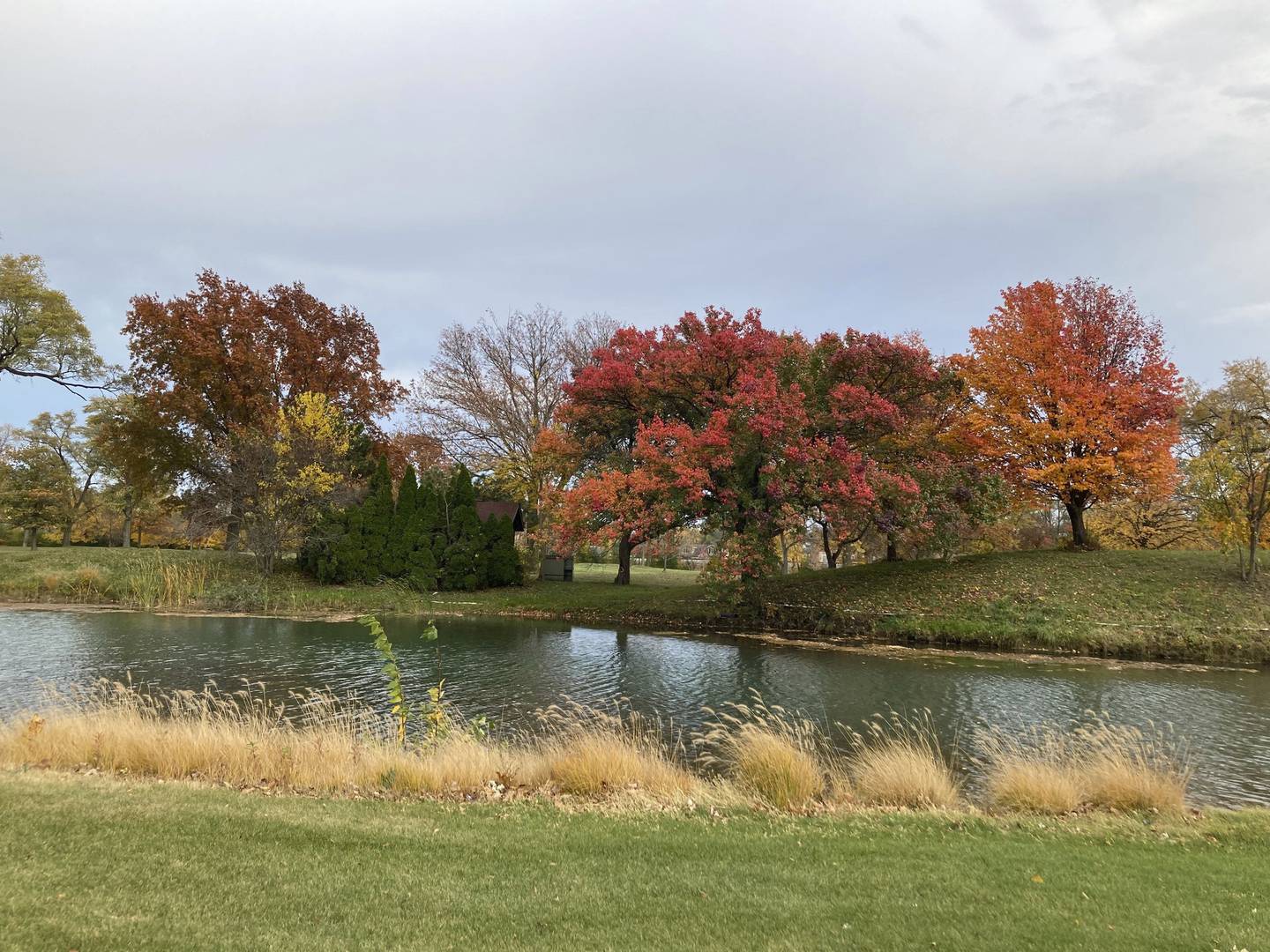
“Every day when I drive through that gate, it’s like I’m stepping back in time,” he said during a recent open house at the golf course, which operated for more than 100 years as a private club until it closed in 2008, was sold and reopened a year later as a public course.
For a few years after Ravisloe was purchased by veterinary surgeon Claude Gendreau it was an annual money loser as the area slowly recovered from the recession. But as word spread about the course’s classic design by noted golf architect Donald Ross, its popularity among links aficionados made it a destination.
Advertisement
Now it’s breaking even, Gendreau said, though he doesn’t expect to recoup the money he spent to acquire Ravisloe and fix it up. Still, Gendreau loves the course, and his favorite hole is 13, a par 5 and Ravisloe’s longest fairway. But he’s never played it, or any of the other holes at his golf course.
“When I have time to go there, I enjoy the property rather than being frustrated on the course,” he said. “I can ride around and enjoy the beauty of it.”
Gendreau doesn’t golf.
“I haven’t had the time to pick it up. I might someday,” the 82-year-old said, “but I have more time consuming things to do.”
That mainly involves operating on injured dogs, repairing cruciate ligaments and fractures at his veterinary facility in Highland, Indiana.
He still finds the time to come to the course two or three times a month, mostly on Saturdays, to take in the scenery.
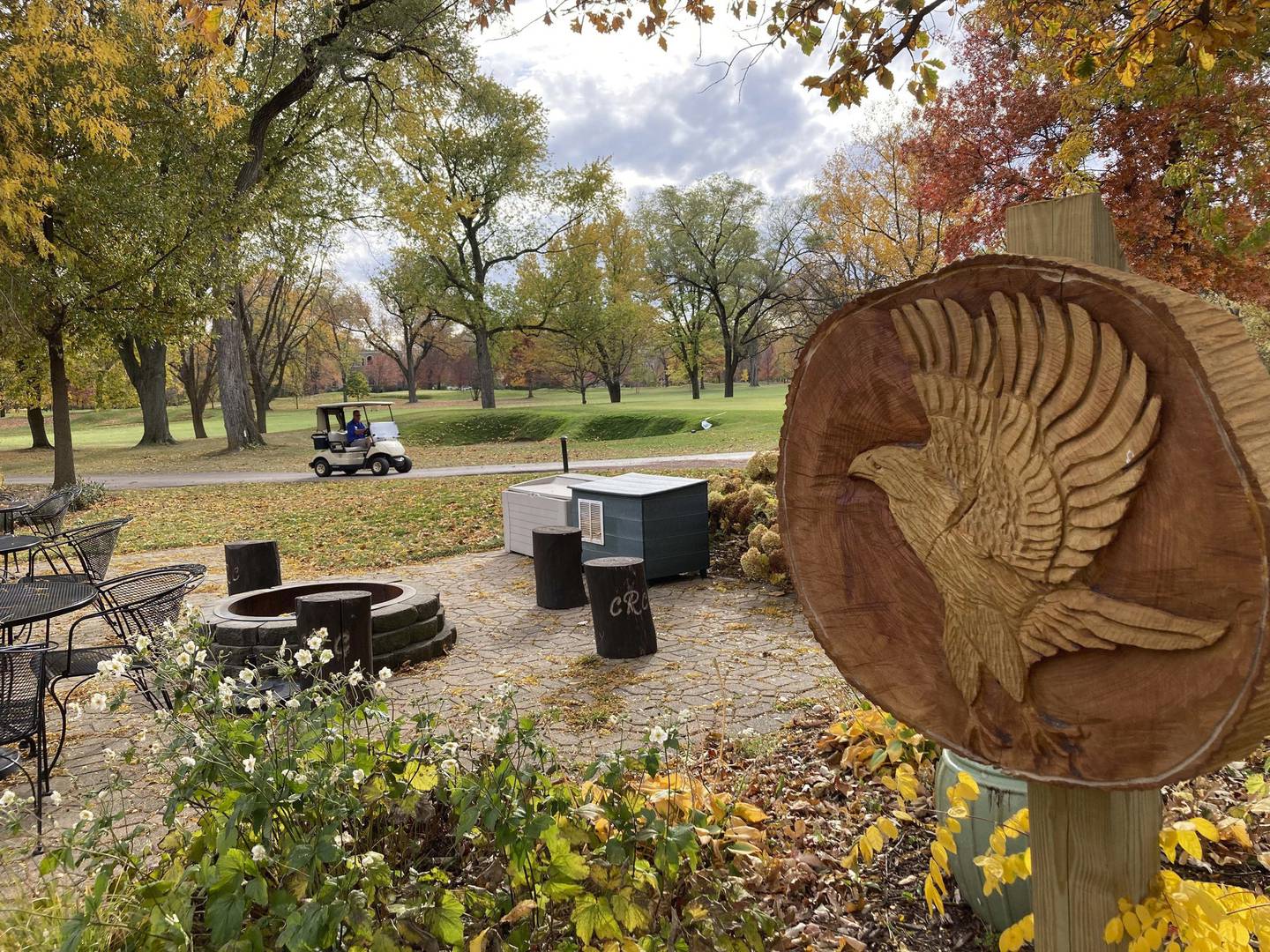
The components of that scenery, both constructed and planted, have garnered some major accolades for Gendreau. Late last year, Ravisloe’s clubhouse and golf course were added to the National Register of Historic Places, and in June, the property became the first golf course to be accredited as an arboretum by the Morton Register of Arboreta, a global listing based at the Morton Arboretum in Lisle.
The arboretum accreditation was the reason for the open house on a beautiful late October Monday, when visitors had the opportunity to head out on a golf cart to check out the course’s more than 3,000 trees.
Advertisement
It’s a far cry from the wide-open spaces encountered by members of the Standard Club of Chicago when they established Ravisloe in 1901 on former hayfields adjacent to the Illinois Central Railroad. Donald Ross was retained to reorganize the course layout in 1916, and in the 1930s the course underwent a massive tree planting program, according to materials provided by Carpenter, Ravisloe’s general manager.
By 1995 more than 2,200 trees were cataloged on the property, comprising more than 70 species. Since Gendreau purchased the property, hundreds more trees have been planted, including 15 to 20 new species.
At least three of the trees likely predate the golf course, including two silver maples with a girth of over 2 meters, and a cottonwood of more than 2.5 meters.
It’s impossible to know the exact age of those giants without cutting them down and counting their rings, but they’re definitely old, Carpenter said.
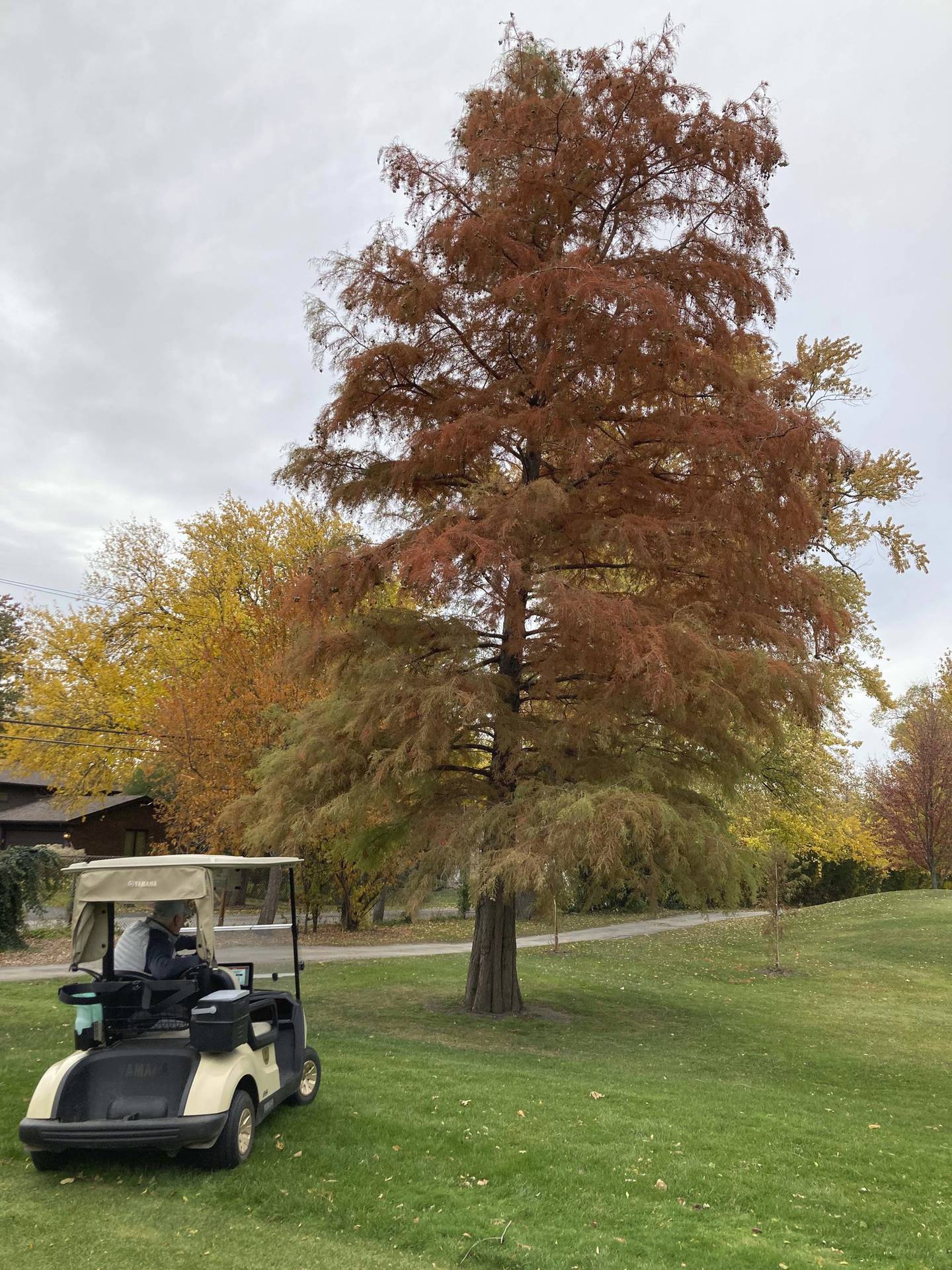
His favorite tree is a younger specimen, albeit still stately, of bald cypress near the end of the first hole — a conifer with needles “as soft as can be” that turns colorful and sheds leaves in autumn.
Carpenter isn’t a fan of all the trees, though. He’s gradually getting rid of all the Siberian elms on the property, trees he called “not good.”
Advertisement
“They’ll drop limbs on a calm day,” he said.
The trend at Ravisloe is toward more trees.
“This year we added 51 trees, and we will keep adding every year,” Gendreau said. There’s a lot we can do to improve the property.”
The parklike setting is one of the reasons Gendreau bought the property. A longtime conservationist who wrote a book encouraging efforts to mitigate global warming “before it was in the news.”
“I’ve been aware of the damage the industrial revolution has done to the earth for a long time,” he said.
The owner of several farms, he was skeptical of the opportunity to buy Ravisloe when it was put up for sale in 2008.
Advertisement
“So I drove onto the property and said, ‘Oh my God, I can own this instead of just farmland?’” he said. “I had no idea what I was purchasing when I bought it. I’d never been on a golf course, never knew how golf courses are rated. I just found out so many things that are better than I had anticipated. Every year I learn something more about how special this property is.”
Before pursuing the arboretum status, Gendreau and Carpenter got Ravisloe listed on the National Register of Historic Places through the National Park Service. It’s one of only 26 golf courses listed in the country, and one of only three in Illinois, according to Carpenter.
The club’s name is derived from an early plan by the Standard Club of Chicago to purchase land for its golf course along the Calumet River owned by the Ravisloot family. The property plan changed, but they kept the name when the course instead was developed along the Illinois Central in what would become a private golf Mecca that included Olympia Fields, Flossmoor, Idlewild and Calumet country clubs.
Like Idlewild, Ravisloe’s members were primarily Jewish. The membership rolls contained famous Chicagoans such as Julius Rosenwald of Sears Roebuck, shoe magnates Simon and Norman Florsheim and Louis Eckstein, who developed Ravinia in Highland Park.
Elaine Rosenthal, who won the Women’s Western Open three times in the 1910s, was perhaps the club’s most accomplished golfer.
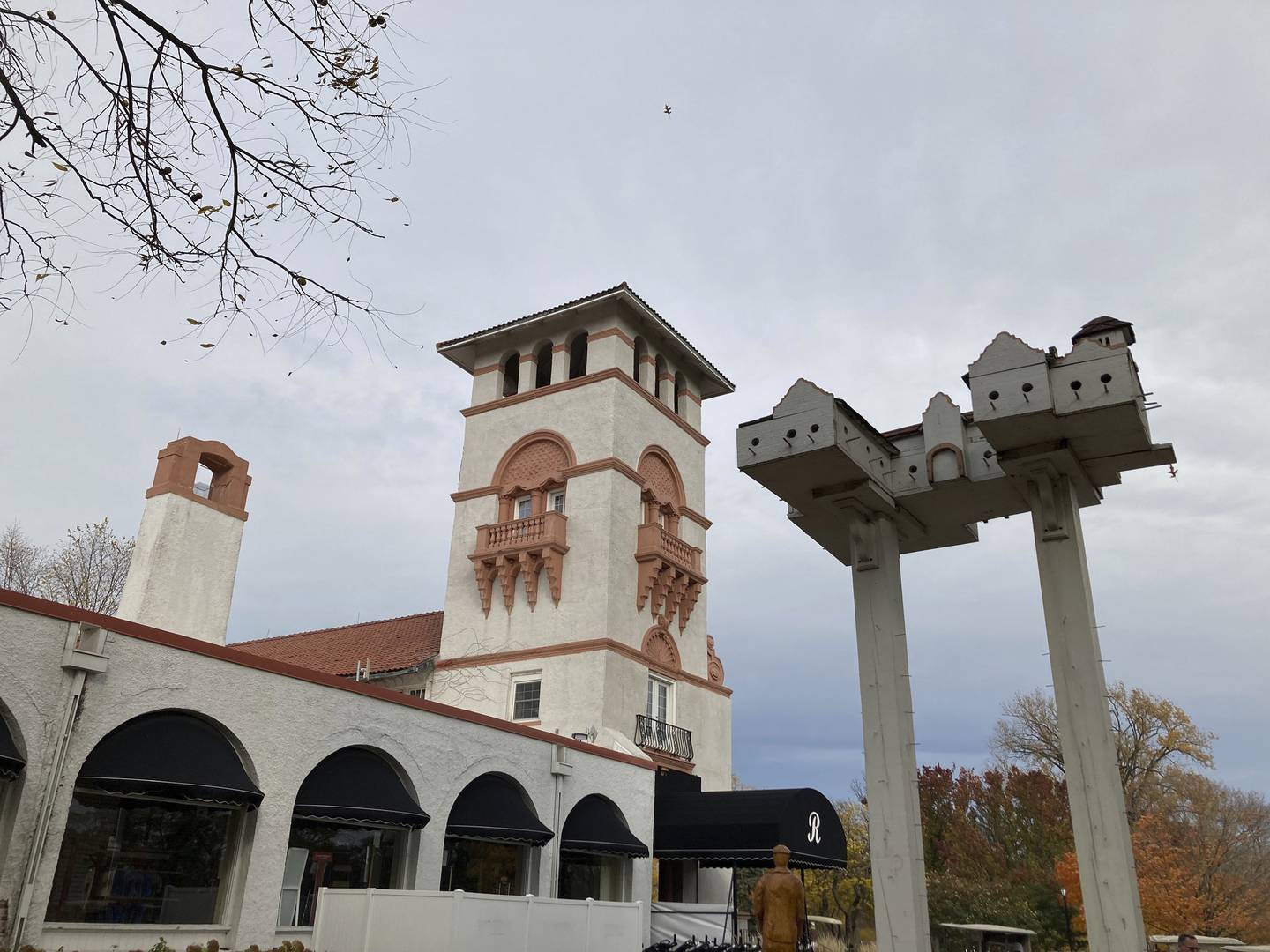
The effort to get Ravisloe listed on the National Register was “more complicated than it would seem,” Carpenter said, noting the process took about nine months. With the help of a firm that specializes in these kinds of efforts, he said the examined the contents of old computers and unearthed boxes of old documents from storage, including some from the clubhouse’s signature tower.
Advertisement
“It’s pretty neat,” Carpenter said. “There’s only three in Illinois, Olympia Fields, Chicago Golf Club (in Wheaton — the oldest 18-hole course in North America) and us.”
Daily Southtown
Twice-weekly
News updates from the south suburbs delivered every Monday and Wednesday
Neither of the recent accolades include financial benefits, though Ravisloe has started a program linked to its arboretum status where people can dedicate a tree on the property with a plaque by making a $100 donation to the South Suburban Humane Society or the Homewood Science Center.
“We had three people out here today picking out a tree to dedicate to someone,” Carpenter said Friday, noting about 23 trees had been sponsored so far. “It’s a good start.”
But the listings might do some good in helping to keep Ravisloe as open space, continuing Gendreau’s mission he started when he saved the closed course from potential redevelopment in 2008. He’s also prepared some 70 pages of legal documents that should help preserve Ravisloe as a golf course long after he’s gone.
“It can’t be sold for any other purpose until 2045, and there’s plenty of money in a fund to keep Ravisloe going for many years to come, and hopefully beyond that,” he said.
Owning Ravisloe, he said, offers “a sense of pride.”
Advertisement
“I like what we’re doing there,” he said. “I feel good to be part of that.”
Landmarks is a weekly column by Paul Eisenberg exploring the people, places and things that have left an indelible mark on the Southland. He can be reached at peisenberg@tribpub.com.