


By Reverend Dr. John E. Jackson, Sr.
The late sage and Jegna of Black people John Henrik Clarke once said, “Africa is our center of gravity, our cultural and spiritual mother and father, our beating heart, no matter where we live on the face of this earth.”
It is fascinating to know that when enslaved and later formerly enslaved people of African Ancestry began to form themselves into congregations, they identified themselves as African first.
Scholars like Albert J. Raboteau in his classic work “Slave Religion: The Invisible Institution in Antebellum South,” and other works by him identified the Black church in its infancy as the “Invisible Institution,” because African people would sneak off to worship God and Christ in secret, away from the controlling and destructive gaze of slave owners.
The Black church started as an invisible institution where authentic identity could be celebrated, spiritual rejuvenation was released and where strategy and planning were relayed and reiterated for survival in the cruel and inhumane treatment of chattel slavery in America.
It is extremely important to reflect and remember that when Black people named their first houses of worship, they identified them as “African.”
Black Historians like Andrew Billingsley in his work “Mighty Like A River: The Black Church and Social Reform,” and the exhaustive research of L.H. Whelchel, Jr., in his work “The History and Heritage of African-American Churches: A Way out of No Way,” have meticulously documented the movement of Black religion here in America.
Professor Billingsley identified that the Black congregation of Silver Bluff Baptist Church established at Beech Island, South Carolina, in 1775 as not only being populated by enslaved African Americans but under the leadership of Rev. David George helped birth other Black congregations.
Rev. George had been mentored by Rev. George Liele, another early Black preacher whose preaching and organizing helped to expand the landscape of Black worship and religion in some of the roughest times for African people in this nation.
Rev. Liele’s labors in organizing Black people in Savannah also led to the founding of the First African Baptist Church in Savannah, Georgia, in 1775, where Rev. Andrew Bryan was the pastor and who also had been mentored by Rev. Liele.
In 1782, the British evacuated many enslaved Africans to places like Nova Scotia, but Rev. Liele traveled to Jamaica and founded the First African Baptist Church of Kingston, Jamaica, in 1784. This church is still in operation today.
There was the First African Baptist Church of Petersburg, Virginia, established in 1774. The Second African Baptist Church of Savannah, Georgia, was founded in 1802 and was led by Rev. Henry Cunningham, and then there was the Third African Baptist Church of Savannah, Georgia, and it was led by Rev. Andrew Marshall in 1832.
The First African Baptist Church of Richmond, Virginia, was founded in 1780, which was the also the city where Rev. Gabriel Prosser organized the first of the big three Slave Rebellions in 1800. The other two of the big three Slave Rebellions were led by ministers like Denmark Vesey in 1822 and the biggest of the big three, led by Rev. Nathaniel Turner in Southampton, Virginia, in 1831.
The First African Baptist Church of Augusta, Georgia, was founded in 1787 and was led by Rev. Jesse Peter. The name of the church was later changed to Springfield Baptist Church and in 1867 was the church that birthed Morehouse College.
Finally, many by now are familiar with the organizing and founding of the historic African Methodist Episcopal denomination by Rev. Richard Allen and other free Blacks who walked out of St. Georges Methodist Episcopal Church because of the racist treatment they had been subjected to in 1787 to first form the “Free African Society” and later Bethel African Methodist Episcopal Church in 1793.
As you can see many of the first Black congregations both during and immediately after chattel slavery in America identified themselves as African congregations first and foremost, because identity is essential.
My Pastor, Dr. Jeremiah A. Wright, Jr., used to remind us that it is crucial to always remember “Who you are and Whose you are.”
Black people in this nation both during and immediately after Chattel Slavery identified themselves as Africans because, as Dr. Clarke stated, “Africa is our center of gravity…” and fundamental to living and to authentically practice the faith of Christianity that was started by a dark-skinned Palestinian African Jew by the name of Jesus of Nazareth, who is the Christ of God.
Jesus said, “You shall know the truth, and the truth shall set you free.” Be Free today!
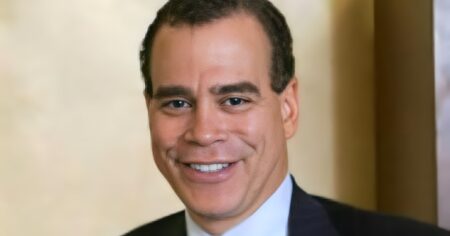
Rev. Dr. John E. Jackson, Sr. is the Senior Pastor of Trinity United Church of Christ-Gary, 1276 W. 20th Ave. in Gary. “We are not just another church but we are a culturally conscious, Christ-centered church, committed to the community; We are Unashamedly Black and Unapologetically Christian.” Contact the church by email at [email protected] or by phone at 219-944-0500.