



By Stacy M. Brown
NNPA Newswire Senior National Correspondent
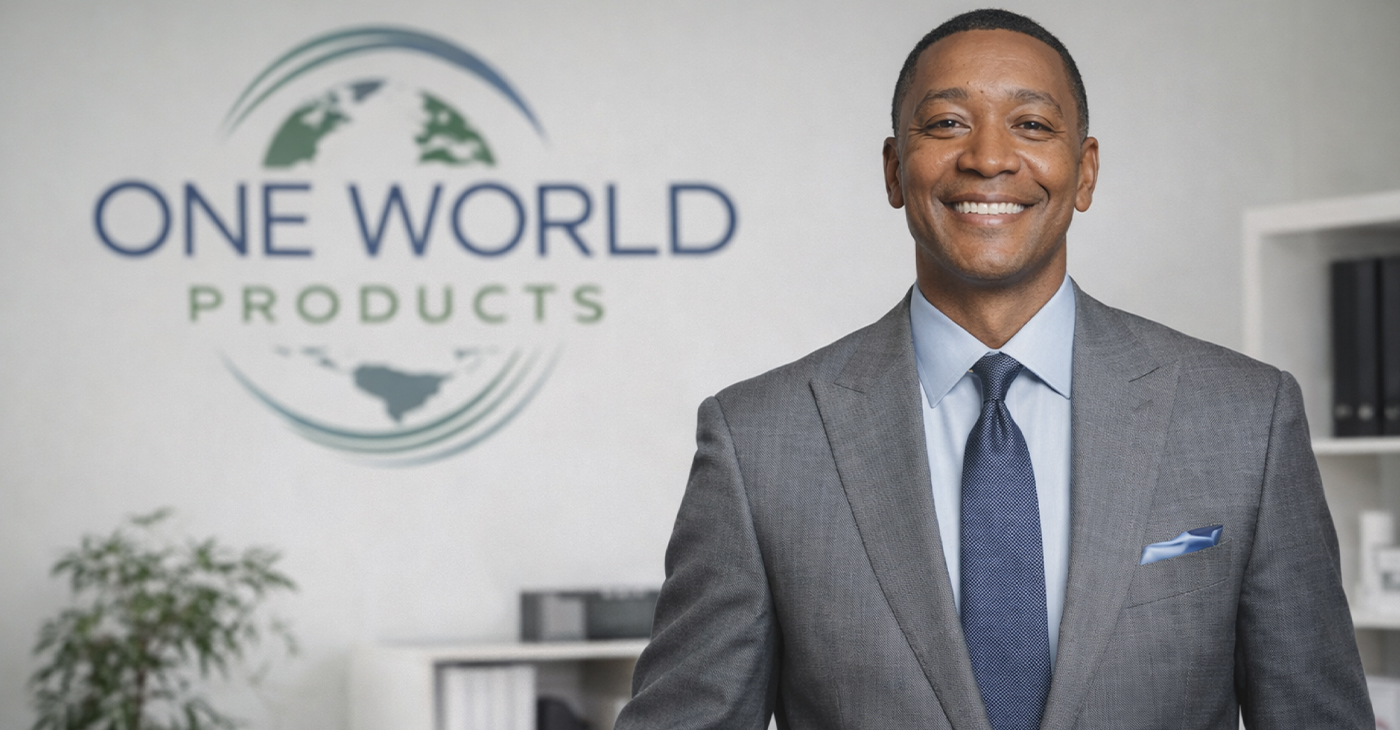
NBA legend Isiah Thomas has continued to rewrite the rules of wealth, industry, and the American dream with his One World Products Inc., the materials and manufacturing company that he’s transitioning into Isiah Enterprises Inc.
The company is now tracking toward operational breakeven after shipping more than 250,000 pounds of pelletized rubber from its Michigan facility, marking a major milestone in a turnaround that has reshaped a once-distressed public company into a growing clean-materials platform.
The company, traded on the OTCQB under the ticker OWPC, reported that the shipments were produced at its Eco Bio Plastics Michigan operation in Midland, a facility that had previously faced insolvency before being integrated into One World Products’ operations. The December shipment volume validated the plant’s throughput and reliability while anchoring a larger strategy focused on recycled materials, industrial hemp biocomposites, and sustainable inputs for automotive and packaging markets.
In a parallel move, the company has formally established Isiah Enterprises as a registered entity in Michigan and opened an office in Troy, placing executive leadership, product development, and customer engagement inside the nation’s automotive manufacturing corridor. The location positions the company closer to OEMs, suppliers, and its Midland processing facility, tightening the loop between development and production as it enters 2026.
In an earlier phone call with NNPA Newswire, Thomas noted how he had hired engineers, worked with Stellantis, and poured time and thought into a field most people in his world did not consider. “There were a lot of research moments, a lot of ups and downs, and a lot of failures,” Thomas acknowledged. “But eventually, we got it. And once we got it, we patented the process and started moving it into automotive.”
The recent operational progress follows a multi-phase restructuring that effectively merged One World Products with Eco Bio Plastics Michigan into a single materials platform headquartered in Troy. When new leadership assumed control, One World Products was operating as a distressed public entity, while Eco Bio Plastics Michigan faced financial collapse. Management stabilized both operations through facility optimization, integration, and a focus on scalable production systems.
Commercial activity is now organized around three primary revenue lanes. Rubber and recycled materials provide near-term contribution and margin stability. Eco Bio Plastics Michigan runs a proprietary pulverize, micronize, and pelletize system capable of handling multiple material categories. Industrial hemp biocomposites represent a longer-term growth platform aligned with sustainability requirements in automotive interiors and packaging applications.
That materials strategy aligns with bigger market shifts. Industry projections point to a global automotive lightweight materials market expected to exceed $150 billion by 2030, alongside a sustainable packaging market projected to surpass $450 billion over the same period. One World Products has positioned its materials as compatible with existing manufacturing lines, an approach designed to reduce adoption barriers for large customers.
The company’s materials are already being developed and tested with Tier 1 suppliers and OEMs, including Stellantis, Flex-N-Gate, ORBIS Corporation, and West Michigan Compounding, according to corporate disclosures. These collaborations focus on talc-free fillers, pelletized rubber additives, and biofiber composites intended for non-structural automotive components and logistics packaging.
Financially, OWPC shares have continued trading in the low-cent range, with more than 120 million shares outstanding. Company officials have said they are completing outstanding filings and expect forthcoming disclosures to show improved operational performance and financial fundamentals in accordance with SEC and OTCQB requirements.
Looking ahead, management has said its focus for 2026 centers on disciplined growth through partnerships, expanded production, and commercialization of materials for automotive and packaging customers. While profitability on a consolidated basis remains a goal rather than a completed task, the company has framed December’s breakeven target and shipment volumes as proof that its turnaround has moved from concept to execution.
“We have built a more stable, efficient enterprise,” Thomas said, “and as we look ahead to 2026, we see real opportunity in automotive, packaging, and sustainable materials.”