


Close Menu
  • Home
  • News
    • Local
  • Opinion
  • Business
  • Health
  • Education
  • Sports
  • Podcast

Subscribe to Updates

Get the latest creative news from FooBar about art, design and business.

What's Hot

At This Black Church Cafe, Your Brunch Helps Feed Someone Else

Houston Haitians Push Back Against TPS Terminations

The Business of Educating Black Parents, Teachers and Kids

Facebook X (Twitter) Instagram
  • Lifestyle
  • Podcast
  • Contact Us
Facebook X (Twitter) Instagram Pinterest Vimeo
The Windy City Word
  • Home
  • News
    1. Local
    2. View All

    Uncle Remus Says Similar Restaurant Name Is Diluting Its Brand and Misleading Customers

    Youth curfew vote stalled in Chicago City Council’s public safety committee

    Organizers, CBA Coalition pushback on proposed luxury hotel near Obama Presidential Center

    New petition calls for state oversight and new leadership at Roseland Community Hospital

    Houston Haitians Push Back Against TPS Terminations

    Black Americans Have Doubts About the U.S. Food System

    CAU Panthers Extend Win Streak to Three Against Maroon Tigers at Inaugural Big Cat Classic

    Women Learned Their Jail Strip Searches Were Recorded. Their Outrage Changed the Law

  • Opinion

    Rep Davis, Olive Post CDR., Call on Trump to Restore file of Black Vietnam War Hero to Website

    Capitalize on Slower Car Dealership Sales in 2025

    The High Cost Of Wealth Worship

    What Every Black Child Needs in the World

    Changing the Game: Westside Mom Shares Bally’s Job Experience with Son

  • Business

    Illinois Department of Innovation & Technology supplier diversity office to host procurement webinar for vendors

    Crusader Publisher host Ukrainian Tech Businessmen eyeing Gary investment

    Sims applauds $220,000 in local Back to Business grants

    New Hire360 partnership to support diversity in local trades

    Taking your small business to the next level

  • Health

    Houston Haitians Push Back Against TPS Terminations

    Black Americans Have Doubts About the U.S. Food System

    Women Learned Their Jail Strip Searches Were Recorded. Their Outrage Changed the Law

    Racial Healing Starts with Honest Conversations

    Arnold Perkins: At 85, a Life of Service, Faith and Giving Back

  • Education

    Outnumbered: Elbert Cox’s Equation for Greatness

    Gov. Newsom’s Latest Appointees Include Sacramento Advocate for Formerly Incarcerated Students; State’s New Tech Chief

    Alphas Use Mentorship to Prepare Jacksonville Youth for Manhood

    COMMENTARY: You Are Already Paying for the AI Boom

    COMMENTARY: We Lived It: Why a Different World Still Matters Today — an Ode to HBCUs

  • Sports

    CAU Panthers Extend Win Streak to Three Against Maroon Tigers at Inaugural Big Cat Classic

    HBCU Football Schedule: Games to Watch Aug. 29

    Howard stuns Alabama A&M in MEAC | SWAC Challenge

    Recorder Rewind: Falcons 34 – Colts 6, NFL Preseason (photos)

    BSPNTX Announces 2026-27 Scholarships Recipients

  • Podcast
The Windy City Word
Life

Have we been underestimating the Luddites?

StaffBy StaffNo Comments3 Mins Read
Facebook Twitter Pinterest Telegram LinkedIn Tumblr Email Reddit
Share
Facebook Twitter LinkedIn Pinterest WhatsApp Email

In this ever-changing world we live in, I’m always on the lookout for books that help me think a little more deeply about the challenges of today’s day and age, particularly when it comes to how technology influences our lives.

Recent books that have helped shape my understanding include “Uncanny Valley” by Anna Wiener, which pierced the bubble of the tech industry and made me question how many of those emperors might be naked.

“Verified: How to Think Straight, Get Duped Less, and Make Better Decisions about What to Believe Online” by Mike Caulfield and Sam Wineburg armed me with strategies to resist being taken in by the flood of untruths flowing freely through social media. And most recently, Kyle Chayka’s “Filterworld: How Algorithms Flattened Culture” made me sensitive to how much of what I consume in media is the product of algorithmic sorting, and how I need to be more cognizant of when I’m letting my tastes be swayed by aggregation.

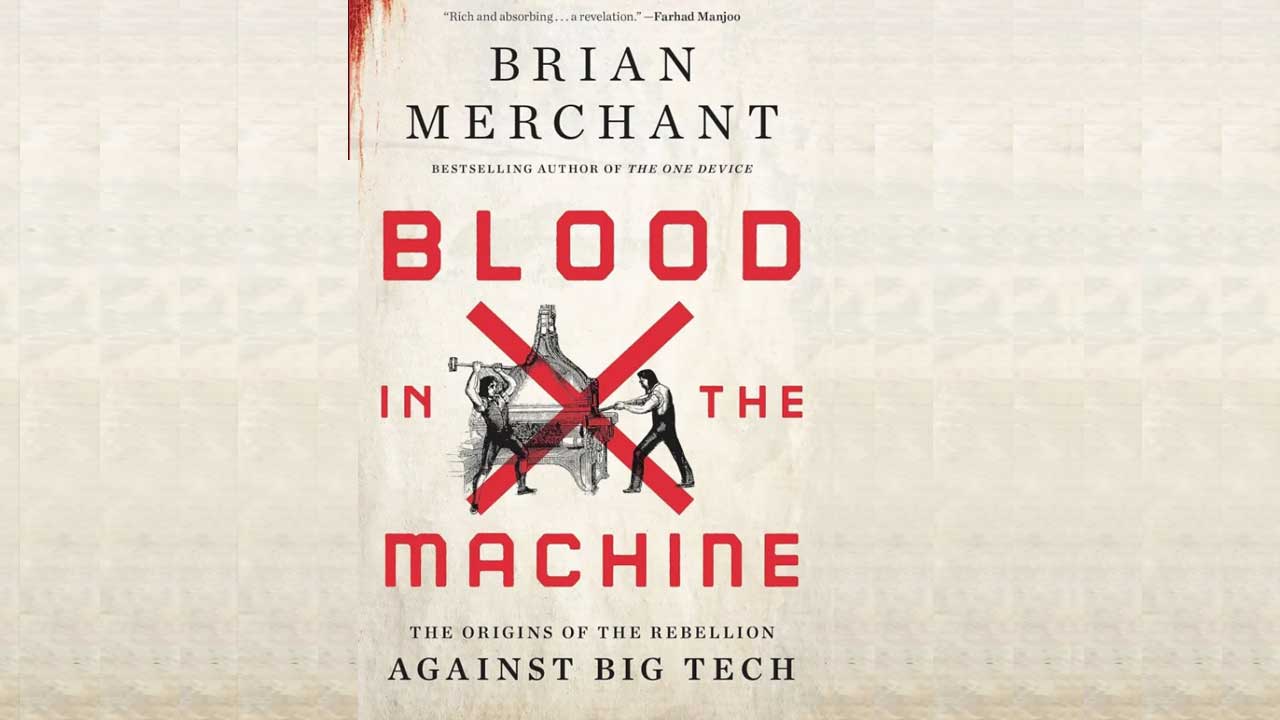
To this group, I’m adding Brian Merchant’s “Blood in the Machine: The Origins of the Rebellion Against Big Tech.” This book is primarily a kind of corrective history of the Luddite movement, but in Merchant’s hands, it is also a history that helps us better understand the present.

Until a recent round of layoffs, Merchant was a tech columnist at the Los Angeles Times, frequently taking contrarian positions regarding technological advancement, questioning if some of these advancements were truly beneficial to society. In Merchant’s retelling of the story of the Luddites, he seeks to expand and complicate the popular image of a group of people who stood in the way of technological advancement out of misplaced fear or superstition.

In reality, Merchant shows how the Luddites were not blanket anti-technology. These textile workers of the early 19th century were instead reacting against the thoughtless replacement of their high-quality human labor with inferior (but cheaper) machine work. Their concerns were literally existential, not backward or superstitious. Technology was coming to take their livelihoods and their way of life without any offer of compensation in return.

Told through a series of short narratives, each illustrating key moments in the movement, Merchant brings alive the past, these people and their motives, including a person who never existed, “Ned Ludd,” a legend said to have destroyed his factory owner’s machinery that came in to stand as a symbol for the movement.

I lost track of the times I wrote “I didn’t know this” in the margins.

In the latter parts of the book, Merchant juxtaposes the history of the Industrial Revolution with the technological disruption of today, showing both how much and how little has changed. He uses the example of Doug Schifter, a man who had chauffeured people around Manhattan since 1981, logging more than 5 million miles. But after the arrival of Uber, he found himself driving 120 hours a week to try to make a living before finally realizing the job he’d done for 40 years was gone. In a public act of protest, Schifter took his own life.

We may love the convenience of Uber, but Merchant’s book makes us sensitive to the costs.

There’s no simple solution here, and Merchant doesn’t pretend to believe otherwise, but the conclusion of his book suggests we may be courting a literal rebellion if we’re not willing to extend care and consideration to the people who are shunted aside in the name of progress.

Who knows? Those people may be us.

John Warner is the author of “Why They Can’t Write: Killing the Five-Paragraph Essay and Other Necessities.”

Twitter @biblioracle

Share. Facebook Twitter Pinterest LinkedIn Reddit WhatsApp Telegram Email
Previous ArticleRoots of Black aviation in America can be traced to a short flight from Robbins to Oak Lawn
Next Article Rhymefest Shares His thoughts about Us in ‘James and Nikki: A Conversation’
Staff
  • Website

Related Posts

The High Cost Of Wealth Worship

What Every Black Child Needs in the World

Leave A Reply Cancel Reply

Video of the Week
https://www.youtube.com/watch?v=AxFXtgzTu4U
Advertisement
Video of the Week
https://www.youtube.com/watch?v=OjfvYnUXHuI
ABOUT US


The Windy City Word is a weekly newspaper that projects a positive image of the community it serves. It reflects life on the Greater West Side as seen by the people who live and work here.

OUR PICKS

Is Your Vehicle a Super Spy?

The Price of Silence: $74,740 Revelation

From Churros to Legacy

MOST POPULAR

Houston Haitians Push Back Against TPS Terminations

Black Americans Have Doubts About the U.S. Food System

Women Learned Their Jail Strip Searches Were Recorded. Their Outrage Changed the Law

© 2026 The Windy City Word. Site Designed by No Regret Medai.
  • Home
  • Lifestyle
  • Podcast
  • Contact Us

Type above and press Enter to search. Press Esc to cancel.