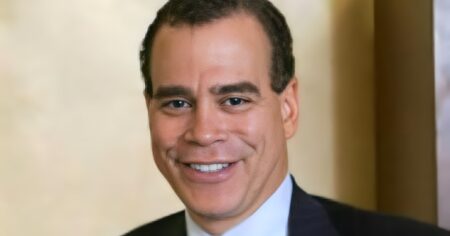





By Rev. John Jackson
The late Rev. Dr. Wyatt Tee Walker, in his classic book, “Somebody’s Calling My Name, Black Sacred Music and Social Change,” wrote “A survey of the musical content of the Black religious tradition, which can serve as an accurate commentary of what was happening to the Black community and its response to those conditions. Simply put, what Black people are singing religiously will provide a clue as to what is happening to them sociologically.”
Dr. Walker also has an image of what he calls “The Music Tree” in his book. This tree shows that its roots and bottom trunk are made up of what he calls “Slave utterances, Chants, moans, cries for deliverance and pure spirituals.” As the bottom of the tree narrows upward, you find branching out “the Blues, then ragtime, then Black meter music, then Jazz and then hymns,” and so on.
What Dr. Walker is illustrating is that for African people there was never a bifurcation between sacred and secular, or spirit and body. In European culture, particularly Greek thought, there was the bifurcation or separation between soul and body, secular and sacred, mind and emotions.
Not African people. African people saw all as one. The secular and sacred were intertwined just like mind and emotions and body and soul. That African way of being is exactly what you find in the sacred text we call the Bible. Remember that the Bible was written by African people to African people.
Therefore as Dr. Walker points out in these “Yet to be United States,” to quote the late Maya Angelou, you can discern what was happening to Black people by what was being sung religiously.
The Spirituals, or what we call the “Negro Spirituals,” are one of the best examples of this fact. We often think of the anthemized renditions of the spirituals popularized by the Fisk Jubilee Singers and others. However, Dr. Walker identified in his book that in their original form, those spirituals were not as polished as the anthemized versions of later years.
In their “pure” state, as Dr. Walker calls them, please notice that there is no single author of any spiritual. No one person composed a spiritual. In fact, no one knows who first lifted up a holler “Sooner will be done with the trouble of the world.” I polished the English so that the heavy African dialect and Black idiom popularized by Paul Lawrence Dunbar would be a bit easier to read for some of those reading this article. Please, however, think of those Black idioms as you consider the spirituals.
There was no single author because the community of people created them. They created them as a way to buffer each other from the cruel and inhumane treatment of chattel slavery, also called the MAAFA or Great suffering unleashed upon people of African ancestry. The most barbaric treatment of any human ever in history.
They connected to each other to buffer one another through song. By the way, an outgrowth of this is seen in the chain gang chants during the period of the “Black Codes’ immediately after emancipation. Those chain gang chants were a way of linking mostly Black men together who had been unjustly incarcerated on chain gangs and then leased out to former slave owners to work railroads and cotton fields—all because many could not find work because they could not get hired by white people. So, they were arrested for not having a job when in reality they were refused paying jobs by the white business owners.
Those Black men, like Black people in cane breaks and cotton fields, used song and music to help shield them during the harsh reality of working from sun up to sun down. Second those spirituals were code language to communicate information that they did not want slave owners to understand.
“Go down Moses, way down to Egypt land, tell O Pharaoh, to let my people go,” was not only a reference to the Biblical story of liberation from slavery and oppression found in Exodus, but those lyrics were also information about the Underground Railroad to freedom that was rolling through “round about midnight,” engineered by Rev. Harriett “44 pistol-packing” Tubman.
The lyrics were created communally, they were covert communication about liberation, and they were referencing traditional African religious traditions.
Think of the song “Steal Away to Jesus.” It, too, was covert communication about liberation from the plantation as the lyrics suggest, “Steal away, steal away, steal away to Jesus.” Slave owners mistakenly underestimated the intelligence of these African people by assuming that they were merely singing about dying and going to Jesus. In reality they were singing about running away from the plantation and following the North Star to freedom.
Yet the hidden gem is that when you examine the first verse a treasure can be found. It says, “My Lord, He calls me, He calls me by the thunder…” That line is a direct reference to the West African god Shango. Shango represents lighting and thunder. In fact, in his classic work, “Black Belief,” by theologian and scholar Henry Mitchell, he cites how Black people in the South, in particular when a thunder storm was approaching, would go out in their back yards and take an ax and chop up the ground with the ax. They did that because Shango is represented by an ax and they were assuring that their home would not be hit by the lightening. The lightening would hit the ground that was chopped up by the ax.
Finally, there was humor in the spirituals. Think of the song, “I got shoes, you got shoes, all God’s children got shoes, when I get to heaven gonna put on my shoes and walk all over God’s heaven…” Now pay close attention because while singing this spiritual the Africans would then look toward the “Big House,” the slave owners house, and say, “Everybody talkin bout heaven ain’t going there, heaven, heaven…”
They were as the Black idiom of today would say, “They were throwing shade” at plantation owners for thinking that they could really get to heaven after owning and torturing people and treating people, who were made in the image of God, as property.
As Mari Evans says, “to identify the enemy is to free the mind of the people. Free the mind of the people. Speak to the mind of the people. Speak truth.” And as the African Apostle Paul says, “Do not conform any longer to the patterns of this world but be transformed by the renewing of your mind.” Be Free Today!!!
Rev. Dr. John E. Jackson, Sr. is the Senior Pastor of Trinity United Church of Christ-Gary, 1276 W. 20th Ave. in Gary. “We are not just another church but we are a culturally conscious, Christ-centered church, committed to the community; We are Unashamedly Black and Unapologetically Christian.” Contact the church by email at [email protected] or by phone at 219-944-0500.