




By Stacy M. Brown
Black Press USA Senior National Correspondent
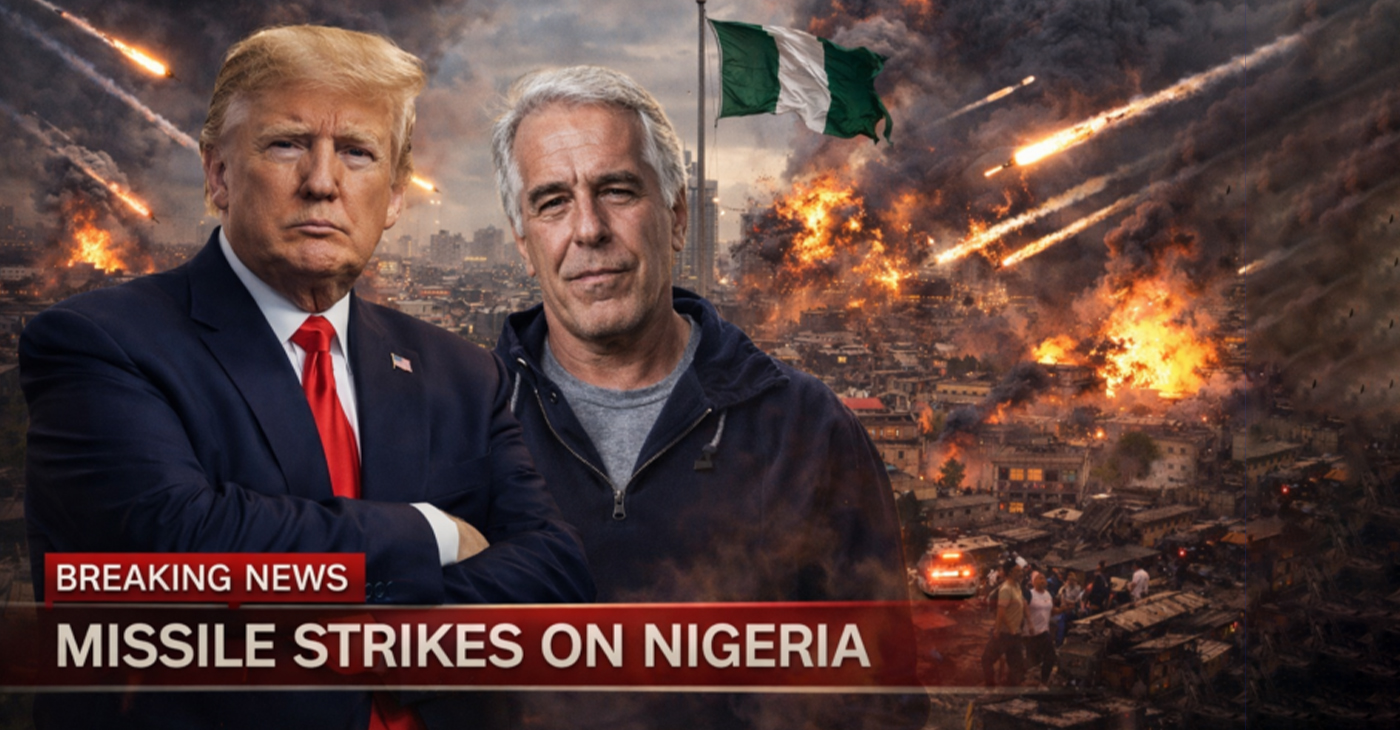
As questions mounted over the heavily redacted release of the Jeffrey Epstein files and new material placing President Donald Trump closer to the late sex trafficker than previously acknowledged, the White House shifted abruptly to a familiar tactic. The president turned outward, announcing U.S. military strikes in Nigeria and framing the action as a defense of Christianity, while critics said the move functioned as a political diversion that again placed Black people and Black nations in the crosshairs.
Trump claimed the United States carried out “powerful and deadly” strikes against Islamic State militants in northwest Nigeria, accusing them of “slaughtering” Christians. The announcement arrived as Trump faced renewed scrutiny over Epstein records that include photographs, internal Justice Department emails, and flight data that raise questions about the administration’s handling of disclosures mandated by Congress.
“The United States launched a powerful and deadly strike against ISIS Terrorist Scum in Northwest Nigeria, who have been targeting and viciously killing, primarily, innocent Christians,” Trump wrote on Truth Social, adding a Christmas message that included, “MERRY CHRISTMAS to all, including the dead Terrorists, of which there will be many more if their slaughter of Christians continues.”
The Pentagon released video showing at least one projectile launched from a U.S. warship, though officials did not specify the precise target. U.S. Africa Command later said the strikes were conducted “in coordination with Nigerian authorities” in Sokoto State. Defense Secretary Pete Hegseth thanked Nigeria for its cooperation, even as Trump publicly criticized Nigerian leaders.
Nigerian officials rejected the religious framing. Foreign Minister Yusuf Maitama Tuggar told the BBC the strike was a joint operation against terrorists and “has nothing to do with a particular religion.” Nigerian President Bola Ahmed Tinubu reiterated that position in a Christmas Eve post, writing that Nigeria remains committed to protecting Christians, Muslims, and all citizens and opposing religious persecution.
Nigeria, Africa’s most populous country with roughly 240 million people, has faced years of violence from extremist groups, criminal gangs, and insurgents that have killed people across religious lines. Just days before Trump’s statement, a blast at a mosque in northeastern Nigeria killed five people and injured dozens.
Meanwhile, California Gov. Gavin Newsom mocked the Justice Department’s release with a video highlighting extensive redactions and past footage of Trump with Epstein. The clip included a headline noting the DOJ’s defense of removing a Trump photograph from the records.
Rep. Don Beyer of Virginia said the administration failed to comply with the law governing the release. Senate Minority Leader Chuck Schumer called the disclosure incomplete and misleading, pointing to pages entirely blacked out. Rep. Ro Khanna, who co-authored the Epstein Files Transparency Act, said the release failed both the spirit and letter of the law, while Rep. Thomas Massie said it “grossly fails to comply.”
The documents do not place former President Barack Obama in the Epstein files and contain no evidence tying him to Epstein. They also do not reveal wrongdoing by Hillary Clinton. Former President Bill Clinton appears in social photographs, though reporting notes no indication of misconduct and Clinton has denied any.
By contrast, the release includes material that places Trump in closer proximity to Epstein than the administration has publicly acknowledged, including a photograph of Epstein holding a novelty check bearing Trump’s signature and internal emails referencing Trump’s travel on Epstein’s jet. The Justice Department has offered no explanation for why those materials were released while others remain obscured.
Critics argue the timing of the Nigeria strikes fits a long-established pattern. For decades, Trump has faced allegations of racial discrimination, from the 1973 Justice Department lawsuit over housing practices to his 1989 newspaper ads calling for the death penalty during the Central Park Five case, a stance he revived during the 2024 presidential debate.
In recent months, Trump has attacked diversity initiatives, defended Confederate symbols, and advanced policies that disproportionately affected Black communities, including mass deportations and federal workforce cuts that heavily impacted Black women. Commentators have noted the administration’s willingness to portray itself as a defender of Christianity and Western identity while stoking grievance politics at home.
As Nigeria faces new travel restrictions and renewed placement on U.S. religious freedom watchlists, Nigerian leaders continue to reject Trump’s depiction of their country. Tinubu said earlier this fall that labeling Nigeria as religiously intolerant “does not reflect our national reality.”
“I stand committed to doing everything within my power to enshrine religious freedom in Nigeria and to protect Christians, Muslims, and all Nigerians from violence,” Tinubu wrote.