



New York Carib News
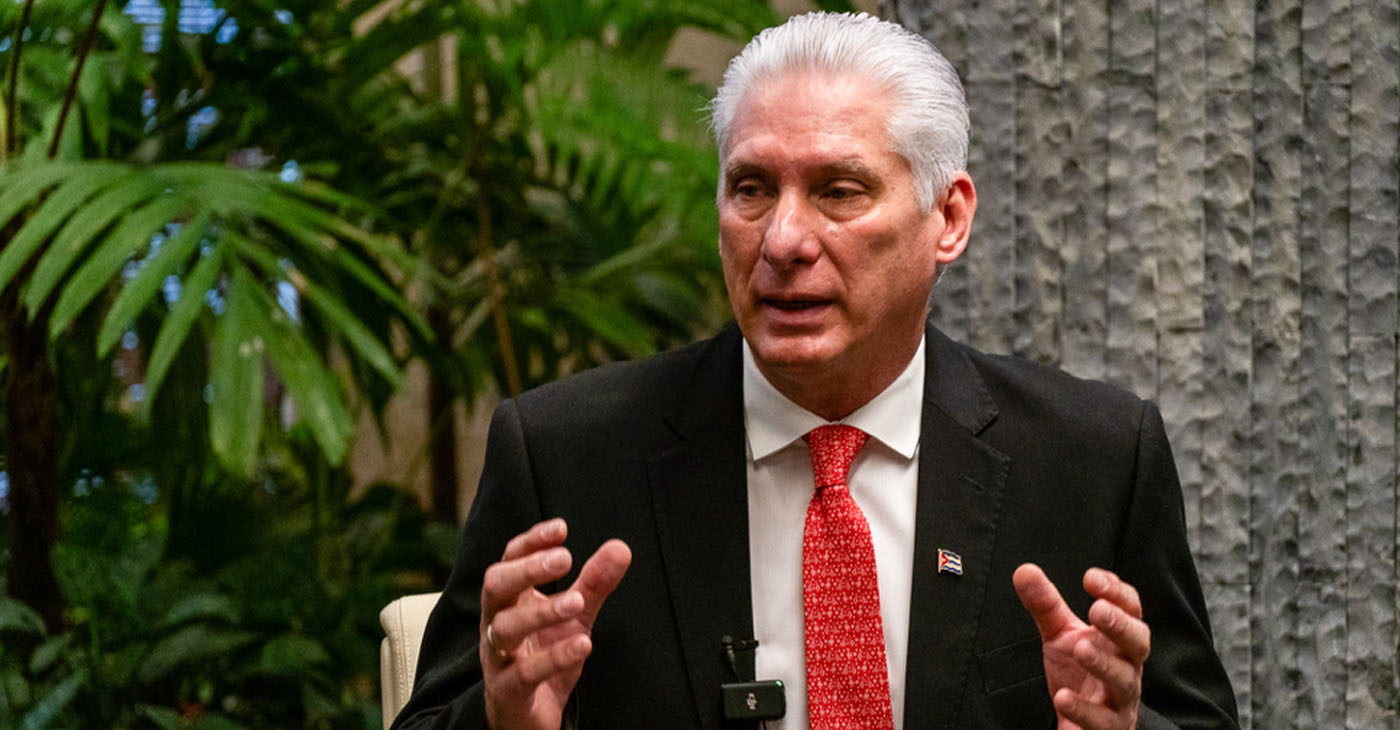
Cuban President Miguel Díaz-Canel has declared that the island will defend itself against any potential military action by the United States, warning of serious regional consequences if tensions escalate further.
In an interview conducted in Havana with NBC’s Kristen Welker, Díaz-Canel emphasized that there is “no justification” for U.S. aggression against Cuba, while stressing that any invasion would provoke resistance. “If that happens, there will be fighting, and there will be a struggle, and we will defend ourselves,” he said, underscoring Cuba’s readiness to protect its sovereignty.
The remarks come amid heightened rhetoric from U.S. President Donald Trump, whose administration has increased pressure on the communist-led nation. Trump recently suggested that a “takeover” of Cuba, potentially unfriendly, remains a possibility, while senior officials, including Secretary of State Marco Rubio, have called for political change on the island.
Despite the rising tensions, Díaz-Canel insisted that Cuba’s position remains defensive, not aggressive. He reiterated a willingness to engage in dialogue but rejected U.S. demands related to political reforms, including multiparty elections and the release of individuals described internationally as political prisoners. Cuban authorities, however, deny holding such prisoners and argue that these claims are part of efforts to discredit the revolution.
The decades-old U.S. embargo remains a central point of contention. First imposed in 1962 following the Cuban Revolution led by Fidel Castro, the policy continues to shape Cuba’s economic challenges, including fuel shortages, power outages, and limited access to essential goods. Díaz-Canel described the embargo as “cruel” and a major factor behind the country’s ongoing hardships.
At the same time, the Cuban leader signaled openness to economic engagement, including potential foreign investment in the island’s energy sector, an area currently restricted for U.S. companies under existing sanctions laws.
While both Washington and Havana have acknowledged preliminary talks, deep mistrust persists. Díaz-Canel pointed to past U.S. actions in other regions as a source of skepticism, warning that negotiations conducted alongside military pressure undermine confidence.
As geopolitical tensions continue to rise, Cuba’s leadership is positioning itself firmly against external intervention while leaving the door open, albeit cautiously, to diplomatic engagement.