




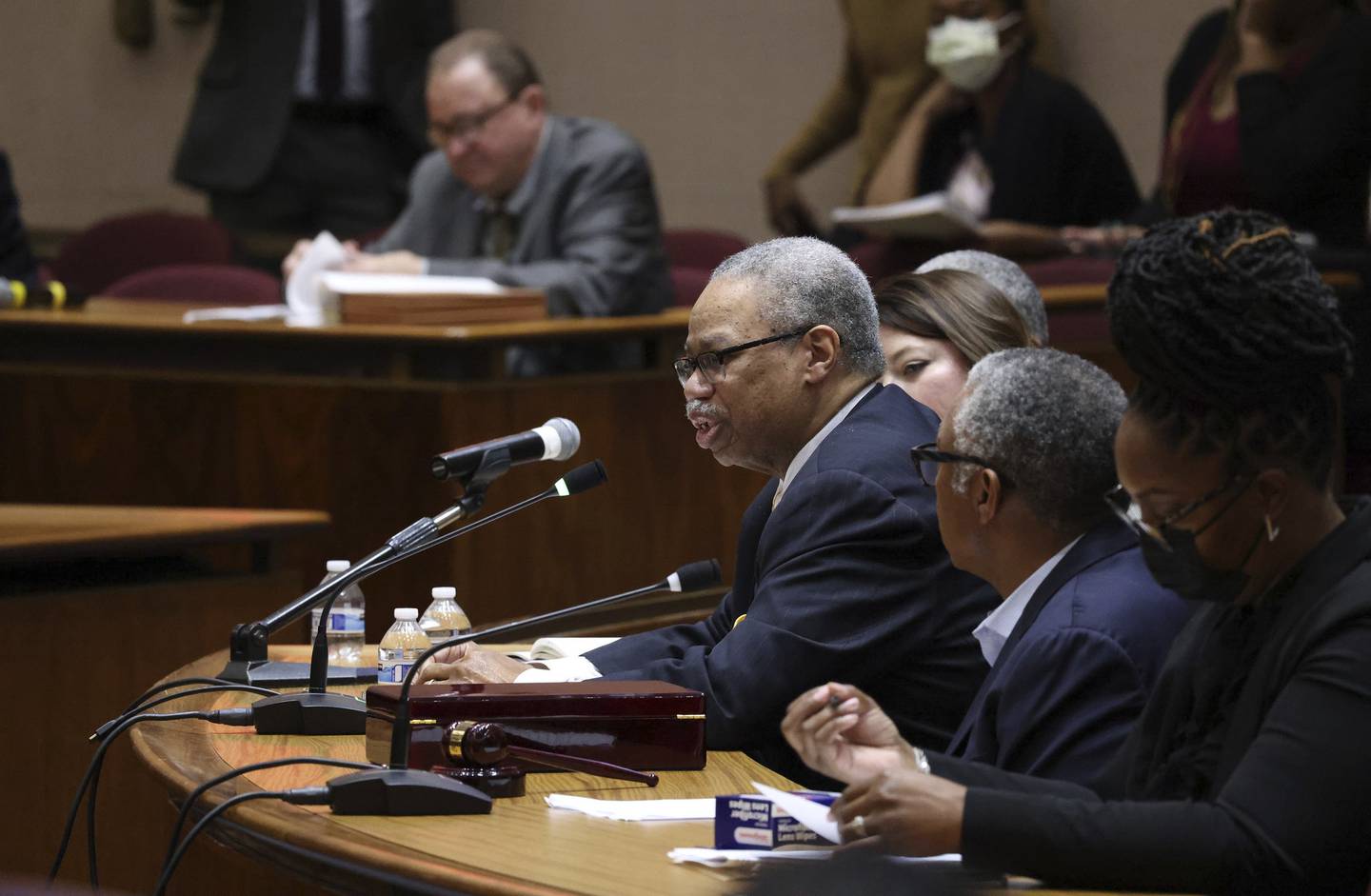
The CTA remains short about 1,000 employees as the agency struggles to provide reliable service, President Dorval Carter said as he appeared before aldermen after skipping a previous City Council hearing.
The agency has for months pointed to a shortage of bus and train operators as a key factor behind long wait times and so-called ghost buses and trains, which show up on trackers but fail to arrive in real life. Thursday, Carter told aldermen the employee shortage still includes between 600 and 700 bus drivers, and 100 to 200 train operators.
Advertisement
Carter’s appearance before the City Council’s Transportation Committee came as the agency continues to face complaints about safety and service. Aldermen grilled him over wide-ranging concerns about unpredictable service, crime and security, cleanliness and conditions on one of the country’s largest transit systems. Adding to the urgency of addressing concerns, some said, is a looming financial cliff the CTA faces when it runs out of federal COVID-19 relief funding, which is expected after 2025.
Underpinning many of the questions aldermen raised was the CTA’s need for City Council approval for a transit tax district to fund part of the planned 5.6-mile extension of the Red Line south to 130th Street.
Advertisement
“I do not envy you, I know you have many challenges that you’re contending with and many of those were caused by things far outside your control,” downtown Ald. Brendan Reilly told Carter. “But I also struggle with the idea of making close to a billion dollar investment in a system that’s not properly serving its customers today.”
The questions Thursday in large part reflected concerns raised by aldermen at a September meeting. They had sought to bring Carter in at that time, but he instead sent other CTA officials.
Dozens of aldermen later signed onto an ordinance that would have required quarterly hearings on the CTA’s service levels, security and other issues. But Aldermen Scott Waguespack and Jason Ervin, allies of Mayor Lori Lightfoot, blocked the proposal after it was introduced by sending it to the Rules Committee, where legislation often stalls.
North Side Ald. Andre Vasquez said Thursday he was in discussions to instead require two meetings a year. Answering questions from Vasquez, Carter said he would commit to whatever the City Council ultimately decided.
Over the summer Carter unveiled a broad plan to address CTA challenges that included schedule tweaks to take into account the limited number of operators, upgrades to bus and train trackers, and ongoing increased safety and hiring measures. The agency has started to put in place some of the measures, including beginning to roll out new train schedules.
Since new schedules took effect at the end of October, the CTA has been running about 81% of its scheduled service on weekdays and the number of extra long wait times has decreased, according to CTA numbers made public Thursday. But service on the busy Red and Blue lines lags the rest of the system.
Carter told aldermen the agency has been facing a “mass resignation” during the pandemic, is contending with high numbers of absent employees as staff continue to contract COVID-19 and call in sick, and has not yet recruited enough employees to fill all its vacancies.
Without enough operators the agency cannot run all of its scheduled service, which affects wait times and the accuracy of train and bus trackers.
Advertisement
Facing comments from aldermen about safety and security, he deferred questions about police use and deployment to the Chicago Police Department and said CTA crime reflected crime across the city. The CTA has added unarmed, private security and K-9 teams to the system, but Carter did not support creating a CTA police force separate from the Chicago Police Department, saying it would take too long and be too expensive.
Carter has to address safety, said Ald. Harry Osterman, whose ward includes part of the north side of the Red Line
“You have to find a way to deal with the safety issue,” he said. “That is the absolute ballgame.”
Aldermen also urged Carter to address a seeming uptick in people living on trains. The CTA recently proposed an agreement with the city’s Department of Family and Support Services to provide outreach and support for people sleeping on trains and riders struggling with mental health crises and substance abuse.
As the CTA faces challenges, 25th Ward Ald. Byron Sigcho-Lopez raised concerns about what will happen when the CTA runs out of federal COVID-19 relief money. The CTA has been relying on the money to make up for lost revenue as ridership plummeted at the start of the pandemic, and is expecting it to run out after 2025.
Carter said the CTA faces two paths once the pandemic aid runs out: get ridership numbers back up to pre-pandemic levels, or revisit the way CTA is funded.
Advertisement
“If things are running this way, with adequate funding from what I’m hearing, what happens next?” Sigcho-Lopez said.
sfreishtat@chicagotribune.com


