


Close Menu
  • Home
  • News
    • Local
  • Opinion
  • Business
  • Health
  • Education
  • Sports
  • Podcast

Subscribe to Updates

Get the latest creative news from FooBar about art, design and business.

What's Hot

CalAIM Helped Alfred Flores Rebuild His Life. Why Can’t More Californians Access Its Benefits?

How Inglewood’s Homeless Seniors Are Finding Relief Through Housing and Trauma-Informed Care

How Inglewood’s Homeless Seniors Are Finding Relief Through Housing and Trauma-Informed Care

Facebook X (Twitter) Instagram
  • Lifestyle
  • Podcast
  • Contact Us
Facebook X (Twitter) Instagram Pinterest Vimeo
The Windy City Word
  • Home
  • News
    1. Local
    2. View All

    Uncle Remus Says Similar Restaurant Name Is Diluting Its Brand and Misleading Customers

    Youth curfew vote stalled in Chicago City Council’s public safety committee

    Organizers, CBA Coalition pushback on proposed luxury hotel near Obama Presidential Center

    New petition calls for state oversight and new leadership at Roseland Community Hospital

    CalAIM Helped Alfred Flores Rebuild His Life. Why Can’t More Californians Access Its Benefits?

    How Inglewood’s Homeless Seniors Are Finding Relief Through Housing and Trauma-Informed Care

    Street Medicine Brings Care to Unhoused Angelenos — But Housing Remains the Missing Prescription – Observer Group Newspapers of Southern California, inc.

    OP-ED: Washington Has a Chance to Save Veterans’ Lives

  • Opinion

    Rep Davis, Olive Post CDR., Call on Trump to Restore file of Black Vietnam War Hero to Website

    Capitalize on Slower Car Dealership Sales in 2025

    The High Cost Of Wealth Worship

    What Every Black Child Needs in the World

    Changing the Game: Westside Mom Shares Bally’s Job Experience with Son

  • Business

    Illinois Department of Innovation & Technology supplier diversity office to host procurement webinar for vendors

    Crusader Publisher host Ukrainian Tech Businessmen eyeing Gary investment

    Sims applauds $220,000 in local Back to Business grants

    New Hire360 partnership to support diversity in local trades

    Taking your small business to the next level

  • Health

    CalAIM Helped Alfred Flores Rebuild His Life. Why Can’t More Californians Access Its Benefits?

    How Inglewood’s Homeless Seniors Are Finding Relief Through Housing and Trauma-Informed Care

    Street Medicine Brings Care to Unhoused Angelenos — But Housing Remains the Missing Prescription – Observer Group Newspapers of Southern California, inc.

    OP-ED: Washington Has a Chance to Save Veterans’ Lives

    TILGHMAN: Why Parents of Children with IEPs Should Know Their School Bus Driver

  • Education

    Author Kristen Amundson Explains ‘The Grandparent Effect’ and How It’s Helping Children Thrive Through Love, Support, and Connection

    Responsible AI Development Requires a Seat at the Table for Black America

    COMMENTARY: Being Frank: a Safe Place

    Outnumbered: Elbert Cox’s Equation for Greatness

    Gov. Newsom’s Latest Appointees Include Sacramento Advocate for Formerly Incarcerated Students; State’s New Tech Chief

  • Sports

    A Viral Moment with Purpose: Keep Your Head Up Gives Back

    HBCU Leaders, Corporate Partners Convene in D.C. to Strengthen Support for Black Colleges’ Athletic Programs

    NFL: Jalen Hurts did not fold; Caleb Williams goes down

    NBA All-Star Damian Lillard Returns Home for 15th Annual Backpack Giveaway

    NFL: NFC Preview | The Rams will NOT make the Super Bowl

  • Podcast
The Windy City Word
Featured

COMMENTARY: What Two Fathers Talk About at Lunch

staffBy staffUpdated:No Comments5 Mins Read
Facebook Twitter Pinterest Telegram LinkedIn Tumblr Email Reddit
Share
Facebook Twitter LinkedIn Pinterest WhatsApp Email

The slander against Black fathers is as old as the country. The men who owned us knew better. So does modern social science.

Last week I had lunch with an old friend.

He is a Black Republican and a popular commentator, which means we have spent twenty years disagreeing in public and liking each other in private. He would be welcome in any barbershop in America. He keeps it real in the way men in any true community require of one another.

We talked about our kids. That was most of the lunch.

Nothing about that would surprise any Black man reading this. Nothing about it would surprise most Black people.

But every Black father carries something else around with him. We know the stereotypes: that we do not stay, that we do not provide, that we are not there.

Those stories are as old as the country itself.

So is the proof against them. And the proof was written down by the men who owned us.

In November of 1836, a man named Richard escaped near Morganton, North Carolina. He got away while the brother of the man who claimed him was hauling him to Alabama.

The enslaver bought newspaper space to get him back. His advertisement did not guess where Richard was headed. It told readers exactly where to look.

Richard had a wife, a free woman of color named Jane Tucker. She was arranging to return to Raleigh. The ad said there was no doubt her husband would try to get to her.

The man who owned Richard was not speculating. He put money behind it. He had seen enough men run toward a wife or a child to know where to send the search party. He expected his readers to know it too.

Historians have been collecting those advertisements for years. The Freedom on the Move project indexes close to ninety thousand. They name wives. They name children. They name the road the man was likely taking to reach them.

Capture meant brutal punishment. Escape itself could be deadly. They ran anyway.

They did not wait for the war to end, either.

On December 27, 1862, Henry Christian placed a notice in a Philadelphia newspaper. He was searching for Richard, Rebecca, and Rachel Christian. His children. Last known to be traveling out of Winchester, Virginia.

Historians at Villanova University have recovered nearly five thousand notices like it. Freed people paying for newspaper space, year after year, hunting for family sold away. Judith Giesberg, who leads that project, estimates the success rate may have been as low as 2 in 100.

They kept paying anyway.

Many of those notices were placed by men. Fathers. Husbands. Brothers.

Herbert Gutman went through the records community by community. In the places he studied, most Black families had both parents at home. In some rural areas, it ran above eight in ten.

Now come forward to our own time.

Among fathers living with their small children, Black fathers were the most likely of the groups the study counted to bathe, dress, and change them every day. Seventy percent did. For White fathers, 60 percent. For Hispanic fathers, 45.

Among fathers of school-age children, 41 percent of Black fathers helped with homework or checked it daily. For White fathers, 28 percent.

That study covered 2006 to 2010. It is still the most recent we have, because the government stopped asking.

A later look at federal data, from 2017 to 2019, found the pattern holds for fathers living apart from their children. Nearly six in ten Black fathers saw their children weekly. For White fathers, about four in ten.

That survey also has the hard number, and I will not skip it. Forty-three percent of Black fathers have at least one child living somewhere else. For White fathers it is 14.

That is not a shortage of men who want to father. Black fathers who live with their children are among the most involved in this country. The ones living apart report showing up more than anybody.

Something keeps pulling them out of the house.

Work left those neighborhoods. Violence rose. Prisons filled. Researchers have spent forty years untangling how the three feed one another.

None of it is new. None of it is only ours. It hit Black neighborhoods first and hardest, then kept going until it reached everybody.

Next week I will show you those numbers. They belong to every man in America.

My friend and I did not talk about any of this over lunch. We talked about our kids.

That is what fathers do.

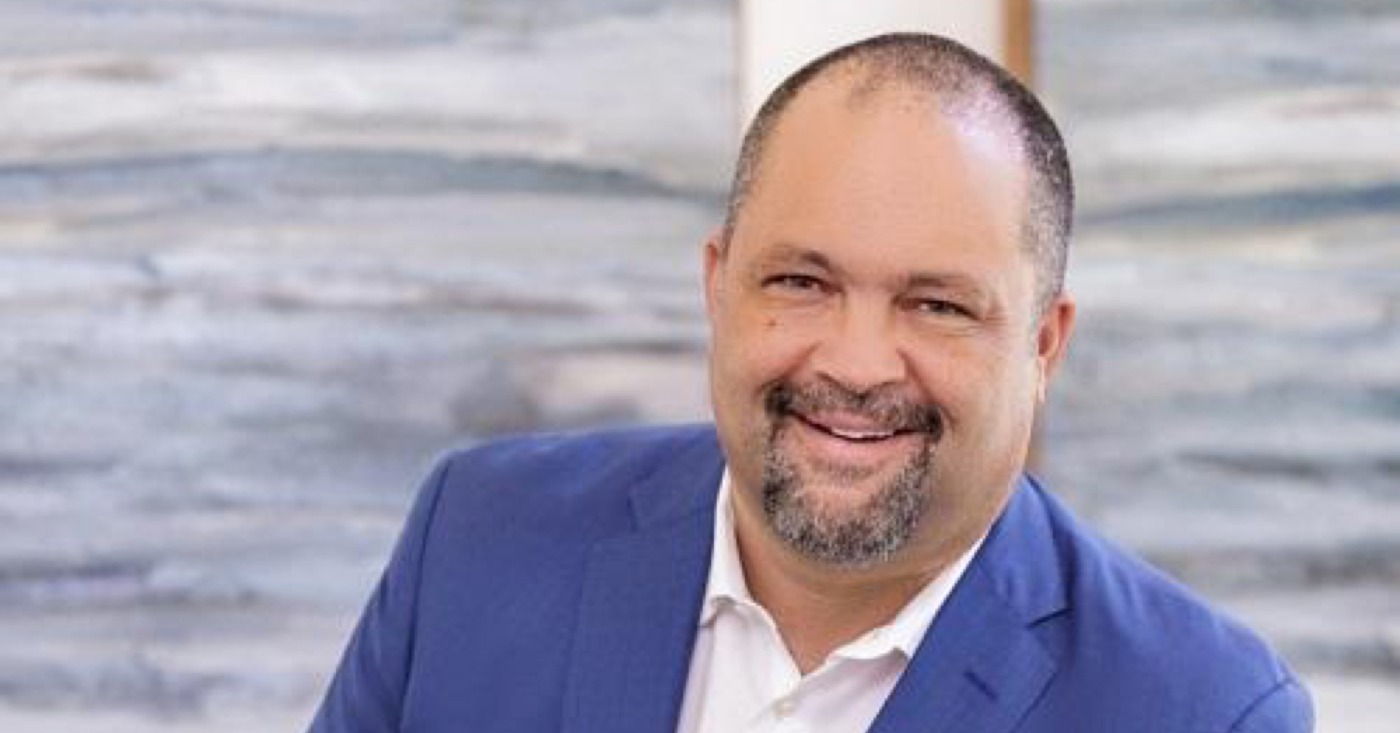
Ben Jealous is a professor of practice at the University of Pennsylvania and former president and CEO of the NAACP.

Based on reporting by Milwaukee Community Journal.


The post COMMENTARY: What Two Fathers Talk About at Lunch appeared first on BlackPressUSA.

Share. Facebook Twitter Pinterest LinkedIn Reddit WhatsApp Telegram Email
Previous ArticleCOMMENTARY: Property Is Power! the Last Generation to Start from Zero
Next Article Episode 4: Grow Stronger After 50
staff

Related Posts

How Inglewood’s Homeless Seniors Are Finding Relief Through Housing and Trauma-Informed Care

OP-ED: Washington Has a Chance to Save Veterans’ Lives

OP-ED: Haiti TPS: Have We Lost Sense of Humanity?

Leave A Reply Cancel Reply

Video of the Week
https://www.youtube.com/watch?v=AxFXtgzTu4U
Advertisement
Video of the Week
https://www.youtube.com/watch?v=OjfvYnUXHuI
ABOUT US


The Windy City Word is a weekly newspaper that projects a positive image of the community it serves. It reflects life on the Greater West Side as seen by the people who live and work here.

OUR PICKS

IN MEMORIAM: Emily “Cissy” Houston, 91

OP-ED: Stop Corporate Consolidation Silencing Local Media Voices

Why Black Artists Struggle to Sell Tours

MOST POPULAR

CalAIM Helped Alfred Flores Rebuild His Life. Why Can’t More Californians Access Its Benefits?

How Inglewood’s Homeless Seniors Are Finding Relief Through Housing and Trauma-Informed Care

Street Medicine Brings Care to Unhoused Angelenos — But Housing Remains the Missing Prescription – Observer Group Newspapers of Southern California, inc.

© 2026 The Windy City Word. Site Designed by No Regret Medai.
  • Home
  • Lifestyle
  • Podcast
  • Contact Us

Type above and press Enter to search. Press Esc to cancel.