


Perhaps success is becoming the last generation that has to start from zero.
I have been thinking about that idea lately because it challenges something deeply embedded in the American definition of achievement. We tend to measure progress by how far a person travels in a single lifetime, the neighborhood they escaped, the degree they earned, the profession they entered, the income they eventually commanded. For Black Americans especially, there is understandable pride attached to being first the first in the family to graduate from college, to become a doctor, to own a business, to buy a home, to reach the executive suite.
But what happens after the first?
That question interests me more than the achievement itself.
Because there is another form of success that receives considerably less attention: creating a family in which being first eventually becomes unnecessary.
A child who inherits a stable home does not begin where their parents began. A young entrepreneur whose family owns a commercial building approaches risk differently from one whose first obligation is paying rent. A college graduate who leaves school without having to financially rescue the generation before him has choices that another equally talented graduate may not have. A family that owns land, businesses, investments, or income-producing property possesses something more consequential than money. They possess a different starting point.
We like to imagine America primarily as a meritocracy of finish lines. Work hard enough, become educated enough, make the correct decisions, and eventually you will arrive. There is truth in that, but wealth operates according to another logic; wealth is deeply influenced by where the race begins.
An inheritance does not have to arrive as a million-dollar check; sometimes, inheritance is simply the absence of a burden.
It is graduating without debt, it is living in a family-owned property while starting a business, it is receiving $30,000 toward a first home, it is having parents who can help rather than parents who require help, it is inheriting a duplex with a mortgage nearly paid off, a piece of land purchased decades earlier, shares in a family business, or simply the knowledge of how money works. None of those advantages guarantees success, but they create room for it.
We talk about wealth as though its principal benefit is a larger house, a better automobile, better vacations, and a more comfortable retirement. But the deeper value of wealth is optionality. Wealth gives people the ability to make decisions based on opportunity rather than immediate necessity.
A person with assets can sometimes afford to wait; they can turn down the wrong job; they can survive a business failure; they can relocate for an opportunity; they can help a child with a down payment; they can think in decades because not every decision has to be solved by Friday.
The Federal Reserve’s most recent comprehensive Survey of Consumer Finances found that the typical White family held roughly six times the wealth of the typical Black family in 2022. There was encouraging movement beneath that number: Black ownership of homes, stocks, and businesses increased, but the underlying disparity remained enormous.
There is another number that helps explain why these gaps can be so stubborn. Federal Reserve research found that nearly 30 percent of White families had received an inheritance or substantial gift, compared with about 10 percent of Black families, and among families receiving inheritance, White families tended to receive larger amounts.
That difference is not merely about what one generation receives. It affects what that generation is capable of leaving; this is where the mathematics of legacy becomes unforgiving.
A family that inherits capital can invest sooner. A family that invests sooner benefits from more years of appreciation and compounding. Those assets can then become collateral for additional assets. A house can produce equity that helps purchase another property. A business can finance another enterprise. Land acquired before development arrives can become valuable decades later. Capital creates the possibility of additional capital.
Meanwhile, the family, beginning with nothing, may be doing everything right and still spend its most productive years building the foundation another family will inherit. That is why income alone cannot tell us whether a family is becoming wealthy.
There are Black households today earning incomes their grandparents could scarcely have imagined. That is genuine progress. But a household earning $200,000 while building few transferable assets may ultimately leave less economic power behind than a household earning considerably less, spending 30 years acquiring property, investments and businesses.
The distinction becomes especially important now because America is approaching an extraordinary economic transition. Cerulli Associates now estimates that roughly $124 trillion could transfer between generations and to charities between 2024 and 2048, an increase from its earlier $84 trillion projection. Rising values of financial assets and real estate are major reasons the estimate has grown so dramatically.
Think about what that actually means.
While much of America is discussing wages, inflation, interest rates, and affordability and understandably so another economy is operating quietly underneath it. Houses purchased in 1987 are becoming inheritances. Businesses started in 1994 are changing hands. Stock portfolios accumulated over 40 years are being transferred to children. Land purchased when nobody wanted it now sits in the path of development.
It changes how we think about the family home. Perhaps the first instinct should not always be to sell Grandma’s house and divide the proceeds. Sometimes the more important question is whether that property can remain an asset. It changes how entrepreneurs think about real estate. If you operate the same business in the same neighborhood for twenty years, should the next generation inherit only the business or the building beneath it?
It changes how we think about land. Some property does not need to produce an immediate return to have strategic value. Sometimes patience itself is the investment. It even changes how we think about lifestyle. There is nothing inherently wrong with enjoying the fruits of one’s labor. Wealth without living is merely accumulation. But there is a difference between enjoying success and consuming all evidence that success ever occurred.
An abundance mindset is sometimes misunderstood as simply believing there is enough opportunity for everyone. I think it requires something more demanding: believing that my economic decisions should extend beyond my own lifetime.
That means replacing some short-term questions with longer ones.
Not merely, can I afford this, but what will this become?
Not merely, how much do I make, but how much of what I make becomes ownership?
Not merely, what can I buy, but what can I build that remains after me?
Property belongs at the center of that philosophy, but property should be understood broadly. A home matters. So does a rental property, a business, land, intellectual property, equities, and ownership in enterprises that can appreciate and transfer. The objective is not to worship real estate. The objective is to understand the difference between earning money and converting a portion of that money into things that can outlive the person who earned it.
At roughly half a percent of Black America’s population, we are talking about hundreds of thousands of people. If those households began accumulating even one additional meaningful asset – a home, rental property, parcel of land, business interest or investment portfolio – the immediate effect would matter, but the more interesting effect would not appear on next year’s balance sheet.
It would appear 20 or 30 years from now.
Children would inherit property instead of merely photographs of the house where their grandparents once lived. Young entrepreneurs would inherit capital along with ambition. Families would enter difficult economic periods with assets they could borrow against, rather than with the desperation they had to borrow through. Some children would still fail; others would squander opportunities; there are no guarantees in capitalism or in families.
For generations, Black America understandably celebrated how far we had traveled from where history placed us. There is another stage of economic maturity, however, in which progress is measured not only by distance traveled but by how much of that distance the next generation does not have to travel again.
That is legacy.
Legacy is not the amount of money people remember you having. It is the amount of struggle your decisions made unnecessary for someone who came after you. The goal is not to raise children who never have to work. Work has dignity, discipline, and purpose. The goal is to raise generations whose work can begin at a higher level because someone before them has laid the foundation.
Maybe your grandparents couldn’t do it.
Maybe your parents didn’t know how.
Maybe circumstances required that everything they earned simply be used to survive.
But somebody eventually has to interrupt the pattern.
Somebody buys the first property.
Somebody keeps the land.
Somebody starts the company.
Somebody creates the estate plan.
To live well, certainly. To accomplish something meaningful, absolutely. But also to reach the end of one’s economic life knowing that the people coming behind us will have problems of their own to solve just not all of ours.
Perhaps success is becoming the last generation that has to start from zero, and perhaps Property is Power is ultimately about making certain that once a family finally builds something worth keeping, it never has to start from nothing again.
Property is Power!
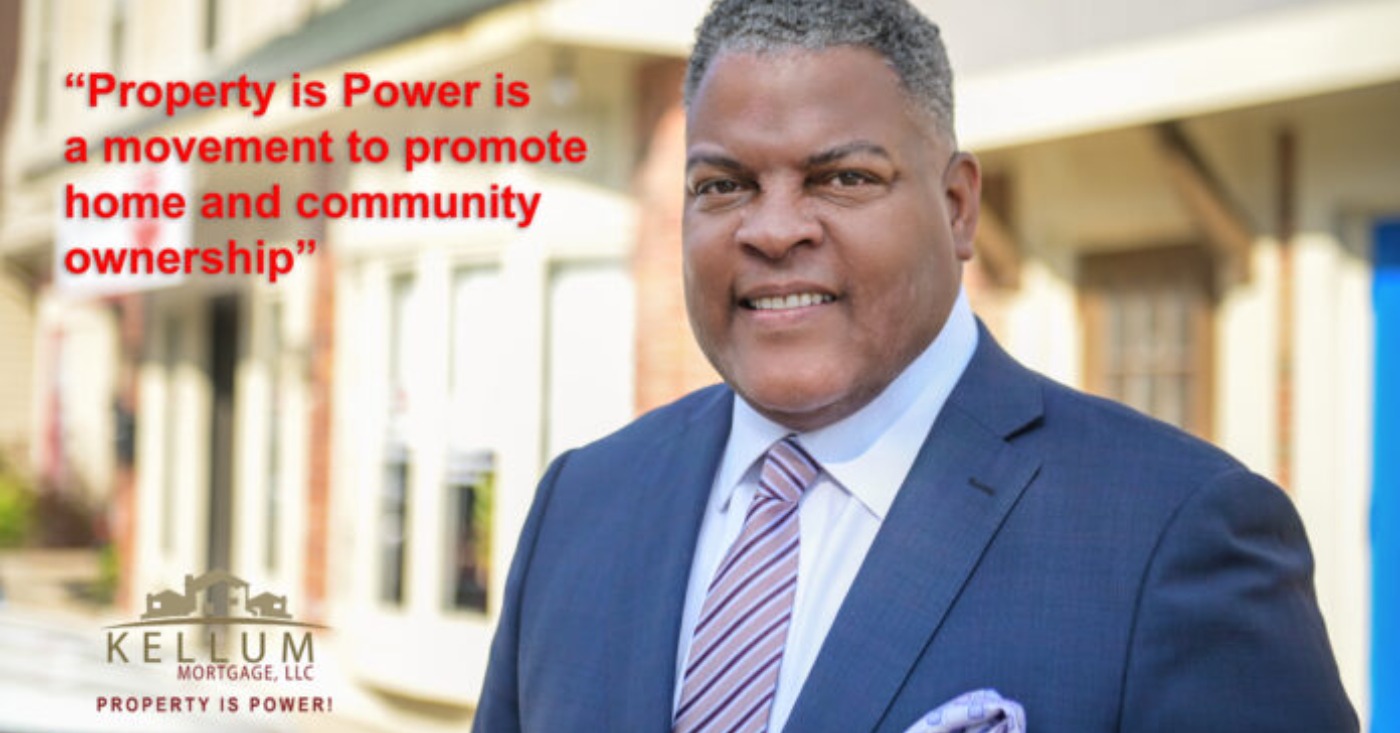
Property is Power! is a movement to promote home and community ownership. Studies indicate homeownership leads to higher graduation rates, family wealth, and community involvement.
Based on reporting by Michigan Chronicle.
The post COMMENTARY: Property Is Power! the Last Generation to Start from Zero appeared first on BlackPressUSA.